


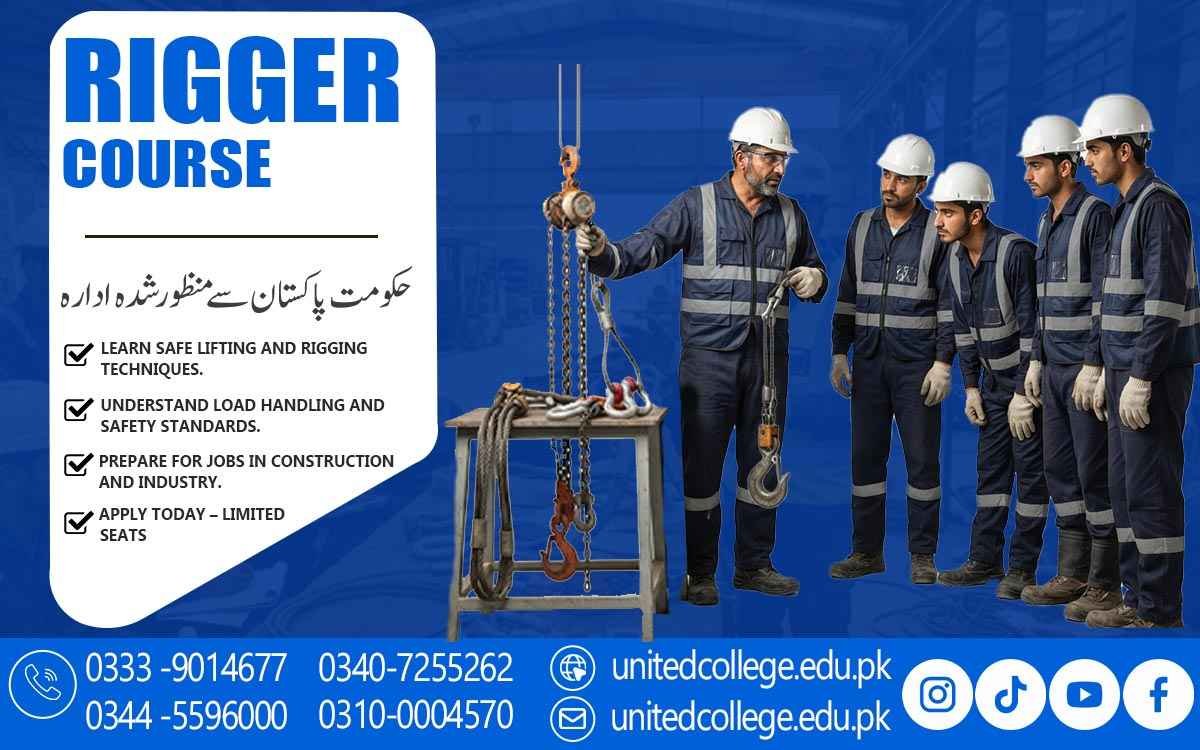

Rigger Course in Gujrat for Construction and Rigging Training
Modern Rigging Methods for Industrial Projects.
The Rigger Course in Gujrat introduces students to modern rigging methods that are widely used in construction, oil and gas, manufacturing, power generation, logistics, and heavy engineering industries. Rigging is a specialized profession that requires technical knowledge, careful planning, and practical skills to lift, move, and position heavy loads safely. Modern industrial projects demand skilled riggers who understand current lifting technologies and international safety practices.
Students begin by learning the role and responsibilities of a professional rigger throughout the lifting process. They study how lifting operations are planned, how equipment is selected, and how loads are prepared before cranes begin lifting. The course explains the importance of following proper rigging procedures to protect workers, equipment, and project materials while maintaining productivity on construction sites.
Through classroom instruction and practical demonstrations, learners develop a strong understanding of industrial lifting operations. This combination of theoretical and practical learning prepares students to perform professional rigging duties confidently while meeting the standards expected by modern employers.
Safe Lifting Planning and Execution
Every successful lifting operation begins with proper planning. During the Rigger Course in Gujrat, students learn how to prepare lifting plans by evaluating load weight, dimensions, center of gravity, lifting points, and environmental conditions before work begins.
The course explains how to calculate safe lifting capacities, select appropriate rigging methods, and organize lifting operations according to workplace safety procedures. Students also learn how weather conditions, ground stability, nearby structures, and restricted workspaces can influence lifting activities and require additional safety precautions.
Practical lifting exercises allow learners to apply these planning techniques during simulated industrial operations. By following step-by-step lifting procedures, students gain confidence while developing the ability to execute safe and efficient lifting operations in real working environments.
Inspection of Rigging Tools and Accessories
Professional riggers must ensure that every piece of lifting equipment is in good working condition before use. This section introduces students to various rigging tools including wire rope slings, chain slings, synthetic web slings, shackles, hooks, lifting clamps, eyebolts, spreader beams, and turnbuckles.
Students learn how to inspect equipment for corrosion, broken wires, cracks, excessive wear, deformation, and other defects that may reduce lifting safety. They also understand equipment ratings, safe working load limits, and proper maintenance procedures that help prevent equipment failure during lifting operations.
Hands-on practical sessions allow learners to inspect and assemble lifting equipment under instructor supervision. These practical experiences help students become familiar with industry-standard inspection methods while strengthening their technical knowledge.
Crane Coordination and Signal Systems
Effective coordination between the rigger and crane operator is essential for safe lifting operations. The Rigger Course in Gujrat teaches internationally recognized hand signals, radio communication techniques, and standard signaling procedures used across construction and industrial workplaces.
Students learn how to communicate lifting instructions clearly while maintaining constant coordination with crane operators. They also understand the importance of teamwork, timing, and accurate signaling when handling heavy materials in busy industrial environments.
Practical communication exercises improve students' confidence by allowing them to participate in simulated crane operations. These activities develop strong teamwork and communication skills that reduce lifting errors and improve workplace safety.
Maintaining Safety During Heavy Lifting
Safety is the most important element of every rigging operation. Students learn how to identify workplace hazards, perform risk assessments, establish exclusion zones, inspect lifting paths, and ensure safe working conditions before any lifting task begins.
The course also provides detailed instruction on Personal Protective Equipment (PPE), emergency response procedures, accident prevention techniques, and industrial safety regulations commonly followed on construction and engineering projects.
Practical safety drills reinforce classroom learning by allowing students to respond to realistic workplace scenarios. Developing strong safety awareness enables graduates to work responsibly while protecting both personnel and valuable equipment.
Practical Industrial Rigging Workshops
Practical workshops provide students with valuable experience using professional rigging equipment in controlled industrial training environments. Learners participate in lifting exercises that simulate actual workplace operations under the supervision of experienced instructors.
Training includes equipment inspection, sling selection, load balancing, crane communication, safe lifting techniques, and proper use of lifting accessories. Students gradually progress from basic lifting tasks to more advanced industrial rigging activities.
Regular practical sessions improve technical competence, decision-making ability, and confidence. This hands-on training ensures graduates are fully prepared for the responsibilities of professional rigging positions.
Building Careers in Construction and Engineering
Construction and engineering industries continue to create strong demand for qualified riggers both in Pakistan and internationally. Skilled professionals are required for infrastructure projects, manufacturing facilities, power plants, oil and gas companies, ports, warehouses, and heavy industrial operations.
After completing the Rigger Course in Gujrat, graduates can pursue careers as professional riggers, crane signalers, lifting technicians, material handling specialists, lifting supervisors, and industrial support professionals. These roles provide opportunities for career progression and long-term employment.
The practical knowledge gained through this course also increases opportunities for overseas employment, particularly in Gulf countries where experienced riggers are highly valued on large industrial and infrastructure projects.
Professional Development Through Rigging Training
The Rigger Course in Gujrat equips students with the technical skills, workplace safety awareness, and practical experience required to succeed in modern industrial environments. Throughout the program, learners strengthen their knowledge of lifting operations, equipment handling, hazard management, and professional communication.
Graduates leave the course with the confidence to perform safe lifting operations while meeting industry standards and employer expectations. Their technical competence and commitment to workplace safety make them valuable members of construction and industrial teams.
As industries continue to expand and invest in new projects, qualified riggers remain in high demand. Completing professional rigging training provides students with a strong foundation for career growth, higher earning potential, and long-term success in the construction, engineering, and industrial sectors.
Frequently Asked Questions (FAQs)
The Rigger Course in Gujrat is designed to teach students professional rigging techniques, safe lifting operations, equipment handling, crane signaling, and workplace safety required in construction and industrial sectors.
Students learn to work with wire rope slings, chain slings, synthetic slings, hooks, shackles, lifting clamps, eyebolts, spreader beams, and other essential rigging tools used in modern lifting operations.
Yes. The course includes extensive practical training where students perform lifting exercises, inspect rigging equipment, secure loads, communicate with crane operators, and follow industry-standard safety procedures.
Yes. The practical rigging skills and workplace safety knowledge gained during the course can help prepare students for employment opportunities in Gulf countries and other international construction and industrial projects.
The course combines classroom learning with hands-on practical experience, helping students build technical expertise, improve workplace safety awareness, and prepare for rewarding careers in construction, engineering, manufacturing, and heavy industries.
Admission Open: Start Your Professional Journey Today!
Join United College of Technology and build a career with practical training, recognized certifications, and Gulf job support. Seats are limited.
Apply Now via WhatsAppContact Information
- Address: Rawalpindi: F-272 Main New Katarian Stop, Old IJP Road | Lahore Campus: Lahore, Pakistan
- Phone/WhatsApp: 0333-9014677 / 0344-5596000 / 0310-0004570 / 0301-5044340 / 0340-7255262
- Website: unitedcollege.edu.pk
















Leave a Comment