


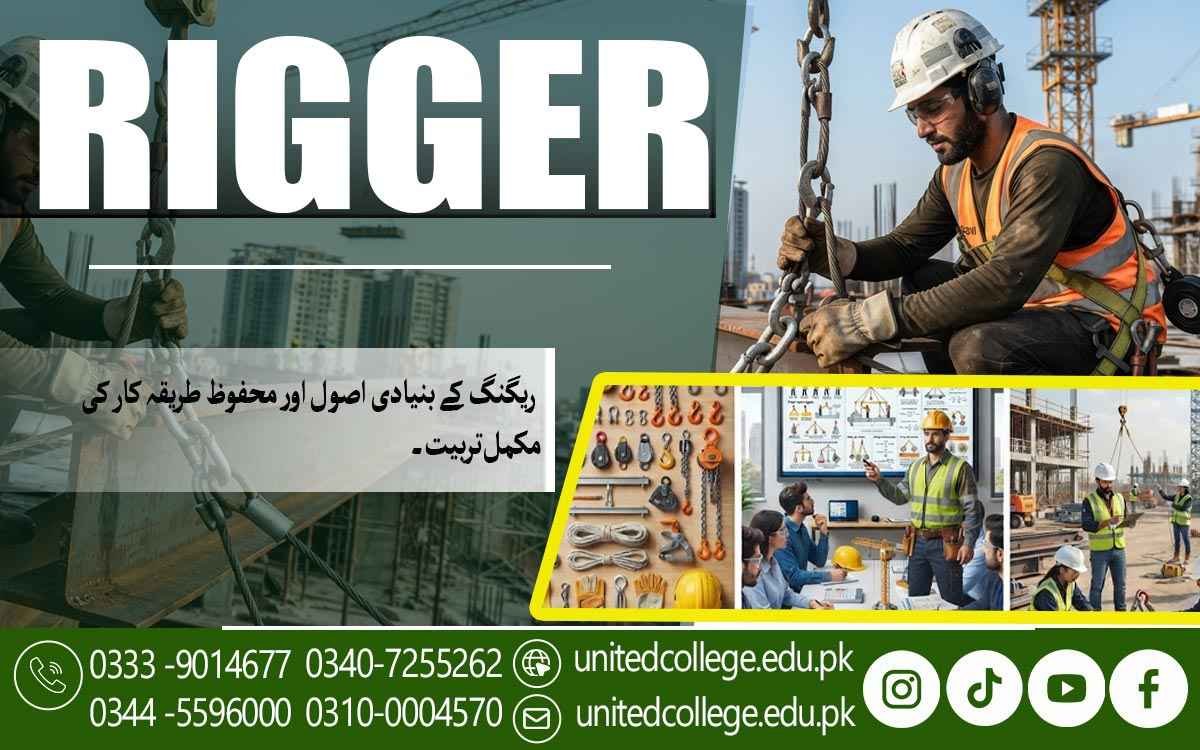

Rigger Course in Mandi Bahauddin – Learn the Art of Safe Rigging
Shape Practical Skills for Safer Lifting
Moving heavy materials requires more than powerful machinery. A successful lifting task also depends on careful load preparation, suitable rigging equipment, clear communication, and workers who understand their responsibilities. These practical skills make rigging an important part of many technical work environments.
The Rigger Course in Mandi Bahauddin introduces learners to the basic knowledge and practical habits needed for controlled load handling. Offered by United College of Technology, the training can help beginners understand rigging procedures, equipment awareness, workplace safety, and the teamwork involved in lifting operations.
Where Careful Preparation Makes the Difference
A rigger's work often begins before the lifting equipment starts moving. The worker needs to understand what is being lifted, examine the work area, prepare the load, and make sure the lifting arrangement suits the task. Good preparation can make a lifting operation more organized.
It also helps workers recognize possible obstacles, unsafe positions, or equipment concerns before the load leaves the ground. Through the Rigger Course in Mandi Bahauddin, beginners can start developing this preparation-focused approach instead of treating rigging as a task based only on physical strength.
From Basic Tools to Real Rigging Awareness
Understanding rigging equipment is an important part of technical training. Learners can become familiar with items such as ropes, wire ropes, slings, hooks, shackles, chains, and other tools used for lifting and securing loads. Each piece of equipment has a specific purpose. A sling, for example, helps connect a load to lifting equipment, while a shackle provides a secure connection between components.
Learning these basic functions helps beginners understand how a lifting setup comes together. Equipment awareness also includes checking condition and recognizing visible signs of damage. This encourages learners to treat every lifting task with greater attention.
Load Handling Starts with Understanding the Load
Every load can behave differently during movement. Its weight, shape, balance, lifting points, and position can influence how easily it can be controlled. Students learning rigging techniques can explore how loads are prepared and secured before movement.
They can also understand why selecting suitable equipment and positioning it correctly matters for safer handling. These concepts form an important part of lifting and rigging training because a well-prepared load is easier for the lifting team to monitor and control.
Communication Keeps the Lifting Team in Sync
A rigger does not normally work alone. Lifting operations may involve crane operators, supervisors, workers, and other technical staff. Clear communication allows everyone involved to understand the intended movement. Signal communication is particularly important when the rigger and crane operator cannot maintain direct verbal communication.
Standard signals and clear instructions help guide lifting, lowering, stopping, and positioning activities. Professional rigger training can therefore focus not only on equipment but also on teamwork. Learners can develop the habit of paying attention, giving clear signals, and following agreed procedures during lifting operations.
Safety Awareness Belongs in Every Rigging Decision
Rigging work may involve suspended loads, moving machinery, uneven surfaces, restricted spaces, and other hazards. A responsible worker needs to notice these conditions and respond according to established safety procedures. Safe lifting practices include checking equipment, keeping a suitable distance from suspended loads, maintaining awareness of nearby workers, and avoiding unnecessary movement around active lifting areas.
United College of Technology can help learners connect technical knowledge with workplace safety through practical learning. For individuals looking to develop these skills, a Rigger Course in Mandi Bahauddin can provide useful knowledge about safe lifting practices, hazard awareness, and workplace procedures. Developing this awareness early can encourage beginners to approach industrial and construction environments more carefully.
Practical Training Turns Technical Lessons into Useful Skills
Practical training allows learners to understand how rigging concepts work beyond written explanations. Observing equipment and working through controlled exercises can make unfamiliar ideas easier to understand. Students can gradually improve skills such as equipment identification, load preparation, worksite observation, communication, and following lifting procedures.
These abilities require practice and attention rather than memorization alone. For learners interested in technical skills training, practical rigger training can provide a useful foundation for understanding the responsibilities associated with material handling and lifting operations.
A Strong Rigger Depends on Discipline as Much as Technique
Technical knowledge is important, but responsible working habits also matter. A rigger needs patience when preparing a load, concentration while monitoring movement, and discipline when following safety instructions. Teamwork is another important part of rigging work. Workers need to respect each other's roles and communicate when conditions change.
Rushing or ignoring instructions can create unnecessary problems during a lifting task. Beginners can strengthen these habits by taking training seriously, asking questions when something is unclear, observing experienced practices, and giving proper attention to every practical activity.
Rigger Course in Mandi Bahauddin Can Strengthen Your Technical Foundation
Rigging combines practical equipment knowledge with careful planning, load handling, communication, and safety awareness. Learning these areas together can help beginners better understand what happens behind a controlled lifting operation. The Rigger Course in Mandi Bahauddin can be a useful learning path for students, fresh learners, workers, and others who want to explore practical rigging skills.
The knowledge can also complement related abilities in construction, maintenance, industrial work, and material handling. With training offered by United College of Technology, learners can focus on understanding proper procedures and developing responsible workplace habits. Building these skills through practice can help students make better use of their technical knowledge as they continue toward future hands-on work.
Frequently Asked Questions (FAQs)
A rigger should pay attention to the load's position, connection points, available space, equipment condition, and the planned movement before work begins.
Lifting points help learners understand where equipment can be connected to support controlled movement. This knowledge also improves awareness when preparing different types of loads.
What can learners observe during practical rigging exercises? Learners may observe how equipment is arranged, how loads are connected, how signals are used, and how workers coordinate their actions during a controlled exercise.
Conditions around a lifting area can change. Staying alert helps a worker notice nearby objects, people, restricted spaces, and other factors that may affect the task.
Yes. Basic rigging knowledge can complement construction-related skills by helping workers understand material movement, lifting arrangements, equipment handling, and site safety.
Regular practice, careful observation, listening to instructions, reviewing safety procedures, and learning from supervised activities can help beginners strengthen their technical understanding.
Admission Open: Start Your Professional Journey Today!
Join United College of Technology and build a career with practical training, recognized certifications, and Gulf job support. Seats are limited.
Apply Now via WhatsAppContact Information
- Address: Rawalpindi: F-272 Main New Katarian Stop, Old IJP Road | Lahore Campus: Lahore, Pakistan
- Phone/WhatsApp: 0333-9014677 / 0344-5596000 / 0310-0004570 / 0301-5044340 / 0340-7255262
- Website: unitedcollege.edu.pk
















Leave a Comment