


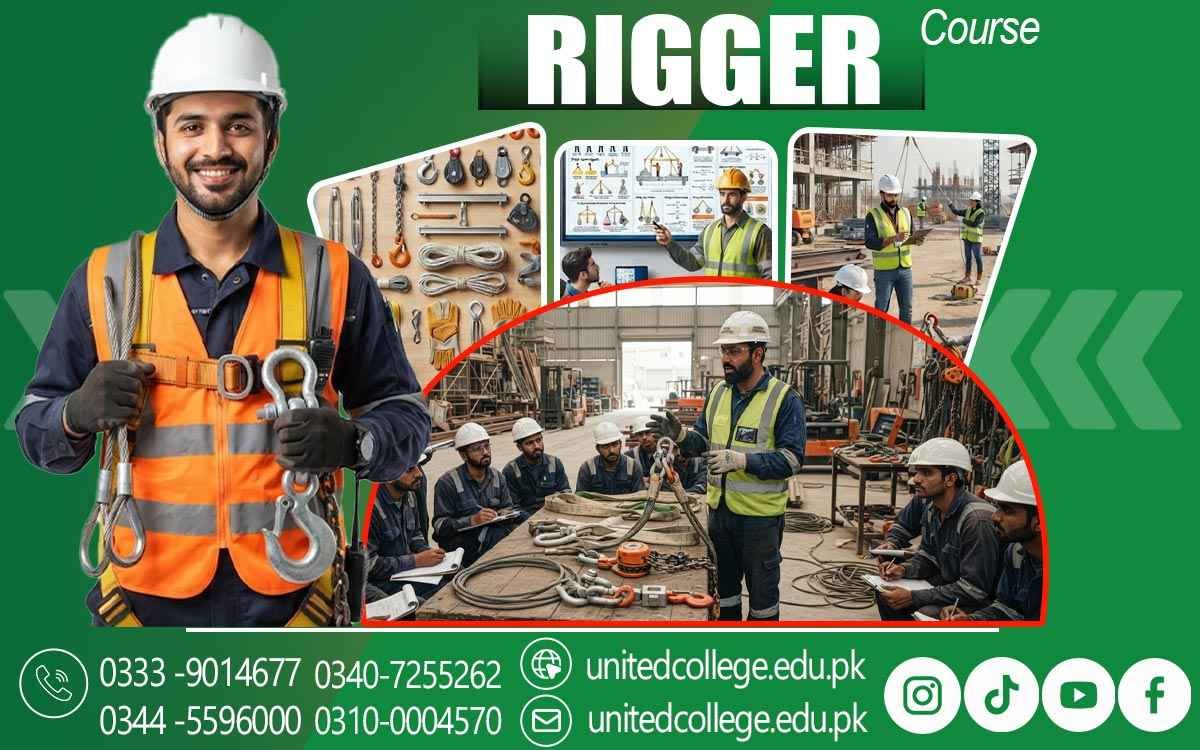

Rigger Course in Mansehra for Professional Rigging Careers
Professional Rigging Skills for Beginners
The Rigger Course in Mansehra is designed to provide beginners with a strong foundation in professional rigging practices required in construction, infrastructure development, manufacturing, oil and gas, logistics, and heavy engineering industries. Rigging is a specialized skill that focuses on the safe lifting, moving, and positioning of heavy loads using cranes, hoists, and various lifting accessories. Learning these essential skills enables students to perform lifting operations efficiently while maintaining the highest standards of workplace safety.
Students begin by understanding the duties and responsibilities of a professional rigger. They learn how to inspect lifting equipment, prepare lifting plans, secure loads correctly, communicate with crane operators, and ensure that every lifting operation is completed safely. The course also introduces students to the importance of teamwork, precision, and following industry regulations to minimize workplace risks.
Through a combination of classroom instruction and practical demonstrations, learners gain both theoretical knowledge and real-world experience. This balanced training approach helps beginners develop confidence while preparing them for advanced rigging tasks in industrial environments.
Safe Material Lifting and Positioning
Safe lifting techniques are one of the most important aspects of professional rigging. During the Rigger Course in Mansehra, students learn how to assess materials before lifting by evaluating their weight, dimensions, center of gravity, and stability. Understanding these factors helps prevent accidents, equipment damage, and unsafe lifting conditions.
The course explains proper methods for selecting lifting points, attaching slings, balancing loads, and controlling lifting movements throughout every stage of the operation. Students also learn how environmental conditions such as uneven surfaces, limited working spaces, weather conditions, and nearby obstacles can affect lifting safety.
Practical lifting exercises allow learners to apply these techniques using professional rigging equipment under instructor supervision. Regular practice improves technical competence, confidence, and the ability to perform safe lifting operations in real industrial workplaces.
Selecting the Right Rigging Equipment
Choosing appropriate rigging equipment is essential for safe and successful lifting operations. This section introduces students to commonly used lifting accessories such as wire rope slings, chain slings, synthetic web slings, hooks, shackles, eyebolts, lifting clamps, spreader beams, and turnbuckles. Students learn the specific purpose and correct application of each tool.
The training also emphasizes equipment inspection and maintenance. Learners identify signs of wear, corrosion, damaged components, broken wires, and other defects that may affect lifting safety. Understanding safe working load limits and equipment ratings helps students avoid overloading and equipment failure.
Hands-on workshops provide opportunities to inspect, assemble, and use different rigging accessories correctly. Practical experience enables students to select suitable equipment for different lifting situations while following industrial safety standards and manufacturer recommendations.
Learning Standard Hand Signal Procedures
Effective communication between riggers and crane operators is essential for maintaining safe lifting operations. The Rigger Course in Mansehra teaches internationally recognized hand signals and communication techniques used on construction sites and industrial projects around the world.
Students learn the responsibilities of a signaler, how to maintain visual contact with crane operators, and the importance of giving clear, accurate instructions during lifting activities. The course also explains the use of radio communication systems when direct visual communication is not possible.
Practical signal coordination exercises help learners improve communication skills while performing simulated lifting operations. These activities strengthen teamwork, reduce misunderstandings, and ensure safer crane operations in busy industrial environments.
Workplace Safety and Accident Prevention
Safety is the highest priority in every rigging operation. The Rigger Course in Mansehra provides comprehensive instruction on workplace safety regulations, hazard identification, accident prevention, emergency response procedures, and the proper use of Personal Protective Equipment (PPE).
Students learn how to conduct risk assessments before lifting operations, identify unsafe working conditions, inspect lifting equipment, establish exclusion zones, and monitor environmental hazards. These procedures help prevent workplace incidents while ensuring compliance with national and international safety standards.
Practical safety drills reinforce classroom learning by allowing students to apply safety principles during lifting exercises. Developing a strong safety mindset prepares graduates to work responsibly while protecting coworkers, equipment, and project materials.
Practical Training for Heavy Lifting Tasks
Practical experience forms the core of the Rigger Course in Mansehra. Students participate in supervised training sessions that simulate real industrial lifting operations using professional rigging equipment and lifting accessories. These practical exercises allow learners to apply theoretical knowledge in realistic workplace situations.
Training activities include equipment inspection, sling selection, load balancing, lifting plan preparation, crane communication, and safe material handling. Each practical session is carefully supervised by experienced instructors who provide guidance and professional feedback.
Continuous hands-on practice improves technical skills, decision-making abilities, and confidence. By completing realistic lifting exercises, students become well prepared for employment in construction sites, factories, warehouses, power plants, ports, and infrastructure projects.
Growing Career Opportunities in Industry
The demand for skilled riggers continues to increase as industrial development expands across Pakistan and internationally. Construction companies, oil and gas organizations, manufacturing plants, engineering firms, logistics companies, mining operations, and power generation projects require trained professionals who can perform lifting operations safely and efficiently.
After completing the Rigger Course in Mansehra, graduates can pursue careers as professional riggers, crane signalers, lifting technicians, material handling specialists, lifting supervisors, and industrial support personnel. These career opportunities offer stable employment and the potential for professional growth.
The practical knowledge and safety awareness gained during the course also improve opportunities for overseas employment, particularly in Gulf countries where qualified riggers are highly sought after for large-scale industrial and infrastructure projects.
Becoming a Competent Professional Rigger
The Rigger Course in Mansehra provides students with the technical knowledge, practical experience, and workplace safety awareness required to become competent professional riggers. Throughout the training program, learners develop expertise in lifting equipment, load handling, crane communication, hazard management, and industrial safety practices.
Graduates leave the course with the confidence to perform lifting operations according to industry standards while adapting to different working environments. Strong technical skills, professional discipline, and effective teamwork make them valuable assets for employers in construction and industrial sectors.
As industries continue to invest in new development projects, skilled riggers remain in high demand both locally and internationally. Completing professional rigging training opens the door to long-term career growth, higher earning potential, and opportunities to work on major industrial, engineering, and infrastructure projects across the world.
Frequently Asked Questions (FAQs)
The course teaches professional rigging techniques, safe lifting procedures, load positioning, rigging equipment selection, crane signaling, workplace safety, hazard identification, and practical lifting operations required in industrial environments.
Yes. Students receive extensive hands-on training in equipment inspection, sling attachment, load balancing, lifting operations, crane communication, and safe handling of heavy materials under the guidance of experienced instructors.
The course is suitable for beginners, construction workers, industrial employees, and anyone interested in developing professional rigging skills for local or overseas employment opportunities.
Graduates can find employment in construction companies, oil and gas projects, manufacturing industries, power plants, engineering firms, logistics companies, shipyards, ports, and infrastructure development projects.
The course combines theoretical knowledge with practical training, helping students build technical expertise, improve workplace safety awareness, and prepare for rewarding careers in the construction and industrial sectors.
Admission Open: Start Your Professional Journey Today!
Join United College of Technology and build a career with practical training, recognized certifications, and Gulf job support. Seats are limited.
Apply Now via WhatsAppContact Information
- Address: Rawalpindi: F-272 Main New Katarian Stop, Old IJP Road | Lahore Campus: Lahore, Pakistan
- Phone/WhatsApp: 0333-9014677 / 0344-5596000 / 0310-0004570 / 0301-5044340 / 0340-7255262
- Website: unitedcollege.edu.pk
















Leave a Comment