


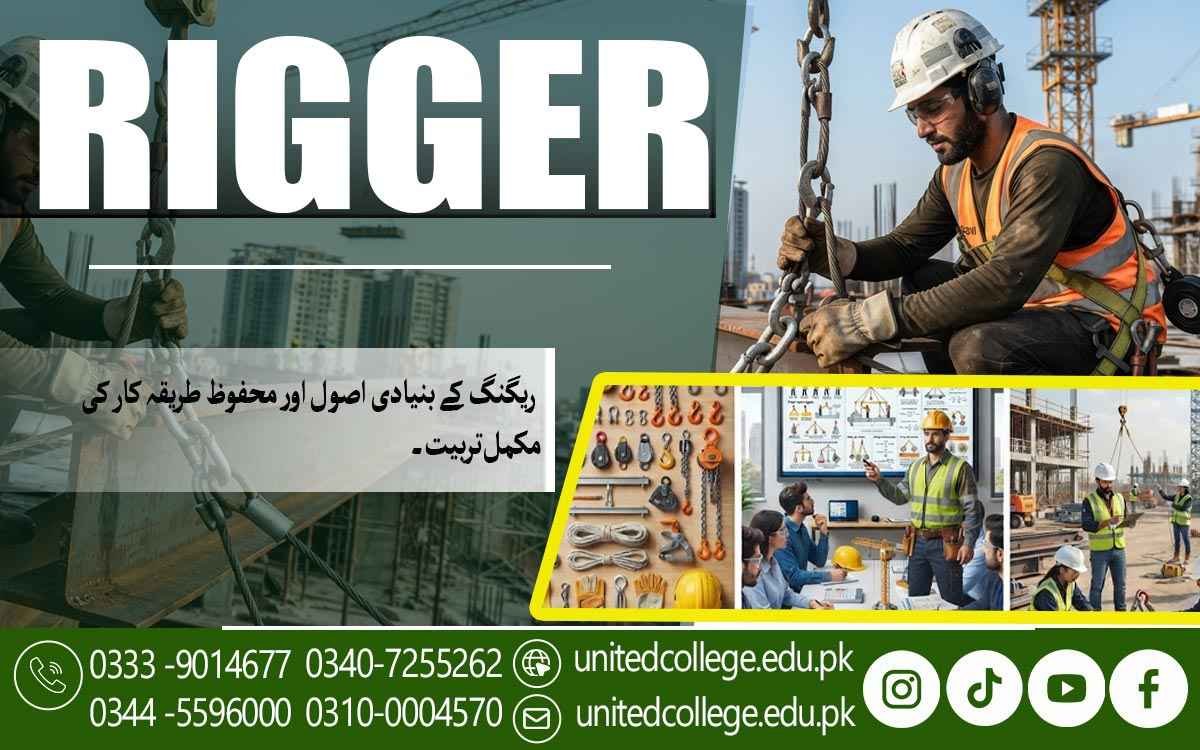

Rigger Course in Murree for Industrial Rigging Knowledge
Introduction to Modern Rigging Practices
The Rigger Course in Murree introduces learners to modern rigging practices used for lifting, moving, and positioning materials in different work environments. Students learn the basic responsibilities of a professional rigger and understand why every lifting activity requires careful preparation and proper coordination. The course provides an introduction to organized rigging procedures that can be applied in construction, industrial, and material-handling workplaces.
Learners study the basic stages of a lifting operation, including checking the load, preparing lifting accessories, securing materials, and coordinating movement with other workers. They also learn why load characteristics and surrounding conditions should be considered before beginning a task. This knowledge helps students develop a more structured approach to rigging activities.
Practical learning further helps students understand how rigging procedures are applied in real workplace situations. They become familiar with the importance of following instructions, checking equipment, and maintaining awareness around lifting areas. These fundamentals can help learners build confidence as they develop their rigging knowledge.
Understanding Lifting Tools and Their Applications
Lifting operations depend on different tools and accessories, and a rigger needs to understand their basic applications. Students learn about commonly used equipment such as slings, shackles, hooks, chains, wire ropes, and other lifting accessories. They study the purpose of these tools and how they may be used for different types of loads.
The Rigger course also explains why lifting equipment should be selected according to the requirements of the task. Learners consider factors such as load weight, shape, attachment points, and lifting conditions. Understanding these factors helps students develop better awareness when preparing equipment for professional lifting activities.
Students also learn the importance of checking tools before use. They become familiar with basic inspection practices and understand why damaged or unsuitable equipment should not be used. This knowledge supports responsible equipment handling and helps learners prepare for practical rigging duties.
Learning Safe Techniques for Load Positioning
Proper load positioning is an important part of controlled lifting operations. The Rigger Course in Murree teaches students basic techniques for positioning materials before, during, and after lifting. Learners study how load balance, attachment points, and movement direction can affect the positioning process.
Students learn why materials should be properly secured before they are moved. They are introduced to methods for maintaining control and avoiding unnecessary movement during lifting. Understanding these procedures can help learners become more careful when handling heavy or awkward materials.
The course also develops awareness of the surrounding work area. Students learn to consider obstacles, available space, workers nearby, and the intended placement location. This practical understanding helps them recognize that successful load positioning requires both technical preparation and careful coordination.
Exploring Rigging Accessories and Equipment
Professional rigging involves a variety of accessories, and students need to recognize their basic functions. During training, learners explore items such as lifting slings, shackles, hooks, chains, wire ropes, and related equipment. They learn how these accessories support different lifting and load-handling activities.
The Rigger course provides an understanding of how accessories are connected and used during lifting operations. Students learn why correct attachment and proper positioning are important when securing a load. They also become familiar with the need to follow workplace procedures when using lifting equipment.
Practical exposure allows learners to develop greater familiarity with common rigging accessories. They can learn how to identify equipment, check its condition, and prepare it for a particular task. This knowledge can be useful for students who want to develop professional rigging skills in Murree.
Studying Methods for Securing Heavy Materials
Heavy materials must be properly secured before lifting begins. Students learn basic methods for preparing and securing different types of loads. They study how load weight, shape, size, and attachment points should be considered when preparing materials for movement.
Learners also understand why loose or poorly secured materials can create difficulties during lifting. The course introduces them to basic procedures for checking connections and ensuring that lifting accessories are positioned appropriately. These practices help students develop greater awareness of load security.
Through practical learning, students can improve their understanding of controlled material handling. They learn to follow instructions carefully and check the load before movement starts. This foundation can help them participate more responsibly in lifting activities at construction and industrial worksites.
Developing Effective Site Communication Skills
Clear communication is an important part of every coordinated lifting operation. The course teaches students how riggers communicate with crane operators, supervisors, and other workers during lifting activities. Learners are introduced to basic hand signals and communication procedures used to coordinate different stages of a lift.
Students learn why instructions should be clear and understood before a load is moved. They study communication related to lifting, lowering, stopping, and positioning materials. Good communication helps team members understand their responsibilities and coordinate their actions more effectively.
The training also encourages students to remain attentive during active lifting operations. They learn that communication should continue throughout the task and that important instructions should not be ignored or misunderstood. Developing these skills can support better teamwork in professional rigging environments.
Following Precautions During Lifting Operations
Lifting operations can involve different hazards, including suspended loads, moving machinery, unstable materials, overhead obstacles, and restricted working areas. Students learn how to recognize these risks and understand the importance of following established safety precautions.
The Rigger Course in Murree introduces learners to practices such as inspecting equipment, maintaining suitable distances, keeping lifting zones clear, following site instructions, and using appropriate protective equipment. Students also learn why workers should avoid unnecessary exposure to areas where active lifting is taking place.
Developing safety awareness helps learners become more responsible while working around heavy loads and machinery. They learn to observe their surroundings before and during a lifting operation and understand the importance of reporting unsafe conditions. These habits can contribute to more organized and careful workplace practices.
Building a Foundation for Rigging Careers
A professional rigger needs practical knowledge of equipment, load handling, communication, and workplace safety. The course combines these areas to give learners a foundation for understanding the different responsibilities involved in rigging work.
Students can develop knowledge about equipment selection, load preparation, securing methods, lifting signals, inspection procedures, and hazard awareness. Practical activities can help them become more comfortable with the procedures involved in handling and positioning materials.
The Rigger Course in Murree can provide useful foundational training for individuals interested in construction sites, industrial projects, warehouses, manufacturing environments, and other material-handling workplaces. With continued practice and experience, learners can further develop their professional rigging abilities and prepare for future responsibilities in the field.
Frequently Asked Questions (FAQs)
A Rigger Course in Murree provides learners with basic knowledge and practical understanding of lifting operations, rigging equipment, load securing, communication, and workplace safety.
The course covers lifting tools, rigging accessories, load positioning, securing heavy materials, equipment inspection, lifting signals, communication, and safety precautions.
Individuals interested in construction, industrial work, warehouse operations, manufacturing, and material-handling activities can consider joining the course.
Properly securing a load helps maintain control during lifting and movement. Students learn basic procedures for selecting suitable accessories and checking connections before lifting.
Students may learn about commonly used equipment such as slings, shackles, hooks, chains, wire ropes, and other rigging accessories.
Admission Open: Start Your Professional Journey Today!
Join United College of Technology and build a career with practical training, recognized certifications, and Gulf job support. Seats are limited.
Apply Now via WhatsAppContact Information
- Address: Rawalpindi: F-272 Main New Katarian Stop, Old IJP Road | Lahore Campus: Lahore, Pakistan
- Phone/WhatsApp: 0333-9014677 / 0344-5596000 / 0310-0004570 / 0301-5044340 / 0340-7255262
- Website: unitedcollege.edu.pk
















Leave a Comment