


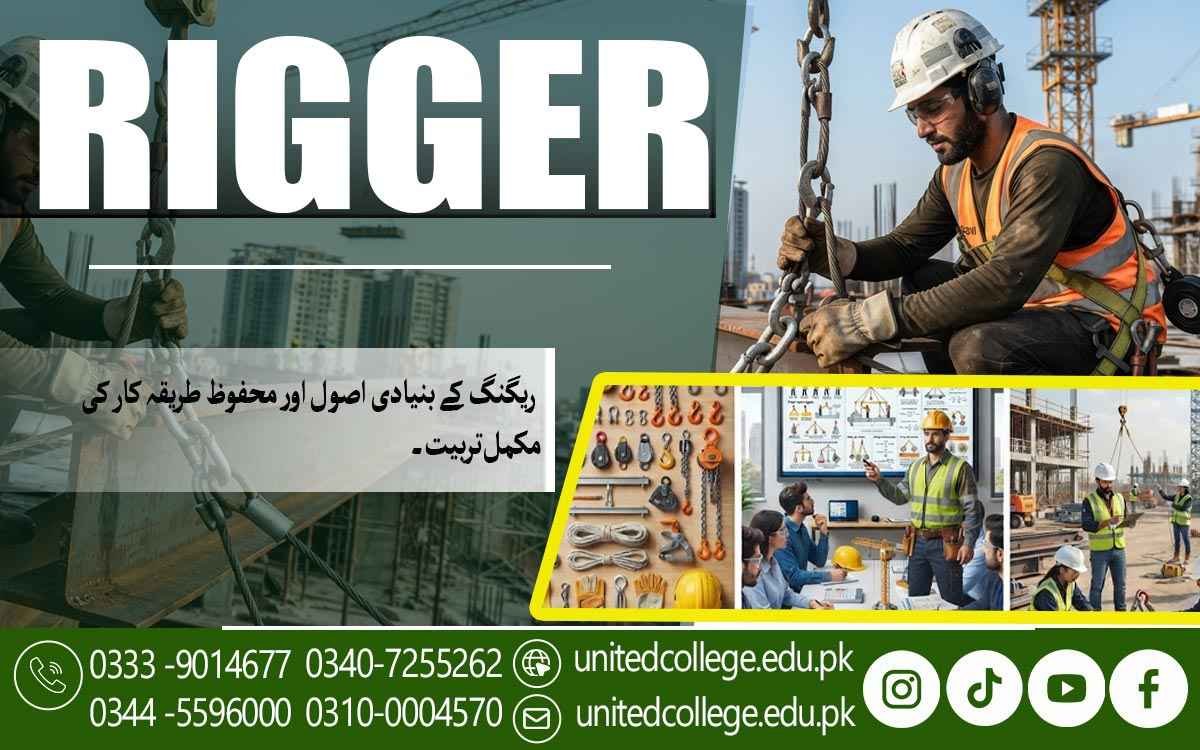

Rigger Course in Muzaffargarh for Professional Lifting Skills
Understanding the Basics of Rigging Work
Rigging is an important part of construction, industrial, and lifting operations where heavy materials and equipment need to be moved safely. A rigger works with different lifting tools, attachments, ropes, chains, and other equipment to prepare loads for lifting. Understanding the basic principles of rigging helps learners recognize how loads should be prepared and handled before an operation begins.
The Rigger Course in Muzaffargarh introduces students to fundamental rigging concepts and practical workplace procedures. Learners study how to identify different types of loads and understand the importance of selecting suitable lifting equipment. They also learn why proper preparation is necessary to reduce risks during lifting activities.
Basic rigging knowledge is useful for people who want to work in construction sites, warehouses, industrial areas, and other workplaces where lifting operations are performed. Through practical learning, students can develop better awareness of equipment, load movement, and safe working practices.
Exploring Different Types of Lifting Equipment
Different lifting operations require different types of equipment depending on the size, weight, and shape of the load. Riggers may work with lifting slings, shackles, hooks, chains, wire ropes, and other accessories. Understanding the purpose of each item helps workers choose and use equipment appropriately.
During the Rigger Course in Muzaffargarh, learners can explore common lifting equipment and understand their basic functions. They learn how equipment is connected to loads and how different accessories work together during lifting operations. This knowledge helps students become more familiar with equipment commonly found at worksites.
Students also learn the importance of checking lifting equipment before use. Damaged, worn, or unsuitable equipment can create serious workplace risks. Developing the habit of inspecting tools and accessories allows future riggers to approach lifting tasks with greater attention to safety.
Learning Safe Load Handling Methods
Safe load handling is one of the most important parts of professional rigging work. A rigger needs to understand how loads behave when they are lifted, moved, or lowered. Factors such as load weight, balance, attachment points, and lifting position can affect the stability of a load.
The Rigger Course in Muzaffargarh helps learners understand basic methods for preparing and handling loads. Students learn how to position lifting accessories correctly and how to maintain awareness while a load is being moved. They also study the importance of keeping people away from unsafe areas during lifting operations.
Proper load handling requires careful planning rather than simply attaching equipment and lifting a load. Learners are introduced to procedures that help them identify potential problems before lifting begins. This practical understanding can support safer work practices in different industrial environments.
Studying Rigging Tools and Accessories
Rigging work involves many tools and accessories that assist in lifting and securing materials. Slings, shackles, hooks, clamps, wire ropes, chains, and related equipment are commonly used for different lifting tasks. Each item has its own purpose and should be selected according to the requirements of the job.
In the Rigger Course in Muzaffargarh, students can become familiar with commonly used rigging tools and accessories. They learn how these items are connected, positioned, and checked before use. Understanding equipment functions allows learners to work more carefully when preparing loads for lifting.
Regular inspection is also an important part of equipment handling. Learners can develop an understanding of checking equipment for visible damage, excessive wear, deformation, or other problems. This knowledge helps future workers recognize when equipment may require attention before it is used.
Practicing Proper Load Securing Techniques
Securing a load correctly is essential before any lifting operation begins. If a load is not properly attached or balanced, it may shift during movement. Riggers therefore need to understand how lifting accessories should be positioned and how loads can be secured according to the requirements of the task.
Through the Rigger Course in Muzaffargarh, learners have the opportunity to study practical load-securing techniques. They learn about different ways to attach lifting accessories and understand why proper positioning is important. Practical exercises can help students become more comfortable with the equipment used during rigging activities.
Load securing also requires attention to the condition of the lifting accessories. Students learn that equipment should be checked before being used and that unsuitable accessories should not be used for lifting tasks. These practices contribute to better preparation and safer handling procedures at the workplace.
Understanding Signals and Team Communication
Communication is an important part of lifting operations because riggers often work with crane operators, supervisors, and other site workers. Clear signals help team members understand when a load should be lifted, moved, stopped, or lowered. Poor communication can create confusion during an operation.
The Rigger Course in Muzaffargarh introduces learners to basic communication practices used during lifting work. Students can learn about standard signals and the importance of maintaining clear communication with equipment operators. They also understand why one responsible person may need to coordinate signals during certain lifting activities.
Good teamwork improves coordination between workers involved in a lifting operation. Learners are encouraged to remain attentive, communicate clearly, and follow the agreed procedures. These habits can be useful for people working on construction projects, industrial sites, and other workplaces involving lifting equipment.
Following Safety Rules During Lifting Operations
Safety rules are an essential part of every rigging activity. Before lifting a load, workers need to consider the work area, equipment condition, load characteristics, and possible hazards. Following established procedures can help reduce unnecessary risks during lifting operations.
Students enrolled in a Rigger Course in Muzaffargarh can learn about workplace safety practices related to lifting and rigging. They study the importance of using appropriate personal protective equipment and maintaining a safe distance from suspended loads. Learners also develop awareness of hazards that may occur when equipment is used incorrectly.
Safety awareness should remain a priority throughout the entire lifting process. From equipment inspection and load preparation to lifting and lowering, each stage requires attention. Developing these habits during training can help learners approach future rigging responsibilities more responsibly.
Developing Skills for Professional Rigging Work
Professional rigging requires a combination of equipment knowledge, practical skills, safety awareness, and effective communication. A trained rigger needs to understand how different tools are used and how loads should be prepared before lifting. Regular practice can help learners become more familiar with workplace procedures.
The Rigger Course in Muzaffargarh provides an opportunity for students to build knowledge related to lifting operations and rigging practices. Learners can study equipment, load securing, communication, safety procedures, and other important areas of rigging work. This training can be useful for individuals interested in developing technical skills for construction and industrial environments.
With proper training and practical exposure, students can build a stronger foundation for future work involving lifting and material handling. The course can help learners understand their responsibilities and the importance of following safe working procedures while performing rigging-related tasks.
Frequently Asked Questions (FAQs)
A Rigger Course in Muzaffargarh is designed to teach learners the basic knowledge and practical methods used in rigging, lifting, load handling, and workplace safety.
Students learn about lifting equipment, rigging tools, load securing methods, safety procedures, communication signals, and proper handling of different loads.
Individuals interested in construction, industrial work, lifting operations, warehouse activities, or technical trades can consider joining the course.
Safety is important because rigging involves lifting and moving heavy materials. Proper procedures help workers identify hazards and handle loads more carefully.
Training may introduce learners to equipment and accessories such as slings, shackles, hooks, chains, wire ropes, and other commonly used rigging tools.
Admission Open: Start Your Professional Journey Today!
Join United College of Technology and build a career with practical training, recognized certifications, and Gulf job support. Seats are limited.
Apply Now via WhatsAppContact Information
- Address: Rawalpindi: F-272 Main New Katarian Stop, Old IJP Road | Lahore Campus: Lahore, Pakistan
- Phone/WhatsApp: 0333-9014677 / 0344-5596000 / 0310-0004570 / 0301-5044340 / 0340-7255262
- Website: unitedcollege.edu.pk
















Leave a Comment