


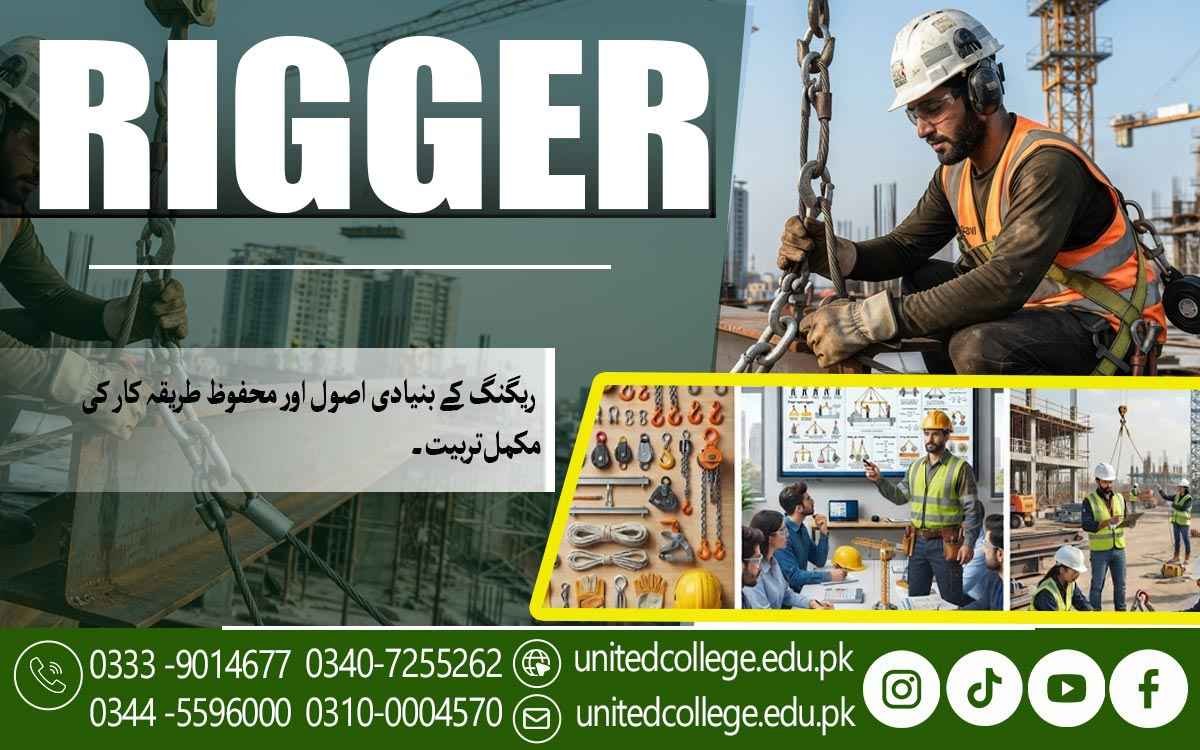

Rigger Course in Sheikhupura – Shape Your Future in Rigging
Shape Practical Skills for Safer Lifting
Heavy materials do not move safely through strength alone. Lifting work requires proper preparation, suitable equipment, careful load control, and people who understand their responsibilities. This is where trained riggers become an important part of construction and industrial activities.
The Rigger Course in Sheikhupura introduces learners to the practical side of lifting and rigging work. Offered by United College of Technology, the training can help beginners, workers, students, and job seekers understand the skills and safety awareness needed around lifting operations.
The Skills Behind Every Well-Controlled Lifting Operation
A rigger helps prepare and secure loads before they are moved with lifting equipment. The work can involve selecting suitable rigging accessories, checking the load, guiding movement, and communicating with other members of the lifting team. This makes rigging more than a simple equipment-handling task. A person working in this area needs concentration, responsibility, and an understanding of workplace safety.
Rigger Course in Sheikhupura can introduce learners to these responsibilities in a structured learning environment. For beginners, understanding the purpose of a rigger's role is an important first step. It helps learners see how preparation and careful decisions can influence the safety and control of a lifting activity.
Building Practical Rigging Skills from the Ground Up
New learners need a strong foundation before moving toward more advanced lifting tasks. Training can introduce them to basic rigging skills, load handling, equipment awareness, workplace procedures, and safe working methods. Lifting and rigging training may cover concepts related to preparing loads, securing materials, using lifting accessories, and maintaining awareness of the surrounding work area.
These lessons can help students understand how different parts of a lifting operation work together. The aim is not simply to learn technical names. Learners should gradually understand why each procedure matters and how careful working habits can reduce avoidable risks during practical activities.
Understanding the Equipment That Supports Heavy Loads
A rigger needs familiarity with the tools used to connect, secure, and control loads. These may include slings, hooks, shackles, ropes, and other lifting equipment or rigging accessories. Training can help beginners understand the purpose of these items and the importance of checking their condition before use.
Equipment with visible damage, excessive wear, or other problems should not simply be ignored. Learning these basic principles gives students a clearer understanding of responsible equipment handling. It also supports the development of practical rigging skills that can be strengthened through supervised practice and workplace experience.
Safe Slinging Creates a Stronger Foundation for Load Handling
Slinging is an important part of preparing a load for lifting. It involves connecting the load with appropriate lifting accessories so that it can be moved in a controlled manner. Through training, learners can become familiar with basic slinging techniques, load securing, and factors that can affect the stability of a load.
The shape, weight distribution, connection points, and condition of equipment all require attention. Good load handling begins before the load leaves the ground. By learning to prepare carefully and follow established procedures, beginners can develop a more safety-focused approach to lifting activities.
Crane Rigging Requires Focus, Signals, and Team Coordination
Crane lifting activities depend on careful coordination between the rigger, crane operator, and other workers involved in the task. A rigger may use agreed signals or established communication methods to guide and support the lifting process. Through a Rigger Course in Sheikhupura, learners can understand the responsibilities of a rigger when working alongside crane operations without confusing rigging duties with crane operation.
Clear communication and focused teamwork can help keep lifting activities organized. Paying attention to signals, observing the load's movement, and understanding the surrounding work area are important parts of responsible rigging. When workers coordinate properly and respond to instructions carefully, they can support a more controlled and structured lifting environment.
Safety Awareness Should Guide Every Rigging Decision
Rigging safety should remain central to every lifting activity. A trained worker needs to recognize hazards, follow workplace procedures, keep unnecessary people away from dangerous areas, and avoid taking shortcuts. Training can introduce learners to safety procedures, equipment inspection, safe positioning, suspended-load awareness, and other basic principles connected with workplace safety.
These concepts are especially important because lifting activities can involve heavy materials and powerful equipment. Industrial safety training can also help learners develop the habit of thinking before acting. A careful rigger considers the work area and equipment instead of treating every lifting task as routine.
Hands-On Learning Turns Technical Knowledge into Workplace Awareness
Practical learning can make technical concepts easier to understand because students can connect classroom information with physical equipment and realistic work situations. It can also help beginners recognize how preparation, communication, and safety fit together. At United College of Technology, the Rigger Course in Sheikhupura provides a structured setting for learners interested in developing relevant technical and practical knowledge.
Students can focus on the principles behind rigging while becoming more familiar with responsible workplace practices. This type of hands-on training can be useful for learners who have little previous exposure to industrial work. It can also help workers organize their existing knowledge and develop greater awareness of the responsibilities involved in lifting tasks.
Sheikhupura Learners Can Turn Technical Training into Useful Skills
Sheikhupura has a strong connection with manufacturing, construction, industrial activity, and other hands-on fields where technical skills can be valuable. For individuals interested in vocational training, developing a specialized skill can provide a practical direction for further learning. The Rigger Course in Sheikhupura can suit people who prefer active technical work and want to understand lifting, load securing, equipment handling, and workplace safety.
Students, beginners, workers, and job seekers can consider this type of training according to their interests and professional goals. Rigger skills can be relevant across construction rigging, industrial environments, manufacturing facilities, logistics operations, maintenance work, and other settings where lifting activities take place. The exact responsibilities depend on the workplace and the worker's level of training and experience.
A Responsible Approach Builds Stronger Career Skills for Riggers
Becoming familiar with rigging equipment is only one part of professional development. A capable worker also needs discipline, concentration, communication skills, teamwork, and a willingness to follow safety procedures consistently. The Rigger Course in Sheikhupura gives learners a way to explore these areas while developing practical knowledge related to lifting operations.
With guidance from United College of Technology, students can build a foundation in rigging principles and workplace awareness without relying on complicated technical language. For people interested in technical training in Sheikhupura, rigger training can be a practical option for developing specialized skills. Continued learning and real workplace experience can help learners strengthen their abilities and better understand the responsibilities connected with professional lifting work.
Frequently Asked Questions (FAQs)
A beginner should first understand basic load movement, equipment identification, workplace signals, safety rules, and the responsibilities of a rigger.
Knowing the load weight helps workers understand the demands placed on lifting equipment and choose an appropriate method for handling the material safely.
Careful inspection, punctual communication, following instructions, staying alert, and avoiding shortcuts can help develop dependable professional habits.
Yes. Beginner-focused training can introduce fundamental concepts gradually, allowing new learners to become familiar with equipment, procedures, and workplace responsibilities.
A rigger can help prepare the load, examine relevant equipment, understand the lifting plan, and make sure the working area is suitable for the planned activity.
Learners can develop specialized knowledge of lifting activities, equipment handling, load preparation, communication, and safety practices that complement practical technical abilities.
Admission Open: Start Your Professional Journey Today!
Join United College of Technology and build a career with practical training, recognized certifications, and Gulf job support. Seats are limited.
Apply Now via WhatsAppContact Information
- Address: Rawalpindi: F-272 Main New Katarian Stop, Old IJP Road | Lahore Campus: Lahore, Pakistan
- Phone/WhatsApp: 0333-9014677 / 0344-5596000 / 0310-0004570 / 0301-5044340 / 0340-7255262
- Website: unitedcollege.edu.pk
















Leave a Comment