


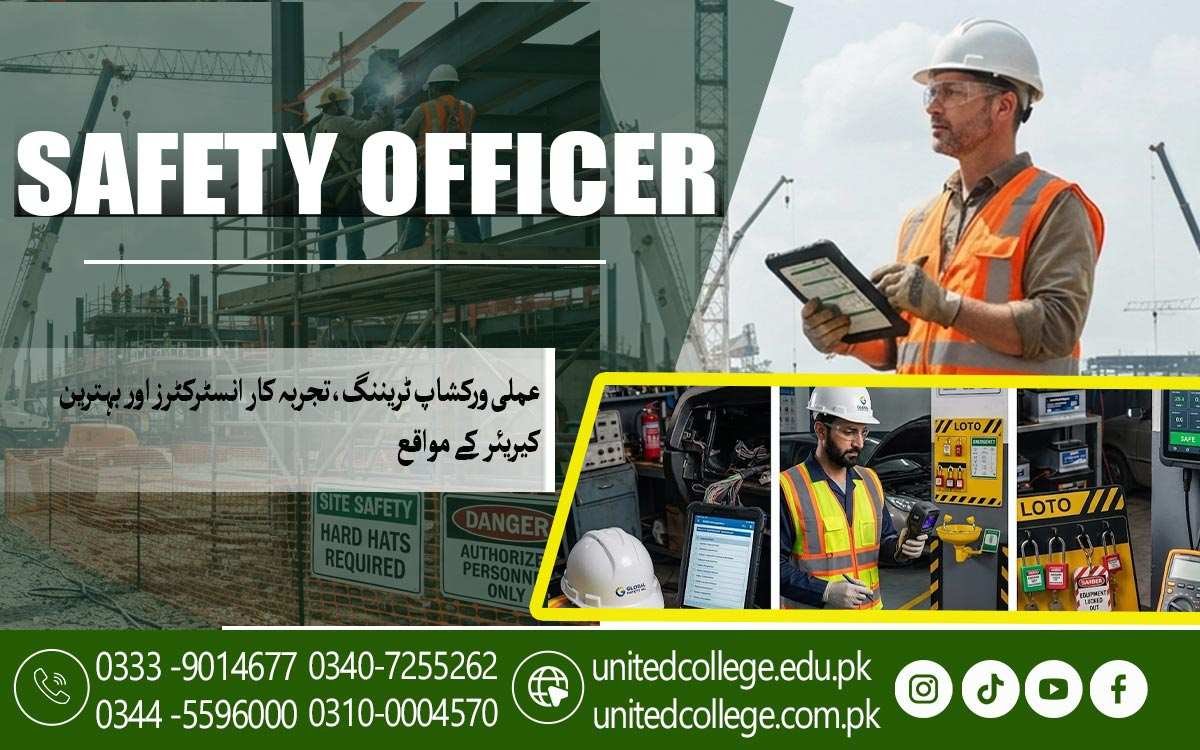

Safety Officer Course in Multan | Turn Safety Expertise into a High-Demand Profession
Safety Officer Course in Multan – Build a Career That Protects Lives and Industries
Modern industries cannot succeed without safe working environments. Whether it is a construction site, a manufacturing plant, or a large engineering project, protecting workers has become just as important as completing the job itself. This growing focus has created excellent opportunities for people who want to build a meaningful and stable profession in occupational safety.
Learning professional safety skills helps individuals understand how to prevent accidents, reduce workplace risks, and support safer operations across different industries. At United College of Technology, students receive practical learning that prepares them for real industrial environments through structured training and hands-on experience. For anyone looking for a Safety Officer Course in Multan, this program offers a practical path toward a rewarding career.
The Growing Need for Skilled Safety Professionals
Every year, industries introduce new machinery, larger projects, and more complex work processes. While these developments improve productivity, they also increase workplace risks. Because of this, companies now place much greater importance on trained professionals who understand safety regulations and can protect both employees and business operations.
A qualified safety professional helps identify hazards before they become serious problems. By improving safety management systems and encouraging safe working practices, organizations reduce accidents, avoid costly delays, and create healthier workplaces. This is why employers across Pakistan and many international markets continue to look for people with professional safety knowledge.
Learning the Foundations of Industrial Safety
A good training program is more than reading books or memorizing rules. It helps students understand how safety principles are applied in real working environments. During the course, learners study important topics such as workplace safety, industrial safety, fire safety, emergency response, and safety management. They also become familiar with internationally recognized concepts, including OSHA Standards and NEBOSH Basics, which provide valuable knowledge about modern health and safety practices.
Classroom sessions explain important concepts in simple language, while practical activities allow students to apply what they learn. Through demonstrations, exercises, and supervised practice, they gain confidence in handling responsibilities that safety professionals face every day. Students at United College of Technology also receive guidance that connects theory with practical situations, making the Safety Officer Course in Multan suitable for those preparing for industrial workplaces.
Practical Skills That Make You Job Ready
Professional knowledge becomes valuable only when it can be applied in real situations. That is why the training focuses on developing practical abilities that employers expect. One of the first skills students develop is hazard identification. They learn how to observe a workplace, recognize unsafe conditions, and understand how small issues can become major risks if ignored. Another important area is risk assessment. Instead of simply identifying hazards, students learn how to evaluate their severity, determine possible outcomes, and recommend practical control measures.
Fire safety training introduces different types of fire hazards, emergency procedures, and the safe use of firefighting equipment. Understanding how to react quickly during emergencies can protect both lives and property. Proper use of Personal Protective Equipment (PPE) is another essential part of the learning process. Students understand when different protective equipment should be used and why correct usage reduces workplace injuries. The course also covers safety inspection techniques. Learners practice checking work areas, identifying unsafe conditions, and preparing inspection reports that help organizations improve their safety standards.
Another valuable topic is accident prevention. By studying real workplace situations, students understand how proper planning, communication, and monitoring reduce incidents before they happen. Alongside technical knowledge, communication plays a major role. Safety professionals must explain procedures clearly, guide workers confidently, and prepare accurate documentation that supports effective decision-making.
A Course Designed for Different Career Goals
Not everyone joins safety training for the same reason, but many people can benefit from learning these valuable skills. Students who have completed Intermediate and are eligible Matric students often choose this field because it offers a professional career path with opportunities for continuous growth. Fresh job seekers gain practical knowledge that strengthens their confidence when applying for industrial jobs.
Construction workers, factory employees, and site supervisors can improve their understanding of safe working practices while increasing their professional value. The course is also useful for individuals who want to move into supervisory roles or begin a long-term career in health and safety. Anyone interested in protecting people while building a respected profession can benefit from this training.
Where Safety Professionals Build Successful Careers?
Almost every industry depends on trained safety personnel because protecting workers is now part of everyday business operations. Construction companies require safety experts to monitor site activities, ensure proper equipment usage, and reduce hazards during building projects. Manufacturing industries depend on safety teams to maintain factory safety and support efficient production. Oil and gas organizations work in environments where strict health and safety procedures are essential. Qualified professionals help maintain compliance and reduce operational risks.
Power plants and chemical industries require careful monitoring because employees often work around complex machinery and potentially hazardous materials. Safety specialists help maintain secure operating conditions through regular inspections and preventive planning. Warehouses and logistics companies also benefit from professional safety practices. Safe storage methods, equipment handling, and transportation procedures reduce accidents while improving efficiency. Engineering firms and large infrastructure projects rely on trained professionals to maintain safe working conditions throughout every stage of development.
Turning Professional Skills into Career Opportunities
As industries continue to grow, the demand for trained safety professionals also increases. Employers value individuals who understand practical safety procedures and can contribute to safer workplaces. After completing the program, graduates may work as Safety Officers, HSE Officers, Site Safety Supervisors, Fire Safety Officers, Safety Inspectors, Industrial Safety Assistants, or Safety Coordinators.
Career growth often improves further with practical experience, additional Safety Certification, and continued professional learning. Many organizations also prefer candidates who combine technical knowledge with strong communication and leadership skills, making continuous development an important part of long-term success.
Why Hands-On Experience Creates Better Professionals?
Real learning happens when students experience workplace situations instead of only reading about them. Practical workshops introduce learners to equipment handling, emergency drills, hazard recognition, inspection procedures, and report writing. These activities help students understand how safety decisions are made in actual industrial environments.
Practice sessions also improve confidence. When learners participate in fire response exercises or conduct supervised workplace inspections, they become more comfortable performing similar responsibilities after entering the workforce. At United College of Technology, practical learning is integrated with classroom instruction, so students develop professional safety skills through both knowledge and experience.
Learning in an Environment That Supports Professional Growth
Choosing the right institute plays an important role in developing technical abilities. A supportive learning environment helps students understand concepts more effectively and prepares them for professional responsibilities. United College of Technology provides experienced instructors who explain complex topics in simple language. The curriculum focuses on industry-relevant knowledge while encouraging active participation through workshops and practical exercises. Modern teaching methods, structured learning activities, and professional guidance help students strengthen their understanding of occupational safety and prepare for future workplace responsibilities with greater confidence.
Step Into a Career Where Every Decision Can Save Lives
A successful career is not only about earning a good income—it is also about making a positive impact. Safety professionals help create secure workplaces, reduce risks, and protect people across many industries. As businesses continue to strengthen their health and safety practices, the demand for skilled professionals is expected to remain strong.
If you want to develop practical knowledge and prepare for opportunities in construction, manufacturing, engineering, oil and gas, and other industrial sectors, the Safety Officer Course in Multan offered by United College of Technology provides a solid learning foundation. Through industry-focused training, practical workshops, and expert guidance, students build the confidence and professional skills needed to succeed in today's workplace and grow in the field of industrial safety.
Frequently Asked Questions (FAQs)
The duration depends on the training program and institute. Some courses can be completed within a few months, while more advanced programs may take longer. It is best to check the course schedule before applying.
Basic English is helpful because many safety signs, manuals, and technical documents use English. However, experienced instructors explain concepts in simple language, making it easier for beginners to understand.
This course provides a strong foundation for safety-related roles. Many international employers also require additional experience or globally recognized certifications, so career opportunities may expand as you gain further qualifications.
Yes. Most professional training programs include practical assessments where students demonstrate their ability to apply safety procedures, complete inspections, and respond to workplace scenarios.
A good Safety Officer should be observant, responsible, confident, and able to communicate clearly. Problem-solving skills, attention to detail, and the ability to remain calm during emergencies are also valuable qualities.
After completing the training, you can gain workplace experience, attend advanced safety programs, earn higher-level certifications, and stay updated with changing industry standards to improve your career prospects.
Admission Open: Start Your Professional Journey Today!
Join United College of Technology and build a career with practical training, recognized certifications, and Gulf job support. Seats are limited.
Apply Now via WhatsAppContact Information
- Address: Rawalpindi: F-272 Main New Katarian Stop, Old IJP Road | Lahore Campus: Lahore, Pakistan
- Phone/WhatsApp: 0333-9014677 / 0344-5596000 / 0310-0004570 / 0301-5044340 / 0340-7255262
- Website: unitedcollege.edu.pk
















Leave a Comment