


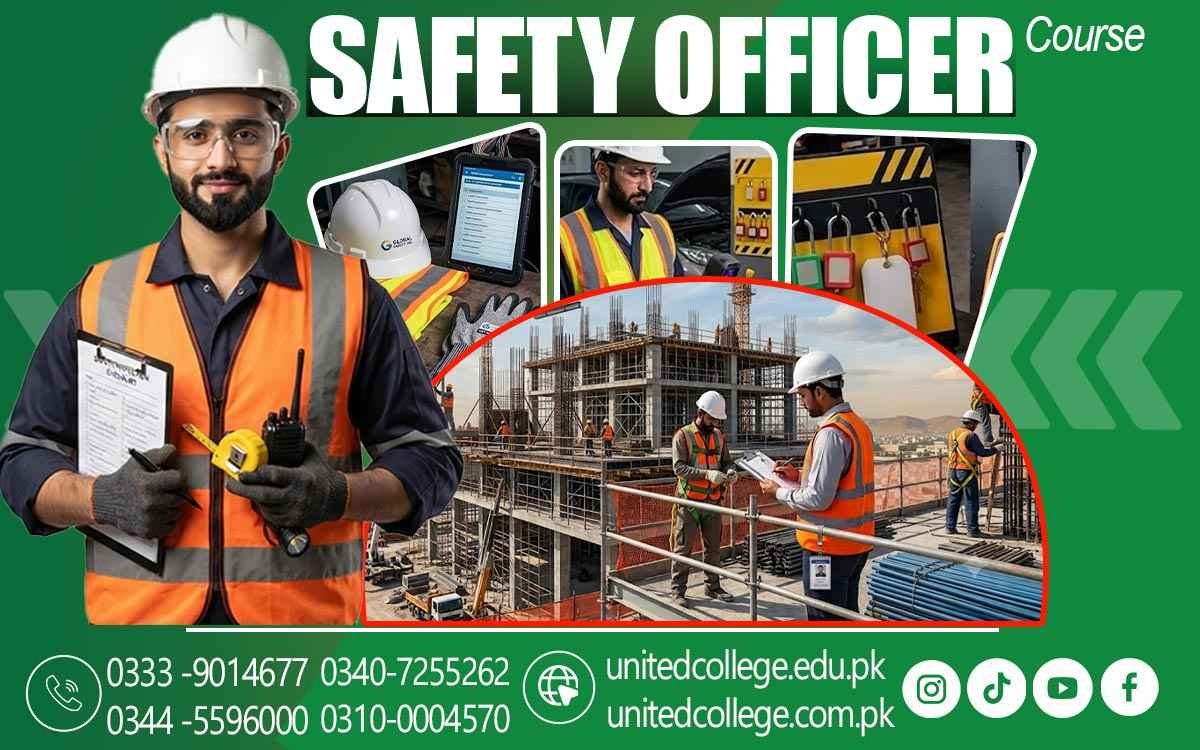

Safety Officer Course in Poonch AJK for Safety Career Development
Understanding the Fundamentals of Workplace Safety
Workplace safety focuses on protecting employees, equipment, and working environments from avoidable risks. The Safety Officer Course in Poonch, AJK, introduces learners to the fundamental principles that form the basis of effective occupational safety management.
Students learn why organizations need clear safety procedures and why employees should understand the risks associated with their daily tasks. Basic safety awareness can help workers make better decisions and follow established workplace practices.
A professional safety officer also needs to monitor whether safety procedures are being followed. Through training, learners develop an understanding of workplace observation, employee awareness, hazard prevention, and the importance of maintaining safe working conditions.
Exploring Hazard Recognition in Various Workplaces
Hazard recognition is an important skill for safety professionals. Learners study different types of workplace hazards, including physical, electrical, mechanical, chemical, fire, and environmental risks.
Students learn how workplace activities and conditions can create potential dangers. They develop observation skills that can help them identify unsafe equipment, poor housekeeping, exposed electrical connections, improper material storage, and other potentially hazardous situations.
Different workplaces require different approaches to hazard recognition. A construction site may have risks related to heights and machinery, while a workshop may involve electrical and mechanical hazards. Understanding these differences helps learners apply safety knowledge more effectively.
Learning Professional Risk Assessment Techniques
Risk assessment helps safety professionals evaluate workplace hazards and determine suitable control measures. During the Safety Officer Course in Poonch AJK, learners develop an understanding of how workplace risks can be identified and prioritized.
Students learn to consider the likelihood of an incident and the potential consequences associated with a hazard. This allows them to understand why certain risks may require immediate corrective action while others may be managed through routine monitoring.
Risk assessment should also be reviewed when workplace conditions change. New equipment, materials, processes, or work activities can introduce new hazards. Safety professionals therefore need to monitor risks and recommend improvements when necessary.
Developing Skills for Safety Monitoring and Control
Safety monitoring allows organizations to check whether workers are following established procedures and whether workplace conditions remain safe. Learners develop an understanding of how safety officers can monitor work activities and identify areas requiring improvement.
Students learn to observe equipment, employee practices, work areas, protective measures, housekeeping, and other safety-related conditions. Regular monitoring can help identify unsafe situations before they contribute to accidents.
Once a safety concern is identified, appropriate control measures need to be considered. Safety officers can communicate the issue, recommend corrective actions, and follow up to determine whether the problem has been addressed effectively.
Managing Fire Prevention and Emergency Response
Fire prevention is an important part of workplace safety. The Safety Officers course introduces learners to common fire hazards, basic preventive measures, emergency procedures, evacuation arrangements, and workplace preparedness.
Students learn why emergency exits should remain clear and why employees should understand what to do during an emergency. Clear procedures can help workers respond more effectively and reduce confusion during unexpected situations.
Safety officers may also assist with emergency drills and awareness sessions. Regular training and practice can help employees become familiar with emergency procedures and understand their responsibilities during an incident.
Understanding Safety Rules and Workplace Responsibilities
Safety rules provide employees with guidance for performing tasks safely and consistently. Learners study why workplace procedures need to be communicated clearly and followed by employees at all levels.
A safety officer may monitor whether workers are following required safety practices and identify areas where additional awareness or training is needed. This responsibility requires good communication and professional interaction with different workplace teams.
Understanding workplace responsibilities also encourages employees to take an active role in maintaining safety. When workers and management cooperate, organizations can develop a stronger safety culture and reduce avoidable workplace risks.
Applying Practical Accident Prevention Strategies
Accident prevention focuses on reducing the possibility of workplace incidents before they occur. Learners study practical methods such as hazard identification, workplace inspections, employee training, safe operating procedures, and risk control.
Students understand that accidents may result from unsafe conditions or unsafe practices. Identifying these contributing factors allows safety professionals to recommend preventive measures and improve workplace procedures.
Continuous monitoring is important for maintaining effective accident prevention. Safety officers can review workplace conditions, communicate safety requirements, and encourage employees to report hazards. These activities support a proactive approach to workplace safety.
Preparing for Professional Growth in Safety Management
The Safety Officer Course in Poonch AJK can provide a foundation for individuals interested in developing professional skills in safety management. Learners can gain knowledge relevant to construction, manufacturing, workshops, warehouses, industrial facilities, and other workplaces.
The training can benefit students, diploma holders, technicians, supervisors, engineers, and job seekers who want to improve their understanding of occupational safety. Along with technical knowledge, communication, reporting, observation, and teamwork skills can support professional development.
Building a successful safety career requires continuous learning and practical experience. By developing a strong understanding of hazards, risk assessment, monitoring, emergency response, and accident prevention, learners can prepare themselves for future safety-related responsibilities and professional growth.
Frequently Asked Questions (FAQs)
The course covers workplace safety fundamentals, hazard recognition, risk assessment, safety monitoring, fire prevention, emergency response, accident prevention, and safety management.
Hazard recognition helps safety professionals identify potentially dangerous workplace conditions and recommend suitable measures to reduce associated risks.
Yes. Learners develop an understanding of how workplace hazards can be evaluated, prioritized, and controlled through appropriate preventive measures.
Safety monitoring involves observing workplace activities, checking safety conditions, identifying unsafe practices, communicating concerns, and following up on corrective actions.
The course can provide foundational safety knowledge and practical skills that may support individuals interested in pursuing safety-related responsibilities in different industries.
Admission Open: Start Your Professional Journey Today!
Join United College of Technology and build a career with practical training, recognized certifications, and Gulf job support. Seats are limited.
Apply Now via WhatsAppContact Information
- Address: Rawalpindi: F-272 Main New Katarian Stop, Old IJP Road | Lahore Campus: Lahore, Pakistan
- Phone/WhatsApp: 0333-9014677 / 0344-5596000 / 0310-0004570 / 0301-5044340 / 0340-7255262
- Website: unitedcollege.edu.pk
















Leave a Comment