


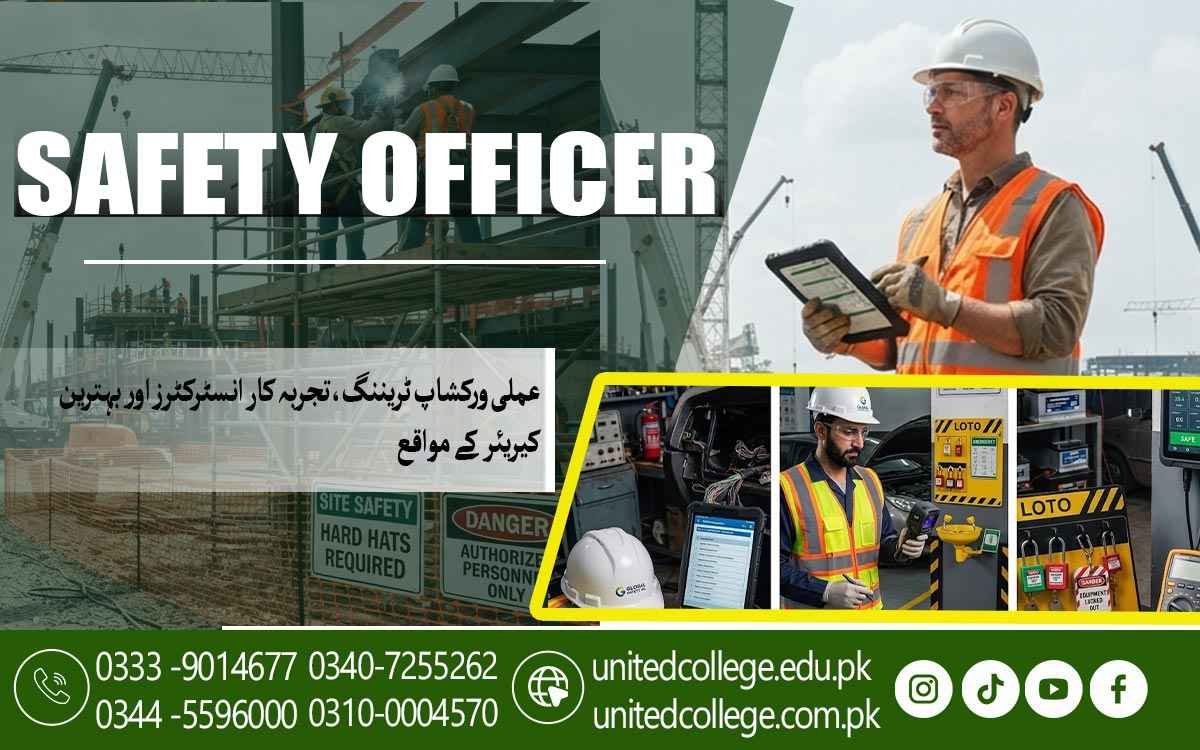

Safety Officer Course in Sheikhupura – Learn Before You Lead
Turn Awareness Into Professional Strength
One careless step, an ignored warning sign, or a missing safety check can create a serious workplace problem. Yet many accidents can be reduced when someone knows what to look for before danger turns into damage. This is where a trained safety professional becomes valuable. For students, beginners, workers, and job seekers in Sheikhupura, learning workplace safety can provide knowledge that applies to many professional environments.
The Safety Officer Course in Sheikhupura offers learners an opportunity to understand how hazards are recognized, risks are controlled, and safer working practices are encouraged. The focus is not simply on memorizing rules. Learners can develop an awareness of how safety decisions are made and why prevention should become part of everyday work. United College of Technology offers professional-oriented training for individuals who want to develop practical knowledge and build a stronger foundation for future responsibilities in workplace safety.
A Workplace Looks Different When You Know Where the Risks Are
Walk through a factory, workshop, construction area, warehouse, or even an office, and there may be risks that an inexperienced person barely notices. Loose cables, poor storage, unsafe movement around machinery, blocked exits, improper lifting, and missing protective equipment can all create potential problems. A Safety Officer Course in Sheikhupura can teach learners to observe these situations more carefully and understand the importance of workplace hazard identification.
During safety officer training, students can learn how to recognize different types of workplace hazards and understand why they should not be overlooked. They can explore physical, electrical, chemical, fire, and operational risks in a beginner-friendly way. This knowledge helps develop a safety-focused mindset in which learners think about prevention instead of waiting for an accident.
Risk Assessment Turns Observation Into a Safety Decision
Finding a hazard is only the first step. A future safety professional also needs to understand what could happen because of that hazard and how the risk can be reduced. This is where risk assessment becomes an important part of the learning journey. Students can learn to consider the possible consequences of a workplace hazard, the people who may be exposed, and the controls that can help reduce the danger.
Through the Safety Officer Course in Sheikhupura, learners can develop a basic understanding of workplace risk management without becoming overwhelmed by complicated terminology. They can also explore accident prevention as an ongoing process rather than a one-time activity. This way of thinking can help students become more observant and responsible when they eventually enter professional environments.
PPE Works Best When People Understand Its Purpose
A helmet, pair of gloves, safety shoes, goggles, or protective clothing may appear simple, but each type of personal protective equipment (PPE) has a specific purpose. Wearing the wrong equipment, using it incorrectly, or ignoring damaged protective gear can reduce its effectiveness. Professional safety training can introduce learners to PPE awareness and explain why protective equipment should match the hazards associated with a particular task.
Students can understand the importance of proper use, care, and workplace safety procedures related to protective equipment. They can also learn that PPE is one layer of protection rather than a replacement for safer processes and hazard control. This practical understanding is useful for beginners because it moves the subject beyond simply knowing the names of safety items. Instead, learners begin to understand how individual actions contribute to safer working conditions and why safety responsibilities belong to everyone in a workplace.
Emergency Preparedness Starts Long Before an Emergency
Nobody wants a workplace emergency, but responsible organizations prepare for one before it happens. Fire, electrical incidents, equipment failures, or other unexpected situations can become more difficult when workers do not know how to respond. A safety-focused course can introduce learners to fire safety, emergency response, evacuation awareness, alarm procedures, emergency exits, and basic preparedness practices.
Fire prevention is also important because reducing the chance of an incident is better than depending entirely on a response after something goes wrong. Through the Safety Officer Course in Sheikhupura, learners can build awareness of how emergency planning supports workplace protection. They can also understand the importance of communicating procedures clearly so workers know their responsibilities instead of reacting with confusion when a genuine emergency occurs.
Inspections and Reports Give Safety Work a Clear Direction
Safety management does not end after a hazard has been identified. Workplaces need regular observation to determine whether safety procedures are actually being followed and whether new risks have appeared. This makes safety inspection an important professional skill. Learners can explore how inspections help identify unsafe conditions, review working practices, and highlight areas that may require attention. Documentation and incident reporting are also valuable because written information can help organizations track what happened, what was observed, and what action may be needed.
A safety professional therefore needs more than the ability to notice a problem. They must also communicate information in a clear and responsible manner. Safety management skills can include observation, reporting, organization, communication, and follow-up. Developing these abilities can make learners more comfortable with the practical responsibilities that may be expected in safety-related working environments.
The Strongest Safety Professional Knows How to Work With People
Safety rules are useful only when people understand and follow them. This is why communication is an important part of safety officer skills. A safety professional may need to explain a procedure to a new worker, discuss an unsafe condition with a supervisor, remind a team about protective equipment, or communicate emergency instructions clearly. Good communication should be firm but understandable, especially when workers have different levels of experience.
Learners can develop awareness of how cooperation and respectful communication support health and safety practices. The Safety Officer Course in Sheikhupura can also help students understand how safety responsibilities connect with different workplace teams. At United College of Technology, learners can work toward building relevant knowledge through structured, practical-oriented training.
Take Your First Step Toward a Skill That Can Travel With You
Safety knowledge is not limited to one type of workplace. Depending on their qualifications, experience, and employer requirements, trained individuals may explore safety-related opportunities in construction, manufacturing, factories, workshops, warehouses, offices, engineering environments, and other workplaces where safety practices are required. For Pakistani students and job seekers, professional safety training can therefore become a foundation for continued learning and career development.
The Safety Officer Course in Sheikhupura can be suitable for beginners who want to understand the field, students looking for practical professional knowledge, workers who want to strengthen their safety awareness, and individuals considering a future in occupational safety. It does not guarantee employment, but it can help learners develop knowledge that may support further education, workplace experience, and professional growth.
Frequently Asked Questions (FAQs)
A beginner can develop a clearer understanding of safe work habits, common workplace responsibilities, preventive thinking, and the importance of following established safety practices.
Yes. Workers can use safety knowledge to better understand risks connected with their daily duties and become more aware of responsible workplace practices.
A safety officer can guide workers, explain procedures, observe working conditions, identify concerns, and communicate safety requirements in a clear and practical manner.
Workplace conditions can change because of new equipment, different tasks, or changing work environments. Regular monitoring helps identify new concerns before they become serious problems.
Clear communication helps workers understand instructions, report concerns correctly, cooperate during inspections, and respond more effectively when safety procedures need to be followed.
Yes. Learners can continue improving through workplace experience, additional training, relevant certifications, and greater familiarity with the safety requirements of specific industries.
Admission Open: Start Your Professional Journey Today!
Join United College of Technology and build a career with practical training, recognized certifications, and Gulf job support. Seats are limited.
Apply Now via WhatsAppContact Information
- Address: Rawalpindi: F-272 Main New Katarian Stop, Old IJP Road | Lahore Campus: Lahore, Pakistan
- Phone/WhatsApp: 0333-9014677 / 0344-5596000 / 0310-0004570 / 0301-5044340 / 0340-7255262
- Website: unitedcollege.edu.pk
















Leave a Comment