


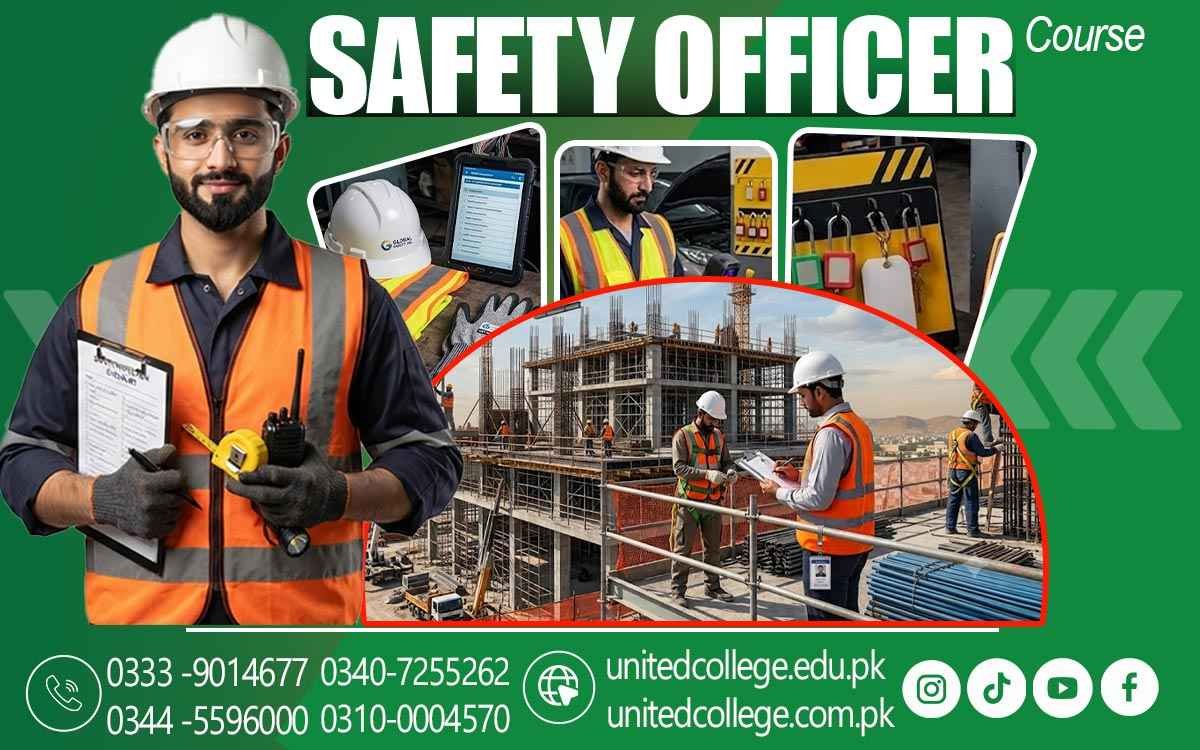

Safety Officer Course in Talagang for Advanced Risk Management
Exploring Modern Workplace Safety Management
Modern safety management focuses on preventing incidents through proper planning, monitoring, training, and risk control. The Safety Officer Course in Talagang introduces learners to the principles used to create safer and more organized working environments.
Students learn why safety should be integrated into daily operations rather than treated as a separate activity. Workplace procedures, employee awareness, equipment management, inspections, and emergency planning all contribute to an effective safety system.
A professional safety officer also needs to monitor whether safety practices are being followed consistently. Through training, learners develop an understanding of how regular monitoring and corrective actions can support continuous improvement in workplace safety.
Understanding Risk Factors in Different Industries
Different industries have different types of workplace risks. Construction environments may involve working at heights, machinery, excavation, and falling objects, while factories may have mechanical, electrical, chemical, and operational hazards. Learners study how risks can vary according to workplace activities.
Understanding these differences helps safety professionals choose appropriate preventive measures. Students learn how workplace conditions, equipment, materials, and working procedures can influence the level of risk faced by employees.
The Safety Officer Course also encourages learners to observe work environments. By developing strong hazard recognition skills, aspiring safety officers can become better prepared to identify potential risks and communicate them to workers and supervisors.
Learning Methods for Preventing Workplace Accidents
Accident prevention is one of the key objectives of workplace safety management. Learners study how unsafe conditions and unsafe practices can contribute to workplace incidents and why preventive action is important.
Students develop an understanding of measures such as employee training, safe operating procedures, workplace inspections, proper equipment use, housekeeping, and hazard control. Applying these practices can help organizations reduce exposure to avoidable workplace dangers.
Prevention also requires regular review of existing procedures. When an unsafe condition is identified, safety professionals can recommend corrective actions and monitor whether those actions have been implemented effectively.
Developing Skills for Safety Audits and Inspections
Safety audits and inspections help organizations evaluate their workplace conditions and safety practices. During the Safety Officer Course in Talagang, learners become familiar with conducting systematic safety checks.
Students learn how to observe work areas, equipment, protective measures, emergency arrangements, and employee practices. They also understand the importance of recording inspection findings and communicating identified concerns clearly.
Safety audits can help organizations discover areas that require improvement. By learning inspection and reporting techniques, students can develop practical skills that may be useful when performing safety-related responsibilities in professional workplaces.
Managing Fire Hazards and Emergency Situations
Fire safety and emergency management are important components of occupational safety. The course introduces learners to common fire hazards, basic prevention measures, emergency procedures, evacuation planning, and workplace preparedness.
Students learn why emergency exits should remain accessible and why employees need to understand what to do during an emergency. Clear procedures and regular awareness activities can help workers respond in a more organized manner.
Safety officers may also assist with emergency drills and workplace awareness sessions. Developing knowledge in this area allows learners to understand how preparedness can reduce confusion and support safer responses during unexpected situations.
Applying Personal Protection and Safe Work Practices
Personal protective equipment can provide an additional layer of protection when employees are exposed to workplace hazards. Learners study different forms of PPE and understand the importance of selecting suitable protection according to the task and hazard.
The course also focuses on safe work practices that can reduce unnecessary exposure to risks. These practices may include proper equipment handling, maintaining clean work areas, following established procedures, and using protective equipment correctly.
Safety officers can help workers understand why PPE and safe procedures are important. By promoting consistent safety practices, they can contribute to a stronger safety culture throughout the organization.
Building Confidence in Safety Supervision
Safety supervision requires strong observation and communication skills. A safety officer may need to monitor employees, identify unsafe practices, explain safety requirements, and communicate concerns to supervisors or management.
The Safety Officer Course in Talagang helps learners understand how professional safety supervision can be carried out responsibly. Students can improve their ability to observe workplace activities and recognize situations that require corrective action.
Confidence also develops through knowledge and practical understanding. When learners understand safety procedures and risk control methods, they can communicate safety requirements more clearly and perform their responsibilities with greater confidence.
Creating a Path Toward Safety Management Careers
Professional safety training can help individuals build a foundation for future opportunities in occupational safety. The skills developed during the course may be useful in construction, manufacturing, industrial facilities, warehouses, workshops, and other sectors where workplace safety is essential.
The course can be suitable for students, diploma holders, technicians, supervisors, engineers, and job seekers who want to strengthen their understanding of safety management. Developing both technical and professional skills can help learners prepare for safety-related responsibilities.
A successful career in safety also requires continuous learning and practical experience. The Safety Officer Course in Talagang can be a starting point for individuals who want to develop their knowledge, improve workplace safety skills, and progress toward professional safety management opportunities.
Frequently Asked Questions (FAQs)
The course covers workplace safety management, hazard identification, risk control, accident prevention, inspections, fire safety, emergency procedures, PPE, and safety supervision.
Each industry has different workplace hazards. Safety management helps organizations identify these risks and implement suitable measures to protect workers and property.
Yes. Learners develop knowledge of workplace inspections, safety observations, reporting, and identifying areas that may require corrective action.
PPE provides an additional layer of protection against certain workplace hazards. Learners study its appropriate selection and safe use according to workplace requirements.
Students, technicians, supervisors, diploma holders, engineers, and job seekers interested in developing occupational safety and risk management skills can benefit from the course.
Admission Open: Start Your Professional Journey Today!
Join United College of Technology and build a career with practical training, recognized certifications, and Gulf job support. Seats are limited.
Apply Now via WhatsAppContact Information
- Address: Rawalpindi: F-272 Main New Katarian Stop, Old IJP Road | Lahore Campus: Lahore, Pakistan
- Phone/WhatsApp: 0333-9014677 / 0344-5596000 / 0310-0004570 / 0301-5044340 / 0340-7255262
- Website: unitedcollege.edu.pk
















Leave a Comment