


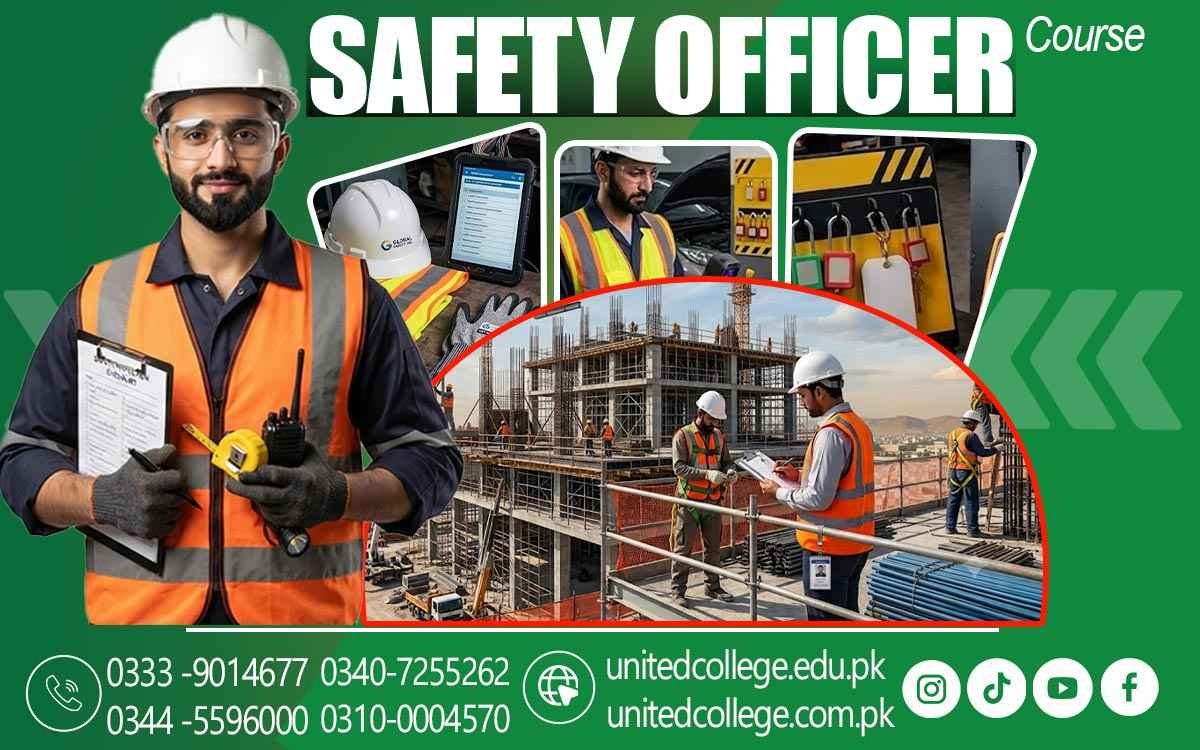

Safety Officer Course in Toba Tek Singh for Career Growth Today
One Overlooked Hazard Can Change a Worker’s Life
A workplace accident can happen in a moment, but its effects can continue for a long time. A slippery floor, exposed electrical wire, unsafe machinery, missing protective equipment, or a blocked emergency exit may look like a small issue until someone gets hurt. This is why workplaces need people who can recognize hazards and encourage safer working practices before an incident occurs.
The Safety Officer Course in Toba Tek Singh offered by United College of Technology can help students, fresh candidates, workers, and job seekers develop practical knowledge related to occupational health and safety. Through safety training, learners can understand how workplace hazards are identified, how risks are assessed, how preventive measures are applied, and why safety awareness is important in construction sites, factories, warehouses, workshops, and other working environments.
A Safety Officer Does More Than Check Safety Rules
A safety officer has responsibilities that go beyond reminding workers to wear helmets or follow workplace rules. The role requires careful observation, communication, planning, and an understanding of different workplace risks. A safety professional may inspect a work area, observe workers performing their tasks, identify unsafe conditions, discuss concerns with supervisors, and recommend suitable corrective action.
For example, if a worker is using equipment without the required protection, the safety officer needs to recognize the risk and communicate the correct procedure. Similarly, if materials are stored in a way that blocks a walkway, the issue should be reported and corrected. Through a Safety Officer Course, students can learn how safety procedures are connected with real workplace responsibilities and how professional communication can help create a safer working environment.
Hazard Identification Turns Observation Into Prevention
A trained safety professional needs to notice potential dangers before they become accidents. Different workplaces can contain different types of hazards, so students need to learn how to observe their surroundings. A construction site may involve work at height, lifting activities, electrical work, moving vehicles, and machinery, while a factory may involve production equipment, chemicals, heat, noise, or moving machine parts.
Through workplace hazard identification and risk assessment training, learners can understand how to recognize these conditions and consider what could happen if they are not controlled. For example, an exposed electrical connection may create a serious risk, while an improperly stored material may fall and injure someone. Learning to identify these issues early can help future safety professionals recommend appropriate preventive measures rather than waiting for an accident to happen.
PPE and Safe Working Practices Need Practical Understanding
Personal Protective Equipment, commonly known as PPE, is an important part of workplace safety when it is suitable for the task and hazard involved. Workers may use safety helmets, gloves, protective footwear, eye protection, hearing protection, or other equipment depending on their working conditions. Students can learn why PPE is required, how it supports safer working practices, and why simply providing equipment does not mean workers will automatically use it correctly.
A safety professional may need to observe workers, explain the importance of protection, and communicate concerns when safety procedures are not being followed. The Safety Officer Course in Toba Tek Singh can help learners understand PPE awareness alongside other important areas such as accident prevention, workplace inspections, fire safety, and occupational safety. This practical knowledge can help students become more confident when dealing with everyday workplace safety situations.
Emergency Preparation Matters Before an Accident Happens
Emergencies can occur without warning, which is why proper preparation should take place before an incident happens. Safety Officer Course can introduce students to fire safety, emergency response, evacuation procedures, emergency exits, warning signs, and basic first aid awareness. Consider a workplace where boxes or equipment have been placed in front of an emergency exit.
On an ordinary day, employees may not think much about the obstruction, but during a fire or another emergency, that blocked route could make evacuation more difficult. A trained safety professional should be able to identify this type of hazard during a workplace inspection and communicate the need for corrective action. Learning emergency procedures helps students understand that safety is not only about preventing accidents; it is also about being prepared to respond appropriately when an unexpected situation occurs.
Practical Training Helps Students Handle Real Workplace Situations
Reading safety rules from a textbook can provide useful knowledge, but applying those rules in a real situation requires practical understanding. A student may know what hazard identification means but still need practice to recognize hazards during an actual workplace inspection. Practical safety training can help learners work through realistic situations involving unsafe equipment, missing PPE, poor housekeeping, blocked pathways, electrical hazards, unsafe storage, and other workplace problems.
United College of Technology offers the Safety Officer Course in Toba Tek Singh with a focus on practical and career-oriented learning. By connecting safety concepts with workplace examples, students can gradually develop observation, communication, risk assessment, reporting, and safety management skills that may be useful when they enter professional environments.
Safety Inspections Require a Sharp Eye for Small Problems
A good safety inspection involves much more than walking through a workplace and checking boxes on a form. It requires attention to details that may easily be ignored during busy working hours. A safety professional may look for damaged tools, poor housekeeping, exposed wires, unsafe storage, missing warning signs, blocked emergency routes, improper PPE use, or unsafe working methods. Suppose a factory worker has placed heavy materials near the edge of a raised platform.
The situation might not immediately look dangerous, but the materials could fall if they are disturbed. A trained safety professional should be able to recognize the possible risk, report the condition, and recommend suitable corrective action. Learning these inspection skills through professional safety training can help students understand how small improvements can contribute to safer workplaces.
Safety Skills Can Lead to Different Professional Roles
Once students develop a foundation in workplace safety and gain relevant practical experience, they can explore different career directions depending on their qualifications and employer requirements. Possible roles may include Safety Officer, HSE Officer, Safety Supervisor, Safety Inspector, Site Safety Officer, Safety Coordinator, and Occupational Health and Safety Assistant. Safety professionals can work in construction companies, factories, manufacturing organizations, warehouses, engineering projects, logistics operations, industrial workplaces, and other environments where workplace safety is important.
Their responsibilities may include inspections, hazard identification, safety awareness, incident reporting, emergency preparation, and communication with workers and management. Completing a course does not guarantee employment or a specific salary, but developing job-ready safety skills can provide a useful foundation for candidates who want to enter and grow within the safety field.
Turn Professional Safety Training Into a Meaningful Career Path
For students and job seekers in Toba Tek Singh, learning safety skills can be a practical way to prepare for responsibilities in different industries. The Safety Officer Course in Toba Tek Singh offered by United College of Technology can help learners develop knowledge of hazard identification, risk assessment, workplace inspections, PPE, fire safety, emergency procedures, accident prevention, safety documentation, and professional communication.
These skills can become more valuable as learners gain practical experience and continue improving their professional knowledge. A safety officer's work is ultimately about more than checking rules—it is about recognizing risks, communicating clearly, supporting preventive action, and helping people return home safely after their working day. For anyone who wants a career built around responsibility, practical skills, and workplace protection, professional safety training can be a strong step toward a purposeful future.
Frequently Asked Questions (FAQs)
The Safety Officer Course in Toba Tek Singh is a skill-based training program designed to help learners understand workplace safety, hazard identification, risk assessment, PPE, fire safety, emergency procedures, and accident prevention.
Students, beginners, fresh candidates, workers, and job seekers interested in occupational health and safety can consider the course. Previous professional safety experience may not be required for beginner-level learning.
Students can learn workplace inspections, hazard identification, risk assessment, safety procedures, PPE awareness, fire safety, emergency response, incident reporting, and other practical safety management skills.
Depending on qualifications and experience, candidates may explore roles in construction companies, factories, manufacturing units, warehouses, engineering projects, industrial workplaces, and other organizations that require safety support.
Yes. A structured Safety Officer Course can introduce beginners to important safety concepts step by step and help them develop confidence in identifying hazards and applying safe working practices.
Admission Open: Start Your Professional Journey Today!
Join United College of Technology and build a career with practical training, recognized certifications, and Gulf job support. Seats are limited.
Apply Now via WhatsAppContact Information
- Address: Rawalpindi: F-272 Main New Katarian Stop, Old IJP Road | Lahore Campus: Lahore, Pakistan
- Phone/WhatsApp: 0333-9014677 / 0344-5596000 / 0310-0004570 / 0301-5044340 / 0340-7255262
- Website: unitedcollege.edu.pk
















Leave a Comment