


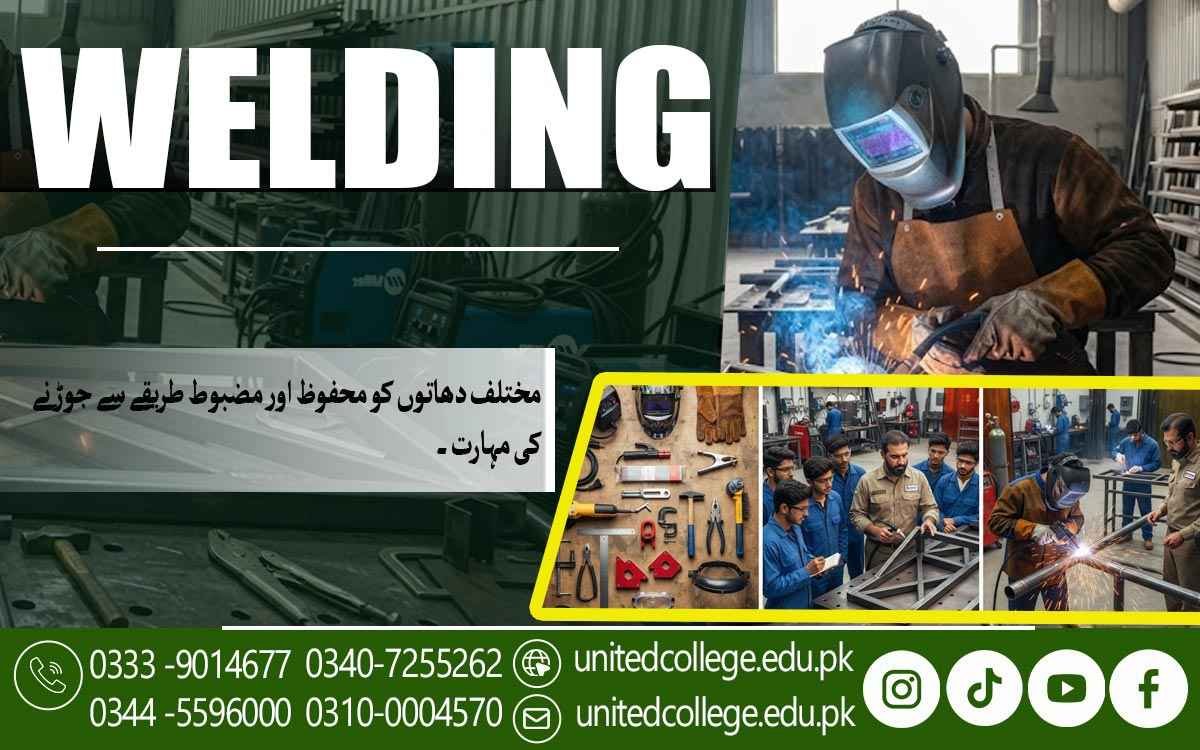

Welding Course in Pakpattan for Hands-On Welding Training
Learning the Essentials of Workshop Welding
Workshop welding involves several basic activities that help metal components become useful structures or products. Beginners need to understand how welding machines work, how metal surfaces are prepared, and how different pieces are positioned before joining. These fundamentals provide a strong starting point for anyone interested in practical metalwork.
The Welding Course in Pakpattan introduces learners to essential welding concepts in a structured way. Students can study basic welding procedures, common tools, metal preparation, and simple joining methods. This initial knowledge can help them understand what happens during a welding operation and why each step matters.
Learning workshop fundamentals also involves developing good working habits. Students can become familiar with organized workspaces, careful equipment handling, proper measurements, and basic safety practices. These habits can support better performance during practical exercises and future welding assignments.
Exploring Metal Cutting and Joining Techniques
Metal cutting is often performed before welding because components may need to be shaped according to the requirements of a project. Accurate cutting helps ensure that pieces fit together correctly before they are joined. Learners can study basic cutting and preparation methods as part of their understanding of the complete welding process.
Through the Welding Course in Pakpattan, students can explore different approaches to preparing and joining metal components. They can learn why material thickness, shape, and project requirements influence the method selected for a particular task. This knowledge helps learners understand how cutting and welding work together.
Proper preparation can make joining activities more controlled. Students can practice measuring, marking, positioning, and preparing metal edges before beginning welding. These activities can help them develop greater awareness of accuracy and improve their approach to fabrication projects.
Understanding Different Welding Joints and Positions
Welding joints are used to connect metal components in different arrangements. Butt, lap, corner, and T-joints are common examples that students may encounter during practical training. Understanding the purpose and basic structure of these joints helps learners recognize how metal pieces can be connected.
The Welding Course in Pakpattan can introduce students to different joint types and common welding positions. Learners can study how the position of a metal component may affect access, movement, and welding technique. This provides useful knowledge for working on different types of fabrication assignments.
Practical exercises can help students become more comfortable with joint preparation and positioning. They can observe how alignment affects the final weld and understand why careful setup is important. With continued practice, learners can improve their ability to approach different joint configurations.
Practicing Equipment Setup for Welding Operations
Correct equipment setup is an important part of any welding task. Before starting work, the welding machine, cables, electrodes, clamps, and other required tools need to be prepared properly. A suitable setup can make the work more organized and help learners focus on the actual welding process.
During the Welding Course in Pakpattan, students can learn about basic equipment setup and preparation procedures. They can understand how different tools are arranged according to the task and why equipment should be checked before use. This practical knowledge can help reduce unnecessary interruptions during workshop activities.
Students can also develop good habits related to equipment care. Checking cables and connections, keeping tools clean, and storing accessories correctly are useful workshop practices. These habits can support equipment reliability and encourage students to work in a more responsible manner.
Studying Methods to Reduce Welding Errors
Welding errors can occur because of poor preparation, incorrect positioning, unsuitable settings, contamination, or uncontrolled movement. Understanding common mistakes allows learners to identify problems and improve their techniques. Error reduction is therefore an important part of developing practical welding knowledge.
The Welding Course in Pakpattan can help students understand common welding problems and their possible causes. Learners can examine issues such as uneven welds, poor alignment, incomplete joining, excessive spatter, and surface irregularities. Studying these problems helps them become more careful during practical work.
Students can also learn that improving welding quality often requires a combination of preparation and practice. Checking the material, selecting suitable equipment, maintaining control, and reviewing the completed weld can all contribute to better results. Regular practice allows learners to identify areas where their technique needs improvement.
Working Safely with Heat, Sparks, and Machinery
Safety is essential in a welding workshop because welding operations can involve high temperatures, sparks, electrical equipment, fumes, and hot metal. Students need to understand how to protect themselves and maintain a safe work environment before performing practical activities.
The Welding Course in Pakpattan can introduce learners to essential safety practices for welding work. Students can learn about welding helmets, gloves, protective clothing, safety footwear, eye protection, and proper ventilation. They can also understand the importance of keeping the workspace clean and organized.
Safe machinery handling is another important area of workshop training. Learners can be taught to inspect equipment before use, handle hot materials carefully, and keep flammable items away from welding areas. Following these practices can help create a more responsible and organized workshop environment.
Improving Precision During Metal Fabrication
Precision is important when preparing metal components for fabrication. Small measurement or alignment errors can affect the shape and quality of the finished structure. Learners therefore need to develop careful habits when measuring, marking, cutting, positioning, and joining metal pieces.
Through the Welding Course in Pakpattan, students can practice techniques that support greater accuracy during fabrication. They can learn how to check dimensions, align components, and position pieces before welding. These activities can help learners understand why accurate preparation is important for successful metalwork.
Precision also involves checking completed work rather than assuming that every task has been performed correctly. Students can inspect dimensions, joint alignment, and weld appearance after completing an assignment. This habit of reviewing work can help identify mistakes and improve future fabrication tasks.
Developing Useful Skills for Future Welding Work
Welding knowledge can be useful in several areas, including metal fabrication, construction, maintenance, repair, and workshop operations. Developing practical skills requires a combination of technical understanding, equipment handling, safety awareness, and regular practice. Students can gradually build these abilities through structured training.
The Welding Course in Pakpattan can provide learners with a foundation for developing practical welding skills. Students can apply their knowledge through activities involving preparation, equipment setup, metal joining, inspection, and finishing. These exercises can help connect classroom learning with practical workshop responsibilities.
With continued learning and practice, students can strengthen their technical awareness and confidence. They can become more familiar with different welding tasks, identify common problems, and improve their working methods. This foundation can support further development in welding, fabrication, maintenance, repair, and other related technical fields.
Frequently Asked Questions (FAQs)
The course covers workshop welding basics, metal cutting and joining, welding joints and positions, equipment setup, error reduction, safety practices, fabrication accuracy, and practical welding skills.
Yes, beginners can start with basic welding concepts and gradually develop practical knowledge through workshop exercises and hands-on activities.
Students can learn basic methods of measuring, marking, preparing, and cutting metal pieces before they are joined through welding.
Learners can study common joints such as butt joints, lap joints, corner joints, and T-joints, along with their basic applications.
Students can learn how to prepare welding machines, cables, electrodes, clamps, and other required tools while following proper equipment-handling procedures.
Admission Open: Start Your Professional Journey Today!
Join United College of Technology and build a career with practical training, recognized certifications, and Gulf job support. Seats are limited.
Apply Now via WhatsAppContact Information
- Address: Rawalpindi: F-272 Main New Katarian Stop, Old IJP Road | Lahore Campus: Lahore, Pakistan
- Phone/WhatsApp: 0333-9014677 / 0344-5596000 / 0310-0004570 / 0301-5044340 / 0340-7255262
- Website: unitedcollege.edu.pk
















Leave a Comment