


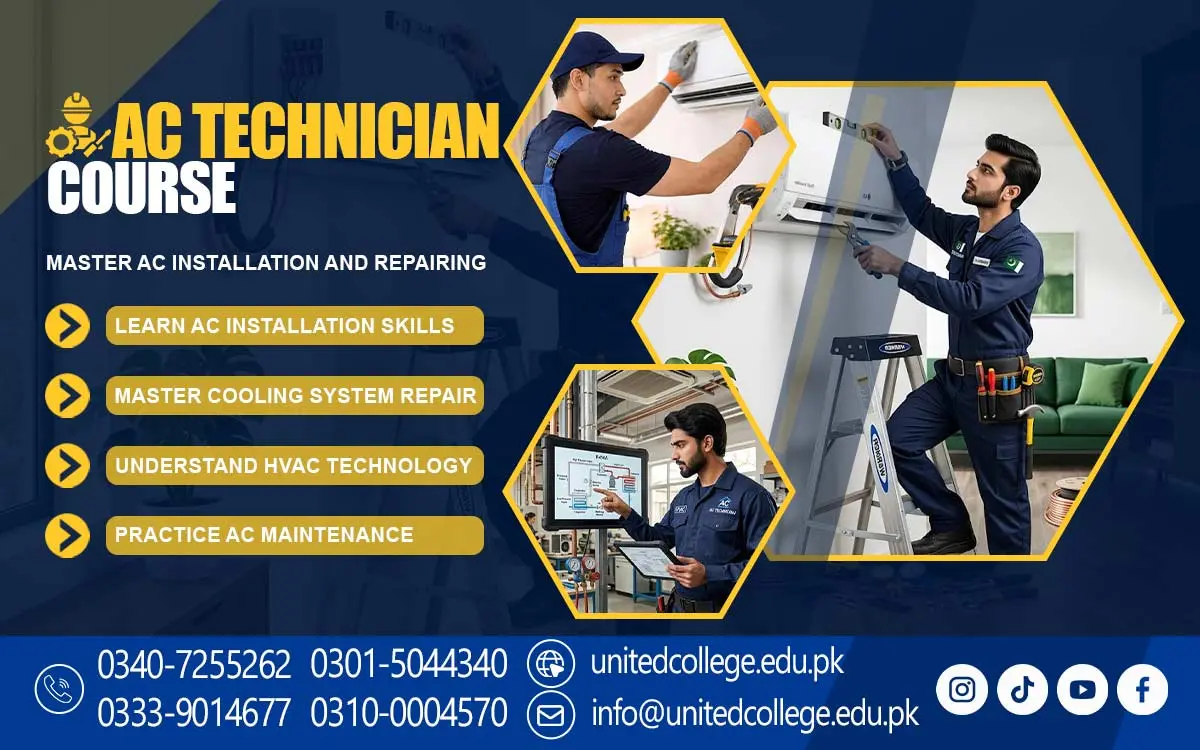

AC Technician Course in Lower Dir for Modern Cooling Systems
Understanding Modern Air Conditioning Technology
Modern air conditioning technology helps maintain indoor comfort by controlling temperature, circulating air, and managing humidity where required. These systems are used in residential buildings, offices, educational institutions, healthcare facilities, and commercial environments. Students enrolled in an AC Technician Course in Lower Dir can begin by learning the basic principles of cooling technology and understanding how air conditioners transfer heat from indoor spaces to the outside environment.
Air conditioning systems operate through a refrigeration cycle involving several major components. The compressor circulates refrigerant through the system, the condenser releases heat, the expansion device regulates refrigerant flow, and the evaporator absorbs heat from indoor air. Understanding these functions helps students learn how the complete system produces a cooling effect.
Students can also explore different types of air conditioners, including split AC units, window systems, and selected commercial cooling equipment. Each system has its own operating characteristics, installation requirements, and maintenance needs. Learning about these differences provides a foundation for understanding modern cooling equipment and preparing for practical technical work.
Exploring Refrigeration Components and System Design
Refrigeration components work together to remove heat from an indoor environment and release it outside. Important parts include the compressor, condenser, evaporator, expansion device, refrigerant pipes, fans, and control components. Students can learn the functions of these parts and understand how their proper operation affects the overall performance of an air conditioning system.
System design involves selecting suitable equipment and arranging its components according to the requirements of a particular space. Factors such as room size, cooling demand, airflow, installation location, and manufacturer recommendations can influence equipment selection and performance. Through AC technician training, learners can develop an understanding of why correct system planning is important for effective cooling.
Students can also study how component faults or unsuitable operating conditions affect refrigeration performance. Restricted airflow, dirty coils, damaged parts, and refrigerant-related problems may interfere with normal operation. Learning about these conditions helps future technicians recognize the importance of careful inspection, accurate diagnosis, and appropriate maintenance procedures.
Learning Cooling Performance and Temperature Control
Cooling performance refers to an air conditioner's ability to maintain the desired indoor temperature under suitable operating conditions. Students can learn about thermostat settings, temperature sensors, airflow, heat transfer, and the relationship between indoor conditions and cooling demand. These concepts help learners understand why an air conditioner may perform differently in different environments.
Temperature control is an important part of modern air conditioning systems. A thermostat monitors the temperature and helps regulate system operation according to the selected setting. Some systems also use electronic sensors and control boards to manage operating functions. Understanding these components allows learners to explore how air conditioners maintain comfortable indoor conditions.
Students can also study common factors that affect cooling performance, including dirty filters, obstructed airflow, poorly maintained coils, and incorrect settings. Proper equipment sizing and suitable installation conditions are also important. By understanding these factors, learners can develop a foundation for identifying performance problems and recognizing when professional testing or servicing is required.
Studying AC Installation and Connection Methods
Proper installation is essential for reliable air conditioning performance. Students can learn about selecting suitable locations for indoor and outdoor units, measuring installation spaces, planning refrigerant piping, and arranging drainage. Correct positioning supports effective airflow and helps make future maintenance easier.
Air conditioning installation also involves pipe insulation, secure mounting, suitable electrical connections, and following manufacturer instructions. Incorrect installation can cause water leakage, excessive vibration, poor cooling, or unnecessary equipment stress. Learners can explore how careful preparation and appropriate installation methods help prevent these problems.
Practical training may introduce students to measuring tools, mounting procedures, pipe preparation, and basic inspection techniques. They can also learn about the importance of checking drainage and confirming correct system operation after installation. Electrical connections, refrigerant charging, pressure testing, and other specialized procedures should be carried out using suitable equipment, approved methods, and qualified supervision.
Understanding Electrical Protection and Control Devices
Electrical protection and control devices help an air conditioning system operate safely and respond to different operating conditions. These devices may include circuit breakers, fuses, contactors, relays, capacitors, thermostats, sensors, and electronic control boards. Students can learn about their functions and understand how they contribute to system operation and protection.
Electrical controls help regulate components such as compressor motors and fans. Protective devices are designed to reduce certain electrical risks and help prevent damage under specified fault conditions. Through the AC Technician Course in Lower Dir, learners can explore basic electrical concepts, wiring diagrams, and the relationship between control devices and cooling equipment.
Safe working practices are essential when inspecting electrical components. Students should learn about isolating the power supply, verifying that equipment is de-energized, using suitable protective equipment, and following approved testing procedures. Practical electrical work should be completed under qualified supervision. This knowledge helps learners understand the importance of safety when installing, inspecting, and maintaining air conditioning systems.
Identifying Common Equipment Failures
Air conditioning equipment can develop different faults during regular use. Common symptoms include insufficient cooling, unusual sounds, water leakage, weak airflow, excessive vibration, and failure to start. Students can learn to recognize these warning signs and understand that several different problems may cause similar symptoms.
For example, poor cooling may be linked to dirty filters, blocked airflow, incorrect thermostat settings, or faults within the refrigeration circuit. Water leakage may occur because of drainage problems or improper installation. Electrical issues can affect the compressor, fan motor, or control system. Learners can study these examples to understand why proper inspection is important before deciding on corrective action.
Troubleshooting requires a systematic approach. Technicians observe symptoms, check basic operating conditions, inspect accessible components, and use appropriate diagnostic equipment. Students can also learn to record findings and communicate problems clearly. Complex electrical faults and refrigerant-related issues require suitable technical expertise, specialized equipment, and approved procedures.
Applying Proper Servicing and Maintenance Techniques
Regular servicing helps air conditioners maintain reliable performance and reduces the likelihood of unexpected breakdowns. Dust accumulation, restricted airflow, dirty filters, and blocked drainage can affect cooling efficiency. Students can learn how routine inspection and cleaning help maintain equipment in good working condition.
Common maintenance activities include cleaning or replacing air filters, inspecting accessible components, checking drainage, examining pipe insulation, and ensuring that outdoor units have sufficient airflow. Learners can also study the importance of monitoring unusual noises, vibration, and changes in cooling performance. Maintenance should follow manufacturer recommendations and appropriate safety procedures.
Professional servicing also requires clear communication and proper recordkeeping. Technicians should explain the condition of equipment, identify problems that require attention, and recommend suitable maintenance or repair work. Learning these practices helps students understand how preventive maintenance supports equipment reliability, customer satisfaction, and longer service life.
Building Technical Knowledge for Cooling Industry Jobs
Air conditioning and refrigeration technology offers potential career opportunities for individuals with relevant training and practical experience. After completing appropriate education, learners may explore entry-level positions with AC service companies, refrigeration businesses, installation contractors, appliance service providers, and building maintenance departments. Opportunities depend on qualifications, technical competence, and employer requirements.
Some technicians focus on installing air conditioners, while others specialize in troubleshooting, maintenance, or refrigeration equipment. With additional experience and further training, individuals may progress toward more specialized work involving commercial cooling systems and advanced HVAC equipment. Knowledge of electrical safety, diagnostic methods, and preventive maintenance can help learners prepare for these responsibilities.
The AC Technician Course in Lower Dir can also provide a starting point for individuals interested in establishing their own servicing business. Self-employment requires technical knowledge, suitable tools, customer communication, time management, and responsible pricing. By combining theoretical learning with supervised hands-on experience and continued professional development, learners can work toward building a career in the cooling industry.
Frequently Asked Questions (FAQs)
Modern air conditioning systems may use advanced sensors, electronic controls, and energy-efficient features to regulate indoor temperatures and manage cooling performance.
The main components generally include a compressor, condenser, evaporator, and expansion device, which work together to transfer heat and produce cooling.
Temperature controls monitor indoor conditions and regulate system operation to help maintain the selected temperature.
Technicians should consider the installation location, room requirements, airflow, drainage, electrical supply, piping arrangements, and manufacturer instructions.
Protective devices help reduce electrical risks and protect equipment under specified fault conditions when correctly selected and installed.
Admission Open: Start Your Professional Journey Today!
Join United College of Technology and build a career with practical training, recognized certifications, and Gulf job support. Seats are limited.
Apply Now via WhatsAppContact Information
- Address: Rawalpindi: F-272 Main New Katarian Stop, Old IJP Road | Lahore Campus: Lahore, Pakistan
- Phone/WhatsApp: 0340-7255262 / 0333-9014677 / 0301-5044340 / 0310-0004570 / 051-8770756
- Website: unitedcollege.edu.pk
















Leave a Comment