

AC Technician Course in Murree for Professional HVAC Training
Exploring the Fundamentals of Air Conditioning
Air conditioning is based on a series of processes that allow heat to be removed from an indoor space. Understanding these basic processes helps learners develop a clear foundation before studying more advanced technical subjects.
Students can become familiar with common AC terminology, basic system operations, airflow, temperature control, and the purpose of major equipment. This introductory knowledge makes it easier to understand how different parts contribute to cooling.
Learning the fundamentals also helps students approach practical activities with greater awareness. Instead of simply operating equipment, learners can understand the basic principles behind the work they are performing.
Understanding Cooling Cycles and System Performance
The cooling cycle is a central part of air conditioning technology. It involves several stages through which refrigerant moves while heat is transferred away from the indoor environment.
During training, learners can study how the main components participate in the cooling process. They can also explore factors that influence system performance, such as airflow, component condition, and proper equipment operation.
This understanding can be useful when checking an AC system that is not providing expected cooling. Knowledge of normal system operation gives learners a better starting point for identifying possible performance issues.
Learning AC Installation from Basic to Practical Tasks
Installing an air conditioner requires more than simply placing a unit in a room. Equipment positioning, connections, setup, and general installation procedures all need to be considered for proper system operation.
Learners can study the basic steps involved in AC Technician and become familiar with the requirements of indoor and outdoor units. Practical lessons can introduce them to equipment preparation and connection procedures.
Hands-on learning gives students an opportunity to understand installation work in a practical setting. Repeated activities can help them become more comfortable with the tools and procedures involved in AC installation.
Working with Electrical Parts and Control Systems
Electrical components are responsible for powering and controlling many functions of an air conditioning system. A technician therefore needs a basic understanding of electrical parts and control mechanisms.
The course introduces learners to wiring, switches, power connections, control components, and other electrical elements found in AC equipment. Students can learn how these parts contribute to the operation of different systems.
Electrical safety is also emphasized during technical learning. Following suitable precautions and responsible procedures helps learners develop safer habits when dealing with AC electrical components and control systems.
Recognizing Causes Behind Common AC Problems
An air conditioner may show different signs when something is not working correctly. Reduced cooling, unusual noises, weak airflow, leakage, or electrical interruptions can all require technical inspection.
Students can learn how to observe these symptoms and consider possible causes. The training encourages learners to inspect relevant parts and understand the relationship between system symptoms and potential faults.
Developing troubleshooting skills can improve a technician's ability to approach problems logically. Instead of making assumptions, learners can follow a step-by-step process to understand what may be affecting system performance.
Developing Skills in System Servicing and Adjustment
An AC technician performs regular checks and practical tasks that help maintain equipment. Cleaning, inspection, component checking, and suitable adjustments can all form part of routine technical work.
Learners can practice basic servicing procedures and understand how different maintenance activities are performed. This gives them a clearer idea of the responsibilities involved in keeping AC equipment in suitable working condition.
Regular practice can also improve technical accuracy. As students become more familiar with servicing procedures, they can learn to organize their work and pay closer attention to the condition of individual components.
Applying Technical Knowledge Through Hands-On Practice
Hands-on training allows learners to apply concepts in practical situations. Working directly with AC equipment can help students understand technical processes that may be difficult to learn through theory alone.
Practical activities can include equipment inspection, installation exercises, basic electrical work, servicing, and troubleshooting tasks. These activities help learners connect different areas of the course.
Practical experience can also strengthen confidence. With proper guidance and repeated practice, students can become more comfortable handling common tasks associated with AC technician work.
Creating Pathways Toward a Professional AC Career
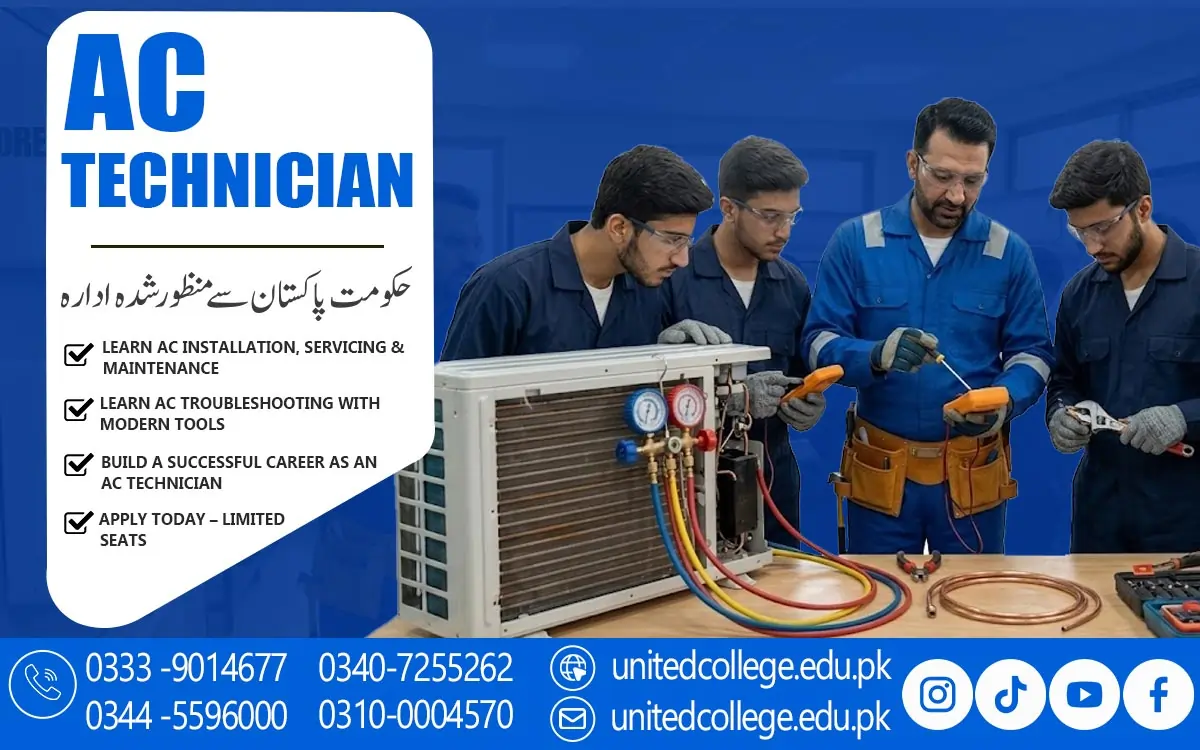
The AC Technician Course in Murree provides learners with knowledge across several areas of air conditioning technology. Students can develop an understanding of cooling cycles, installation procedures, electrical systems, controls, troubleshooting, and servicing.
These skills may be useful for individuals interested in technical work involving air conditioning systems. Depending on their level of experience, learners can explore areas such as AC installation, maintenance, servicing, troubleshooting, and repair.
Technical careers often require continuous improvement and practical experience. By developing their knowledge through structured training and continuing to practice their skills, learners can work toward becoming capable AC technicians and explore opportunities in the HVAC service field.
Frequently Asked Questions (FAQs)
The course covers air conditioning fundamentals, cooling cycles, system performance, installation, electrical components, control systems, troubleshooting, servicing, and practical activities.
Cooling cycle knowledge helps students understand how an air conditioning system produces cooling and how different components work together during operation.
Yes, practical activities allow learners to apply their knowledge through AC inspection, installation, servicing, electrical tasks, and basic troubleshooting exercises.
Learners can develop basic knowledge of AC wiring, power connections, switches, control components, and appropriate electrical safety practices.
After developing suitable technical skills and experience, learners can explore work related to AC installation, servicing, maintenance, troubleshooting, and repair.
Admission Open: Start Your Professional Journey Today!
Join United College of Technology and build a career with practical training, recognized certifications, and Gulf job support. Seats are limited.
Apply Now via WhatsAppContact Information
- Address: Rawalpindi: F-272 Main New Katarian Stop, Old IJP Road | Lahore Campus: Lahore, Pakistan
- Phone/WhatsApp: 0340-7255262 / 0333-9014677 / 0301-5044340 / 0310-0004570 / 051-8770756
- Website: unitedcollege.edu.pk
















Leave a Comment