


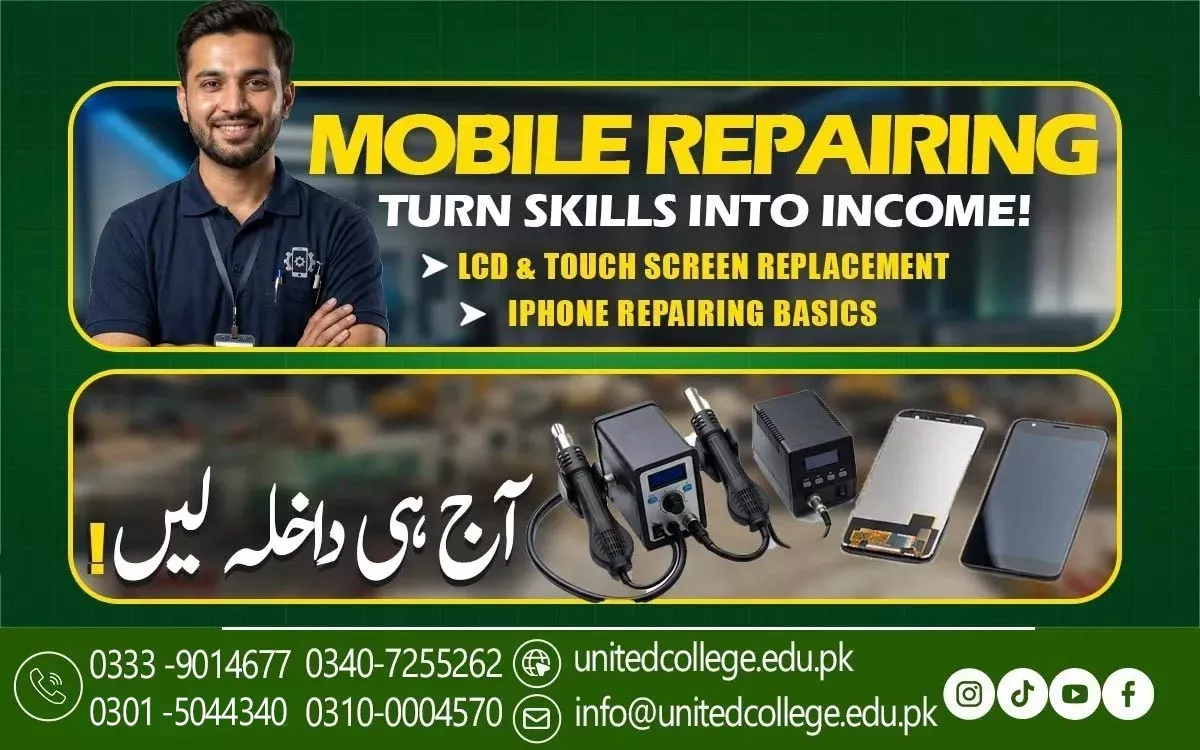

Mobile Repairing Course in Gilgit Baltistan for Mobile Electronics
Introduction to Smartphone Components and Functions
Smartphones contain several important components that work together to provide different features. These include the motherboard, battery, display, touchscreen, cameras, speakers, microphone, charging port, and sensors. Each component has a specific purpose, and a fault in one part may affect the overall performance of the device. Understanding these components is an important first step in learning mobile phone repair.
Students can explore how the battery supplies power, how the motherboard connects electronic components, and how the display allows users to interact with applications. They can also learn about the functions of cameras, audio components, buttons, and charging connectors. This basic knowledge helps learners understand the structure of modern smartphones and recognize common hardware problems.
Through the Mobile Repairing Course in Gilgit-Baltistan, learners can develop a better understanding of smartphone hardware and component functions. They can study how different parts operate and why careful inspection is necessary before attempting repairs. This foundation can help students progress toward more detailed mobile troubleshooting and device maintenance techniques.
Understanding Electronic Circuits Inside Mobile Phones
Electronic circuits are essential for smartphone operation because they control power distribution and support communication between different components. Mobile phones contain small electronic parts, connectors, and integrated circuits that perform specific functions. If a circuit becomes damaged or a connection fails, the device may experience charging difficulties, power problems, audio faults, or other performance issues.
Students can learn basic electronic concepts such as voltage, current, resistance, and circuit connections. They can also explore the functions of components such as resistors, capacitors, and integrated circuits. Understanding these concepts helps learners recognize how electrical signals and power move through a smartphone and why circuit problems require careful diagnosis.
The Mobile Repairing Course in Gilgit-Baltistan can introduce students to the basics of mobile circuit inspection and fault detection. Learners can study how technicians examine visible damage, identify relevant components, and follow systematic testing procedures. With suitable tools, supervised practice, and proper safety measures, students can strengthen their understanding of mobile electronics and hardware troubleshooting.
Exploring Charging Ports and Battery Systems
Charging ports and battery systems are important parts of every smartphone. The battery provides the energy needed to operate the device, while the charging port allows electrical power to enter the phone. Problems involving these components can prevent a smartphone from charging properly or reduce its ability to remain powered throughout the day.
Students can explore common charging issues, including loose charging connections, damaged ports, weak batteries, and slow charging. They can also learn that charging problems may result from faulty cables, unsuitable adapters, software issues, or internal power circuits. Understanding these possibilities helps learners avoid assuming that every charging problem requires battery replacement.
During the Mobile Repairing Course in Gilgit Baltistan, students can develop knowledge of battery inspection, charging system functions, and basic power-related troubleshooting. They can learn why compatible accessories and correct handling procedures matter. Damaged, swollen, or overheating batteries require special precautions and should not be punctured or handled carelessly. Learning safe practices is an essential part of responsible mobile phone maintenance.
Learning About Display Panels and Touch Controls
Display panels and touch controls allow smartphone users to view information, open applications, type messages, and operate different features. A damaged display can make a device difficult to use, even when other components continue to work. Screen problems may occur because of accidental drops, pressure, liquid exposure, or damage to internal connections.
Students can learn to recognize common display faults, such as cracked screens, black displays, flickering images, unusual lines, and unresponsive touch controls. They can also explore the difference between visible glass damage and problems affecting the display panel or touchscreen system. Careful observation helps technicians identify possible causes before deciding which repair procedure may be appropriate.
The Mobile Repairing Course in Gilgit-Baltistan can introduce learners to display inspection, component identification, and the basic principles of screen servicing. Students can understand the importance of using suitable tools and handling delicate connectors carefully. With supervised practical training, they can build knowledge of smartphone display systems and develop a foundation for diagnosing common screen-related faults.
Studying Mobile Software Tools and System Recovery
Smartphones use operating systems and applications to manage their features and provide a smooth user experience. Software-related problems may cause slow performance, application crashes, system errors, unexpected restarts, or difficulties accessing certain functions. Students interested in mobile repairing can learn how to recognize these symptoms and distinguish software issues from possible hardware faults.
Basic mobile software troubleshooting may include checking storage space, reviewing system settings, installing official updates, managing applications, and restarting a device. Learners can also study the purpose of system recovery tools and understand why compatible software is important. Using unsuitable firmware or untrusted software sources may create additional problems or affect device security.
Through the Mobile Repairing Course in Gilgit Baltistan, students can develop an understanding of mobile software maintenance and basic system recovery procedures. They can also learn the importance of protecting customer information before performing operations that may erase data. Backups, customer permission, and careful selection of troubleshooting methods are essential when handling software-related mobile faults.
Recognizing Common Hardware and Software Failures
Mobile phones can experience different types of faults during everyday use. Hardware problems may involve damaged displays, weak batteries, faulty charging ports, malfunctioning speakers, or internal circuit damage. Software problems may include application errors, system freezing, failed updates, and unexpected restarts. Recognizing the difference between these issues helps technicians choose suitable diagnostic methods.
Students can learn to examine the symptoms of a malfunction and consider several possible causes before attempting a repair. For example, a phone that does not turn on may have a depleted battery, a charging problem, a software issue, or an internal hardware fault. Similarly, poor audio quality may result from blocked openings, incorrect settings, damaged components, or connection problems.
The Mobile Repairing Course in Gilgit-Baltistan can help learners understand basic mobile fault diagnosis and troubleshooting procedures. Students can study how to inspect devices, test relevant functions, and record observations before recommending a solution. This step-by-step approach can improve problem-solving abilities, reduce unnecessary component replacement, and support more reliable mobile phone servicing.
Following Proper Procedures for Technical Inspection
Technical inspection is an important part of mobile repairing because it helps identify device problems before repair work begins. A careful inspection may include checking the screen, charging port, buttons, camera, speakers, microphone, battery performance, and general device condition. Students can learn why it is important to gather information about a fault instead of immediately replacing a component.
Learners can also explore the importance of appropriate tools, organized workspaces, and safe handling methods. Smartphones contain delicate components that may be damaged by excessive force, unsuitable tools, or incorrect procedures. Devices exposed to liquid and phones with damaged batteries require additional caution, while advanced internal repairs should be performed only by people with suitable training and equipment.
In the Mobile Repairing Course in Gilgit-Baltistan, students can develop knowledge of systematic inspection, basic diagnostic practices, and responsible device handling. They can also learn to explain findings clearly and respect customer privacy when working with personal devices. These habits support professional service, help prevent avoidable damage, and prepare learners for practical work in mobile maintenance environments.
Exploring Professional Development in Mobile Technology
Mobile technology offers different learning and career pathways for people interested in electronics and technical services. After developing suitable knowledge and practical experience, students may explore opportunities in mobile repair shops, electronics stores, smartphone maintenance centers, and device support businesses. Their opportunities can depend on their technical abilities, experience, training quality, and local market demand.
Some learners may also consider establishing their own mobile servicing business after gaining sufficient practical competence. Possible services include diagnosing common smartphone faults, replacing compatible components, addressing basic software issues, and providing routine device maintenance. Starting a business also requires suitable tools, organized recordkeeping, customer communication, and a clear understanding of service costs.
The Mobile Repairing Course in Gilgit-Baltistan can provide a foundation for continued learning in smartphone maintenance and mobile technology. Students can improve their knowledge by practicing diagnostic procedures, learning about newer phone models, and keeping up with changing software systems. With patience, regular practice, and responsible working habits, learners can gradually prepare for suitable opportunities in the mobile phone servicing field.
Frequently Asked Questions (FAQs)
The Mobile Repairing Course in Gilgit Baltistan introduces students to smartphone components, electronic circuits, battery systems, display panels, software troubleshooting, and mobile phone maintenance.
Students can learn about motherboards, batteries, displays, touchscreens, cameras, speakers, microphones, charging ports, and sensors.
Understanding electronic circuits helps students learn how smartphone components work together and how circuit faults may affect charging, power, audio, and other functions.
Charging problems may result from a damaged charging port, a weak battery, a faulty cable, an unsuitable adapter, or an internal power circuit issue.
Common display problems include cracked screens, black displays, flickering images, lines on the screen, and unresponsive touch controls.
Admission Open: Start Your Professional Journey Today!
Join United College of Technology and build a career with practical training, recognized certifications, and Gulf job support. Seats are limited.
Apply Now via WhatsAppContact Information
- Address: Rawalpindi: F-272 Main New Katarian Stop, Old IJP Road | Lahore Campus: Lahore, Pakistan
- Phone/WhatsApp: 0340-7255262 / 0333-9014677 / 0301-5044340 / 0310-0004570 / 051-8770756
- Website: unitedcollege.edu.pk
















Leave a Comment