


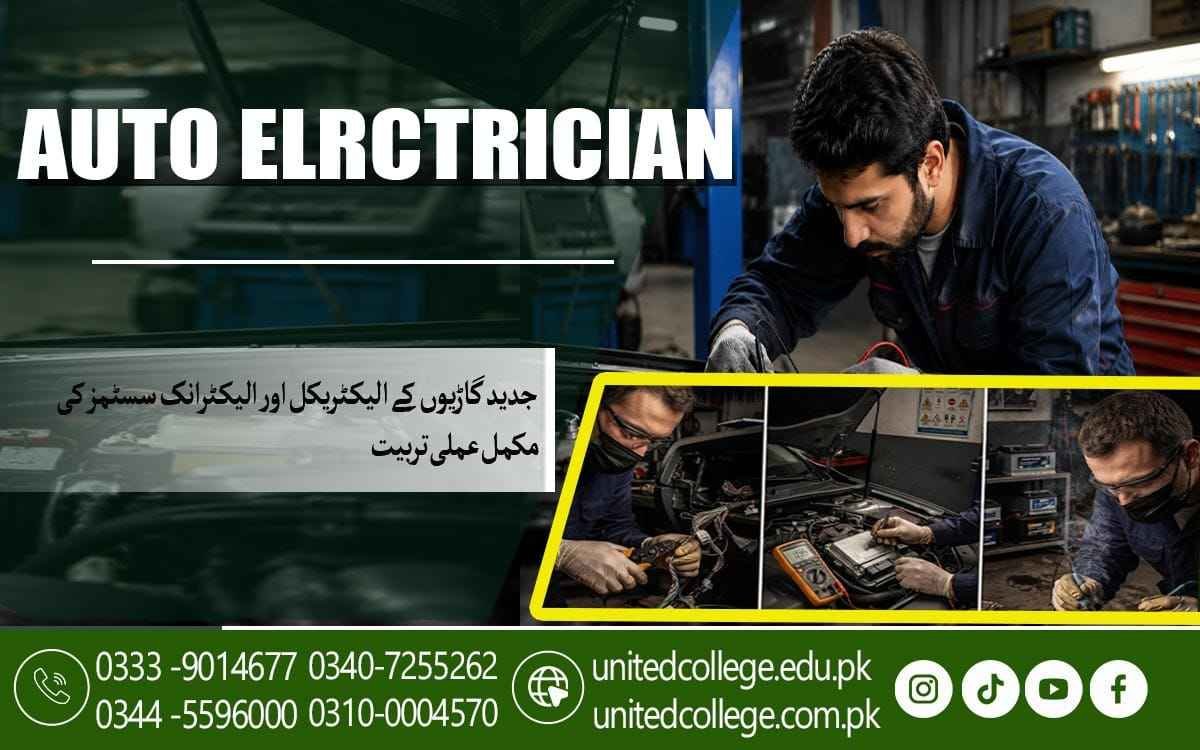

Auto Electrician Course in Bannu for Battery and Circuit Testing
Discover the Technical Skills Hidden Behind Everyday Vehicle Problems
When a car refuses to start, its indicators stop working, or its dashboard displays an unexpected warning, the problem may lie somewhere in its electrical system. Modern vehicles depend on a combination of electrical circuits, electronic controls, sensors, and power sources.
The Auto Electrician Course in Bannu offers a learning path for people who want to explore this technical side of vehicle maintenance. It can help beginners understand the systems that support starting, lighting, charging, and other vehicle functions. Students, fresh learners, and job seekers interested in practical technical knowledge can use this subject as a starting point for developing automotive skills.
Turn Curiosity About Cars into Useful Electrical Knowledge
Auto Electrician Course in Bannu introduces learners to the basic principles of automotive electricity and the role of different electrical components. The goal is to help students understand how a circuit works, how power reaches a component, and what may happen when an electrical connection fails.
Imagine a car radio that works sometimes but suddenly switches off while driving. The issue could involve a loose connection, an unstable power supply, or a problem within the unit itself. Instead of immediately replacing the radio, a technician needs to inspect the relevant circuit and identify the cause. This type of example shows why technical understanding matters in automotive repair.
Learn Through Automotive Electrical Training Offered by United College of Technology
The Auto Electrician Course in Bannu, offered by United College of Technology, is relevant to individuals who want to develop their understanding of vehicle electrical systems. Automotive learning becomes more meaningful when technical explanations connect with the actual functions of vehicle components.
Learners can explore how batteries supply power, how switches control circuits, and how electrical connections allow components to operate. They can also learn why a fault should be investigated before a component is replaced. These concepts encourage careful inspection and help reduce reliance on guesswork.
Understand the Components That Control Starting, Charging, and Lighting
A vehicle's electrical system contains several components that perform separate but connected jobs. Understanding their functions helps learners recognize how common faults may affect vehicle operation. The battery provides electrical energy for starting and other functions when required.
The starter motor turns the engine during the starting process. A vehicle that does not crank may have a problem with the battery, starter circuit, cables, or motor. Lighting circuits operate headlights, brake lights, indicators, and interior lamps. A failed light may result from a damaged bulb, a blown fuse, corrosion, or a broken connection.
Build a Step-by-Step Method for Finding Electrical Faults
Car Electrical Troubleshooting involves investigating symptoms in a planned and logical way. A technician first identifies what is happening, then checks the most relevant components and uses appropriate tests to narrow down the cause. This process is more reliable than replacing parts based only on suspicion.
During the Auto Electrician Course, learners can become familiar with tools such as multimeters and suitable circuit testers. A multimeter can measure voltage and resistance and can perform continuity checks when used correctly. Students need to understand what each measurement means and how to compare results with the appropriate technical information.
Follow Wiring Diagrams to Understand How Vehicle Circuits Connect
Vehicle wiring carries electrical power and signals between different components. A damaged wire or loose connector can interrupt a circuit even when the connected component is working properly. Vehicle Wiring Training helps learners understand these connections and investigate electrical problems more accurately.
Developing Automotive Repair Skills also requires attention to the condition of wires and connectors. Learners should recognize damaged insulation, corroded terminals, loose connections, and poor grounding. Repairs must follow suitable procedures because incorrect connections can cause repeated faults or damage other components.
Prepare for Technical Learning with Patience and Consistent Practice
The Auto Electrician Course in Bannu may interest beginners who want to learn a practical subject, students exploring technical fields, fresh learners developing new knowledge, and job seekers considering automotive skills. People who already enjoy working around vehicles may also want to understand their electrical systems more clearly.
Starting does not require pretending to know everything about cars. Learners can begin with basic electrical terms, component identification, and simple circuit principles. As they gain understanding, they can explore more advanced topics and practise suitable inspection methods. Asking questions, following instructions, and learning from mistakes under appropriate supervision are useful parts of the process.
Develop Auto Electrician Skills for Further Automotive Learning
Strong Auto Electrician Skills can provide a foundation for further study in electrical maintenance, vehicle diagnostics, and related technical fields. Modern vehicles increasingly rely on electronic control modules, sensors, and connected systems. Understanding basic circuits can make these more advanced subjects easier to approach.
An Automotive Electrical Technician may inspect electrical components, test circuits, investigate faults, or assist with repairs in workshops and vehicle service businesses. The work performed depends on the technician's training, experience, and the needs of the workplace. Advanced diagnostic tasks may require further education and supervised practice.
Take Your First Step Toward Practical Vehicle Electrical Knowledge
Understanding the electrical side of a vehicle can help turn confusing faults into problems that can be investigated logically. Battery checks, lighting circuits, starter systems, wiring diagrams, and diagnostic tools each offer a different way to understand how vehicles operate. The Auto Electrician Course in Bannu is worth exploring for anyone interested in developing knowledge in this area.
Before selecting a training option, review the subjects covered and ask about practical activities, equipment, and safety procedures. Choose a programme that matches your learning goals and provides clear guidance for your current level of experience. The course offered by United College of Technology is one option to consider when exploring automotive electrical training.
Frequently Asked Questions (FAQs)
The starter may turn the engine even when another system has a fault. Possible causes include ignition problems, missing sensor signals, or fuel-related issues, so proper diagnosis is necessary.
A wiring harness groups and organizes wires that connect electrical components. It helps route power and signals through the vehicle while keeping connections arranged and protected.
In vehicles where the alternator is belt-driven, a loose or broken belt may prevent proper charging. This can cause battery discharge and electrical warning lights.
Repair manuals provide vehicle-specific wiring diagrams, testing values, and procedures. Using the correct information helps prevent incorrect tests and unnecessary component replacement.
Possible causes include a weak remote battery, a faulty actuator, damaged wiring, a blown fuse, or a control-system issue. The cause should be confirmed through appropriate checks.
Electrical parts must match the vehicle's specifications and system requirements. An incompatible component may not work correctly or could affect other connected systems.
Admission Open: Start Your Professional Journey Today!
Join United College of Technology and build a career with practical training, recognized certifications, and Gulf job support. Seats are limited.
Apply Now via WhatsAppContact Information
- Address: Rawalpindi: F-272 Main New Katarian Stop, Old IJP Road | Lahore Campus: Lahore, Pakistan
- Phone/WhatsApp: 0340-7255262 / 0333-9014677 / 0301-5044340 / 0310-0004570 / 051-8770756
- Website: unitedcollege.edu.pk
















Leave a Comment