


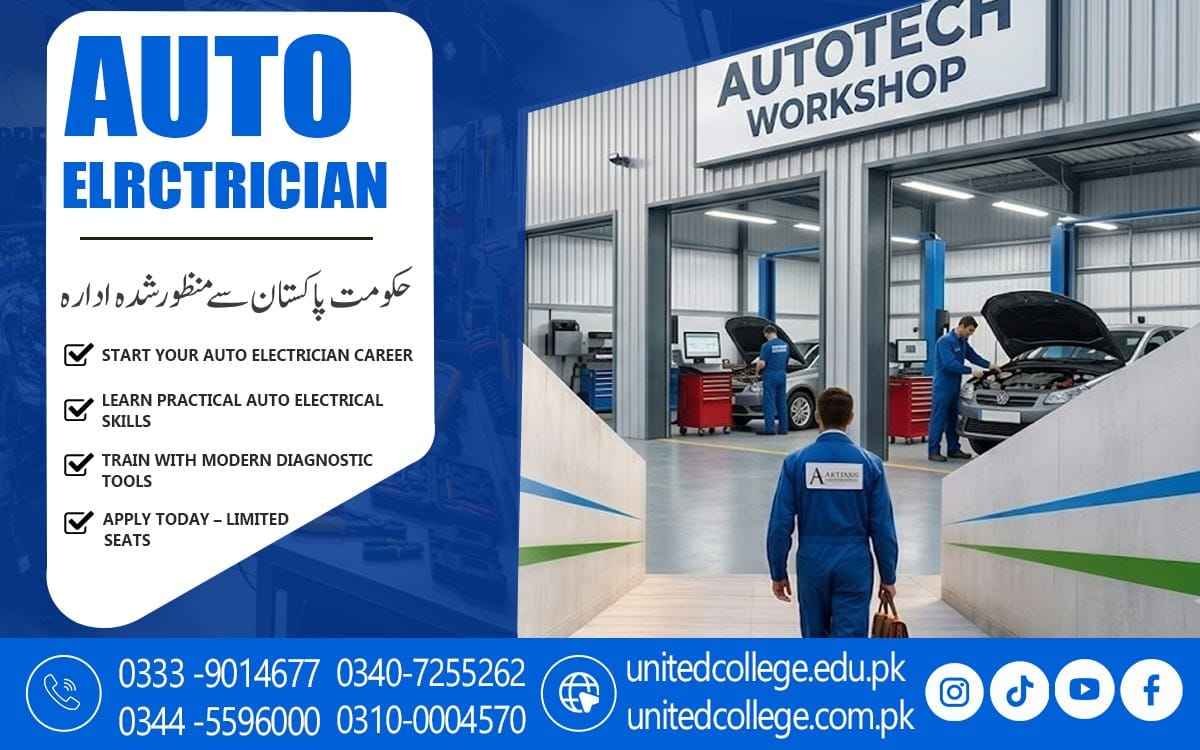

Auto Electrician Course in Batagram for Electrical Fault Detection
Understand the Electrical Technology Behind Every Modern Vehicle
A vehicle can look perfectly normal on the outside but still have an electrical problem that prevents it from starting, affects its lights, or interrupts important functions. Modern vehicles rely on batteries, wiring networks, charging systems, sensors, and electronic controls to operate correctly. Understanding these components is an important part of vehicle repair, especially as automotive technology continues to develop.
The Auto Electrician Course in Batagram provides a relevant learning path for people who want to understand the electrical side of automotive maintenance. It introduces learners to the basic principles behind vehicle electrical systems and helps them explore how different components work together. For beginners, this knowledge can make vehicle repair easier to understand.
Build Technical Confidence Through Auto Electrician Training in Batagram
Auto Electrician Course in Batagram focuses on understanding electrical components, recognizing common faults, and learning how to approach vehicle problems systematically. Rather than guessing which part needs replacement, learners can develop the habit of observing symptoms, checking connections, and using suitable testing methods.
An Automotive Electrical Course can introduce learners to basic electrical principles, component identification, and troubleshooting procedures. A Car Electrician Course can also help them become familiar with the relationship between the battery, starter motor, alternator, and other electrical parts.
Explore Practical Training Offered by United College of Technology
The Auto Electrician Course in Batagram, offered by United College of Technology, is relevant to people interested in developing automotive electrical knowledge. Learning this field involves more than memorizing the names of components. Students need to understand what each part does, how it connects to other systems, and what signs may indicate a fault.
Effective Auto Electrical Training should encourage careful observation, correct tool handling, and an organized approach to testing. Learners should also understand the importance of following vehicle-specific instructions because electrical designs can differ between manufacturers and models. Exploring these principles provides a useful foundation for continued practice and more advanced automotive learning.
Discover the Vehicle Components Every Aspiring Auto Electrician Should Know
An Auto Electrician Course in Batagram is a great opportunity for beginners who want to develop practical skills in vehicle electrical systems and pursue a career in the automotive industry. Learning the main electrical components of a vehicle is an important first step toward becoming a skilled auto electrician.
- Starter motor: This component turns the engine during starting. If the engine does not crank, the problem may involve the battery, cables, starter circuit, or starter motor.
- Lighting equipment: Headlights, indicators, brake lights, and interior lights help provide visibility and communication. Faults can result from damaged bulbs, blown fuses, poor connections, or wiring problems.
Understanding these components gives learners a clearer picture of how separate electrical parts work together inside a vehicle.
Learn a Smarter Approach to Car Electrical Troubleshooting
Car Electrical Troubleshooting begins with identifying the symptom and narrowing down its possible causes. Replacing a component without testing it can waste money and leave the original problem unresolved. A systematic approach helps technicians make decisions based on evidence instead of assumptions.
During Vehicle Electrical System Training, learners can become familiar with appropriate tools such as digital multimeters and test lights. These tools help with certain checks, but students must learn their correct use and understand the limits of each method. Some modern vehicles contain sensitive electronic systems that require specific procedures.
Strengthen Repair Accuracy with Vehicle Wiring Training
Wiring faults can affect several vehicle functions, making circuit knowledge an important part of automotive electrical work. A light may stop working because its bulb has failed, but the problem could also involve a fuse, damaged wire, or poor ground connection. Vehicle Wiring Training helps learners understand how to investigate these possibilities.
Developing Automotive Repair Skills also involves inspecting wires for cuts, damaged insulation, corrosion, and loose connectors. Learners should understand why electrical connections need to be secure and why repairs must use suitable methods and materials. Incorrect wiring can create additional faults or safety risks.
Create a Strong Starting Point for Beginners and Future Technicians
The Auto Electrician Course in Batagram may suit beginners who want to explore a technical subject, students who are interested in hands-on learning, and fresh learners looking for a foundation in automotive systems. Job seekers and people interested in vehicle maintenance may also find this area relevant to their technical development.
Previous experience with vehicle repair can be helpful, but beginners can start by learning basic electrical terms, recognizing common components, and understanding simple circuits. As their knowledge grows, they can explore more detailed testing methods and different types of electrical faults.
Connect Automotive Electrical Knowledge with Future Technical Growth
Developing Auto Electrician Skills can provide a foundation for continued learning in electrical maintenance, vehicle diagnostics, and related automotive subjects. As vehicles use more electronic controls, technicians need to understand how electrical circuits, sensors, and control modules interact. Basic knowledge can help learners prepare to study these systems in greater detail.
An Automotive Electrical Technician may perform inspections, test circuits, identify faults, or assist with electrical repairs in vehicle workshops and automotive service businesses. Actual duties depend on the workplace, the vehicle systems involved, and the individual's training and experience. Some advanced diagnostic work requires further learning and supervised practice.
Move Forward with Practical Automotive Electrical Learning in Batagram
Understanding electrical systems is an important step toward learning how modern vehicles operate. From battery testing and circuit inspection to wiring diagrams and fault detection, each area builds knowledge you can apply to automotive maintenance and repair. The Auto Electrician Course in Batagram offers a relevant subject for people who want to explore these skills and develop a stronger technical foundation.
The United College of Technology course is one option to explore if you are interested in automotive electrical training. Start with the fundamentals, practise carefully, and build your knowledge step by step. With consistent learning and responsible working habits, you can develop a clearer understanding of vehicle electrical systems and prepare for further technical development in the automotive field.
Frequently Asked Questions (FAQs)
Power door locks may depend on switches, actuators, wiring, and control modules. Studying this system helps learners understand how electrical signals activate different vehicle functions.
Voltage drop testing checks how much electrical voltage is lost across a connection or circuit while current flows. It can help identify resistance caused by poor connections or damaged wiring.
Wiring colours can help identify circuits when used with the correct wiring diagram. Since colour conventions vary, technicians should always confirm connections using vehicle-specific information.
A technician may inspect the switch, fuse, wiring, motor, and mechanical movement of the window. Testing each relevant part helps narrow down the source of the problem.
Excessive resistance can reduce current flow and affect component performance. Learning how resistance influences a circuit helps technicians investigate issues such as weak lights or slow electrical motors.
Modern vehicles often use networked control modules, electronic sensors, and computer-based diagnostics. Repairs may require specific tools and procedures instead of relying only on basic wiring checks.
Admission Open: Start Your Professional Journey Today!
Join United College of Technology and build a career with practical training, recognized certifications, and Gulf job support. Seats are limited.
Apply Now via WhatsAppContact Information
- Address: Rawalpindi: F-272 Main New Katarian Stop, Old IJP Road | Lahore Campus: Lahore, Pakistan
- Phone/WhatsApp: 0340-7255262 / 0333-9014677 / 0301-5044340 / 0310-0004570 / 051-8770756
- Website: unitedcollege.edu.pk
















Leave a Comment