


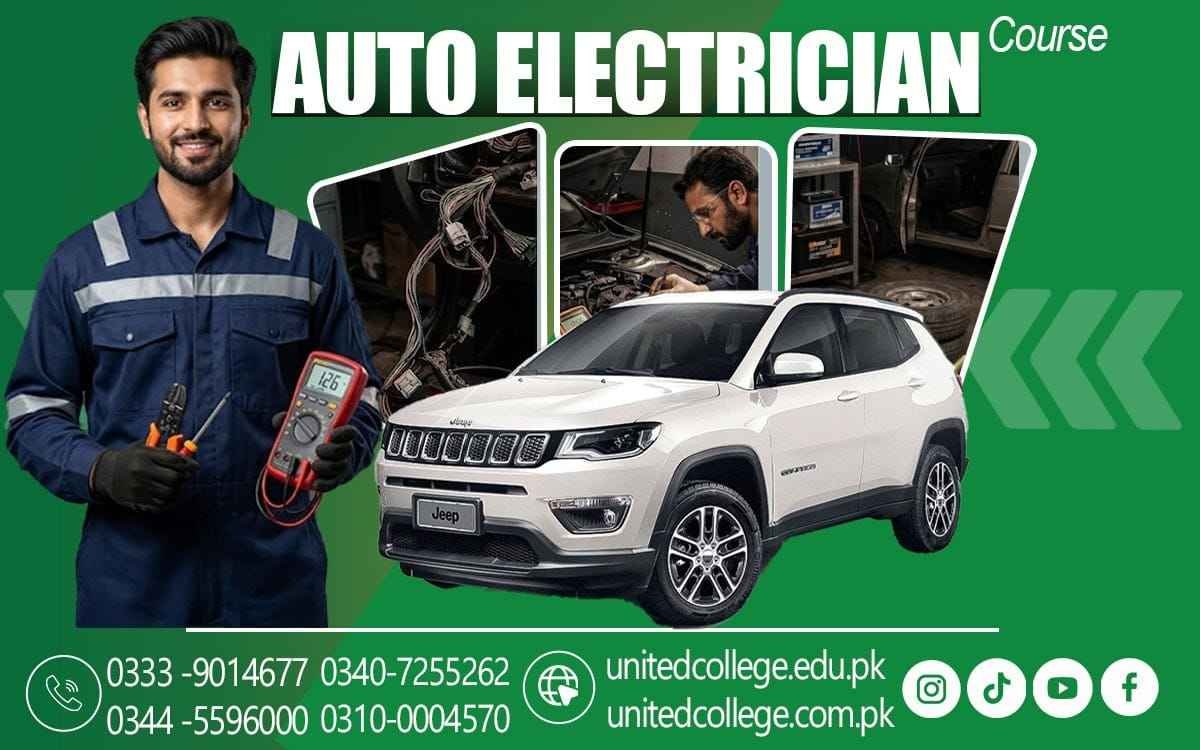

Auto Electrician Course in Chitral for Vehicle Electrical Work
Auto Electrician Course in Mardan for Practical Learning
Auto Electrician Course in Mardan for Practical Learning The Auto Electrician Course in Mardan offered by United College of Technology is a useful option for students who want to learn about vehicle electrical systems and automotive technology. Modern vehicles depend on electrical components for starting, lighting, charging, safety, and other important functions. Understanding these systems is essential for anyone interested in working in the automotive industry.
This course introduces students to automotive wiring, battery testing, starter motors, alternators, electrical circuits, and fault diagnosis. Learners can develop technical knowledge of how vehicle electrical components operate and how common electrical problems are identified. With an interest in practical learning, students can build a foundation for working in automobile workshops, service centers, and vehicle maintenance businesses.
Auto Electrician Training and Technical Fundamentals
The first step in learning automotive electrical technology is understanding the basic principles of vehicle electricity. Students explore voltage, current, resistance, electrical circuits, and the purpose of different electrical components. These concepts help learners understand how electricity moves through a vehicle and supports its essential functions.
The Auto Electrician Course in Mardan introduces learners to the major electrical systems found in cars and other vehicles. They can become familiar with wiring connections, fuses, relays, switches, and electrical accessories. Understanding these components makes it easier to recognize how different parts work together.
United College of Technology provides an educational pathway for people interested in developing automotive technical knowledge. Learning the fundamentals creates a starting point for more advanced topics, including electrical testing, circuit inspection, and troubleshooting.
Vehicle Electrical Wiring and Connection Methods
Vehicle wiring connects electrical components and allows them to operate correctly. Automotive wiring systems supply power to headlights, indicators, dashboard instruments, horns, and other accessories. A proper understanding of these connections is important for identifying electrical faults and maintaining vehicle performance.
During auto electrician training, students can learn about wiring diagrams, wire identification, connectors, insulation, and circuit layouts. These topics help learners understand how to follow electrical connections and recognize possible problems, such as loose terminals, damaged wires, and blown fuses.
The Auto Electrician Course in Mardan helps students build knowledge of vehicle wiring and electrical connections. Learning these concepts can prepare them to understand automotive circuit inspection and the basic procedures used in vehicle electrical maintenance.
Battery Testing and Charging System Operations
A vehicle battery provides the electrical power required to start the engine and operate various electrical systems. The battery also works with the charging system to maintain a suitable power supply. Battery condition can affect starting performance, lights, and other electrical equipment.
Students studying automotive electrical systems can learn about battery terminals, charging procedures, battery condition checks, and common signs of battery failure. They can also explore the functions of alternators and the importance of maintaining secure electrical connections.
The Auto Electrician Course in Mardan covers important concepts related to automotive batteries and charging systems. Understanding these components helps learners recognize common battery problems and appreciate the role of regular inspection in vehicle maintenance.
Starter Motor and Alternator Inspection
The starter motor and alternator are important components of a vehicle's electrical system. The starter motor helps turn the engine during starting, while the alternator generates electrical power when the engine runs and helps recharge the battery. Problems in either component can affect vehicle operation.
Students can learn about the working principles of starter motors, solenoids, alternators, and their related electrical connections. They can also explore common symptoms of faults, including slow engine cranking, unusual starting problems, and charging warnings on the dashboard.
Through automotive electrical education, learners develop a better understanding of how these components function. The Auto Electrician Course in Mardan introduces relevant technical topics that can support further learning in starter motor testing, charging system inspection, and electrical fault identification.
Automotive Lighting and Signal System Checks
Lighting and signal systems are essential for safe driving. Headlights help drivers see the road, while brake lights, indicators, and hazard lights communicate important information to other road users. These systems depend on properly functioning bulbs, wiring, switches, fuses, and electrical connections.
Students can study the main parts of vehicle lighting systems and learn about common problems such as faulty indicators, dim headlights, broken connections, and malfunctioning brake lights. Understanding circuit layouts helps learners identify where an electrical issue may be occurring.
The Auto Electrician Course in Mardan introduces students to automotive lighting and electrical accessories as part of their technical education. Knowledge of these systems can be valuable for learners who want to understand vehicle inspections and routine electrical maintenance.
Electrical Fault Finding and Diagnostic Procedures
Electrical fault diagnosis is an important part of an auto electrician's work. A vehicle may experience problems because of damaged wiring, weak batteries, defective switches, faulty fuses, or malfunctioning electrical components. Identifying the actual cause is important before attempting a repair.
Students can learn about basic diagnostic tools, including multimeters and test lamps, and understand how these tools are used to check electrical circuits. They can also study methods for inspecting connections, testing voltage, and tracing common electrical faults in a systematic way.
The Auto Electrician Course in Mardan helps learners understand the principles of automotive electrical troubleshooting. Proper diagnostic knowledge can reduce guesswork and encourage a more organized approach to identifying vehicle electrical problems. Electrical testing should always follow suitable safety procedures and manufacturer recommendations.
Vehicle Electrical Maintenance and Safety Practices
Regular maintenance helps keep automotive electrical systems in good working condition. Loose terminals, corroded battery connections, worn insulation, and damaged wires can cause electrical problems. Routine inspections help identify these issues before they develop into more serious faults.
Students can learn about inspecting electrical connections, maintaining battery terminals, checking fuses, and recognizing signs of damaged wiring. They can also understand the importance of using suitable tools and following correct procedures when working around vehicle electrical components.
Safety is especially important when dealing with batteries and electrical circuits. Learners should understand the need for protective equipment, proper isolation procedures, and manufacturer instructions. Hybrid and electric vehicles require additional precautions because their high-voltage systems can present serious hazards.
Career Opportunities in Automotive Electrical Technology
Automotive electrical knowledge can support several career pathways in the vehicle maintenance industry. People with relevant training may explore opportunities in automobile workshops, vehicle service centers, battery shops, and automotive electrical businesses. Actual employment opportunities depend on practical ability, experience, and employer requirements.
An auto electrician may work with vehicle wiring, battery systems, charging components, lighting equipment, and electrical accessories. With additional training and experience, technicians may also progress toward more advanced automotive diagnostics and electronic vehicle systems.
The Auto Electrician Course in Mardan offered by United College of Technology can provide a foundation for students who want to explore this technical field. Continued practice, workplace experience, and learning about modern vehicle technology can help learners strengthen their professional abilities over time.
Frequently Asked Questions (FAQs)
The Auto Electrician Course in Mardan teaches students about vehicle wiring, battery systems, starter motors, alternators, lighting systems, and automotive electrical troubleshooting.
United College of Technology offers the Auto Electrician Course for students interested in learning automotive electrical technology and vehicle maintenance.
The course covers automotive wiring, electrical circuits, battery testing, charging systems, starter motors, alternators, lighting equipment, and fault diagnosis.
Students and individuals interested in automotive technology and vehicle electrical systems can explore the course. Admission requirements should be confirmed with United College of Technology.
Students can develop knowledge of electrical connections, battery inspection, circuit testing, component checking, and identifying common vehicle electrical problems.
Admission Open: Start Your Professional Journey Today!
Join United College of Technology and build a career with practical training, recognized certifications, and Gulf job support. Seats are limited.
Apply Now via WhatsAppContact Information
- Address: Rawalpindi: F-272 Main New Katarian Stop, Old IJP Road | Lahore Campus: Lahore, Pakistan
- Phone/WhatsApp: 0340-7255262 / 0333-9014677 / 0301-5044340 / 0310-0004570 / 051-8770756
- Website: unitedcollege.edu.pk
















Leave a Comment