


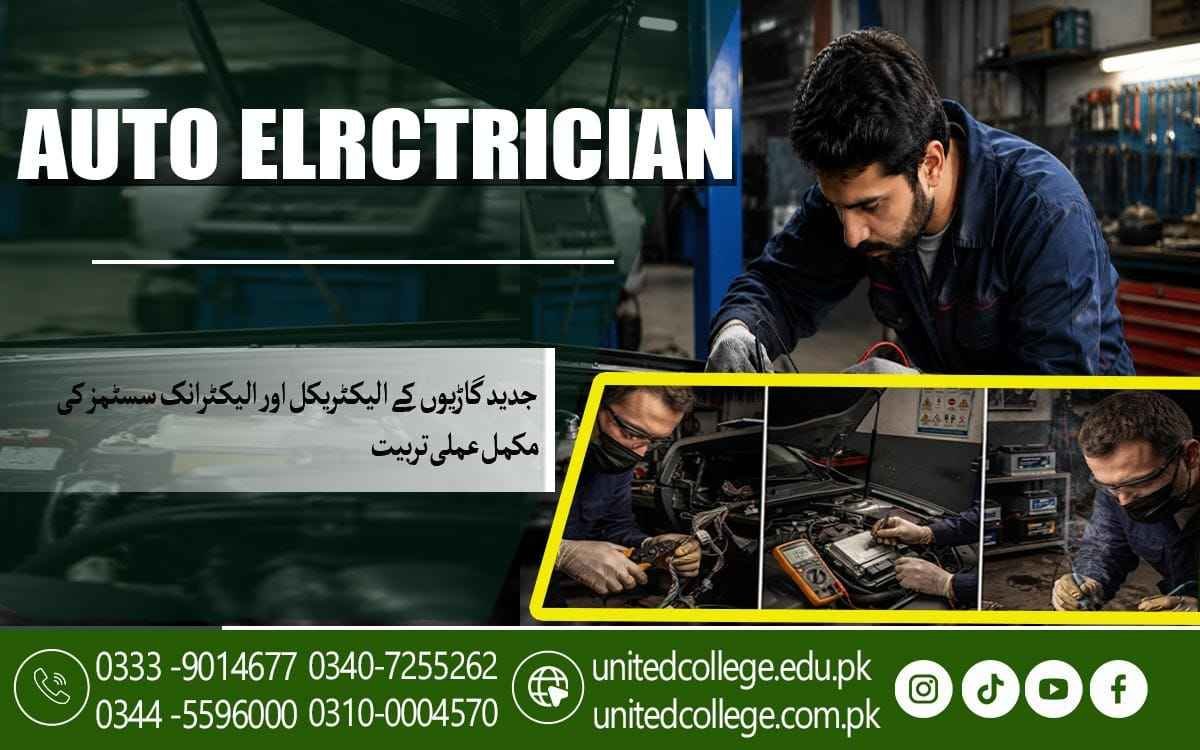

Auto Electrician Course in Hafizabad: Build Your Automotive Future
Master the Skills Behind Every Drive
A vehicle depends on more than its engine and mechanical parts. Electrical systems are equally important for starting, charging, lighting, ignition, sensors, and other essential functions. When a battery becomes weak, a wire is damaged, or an electrical component stops working, the vehicle may fail to operate properly.
This is where an auto electrician plays an important role. These technicians understand vehicle electrical systems and learn how to inspect wiring, test components, identify faults, and carry out suitable repairs. The Auto Electrician Course in Hafizabad at United College of Technology provides beginners, students, and job seekers with an opportunity to develop practical knowledge in this field.
Why Auto Electrical Skills Matter in Modern Vehicles?
Modern vehicles use a wide range of electrical and electronic components. Batteries, alternators, starter motors, sensors, lights, wiring, ignition systems, and control units all work together to support vehicle operation. When an electrical problem occurs, simply replacing a component may not solve the actual issue. A technician needs to understand the system and identify the source of the fault.
This makes auto electrical training valuable for learners who want to develop practical automotive repair skills. A strong understanding of electrical principles can help students recognize how different components work together and how a fault in one part can affect other parts of the vehicle.
What Students Learn in Auto Electrician Training?
The Auto Electrician Course in Hafizabad introduces learners to basic electrical concepts before moving toward practical automotive applications. Students can learn about electrical circuits, vehicle wiring, batteries, charging systems, starting systems, alternators, starter motors, ignition systems, lighting, sensors, and basic fault identification.
Learning these areas helps students develop a broader understanding of the vehicle electrical system. Instead of looking at each component separately, they can begin to understand how electrical power and signals move through different systems. This foundation is useful for beginners who want to enter automotive electrical work without depending entirely on previous experience.
Understanding Car Wiring and Electrical Connections
Wiring is an essential part of every vehicle electrical system. Electrical power and signals travel through wires and connections to reach different components. A damaged wire, loose connection, or poor contact can cause an electrical system to malfunction.
Through training, students can learn the basic purpose of car wiring, electrical connections, and related components. They can also understand why careful inspection is important when diagnosing a vehicle problem. Knowledge of wiring can help learners develop better automotive electrician skills and prepare them to handle common electrical issues in practical workshop environments.
Understanding the Vehicle’s Core Power and Starting Systems
The battery, alternator, and starter motor work together during vehicle operation. The battery provides electrical power, the starter motor helps turn the engine during starting, and the alternator restores electrical energy while the engine is running. Students can learn how these components operate and how problems within these systems may affect vehicle performance.
They can also explore basic battery and charging system concepts, along with alternator and starter motor troubleshooting. Understanding the relationship between these components is an important part of auto electrical education because a starting problem may not always be caused by the battery alone.
Essential Electrical Systems for Modern Vehicle Performance
Vehicle electrical work also includes ignition and lighting systems. Ignition components help support engine operation, while lighting systems provide visibility and contribute to driving safety. Sensors are also important in modern vehicles because they provide information to different electrical and electronic systems.
The course can help students understand the basic functions of these systems and how their electrical circuits operate. This knowledge gives learners a stronger foundation in car electrical repair and helps them understand how different vehicle systems depend on one another.
Strengthen Your Vehicle Troubleshooting Skills with Auto Electrical Training in Hafizabad
Identifying the actual cause of an electrical problem is one of the most important skills for an auto electrician. Some faults may be easy to notice, while others can result from damaged wiring, weak connections, faulty components, or interrupted electrical flow. The Auto Electrician Course in Hafizabad helps learners understand how to examine these issues carefully and follow a systematic approach instead of relying on guesswork.
During the training, students can learn the basics of electrical fault diagnosis and understand how to check different vehicle systems. They can also develop car electrical troubleshooting skills by learning what a system should do, identifying what is not working, and investigating the possible reason for the fault. This practical approach can help learners build confidence and develop useful skills for automotive electrical work.
Modern Diagnostic Tools for Accurate Vehicle Fault Finding
Modern automotive repair increasingly involves diagnostic equipment. These tools can provide useful information about vehicle systems and help technicians investigate problems that may not be visible through a basic inspection. During training, students can learn the purpose of diagnostic tools and understand how they support automotive diagnostics.
More importantly, they can learn that diagnostic equipment works best when combined with technical knowledge and proper troubleshooting methods. This combination of practical skills and diagnostic understanding can help learners become better prepared for modern automotive electrical work.
Practical Training for Real-World Skills
Practical exposure can make technical education easier to understand. Reading about circuits and components provides basic knowledge, but working with actual automotive systems can help learners connect theory with practice. At United College of Technology, practical-focused learning can help students become familiar with electrical components, vehicle wiring, tools, and basic troubleshooting procedures.
This approach allows learners to gradually develop confidence while understanding how automotive electrical systems work. Practical training is particularly useful for beginners because it allows them to apply what they learn instead of relying only on theoretical information.
Career Opportunities After Training
After developing basic knowledge and gaining practical experience, learners can explore different areas of the automotive service industry. They may seek opportunities in automobile workshops, vehicle service centers, repair garages, maintenance departments, and auto electrical businesses. The automotive repair skills developed during training can be useful for work involving vehicle wiring, electrical components, charging systems, starting systems, lighting, and basic fault diagnosis.
Career development in this field also depends on continued practice. As vehicle technology changes, technicians can improve their abilities by learning about newer electrical systems, electronic components, and diagnostic methods.
Start Learning Auto Electrical Skills in Hafizabad
The Auto Electrician Course in Hafizabad can provide a practical starting point for individuals who want to understand the electrical side of modern vehicles. From batteries and wiring to starting, charging, lighting, ignition, sensors, and troubleshooting, students can develop a foundation in important automotive electrical systems.
At United College of Technology, learners can connect basic technical knowledge with practical-focused training and gradually build confidence in automotive electrical work. For students, beginners, and job seekers interested in developing a practical technical skill, auto electrician training can be a useful step toward future opportunities in the automotive industry.
Frequently Asked Questions (FAQs)
A beginner does not need advanced automotive knowledge. Basic interest in vehicles, willingness to learn, and regular practice can provide a good starting point.
Electrical safety helps technicians work carefully around batteries, wiring, circuits, and other components while reducing the risk of incorrect handling.
Yes. Electrical diagrams can help technicians understand connections and trace the relationship between different parts of a vehicle's electrical system.
Fuses help protect electrical circuits by interrupting the circuit when excessive current passes through it.
Repeated practical work helps learners become more familiar with components, tools, inspection methods, and troubleshooting processes.
Yes. Electrical knowledge is increasingly relevant as automotive technology develops and vehicles use more sophisticated electrical and electronic systems.
Admission Open: Start Your Professional Journey Today!
Join United College of Technology and build a career with practical training, recognized certifications, and Gulf job support. Seats are limited.
Apply Now via WhatsAppContact Information
- Address: Rawalpindi: F-272 Main New Katarian Stop, Old IJP Road | Lahore Campus: Lahore, Pakistan
- Phone/WhatsApp: 0340-7255262 / 0333-9014677 / 0301-5044340 / 0310-0004570 / 051-8770756
- Website: unitedcollege.edu.pk
















Leave a Comment