


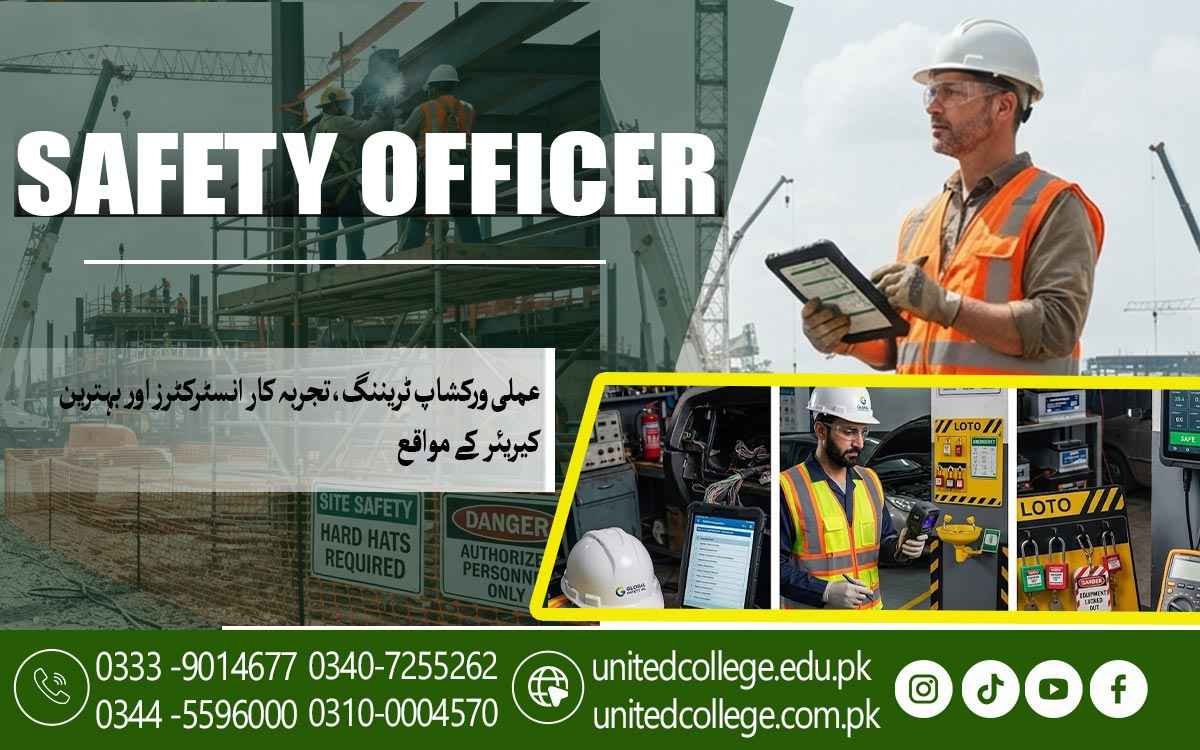

Safety Officer Course in Charsadda for Professional Growth
Safety Officer Course in Charsadda for Smarter Workplace Risk Prevention
A missing warning sign, an unsecured ladder, or a careless decision near operating machinery can turn an ordinary workday into a serious accident. Workplace safety depends on recognizing these dangers before someone gets hurt. In construction areas, factories, workshops, warehouses, and maintenance environments, people need clear procedures to protect themselves and their colleagues.
The Safety Officer Course in Charsadda introduces learners to essential safety principles and practical ways to identify workplace hazards. It is relevant to beginners, students, fresh learners, and job seekers who want to understand occupational safety without needing advanced technical knowledge.
Build a Strong Foundation Through Safety Officer Training in Charsadda
Workplace safety is a shared responsibility, but safety officers help organize preventive measures and encourage workers to follow established procedures. Safety Officer Training in Charsadda can introduce learners to workplace inspections, hazard reporting, risk assessment, safety signs, and accident prevention. For example, a workshop employee may leave tools in a walking path, creating a tripping hazard for other workers.
A safety-conscious person recognizes the problem, reports it when necessary, and helps ensure that the area is made safe through the correct procedure. An Occupational Health and Safety Training program can also explain how workplaces manage risks that affect workers' health and physical well-being.
Turn Hazard Identification Skills Into Better Risk Decisions
Identifying a dangerous condition is only the first step. Workers must also understand how serious the risk could be and which preventive measures are suitable. Risk Assessment Training introduces the process of considering possible harm, evaluating the level of risk, and selecting appropriate controls. For instance, an unstable stack of construction materials may fall onto people working nearby.
The area may need to be restricted while responsible personnel arrange safe storage. Similarly, a damaged electrical cable requires prompt reporting and appropriate action by qualified personnel. Developing Hazard Identification Skills helps learners recognize physical, electrical, chemical, and environmental dangers before they cause harm.
Strengthen Construction and Industrial Safety Awareness
Construction and industrial workplaces often involve changing conditions, heavy materials, machinery, electrical equipment, and activities that require careful coordination. Construction Safety Officer Course helps learners understand general precautions associated with ladders, elevated work areas, moving equipment, site access, and falling objects.
Industrial Safety Training introduces related concerns such as machine guarding, safe material handling, equipment maintenance, and electrical hazards. Each workplace has different requirements, so workers must follow the procedures and instructions that apply to their particular tasks. In Charsadda, learners interested in technical work, construction activities, repair services, or industrial environments can benefit from understanding these safety principles.
Prepare for Emergencies With Fire Safety Awareness
An emergency can develop quickly when flammable materials, electrical faults, overheating equipment, or unsafe storage practices create dangerous conditions. Fire Safety Awareness helps learners recognize common fire risks and understand the importance of prevention. Keeping exits clear, storing materials appropriately, following electrical safety procedures, and knowing how to raise an alarm can support a safer environment.
Emergency Response Training can introduce learners to evacuation procedures, emergency communication, assembly points, and the importance of following instructions from designated personnel. For example, if a worker notices smoke coming from equipment, the correct response is to alert others and follow the workplace emergency plan rather than attempting an unfamiliar repair.
Use Personal Protective Equipment to Reduce Exposure to Hazards
Protective equipment plays an important role when workplace hazards cannot be fully removed through other controls. Personal Protective Equipment (PPE) may include helmets, gloves, safety shoes, protective clothing, goggles, and hearing protection. Each item serves a particular purpose, and workers must use equipment that matches the hazards involved.
Learners should understand that PPE needs proper fitting, regular inspection, and correct use. Damaged or unsuitable equipment should be reported and replaced according to workplace procedures. Good Health and Safety Practices also include following instructions, keeping equipment in suitable condition, avoiding shortcuts, and maintaining an organized work area.
Learn From Everyday Workplace Situations and Safety Inspections – Safety Officer Course in Charsadda
Practical examples help learners connect safety principles with real-life situations they may encounter at work. In the Safety Officer Course in Charsadda, learners can understand how to identify workplace hazards, assess risks, and take appropriate preventive measures. For example, if a warehouse worker notices a damaged storage shelf carrying heavy materials, the worker should immediately report the issue and restrict access to the affected area according to workplace safety procedures.
Safety inspection procedures help safety officers identify unsafe conditions, record their observations, and communicate the need for corrective action. Proper reporting enables supervisors and relevant teams to investigate hazards and arrange suitable solutions. Through the Safety Officer Course in Charsadda, learners can also understand the importance of reporting near-miss incidents, even when nobody is injured.
Develop Practical Safety Skills Through Training at United College of Technology
Students, beginners, fresh learners, and job seekers can benefit from understanding how safety procedures operate in real working environments. The Safety Officer Course in Charsadda, offered by United College of Technology, is relevant to people who want to develop their knowledge of workplace hazards, accident prevention, protective equipment, and emergency procedures.
A Workplace Safety Course can provide a starting point for understanding these subjects and exploring further learning in occupational safety. Before enrolling, prospective learners should confirm the current course content, entry requirements, duration, and qualification details directly with the institution.
Make Responsible Safety Practices Part of Your Professional Development
Workplace safety requires continuous attention, practical judgment, and a willingness to learn. A person who understands safety signs, recognizes hazards, communicates concerns clearly, and follows established procedures can contribute to a more responsible working environment. For learners exploring safety-related responsibilities, developing these habits is an important step toward understanding professional expectations.
Safety knowledge can be relevant to construction, maintenance, manufacturing, warehousing, and other settings where people need to manage workplace risks. The Safety Officer Course in Charsadda gives interested learners a subject to explore as they develop their understanding of occupational health and safety. By combining suitable training with supervised practice, careful observation, and continued learning, individuals can strengthen their foundation for future responsibilities.
Frequently Asked Questions (FAQs)
A clear shift handover helps the next team understand unfinished tasks, equipment problems, restricted areas, and existing safety concerns before starting work.
Labels help workers identify chemical contents, understand relevant warnings, and follow appropriate handling and storage instructions. Missing or unclear labels should be reported.
They can use clear verbal explanations, demonstrations, suitable visual signs, and language workers understand to communicate important precautions.
Restricted access helps prevent unauthorized people from entering areas where maintenance, lifting operations, or other dangerous activities are taking place.
Visitors and temporary workers may be unfamiliar with site rules. Clear instructions, suitable supervision, and access controls help them understand workplace hazards.
Insufficient lighting can make obstacles, warning signs, uneven surfaces, and equipment controls difficult to see. Suitable lighting helps workers perform tasks more safely.
Admission Open: Start Your Professional Journey Today!
Join United College of Technology and build a career with practical training, recognized certifications, and Gulf job support. Seats are limited.
Apply Now via WhatsAppContact Information
- Address: Rawalpindi: F-272 Main New Katarian Stop, Old IJP Road | Lahore Campus: Lahore, Pakistan
- Phone/WhatsApp: 0340-7255262 / 0333-9014677 / 0301-5044340 / 0310-0004570 / 051-8770756
- Website: unitedcollege.edu.pk
















Leave a Comment