


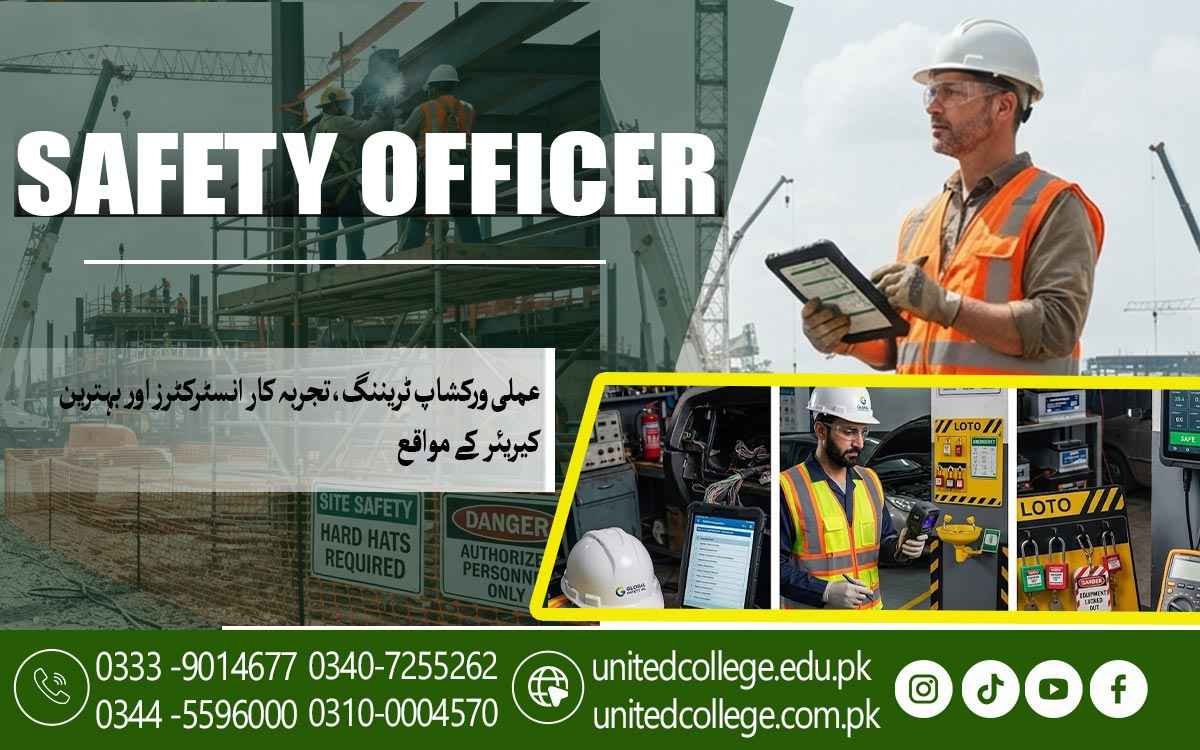

Safety Officer Course in Chitral for Risk Control Techniques
Understanding the Principles of Workplace Protection
Workplace protection involves identifying potential dangers and taking suitable measures to prevent injuries, illnesses, and property damage. Every working environment has different safety requirements depending on its activities, equipment, and materials. Understanding these requirements helps employees perform their duties more safely.
During the Safety Officer Course in Chitral, students can explore the basic principles of occupational health and safety, employee responsibilities, workplace safety policies, and accident prevention. They can also understand why safety awareness and clear communication are essential for maintaining a secure working environment.
A strong understanding of workplace protection helps learners recognize the importance of preventive action. Safety officers support organizations by observing working conditions, reporting unsafe practices, and helping employees understand the correct procedures for their tasks. These activities contribute to a safer and more productive workplace.
Recognizing Physical and Environmental Hazards
Physical and environmental hazards can create serious risks in construction sites, factories, workshops, and industrial facilities. Common examples include excessive noise, extreme temperatures, poor ventilation, slippery floors, falling objects, unsafe machinery, and exposure to harmful substances. Recognizing these hazards is an important step toward preventing workplace accidents.
The Safety Officer Course in Chitral introduces learners to different categories of workplace hazards and explains how they can affect employees. Students can develop an understanding of physical, chemical, electrical, biological, and ergonomic risks. They can also learn why workplace conditions should be monitored regularly to identify possible dangers.
Hazard recognition allows organizations to take corrective action before an incident occurs. Safety personnel may conduct inspections, observe employee activities, review work procedures, and report unsafe conditions to management. These practices help reduce exposure to hazards and support better workplace risk management.
Learning Occupational Safety Requirements
Occupational safety requirements provide guidance for protecting employees and maintaining appropriate working conditions. They may include procedures for equipment operation, electrical safety, chemical handling, emergency exits, fire prevention, and personal protective equipment. Following applicable requirements helps organizations manage risks and meet their safety responsibilities.
Students taking the Safety Officer Course in Chitral can learn about workplace safety policies, inspection procedures, safety documentation, and employee responsibilities. They can also understand why organizations must follow relevant laws, regulations, and industry-specific safety standards.
Safety officers help communicate safety instructions and encourage employees to follow approved procedures. Regular safety briefings, accurate documentation, and effective supervision can improve employee awareness. Knowledge of occupational safety requirements also helps learners recognize unsafe practices and understand how safety management systems support accident prevention.
Exploring Methods of Hazard Identification
Hazard identification is the process of finding conditions, materials, or activities that could cause harm. It is an essential part of occupational health and safety because unidentified hazards may lead to injuries, equipment damage, and other workplace incidents.
Through the Safety Officer Course in Chitral, students can explore methods such as workplace inspections, observation of work activities, safety checklists, employee feedback, and reviews of previous incidents. These methods help safety personnel identify potential dangers before they result in serious problems.
After identifying a hazard, the next step is to evaluate the associated risk and select appropriate control measures. For example, an exposed electrical wire may require isolating the affected area and arranging repairs by a qualified electrician. Understanding this process helps learners connect hazard identification with practical workplace safety improvements.
Preparing for Workplace Emergencies
Emergency preparedness helps organizations respond to unexpected incidents in an organized and safe manner. Workplace emergencies may include fires, electrical accidents, chemical spills, equipment failures, and other dangerous situations. Employees need to know how to report emergencies and follow the procedures established for their workplace.
The Safety Officer Course in Chitral introduces learners to emergency planning, fire prevention, evacuation procedures, alarm systems, and emergency communication. Students can understand why exit routes should remain clear and why employees need to know their designated assembly points.
Safety officers may support emergency drills, maintain awareness of workplace hazards, and help communicate emergency instructions. Proper preparation can reduce confusion and help employees respond appropriately during dangerous situations. Practical firefighting instruction should be provided by qualified trainers, and employees should only attempt to fight a fire when it is safe and they have received suitable training.
Understanding Protective Clothing and Safety Gear
Protective clothing and safety equipment help reduce exposure to workplace hazards. Depending on the job, employees may need safety helmets, protective footwear, gloves, goggles, face shields, hearing protection, or suitable respiratory equipment. Selecting the correct equipment depends on the hazards present and the protection required.
The Safety Officer Course in Chitral helps learners understand the purpose of personal protective equipment, commonly known as PPE. Students can explore how equipment should be selected, worn, inspected, maintained, and replaced when it becomes damaged or unsuitable for use.
Proper protective equipment is important in construction, electrical work, industrial maintenance, and manufacturing. However, PPE should be combined with other suitable control measures rather than treated as the only solution to workplace hazards. Safety officers help workers understand these requirements and encourage consistent use of appropriate protective equipment.
Conducting Workplace Safety Checks
Workplace safety checks help identify unsafe conditions and confirm whether established safety procedures are being followed. These checks may involve examining machinery, electrical equipment, emergency exits, fire protection systems, storage areas, and general housekeeping.
During the Safety Officer Course in Chitral, students can learn the purpose of workplace inspections and the importance of recording their findings accurately. They can explore the use of inspection checklists, hazard reports, equipment records, and corrective action plans to support effective safety management.
Identifying a problem is only the first step. Organizations must also take suitable corrective action and verify that the issue has been resolved. Regular inspections and follow-up procedures help reduce workplace risks and support continuous improvement in occupational health and safety.
Discovering Professional Paths in Safety Services
Occupational health and safety knowledge can be useful for individuals seeking employment in construction, manufacturing, engineering, logistics, and other industrial sectors. Safety personnel may assist with inspections, risk assessments, incident reporting, emergency planning, and employee safety awareness.
Completing a Safety Officer Course in Chitral can help learners develop foundational knowledge for pursuing entry-level safety-related opportunities. Depending on their qualifications and experience, potential roles may include safety assistant, junior safety officer, HSE assistant, or site safety support staff.
Career development in this field often requires further education, practical experience, and knowledge of relevant safety standards. Some employers may require recognized professional certifications or industry-specific training. Students should review job requirements carefully and choose additional qualifications that match their professional goals.
Frequently Asked Questions (FAQs)
The Safety Officer Course in Chitral is a training program that introduces students to workplace protection, occupational health and safety, hazard identification, risk assessment, and accident prevention.
The course may cover workplace hazards, safety regulations, emergency preparedness, fire prevention, personal protective equipment (PPE), workplace inspections, and safety management.
Fresh students, job seekers, and individuals interested in workplace safety may consider this course. Applicants should confirm the current admission requirements with United College of Technology.
A safety officer helps identify workplace hazards, conduct safety inspections, evaluate risks, maintain safety records, and encourage employees to follow appropriate safety procedures.
Depending on qualifications and experience, learners may pursue roles such as safety assistant, junior safety officer, HSE assistant, or site safety support staff.
Admission Open: Start Your Professional Journey Today!
Join United College of Technology and build a career with practical training, recognized certifications, and Gulf job support. Seats are limited.
Apply Now via WhatsAppContact Information
- Address: Rawalpindi: F-272 Main New Katarian Stop, Old IJP Road | Lahore Campus: Lahore, Pakistan
- Phone/WhatsApp: 0340-7255262 / 0333-9014677 / 0301-5044340 / 0310-0004570 / 051-8770756
- Website: unitedcollege.edu.pk
















Leave a Comment