


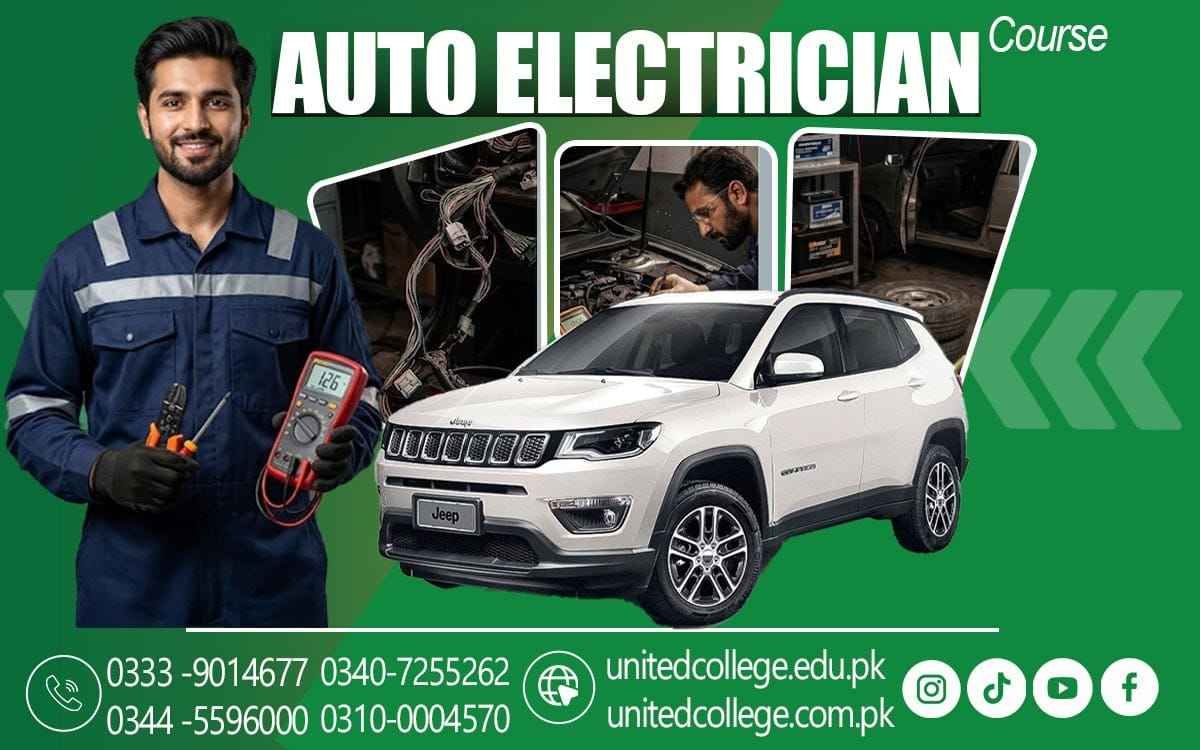

Auto Electrician Course in Okara | Become a Skilled Technician
When a Small Electrical Fault Can Stop an Entire Car
A modern car may look like a simple machine, but a complete electrical system works behind the scenes to keep many of its functions running properly. The Auto Electrician Course in Okara helps learners understand how the battery provides power, the starter motor helps start the engine, the alternator supports the charging system, and wiring connects different electrical components throughout the vehicle.
Headlights, indicators, dashboard functions, sensors, ignition systems, horns, and other accessories also depend on electricity. When a vehicle suddenly refuses to start, or an electrical function stops working, finding the actual problem requires knowledge and practical skills. This is where an Auto Electrician Course in Okara can be a useful choice for students, beginners, and job seekers who want to learn a practical automotive skill and understand how modern vehicle electrical systems operate.
What Students Learn in an Auto Electrician Course
An Auto Electrician Course in Okara introduces learners to the important electrical systems found in cars and other vehicles. Students can begin with simple concepts and gradually learn how electrical power moves through a vehicle and how different components work together. The training can include batteries, charging systems, alternators, starter motors, vehicle wiring, lighting systems, ignition systems, fuses, relays, switches, sensors, electrical accessories, and basic vehicle diagnostics.
Beginners do not need to have advanced knowledge of automobiles before starting because the learning process can move from basic concepts toward more practical subjects. Understanding what each component does and how it connects with other parts can help learners develop stronger auto electrician skills and become more confident when dealing with common vehicle electrical problems.
From Car Wiring to Finding Hidden Electrical Faults
Car wiring is an important part of automotive electrical work because wires and connections carry electrical power and signals between different parts of a vehicle. Almost every electrical function depends on properly connected wiring, and a damaged wire, loose connection, corroded terminal, blown fuse, or faulty switch can cause a system to stop working. Through car wiring and electrical work training, students can learn how to understand basic circuits, follow wiring paths, identify common electrical components, and recognize possible connection problems.
For example, if the headlights suddenly stop working, the problem may not always be the bulbs. A fuse, switch, wire, or connection could also be responsible. Learning how to investigate these possibilities instead of simply replacing parts can help learners develop better troubleshooting habits and useful automotive repair skills.
Understanding Batteries, Alternators, and Starter Motors
The battery, alternator, and starter motor are essential parts of a vehicle's electrical system, so they are important areas covered in the Auto Electrician Course in Okara. The battery provides the electrical power needed to start the vehicle and supports many electrical functions, while the alternator generates electrical power when the engine is running and helps maintain the battery’s charge. The starter motor uses electrical power to turn the engine during the starting process, making proper knowledge of these components important for understanding common vehicle starting and charging problems.
If any of these components, terminals, or connections develop a fault, the vehicle may experience starting difficulties, battery drainage, dim lights, or other electrical symptoms. Students can learn how these systems work together and why proper testing is important before replacing a component. This knowledge can help learners understand common workshop complaints and gradually build confidence in automotive electrical repair.
Practical Training That Turns Knowledge Into Skill
Auto electrical work is a hands-on field, so practical learning is an important part of becoming comfortable with vehicle electrical systems. During practical auto electrician training, students can practice identifying electrical components, checking battery connections, understanding alternators and starter motors, examining vehicle wiring, testing circuits, and investigating common electrical faults. Practical exercises allow learners to connect classroom concepts with real vehicle situations.
For example, instead of only reading that an alternator charges the battery, students can understand its role by studying its connections and learning how a charging problem can affect vehicle operation. Regular practice can also help beginners become familiar with basic testing tools, develop safer working habits, and approach electrical problems in a more organized way.
Learning Vehicle Diagnostics Instead of Guessing
Automotive technology continues to develop, and modern vehicles use many electronic components alongside traditional wiring. Through the Auto Electrician Course in Okara, students can learn basic concepts related to sensors, electronic components, and ECU systems. Sensors can monitor different vehicle conditions, while electronic control units can manage specific vehicle functions. This knowledge helps learners understand how newer vehicles differ from older models and why modern auto electricians need to understand both traditional wiring and electronic systems.
Through vehicle diagnostics and car electrical troubleshooting, learners can develop a step-by-step approach to finding such problems. They can learn to understand the customer's complaint, inspect relevant components, perform basic tests, and use the results to narrow down the possible cause. This logical approach is valuable because professional electrical repair is not simply about replacing parts; it is about identifying the actual problem.
Modern Vehicles Need More Than Traditional Wiring Knowledge
Automotive technology continues to develop, and modern vehicles use many electronic components alongside traditional electrical wiring. Sensors can monitor different vehicle conditions, while electronic control units can manage specific vehicle functions. Through the Auto Electrician Course in Okara, learners can be introduced to basic concepts related to sensors, electronic components, and ECU systems. They can understand why modern vehicles are different from older models and why an automotive technician needs to keep learning as vehicle technology changes.
Beginners do not need to master advanced electronics immediately. Building a strong foundation in basic electrical systems first can make it easier to understand newer technologies later. This combination of traditional wiring knowledge and modern electronic awareness can be useful for anyone planning to develop a long-term career in the automotive field.
How United College of Technology Supports Practical Learning
United College of Technology offers the Auto Electrician Course in Okara for learners who want to develop practical knowledge and skills related to automobile electrical systems. Structured training can help students understand different topics in an organized way instead of trying to learn everything independently. Learners can explore areas such as vehicle wiring, batteries, charging systems, starter motors, alternators, lighting, ignition-related components, sensors, electrical testing, and basic fault finding. Practical demonstrations, exercises, tools, vehicle components, and troubleshooting examples can help students connect theory with real automotive situations.
The purpose of skill-based training is to provide a strong foundation that learners can continue developing through regular practice and workshop experience. Career success cannot be guaranteed by any course, but proper training can give beginners a useful starting point for building their technical abilities.
Build Your Future With Practical Automotive Skills
After developing suitable auto electrical skills and gaining practical experience, learners can explore different career directions in the automotive industry. The Auto Electrician Course in Okara can help build a foundation for roles such as Auto Electrician, Car Electrician, Automotive Technician, Vehicle Electrical Technician, Workshop Technician, Diagnostic Assistant, and Auto Repair Technician. Skilled workers may look for opportunities in automobile workshops, garages, service centers, dealerships, vehicle maintenance businesses, and other automotive workplaces.
Some experienced technicians may eventually consider independent auto electrical work or starting a small repair service, depending on their skills, tools, experience, and business knowledge. Career growth depends on practical ability, experience, location, employer requirements, and continued learning. For students and beginners in Okara who want to turn their interest in cars into a practical skill, an Auto Electrician Course in Okara can be a meaningful first step toward developing confidence, gaining experience, and working toward a career as a skilled automotive technician
Frequently Asked Questions (FAQs)
An Auto Electrician Course in Okara is a practical training program that teaches students how vehicle electrical systems work. It can cover car wiring, batteries, charging systems, starter motors, alternators, lighting, ignition systems, sensors, and basic electrical troubleshooting.
Students can develop skills in vehicle wiring, battery testing, charging systems, starter motors, alternators, lighting, fuses, relays, electrical connections, fault finding, and basic vehicle diagnostics.
Yes. Beginners and fresh learners can consider the course even if they have limited knowledge of automobiles. Training can start with basic concepts and gradually move toward practical vehicle electrical work and troubleshooting.
Auto electrical work requires hands-on skills. Practical training allows learners to identify components, inspect wiring, check connections, understand electrical circuits, and investigate common vehicle faults instead of relying only on theoretical knowledge.
After gaining suitable skills and experience, learners can explore roles such as Auto Electrician, Car Electrician, Automotive Technician, Vehicle Electrical Technician, Workshop Technician, Diagnostic Assistant, or Auto Repair Technician.
With enough practical experience, suitable tools, technical knowledge, and business skills, an experienced technician may consider starting an independent auto electrical repair service or small workshop.
Admission Open: Start Your Professional Journey Today!
Join United College of Technology and build a career with practical training, recognized certifications, and Gulf job support. Seats are limited.
Apply Now via WhatsAppContact Information
- Address: Rawalpindi: F-272 Main New Katarian Stop, Old IJP Road | Lahore Campus: Lahore, Pakistan
- Phone/WhatsApp: 0333-9014677 / 0344-5596000 / 0310-0004570 / 0301-5044340 / 0340-7255262
- Website: unitedcollege.edu.pk















Leave a Comment