


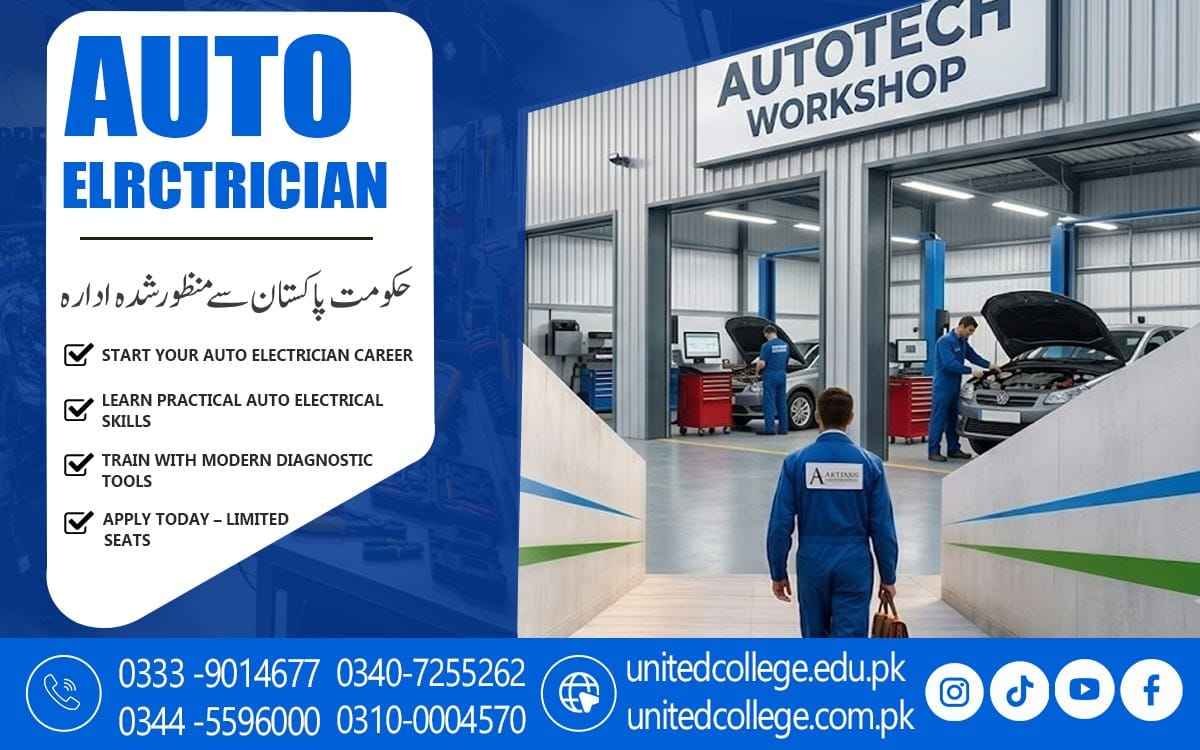

Auto Electrician Course in Upper Dir for Vehicle Maintenance
Exploring Basic Vehicle Electrical Principles
Basic electrical principles are essential for understanding how vehicle electrical systems operate. Students learn about voltage, current, resistance, electrical circuits, and circuit protection. These concepts explain how electricity travels through automotive wiring and supplies power to different components. In the Auto Electrician Course in Upper Dir, learners can develop an understanding of these fundamentals before moving on to more advanced automotive electrical topics.
Electrical components must receive the correct power supply to function properly. Students explore how batteries, switches, fuses, relays, and connectors contribute to circuit operation. They also learn why a loose connection, damaged wire, or faulty fuse may interrupt the flow of electricity. Understanding these issues helps learners recognize common problems that can affect vehicle starting, lighting, and electrical accessories.
A strong foundation in automotive electrical principles also supports effective troubleshooting. Students can learn how electrical testing helps determine whether a circuit is receiving power and whether a connection is functioning correctly. Through guided exercises and suitable practical training, learners can connect theoretical knowledge with real automotive applications and build confidence in understanding vehicle electrical systems.
Studying Automotive Wiring and Circuit Diagrams
Automotive wiring connects electrical components throughout a vehicle and allows them to work together. Wiring systems support essential functions such as ignition, engine starting, lighting, charging, and electronic accessories. Students studying the Auto Electrician Course in Upper Dir can learn about wiring harnesses, connectors, switches, relays, and fuses. They can also explore how proper wiring connections contribute to reliable vehicle performance.
Circuit diagrams are important tools for identifying electrical connections and understanding how a vehicle's systems operate. Learners can study common electrical symbols and follow wiring paths to understand how power reaches individual components. This knowledge helps them recognize possible faults involving broken wires, loose terminals, damaged connectors, and interrupted circuits. Reading wiring diagrams also makes electrical inspection more organized and systematic.
Practical training can help students apply wiring knowledge in workshop environments. Under suitable supervision, they may examine electrical connections, inspect wiring insulation, and use appropriate testing equipment to investigate circuit problems. The Auto Electrician Course in Upper Dir can introduce learners to these methods and explain why technicians should identify the cause of an electrical fault before replacing components. These skills are useful for developing a foundation in automotive wiring and electrical troubleshooting.
Understanding Battery Testing and Power Distribution
A vehicle battery supplies electrical power for engine starting and supports several electrical functions. Battery condition can influence starting performance, lighting, and the operation of electronic accessories. Students enrolled in the Auto Electrician Course in Upper Dir can learn about battery terminals, voltage testing, battery maintenance, and charging requirements. They can also explore common symptoms of battery problems, including slow engine cranking and difficulty starting a vehicle.
Battery testing helps technicians understand whether a battery is operating correctly or requires further inspection. Learners can become familiar with suitable testing tools and study how voltage measurements provide information about battery condition. They may also learn to identify corrosion on terminals, loose connections, and other visible issues that can affect electrical performance. Proper battery inspection is an important part of routine vehicle electrical maintenance.
Power distribution refers to how electrical energy reaches different vehicle components through wiring and protective devices. Students can study the role of fuses, relays, connectors, and electrical circuits in supplying power safely. They can also explore how a weak battery or poor connection may affect several vehicle functions. Understanding battery testing and power distribution provides useful knowledge for identifying common automotive electrical problems and maintaining reliable vehicle operation.
Learning the Functions of Starting and Charging Units
Starting and charging systems are essential for the normal operation of motor vehicles. A starter motor uses electrical power to turn the engine during starting, while an alternator generates electricity when the engine is running. Students in the Auto Electrician Course in Upper Dir can learn how these components work and understand their relationship with the vehicle battery and electrical circuits.
Starting system problems can occur for several reasons, including a weak battery, damaged wiring, faulty connections, or a defective starter motor. Learners can explore common symptoms such as slow cranking, clicking sounds, and failure to start. They can also study basic inspection methods that help technicians investigate possible causes. This knowledge encourages a systematic approach to automotive electrical fault diagnosis.
Charging system maintenance is equally important because the alternator helps supply electrical energy and maintain battery charge during vehicle operation. Students can learn to recognize charging warning lights and understand how alternator problems may affect vehicle electrical performance. The Auto Electrician Course in Upper Dir introduces learners to these important systems and helps them develop the knowledge needed for further practical training in automotive electrical maintenance.
Examining Vehicle Lighting and Signal Components
Vehicle lighting and signal systems play an important role in road safety and communication. Headlights help drivers see the road, while brake lights, indicators, hazard lights, and tail lights communicate important information to other road users. Students studying the Auto Electrician Course in Upper Dir can learn about these components and understand why regular inspection is necessary for safe vehicle operation.
Electrical lighting systems depend on properly functioning bulbs, switches, fuses, wiring, and connectors. When one of these components develops a fault, a light may stop working, become intermittent, or operate incorrectly. Learners can explore basic inspection procedures and understand how to identify visible signs of damage. They can also study the use of suitable testing tools to investigate common lighting circuit problems.
Modern vehicles may include additional lighting features and electronic controls that require a more detailed understanding of automotive electrical systems. Students can build their knowledge by studying different lighting arrangements and learning how electrical connections affect performance. The Auto Electrician Course in Upper Dir provides a foundation for understanding vehicle lights, signal components, and basic electrical maintenance procedures.
Practicing Electrical Fault Checking Techniques
Automotive electrical fault diagnosis involves identifying the underlying cause of a problem rather than simply replacing a suspected component. Common electrical issues include damaged wiring, weak batteries, blown fuses, corroded terminals, and faulty switches. Students in the Auto Electrician Course in Upper Dir can learn how these problems affect vehicle operation and why a careful inspection is necessary before carrying out maintenance.
Testing equipment plays an important role in automotive troubleshooting. Learners can develop an understanding of multimeters, test lamps, and other suitable diagnostic tools. They can study basic procedures for checking voltage, inspecting electrical connections, and testing selected circuits. Following appropriate workshop procedures helps students understand how to gather useful information and investigate faults systematically.
Accurate diagnosis can reduce unnecessary component replacement and make maintenance more efficient. Students can learn to follow wiring diagrams, observe symptoms, check possible causes, and evaluate test results before deciding what needs attention. Under supervised practical training, they can improve their problem-solving abilities and gain a better understanding of automotive electrical troubleshooting. These techniques provide useful preparation for further technical development in vehicle maintenance.
Maintaining Automotive Components Through Safe Methods
Regular maintenance helps keep automotive electrical components in suitable working condition. Batteries, wiring harnesses, connectors, charging systems, and electrical accessories should be inspected according to appropriate maintenance procedures. Students studying the Auto Electrician Course in Upper Dir can learn about routine inspections and understand how preventive maintenance may help identify problems before they cause more serious electrical failures.
Battery care is an important part of automotive electrical maintenance. Learners can study how to inspect terminals, recognize corrosion, check visible damage, and identify signs of poor electrical connections. They can also explore methods for examining wiring insulation, checking fuses, and inspecting accessories. Understanding these tasks helps students appreciate the importance of regular vehicle maintenance and careful handling of electrical components.
Safety must remain a priority during every maintenance activity. Students can learn to use appropriate tools, follow workshop instructions, and observe manufacturer recommendations when working with batteries and electronic systems. They should also understand the risks associated with short circuits, damaged insulation, and incorrect electrical connections. The Auto Electrician Course in Upper Dir can help learners develop responsible workshop habits and understand why complex electrical repairs should be performed by suitably trained technicians.
Preparing for Technical Work in Vehicle Workshops
The Auto Electrician Course in Upper Dir can provide a foundation for students who want to explore technical work in the automotive industry. By learning about vehicle wiring, battery systems, starter motors, alternators, lighting equipment, and electrical fault diagnosis, learners can develop an understanding of the tasks performed by automotive electricians. This knowledge can support further education and practical training in vehicle electrical maintenance.
After gaining appropriate training and experience, learners may explore opportunities in automobile workshops, vehicle service centers, automotive electrical businesses, and maintenance facilities. Some may begin by assisting experienced technicians while developing their practical abilities. Employment opportunities depend on individual skills, experience, local demand, and employer requirements. Continued practice can help students improve their understanding of automotive systems and become more familiar with workshop responsibilities.
Automotive technology continues to advance, with newer vehicles incorporating electronic control units, sensors, and increasingly complex electrical systems. Students who continue learning may develop additional knowledge of modern diagnostic methods and emerging vehicle technologies. The Auto Electrician Course in Upper Dir offers a starting point for this learning journey, while practical experience, safe working habits, and technical development can help learners work toward their future career goals.
Frequently Asked Questions (FAQs)
The Auto Electrician Course in Upper Dir introduces students to vehicle electrical systems, automotive wiring, battery testing, starter motors, alternators, and electrical fault diagnosis.
Beginners, students, and individuals interested in automotive technology can consider this course. Admission requirements depend on the training institute.
Students can learn automotive wiring, circuit inspection, battery maintenance, charging system checks, lighting inspection, and basic electrical troubleshooting.
The course duration varies according to the institute, syllabus, and training level. Students should contact their chosen institute for accurate details.
Automotive wiring connects electrical components and supplies power to different vehicle systems. Understanding wiring helps technicians inspect circuits and identify electrical faults.
Admission Open: Start Your Professional Journey Today!
Join United College of Technology and build a career with practical training, recognized certifications, and Gulf job support. Seats are limited.
Apply Now via WhatsAppContact Information
- Address: Rawalpindi: F-272 Main New Katarian Stop, Old IJP Road | Lahore Campus: Lahore, Pakistan
- Phone/WhatsApp: 0340-7255262 / 0333-9014677 / 0301-5044340 / 0310-0004570 / 051-8770756
- Website: unitedcollege.edu.pk
















Leave a Comment