


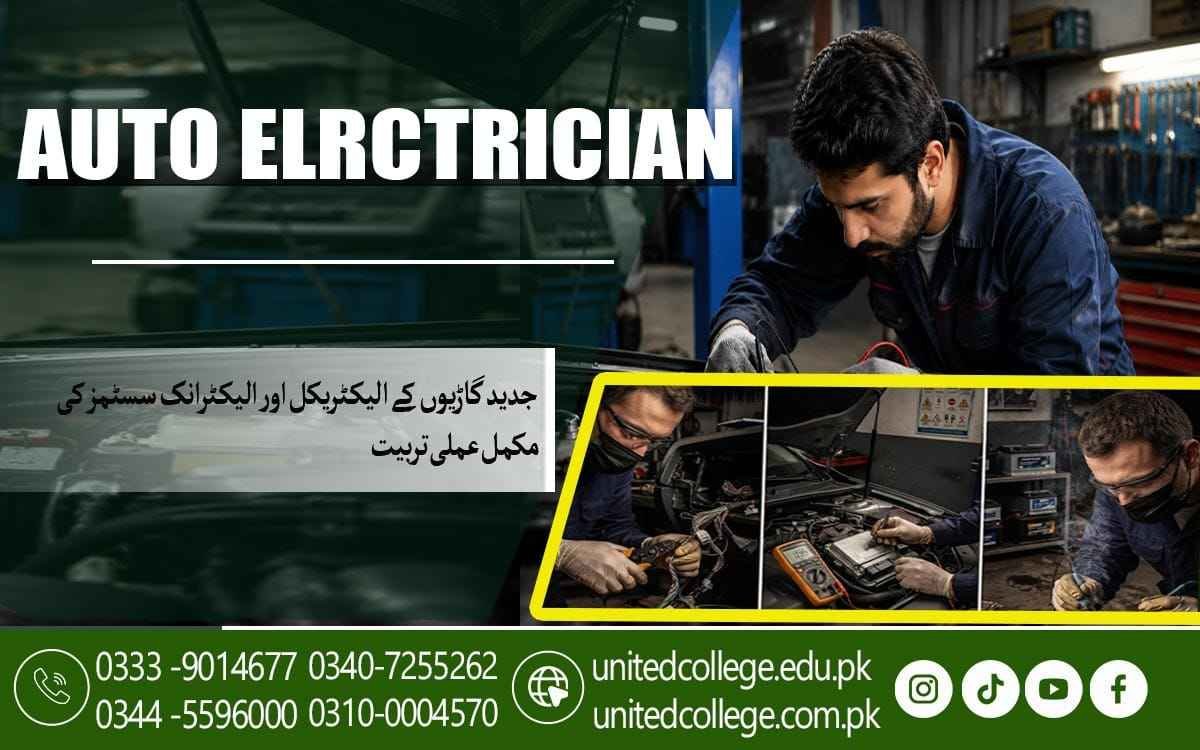

Auto Electrician Course in Vehari – Learn Skills for Your Future
Learn Practical Automotive Skills When a Small Electrical Problem Can Stop a Vehicle
A vehicle may have a powerful engine and good mechanical condition, but a small electrical problem can still leave it unable to start or operate properly. A weak battery, damaged wire, loose connection, faulty starter motor, charging issue, or blown fuse can affect important vehicle functions. Modern automobiles depend on electrical systems for starting, charging, lighting, indicators, dashboard functions, sensors, and many other features.
This is why learning automotive electrical work has become an important practical skill for people interested in vehicle repair. The Auto Electrician Course in Vehari offered by United College of Technology can help students and beginners understand how these systems work and how common electrical problems can be identified. Instead of only learning theoretical information, students can develop practical knowledge that can help them work more confidently around automotive electrical components and prepare for opportunities in the vehicle repair and maintenance field.
Turn Your Interest in Cars Into a Useful Technical Skill
Many people enjoy automobiles but do not know how to turn their interest into a career. Learning auto electrical work can provide a practical starting point for someone who likes vehicles and prefers hands-on work. The Auto Electrician Course in Vehari can introduce learners to vehicle wiring, batteries, charging systems, alternators, starter motors, ignition systems, lighting, fuses, relays, switches, and other electrical components. Students can gradually understand how these parts work together and why a problem in one area can affect another part of the vehicle.
For beginners in Vehari, structured auto electrician training can make the learning process easier because they can start with basic concepts and gradually move toward troubleshooting and repair-related tasks. With regular practice, learners can develop technical confidence and useful automotive repair skills that may support their future work in garages, workshops, service centers, or independent repair environments.
What Students Actually Learn During Auto Electrician Training
The Auto Electrician Course in Vehari can cover the major electrical systems that students are likely to encounter during automotive repair work. Learners can become familiar with the automobile electrical system, automotive wiring, battery systems, alternators, starter motors, ignition systems, lighting systems, fuses, relays, electrical switches, connections, sensors, and basic electronic components. The purpose is not simply to memorize component names but to understand their functions and recognize common signs of failure.
For example, if a vehicle does not start, a technician needs to consider several possibilities rather than immediately replacing the battery. The problem could be related to the battery, starter motor, wiring, connections, or charging system. By learning how to inspect and troubleshoot these areas, students can develop a more organized approach to vehicle electrical repair. This foundation can also help learners understand more advanced automotive electrical systems as their knowledge and experience grow.
From Car Wiring to Electrical Fault Diagnosis
Automotive wiring connects different electrical components and allows power and signals to reach the systems that need them. A damaged wire, loose connection, faulty switch, or blown fuse can create problems that may seem unrelated at first. During car wiring training, students can learn how vehicle wiring is arranged and how basic wiring diagrams can help them understand electrical circuits. They can also learn the importance of checking connections carefully before replacing expensive components.
Electrical fault diagnosis is another important area because technicians need to identify the actual cause of a problem instead of relying on guesswork. A vehicle may have dim lights, repeated battery drainage, starting problems, or an electrical accessory that stops working. Through practical troubleshooting, students can learn how to examine symptoms, perform basic checks, use suitable testing tools, and narrow down possible causes. These skills can become an important part of the work performed by an auto electrical technician.
Batteries, Alternators, and Starter Motors Need Proper Understanding
The battery, alternator, and starter motor are closely connected to the starting and charging functions of a vehicle. The battery supplies electrical power, the starter motor uses that power to help turn the engine during starting, and the alternator helps recharge the battery while the engine is running. A weak battery may cause slow starting, while a charging problem may cause the battery to lose power repeatedly. Through the Auto Electrician Course in Vehari, students can learn how these components work, understand common faults, and develop practical skills for checking and maintaining vehicle starting and charging systems.
A starter motor problem may prevent the engine from turning as expected. Students can learn about the battery and charging system, basic battery inspection, alternator operation, and starter motor problems as part of their training. Understanding these systems can help learners approach common vehicle electrical problems more logically and develop practical knowledge that can be applied in an automotive workshop.
Lighting, Ignition, Sensors, and Dashboard Warnings
Vehicle lighting is another important area of automotive electrical work. Headlights, brake lights, indicators, parking lights, and other lighting components depend on proper wiring, switches, fuses, bulbs, and connections. A light that stops working does not always mean that the bulb needs replacement; the fault may be somewhere else in the circuit. Students can learn how to inspect these systems and understand basic vehicle lighting system repair.
Training can also introduce learners to ignition systems, electrical switches, sensors, and dashboard warning lights. Modern vehicles use different sensors and electronic components to monitor and support vehicle functions, so understanding their basic purpose can be useful for future automotive technicians. Students do not need to learn every advanced electronic system at once. A structured approach can help them build knowledge gradually and develop a foundation for automotive diagnostics and vehicle electrical maintenance.
Hands-On Training Helps Beginners Build Real Confidence
Automotive electrical work is a practical field, and students can understand it better when they are able to work with actual components and practice different tasks. Reading about a battery, alternator, or wiring circuit can provide information, but physically identifying components, checking connections, practicing wiring, and using testing tools can make the learning experience more meaningful. United College of Technology offers the Auto Electrician Course in Vehari with a focus on practical skill development and hands-on automotive training.
Students can learn through practical activities related to component identification, wiring, electrical testing, troubleshooting, maintenance, and safe working procedures. This type of practical auto electrician training can be especially useful for beginners because it allows them to gradually become familiar with the tools and systems used in automotive work. The aim is to help learners build confidence through practice while developing skills that can later be strengthened through real workshop experience.
Where Auto Electrician Skills Can Take Your Career
Once learners develop their technical foundation and gain practical experience, they can explore different career directions within the automotive industry. Possible roles include Auto Electrician, Automotive Electrical Technician, Car Electrical Technician, Vehicle Diagnostic Technician, Automotive Workshop Technician, Auto Electrical Repair Worker, and Automotive Service Technician. These skills may be useful in automobile workshops, garages, auto electrical repair shops, vehicle maintenance businesses, dealership service departments, and commercial vehicle workshops. Beginners may start by assisting experienced technicians and gradually take on more responsibilities as their practical ability improves.
Some experienced technicians may also choose to work independently or establish a small auto electrical repair service. The course itself does not guarantee a job or a specific income, but it can provide a useful technical foundation for people who want to enter the automotive repair field. Continued practice, workplace experience, responsible working habits, and further learning can help students progress in their chosen career direction.
Build Your Automotive Future With a Skill You Can Practice
Learning a practical technical skill can be a valuable choice for students and job seekers who want a career based on hands-on work. The Auto Electrician Course in Vehari offered by United College of Technology can help learners develop knowledge of vehicle electrical systems, automotive wiring, batteries, alternators, starter motors, ignition systems, lighting, sensors, testing, and electrical troubleshooting. These skills can be useful not only for local automotive work but also as a foundation for gaining experience in other cities or exploring international opportunities when the required experience and qualifications are available.
The automotive industry continues to develop, and electrical and electronic systems are becoming increasingly important in vehicle maintenance and repair. For someone who enjoys automobiles, learning these skills can be more than simply learning how to fix a fault—it can be the beginning of a professional journey. Start with the right skills, practice them consistently, gain real experience, and turn your interest in automobiles into a career you can continue to build.
Frequently Asked Questions (FAQs)
The Auto Electrician Course in Vehari teaches students how vehicle electrical systems work and how to identify common electrical problems. The training covers areas such as wiring, batteries, alternators, starter motors, lighting, ignition systems, and basic diagnostics.
The course can be suitable for beginners, students, job seekers, car enthusiasts, and anyone interested in automotive electrical work. Previous professional experience is not necessarily required to start learning.
Students can learn automotive wiring, battery and charging systems, starter motors, alternators, fuses, relays, lighting systems, ignition systems, electrical testing, troubleshooting, and basic vehicle diagnostics.
Practical learning is an important part of developing auto electrical skills. Students can practice identifying components, checking wiring and connections, using basic testing tools, and troubleshooting common vehicle electrical faults.
After gaining practical experience, learners may explore roles such as Auto Electrician, Automotive Electrical Technician, Car Electrical Technician, Vehicle Diagnostic Technician, Workshop Technician, or Automotive Service Technician.
Admission Open: Start Your Professional Journey Today!
Join United College of Technology and build a career with practical training, recognized certifications, and Gulf job support. Seats are limited.
Apply Now via WhatsAppContact Information
- Address: Rawalpindi: F-272 Main New Katarian Stop, Old IJP Road | Lahore Campus: Lahore, Pakistan
- Phone/WhatsApp: 0333-9014677 / 0344-5596000 / 0310-0004570 / 0301-5044340 / 0340-7255262
- Website: unitedcollege.edu.pk
















Leave a Comment