


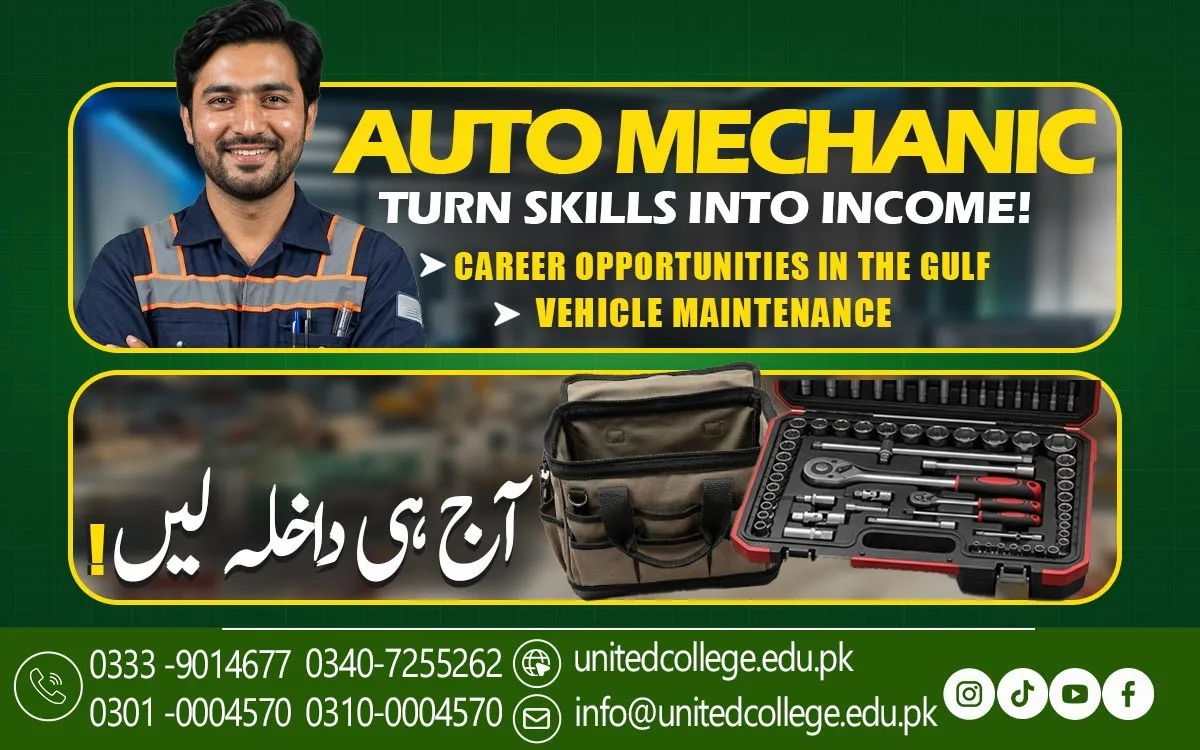

Auto Mechanic Course in Batagram to Explore Engine Care Methods
Auto Mechanic Course in Batagram Opens New Ways to Master Vehicle Repair Skills
Vehicles need more than fuel to keep running smoothly. They require regular servicing, careful inspections, and timely repairs to remain reliable on the road. When a car develops an unusual sound, struggles to start, or shows signs of poor performance, understanding its mechanical systems becomes valuable. The Auto Mechanic Course in Batagram is a relevant learning option for students, beginners, and fresh learners who want to explore the technical side of vehicles.
It introduces the importance of automotive knowledge and helps learners understand the work involved in maintaining and repairing cars. People interested in hands-on learning can use this subject as a starting point to explore vehicle maintenance, develop practical abilities, and consider future technical goals. Learning mechanics takes time, but a clear understanding of basic systems can make more advanced repair tasks easier to approach.
Explore the Hidden Systems Behind Everyday Vehicle Performance
A car may look simple from the outside, but several systems work together to keep it moving safely. The engine produces power, the braking system controls speed, and the steering system helps the driver guide the vehicle. Suspension components support the vehicle and help reduce the effects of uneven roads. The cooling system controls engine temperature, while the lubrication system helps reduce friction between moving parts.
Through the Auto Mechanic Course in Batagram, beginners can explore how these systems function and why each one needs proper care. For example, worn suspension parts may cause unusual movement over bumps, while a problem with the cooling system may lead to overheating. Students can learn to recognise the purpose of different components and understand how one fault may affect another part of the vehicle. This knowledge creates a useful foundation for studying engine repair basics and other automotive tasks.
Develop Practical Skills Through Servicing and Component Inspection
Routine servicing gives beginners a clear way to connect mechanical knowledge with real vehicle maintenance. Learners can explore how mechanics inspect engine oil, check fluid levels, examine filters, and look for visible leaks or damaged parts. They can also study the purpose of replacing an oil filter and why a suitable maintenance schedule matters. For instance, a clogged air filter can restrict airflow to the engine, while old engine oil may no longer protect moving components as effectively as intended.
A Car Mechanic Course can introduce the basic procedures used during vehicle servicing and explain why mechanics follow the correct sequence for each task. Students should learn to consult vehicle-specific instructions rather than assume every model requires the same method. With supervised practice, beginners can gradually improve their ability to recognise components, follow maintenance steps, and understand when a vehicle needs a more detailed inspection.
Recognise Warning Signs and Approach Mechanical Problems Logically
Identifying a vehicle problem requires observation, patience, and a sensible inspection process. Mechanics do not rely on one symptom alone because different faults can create similar warning signs. A car that loses power, for example, may have an issue involving fuel delivery, air intake, ignition, or another engine system. Similarly, a weak battery may cause starting difficulties, but damaged electrical connections or a faulty starter can produce related symptoms. Basic car troubleshooting teaches learners to examine the available clues before deciding what to check next.
They can learn to listen for unusual sounds, observe dashboard warning lights, inspect visible parts, and record when a problem occurs. The Auto Mechanic Course in Batagram is relevant to learners who want to understand this step-by-step approach to automotive repair. Correct diagnosis helps avoid unnecessary part replacement and makes repair work more organised. Beginners should also know when a problem requires advanced diagnostic equipment or assistance from an experienced technician.
Handle Mechanic Tools With Care and Follow Workshop Safety Rules
Good repair work depends on using the right tool correctly. Spanners, socket sets, screwdrivers, pliers, jacks, and torque wrenches each serve particular purposes. Learning their functions helps beginners select suitable equipment and avoid damaging vehicle components through incorrect use. For example, a torque wrench allows a fastener to be tightened to a specified level, which is important when working on components that require precise tightening. Safety must remain a priority throughout every workshop activity.
A vehicle should be supported with suitable equipment before anyone works beneath it, and learners should keep their hands away from moving parts. Hot engine components, fuel systems, batteries, and electrical connections also require careful handling. During practical mechanic training, students can develop habits such as keeping tools organised, following instructions, wearing appropriate protective equipment, and checking their work before finishing a task.
Connect Mechanical Knowledge With Common Vehicle Care Needs
Automotive skills can be useful beyond a repair workshop because basic knowledge helps people understand the condition of their own vehicles. A driver who notices an unfamiliar dashboard light, a change in braking performance, or an unusual vibration can recognise that the vehicle may need professional inspection. Someone with mechanical knowledge may also understand why tyre pressure checks, fluid inspections, and scheduled servicing should not be ignored. However, recognising a warning sign is different from repairing.
Brake faults, steering problems, fuel leaks, and other safety-related issues should receive proper attention from a qualified professional. Vehicle maintenance training helps learners understand what to inspect, what routine care involves, and when expert support is necessary. These lessons encourage careful decision-making instead of guesswork. For students in Batagram, learning about everyday automotive problems can make technical subjects easier to relate to real situations and help them build a stronger understanding of responsible vehicle care.
Build a Future Path Through Practice, Focus, and Technical Growth
Learning auto mechanics can create different opportunities for people who enjoy working with machines and solving practical problems. By enrolling in an Auto Mechanic Training in Batagaram, learners can develop basic knowledge and practical skills in vehicle maintenance and repair. With proper training and experience, they may explore opportunities to assist experienced mechanics, work in local garages, or seek employment in vehicle service centres.
However, completing a course alone does not guarantee employment or business success. Success in this field depends on continuous learning, safe working habits, patience, and attention to detail. Learners need to understand how to identify mechanical faults, use workshop tools correctly, and carry out repairs safely. Regular hands-on practice can help improve their confidence and technical abilities.
Discover the Learning Value of United College of Technology
For people interested in structured automotive learning, the Auto Mechanic Course offered by United College of Technology is worth exploring. It is relevant to learners who want to develop an understanding of vehicle systems, maintenance procedures, and the practical nature of automotive repair. Before enrolling, prospective students should review the current course information and confirm the subjects covered, practical learning arrangements, and other details important to their needs.
Beginners should look for an approach that explains mechanical concepts in simple language and gives appropriate attention to safe working practices. They should also consider whether they are ready to practise regularly and learn from mistakes under suitable guidance. A course can provide a foundation, while personal effort and further supervised experience help turn basic knowledge into stronger technical ability.
Move Forward With a Stronger Understanding of Automotive Skills
For anyone in Batagram who enjoys understanding how machines work, learning vehicle repair can be a practical way to explore a technical interest. The Auto Mechanic Course in Batagram introduces a subject that connects engine systems, routine servicing, fault detection, workshop safety, and responsible maintenance. Beginners can start with simple concepts, become familiar with common vehicle components, and gradually study more advanced procedures as their knowledge grows.
They should compare available learning options, check the details of any course they are considering, and think carefully about their long-term interests. There is no need to master every repair at once; steady progress begins with understanding the basics and applying them correctly. By combining curiosity with patience, safe practice, and a willingness to keep learning, students can develop a clearer picture of automotive work and decide how these skills may fit their plans.
Frequently Asked Questions (FAQs)
Wheel alignment helps keep the wheels positioned according to vehicle specifications. Incorrect alignment can contribute to uneven tyre wear and handling problems, so understanding its basics is useful during inspections.
A mechanic can inspect the radiator for visible leaks, damage, or signs of blockage when the engine is cool. Cooling-system checks should follow safe procedures because hot coolant can cause serious burns.
Mechanical faults involve physical parts such as gears, belts, or suspension components. Electrical faults may involve wiring, sensors, batteries, or connections. Some vehicle problems require checking both systems.
In vehicles with manual transmissions, the clutch helps connect and disconnect engine power from the transmission. Understanding its function helps learners recognise possible clutch-related problems.
A clean workspace helps mechanics locate tools, organise components, and reduce the risk of losing small parts. It also supports safer movement and a more organised repair process.
Manufacturer instructions explain the correct specifications and fitting procedures for particular components. Following them helps reduce installation errors and supports the vehicle's intended operation.
Admission Open: Start Your Professional Journey Today!
Join United College of Technology and build a career with practical training, recognized certifications, and Gulf job support. Seats are limited.
Apply Now via WhatsAppContact Information
- Address: Rawalpindi: F-272 Main New Katarian Stop, Old IJP Road | Lahore Campus: Lahore, Pakistan
- Phone/WhatsApp: 0340-7255262 / 0333-9014677 / 0301-5044340 / 0310-0004570 / 051-8770756
- Website: unitedcollege.edu.pk
















Leave a Comment