


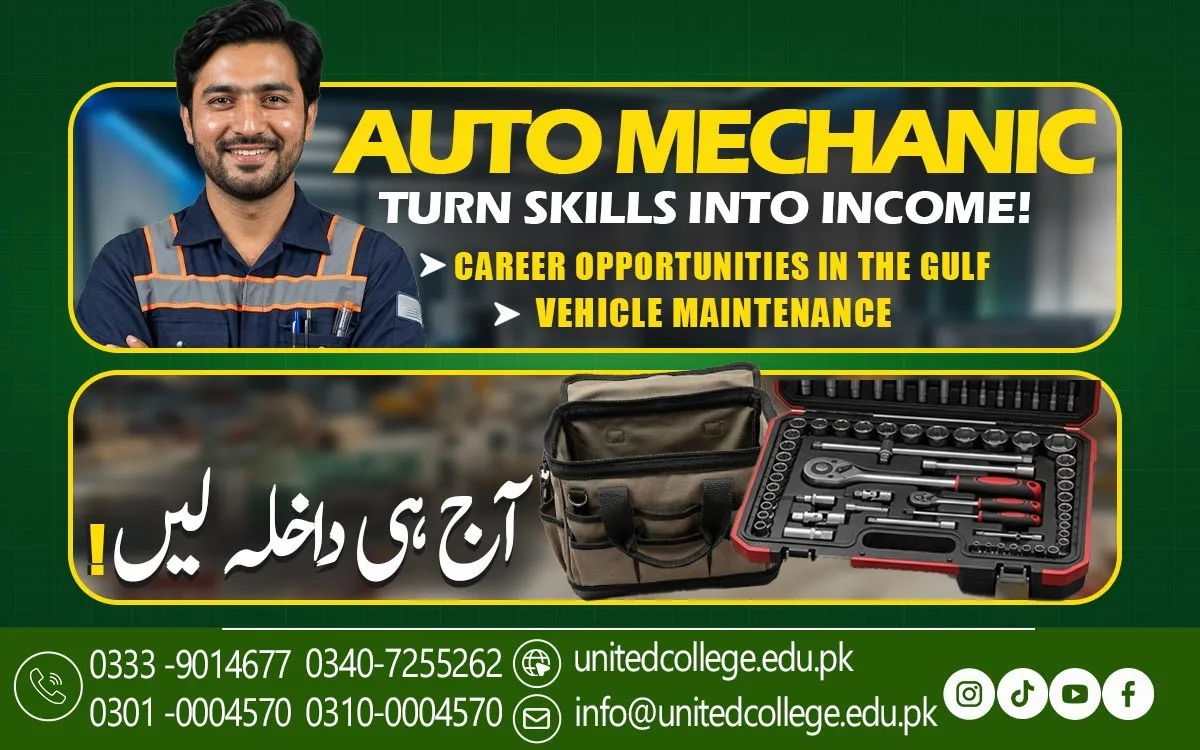

Auto Mechanic Course in Mardan for Engine Care
Understanding Modern Automobile Engine Components
The Auto Mechanic Course in Mardan is a valuable learning opportunity for students who want to understand vehicle engines and develop practical automotive knowledge. Modern automobiles contain different mechanical components that work together to provide smooth and reliable performance. Learning about pistons, cylinders, crankshafts, camshafts, valves, and other engine parts helps students understand how an engine produces power. This knowledge builds a strong foundation for anyone interested in automobile maintenance and mechanical work.
Understanding engine components also helps learners recognize the functions of different parts and their importance in vehicle operation. For example, pistons move inside cylinders, while the crankshaft converts their movement into rotational motion. The camshaft controls the opening and closing of engine valves, allowing air and fuel to enter and exhaust gases to leave where applicable. Learning these basic functions makes it easier for students to understand engine operation and identify possible mechanical problems.
Practical automotive education allows students to connect theoretical knowledge with real workshop activities. Under qualified supervision, learners can observe engine components, study their construction, and understand how different parts work together. This experience helps them develop confidence when dealing with automobile engines. A strong understanding of engine components is an important first step toward learning more advanced inspection, maintenance, and troubleshooting procedures.
Learning Engine Inspection and Maintenance Methods
Regular engine inspection and maintenance are essential for keeping vehicles in good working condition. Students enrolled in the Auto Mechanic Course in Mardan can learn how to check engine oil levels, examine belts and hoses, identify fluid leaks, and recognize unusual engine sounds. They can also understand the importance of following maintenance schedules and using the correct tools for different inspection tasks. These practices help identify potential problems early and maintain vehicle reliability.
During training, learners can study different maintenance procedures used in automobile workshops. These may include checking filters, examining visible engine connections, inspecting coolant levels when the engine is cool, and looking for damaged or worn components. Students also learn that different vehicles have different maintenance requirements, so manufacturers' recommendations should be followed. Understanding these procedures helps learners recognize the importance of regular servicing and timely attention to mechanical issues.
Developing proper inspection habits can help students prepare for practical responsibilities in the automotive industry. A mechanic needs to examine vehicle components carefully, identify signs of wear, and record any issues that require further investigation. Training can introduce learners to systematic inspection methods and safe workshop practices. With continued practice and guidance, students can build the knowledge needed to assist experienced mechanics with routine vehicle maintenance.
Exploring Common Engine Performance Problems
Engine performance can be affected by several issues, including overheating, unusual noises, excessive fuel consumption, and difficulty starting a vehicle. During automotive training, students learn how to recognize these warning signs and understand their possible causes. They can develop the ability to inspect engine components and follow basic troubleshooting procedures. Understanding these problems helps learners build the technical knowledge needed to assist with vehicle servicing and routine engine maintenance.
Different engine problems may produce similar symptoms, so careful inspection is essential before deciding what needs attention. For example, difficulty starting a vehicle may be related to the battery, starter motor, fuel delivery, or ignition system, depending on the vehicle. Overheating may involve a coolant leak, a faulty thermostat, a radiator problem, or another cooling-system issue. Students learn to consider possible causes rather than replacing parts without proper examination.
Learning basic troubleshooting methods helps students develop logical thinking and problem-solving abilities. They can study how to collect information about a fault, inspect relevant components, and use suitable diagnostic methods under supervision. Modern vehicles may also require electronic diagnostic equipment to identify stored fault codes. By understanding both traditional inspection techniques and modern diagnostic approaches, learners can build a foundation for working with different types of automobiles.
Identifying Mechanical Faults in Vehicles
Identifying mechanical faults is an important part of an auto mechanic's work. Problems with engine components, belts, hoses, and other mechanical parts can affect a vehicle's performance and reliability. Students learn how to observe symptoms, inspect relevant components, and understand when a part may require adjustment, repair, or replacement. Developing these skills encourages careful working habits and highlights the importance of accurate fault identification before carrying out maintenance.
Mechanical fault identification is an important part of the Auto Mechanic Course in Mardan, helping students understand how to examine vehicle components for visible damage, unusual movement, wear, and fluid leakage. Learners can study how to recognize damaged belts, loose connections, worn engine mounts, and problems in other mechanical systems. They can also learn how unusual noises and vibrations may indicate underlying vehicle faults. These observations help students understand the importance of careful inspection before recommending maintenance or repairs.
Accurate fault identification can reduce unnecessary repairs and improve the quality of vehicle maintenance. During practical training, students should learn to document inspection findings and communicate possible problems clearly to supervisors or customers. They should also understand when a fault requires specialist equipment or the attention of an experienced technician. Developing these habits helps learners approach automotive work responsibly and prepares them for further technical learning.
Understanding Lubrication and Cooling Systems
Lubrication and cooling systems play an essential role in protecting automobile engines. The lubrication system helps reduce friction between moving parts, while the cooling system controls engine temperature during operation. Students can learn about engine oil, oil filters, radiators, coolant, water pumps, and related components. They also gain an understanding of common warning signs, such as low oil levels and overheating. This knowledge helps learners appreciate how proper maintenance supports engine reliability and service life.
The lubrication system circulates oil through important engine components to reduce friction and help control wear. Students can study the purpose of oil filters, oil pumps, and the correct use of manufacturer-recommended engine oil. They can also learn why old or insufficient oil may affect engine performance. Understanding these functions helps learners recognize the importance of routine oil checks and timely servicing according to the vehicle's maintenance schedule.
The cooling system helps prevent the engine from becoming excessively hot during operation. Learners can explore the functions of the radiator, thermostat, cooling fan, water pump, and coolant passages. They can also study common cooling-system problems, including coolant leaks and restricted airflow. Safe handling is essential because hot coolant and pressurized systems can cause serious burns. Students should learn to inspect these systems only by following proper safety procedures and allowing the engine to cool when required.
Learning Basic Automotive Tool Handling
Automotive tools play an essential role in vehicle inspection, maintenance, and servicing. Students enrolled in the Auto Mechanic Course in Mardancan become familiar with spanners, socket sets, screwdrivers, pliers, torque wrenches, and other commonly used workshop equipment. They can learn about the purpose of each tool and how to select the appropriate equipment for different mechanical tasks. Proper tool handling helps reduce mistakes and supports accurate maintenance work.
Different automotive tasks require different tools, and using the correct equipment helps improve accuracy. For example, socket sets are useful for removing and tightening suitable fasteners, while torque wrenches help apply the specified tightening force to components. Students can learn how to select the appropriate tool, inspect it for damage, and follow workshop instructions. They should also understand that incorrect tool use can damage components or create safety risks.
Practical tool-handling activities help learners become more familiar with workshop procedures. Under supervision, students can practise organizing equipment, preparing a work area, and using hand tools for basic inspection and maintenance tasks. They can also learn the importance of wearing suitable protective equipment and following instructions when using lifting equipment or power tools. These habits support a safer working environment and help learners prepare for the responsibilities of an automotive workshop.
Practicing Routine Vehicle Inspection Procedures
Routine vehicle inspections help identify possible problems before they become more serious. Students can learn to check engine oil, coolant levels, battery connections, belts, hoses, lights, and visible signs of leakage. They can also understand how to record inspection findings and report issues that require further attention. These procedures are valuable for maintaining vehicle performance and supporting road safety. Consistent practice helps learners develop a systematic approach to automotive maintenance.
A complete basic inspection may also involve examining tyres, checking visible brake components where appropriate, reviewing dashboard warning lights, and confirming that essential vehicle systems operate correctly. Students can learn to follow a checklist so that important areas are not overlooked. They should understand that inspection procedures vary according to the vehicle and the task being performed. Following manufacturer recommendations and workshop guidelines helps ensure that inspections are carried out properly.
Recordkeeping is another useful part of routine vehicle inspection. Learners can study how to document the condition of inspected components, note unusual observations, and communicate maintenance requirements clearly. Accurate records help mechanics track recurring issues and plan appropriate servicing. Through supervised practice, students can develop attention to detail and understand how routine inspection supports vehicle reliability, customer service, and responsible workshop operations.
Exploring Career Opportunities in Engine Maintenance
Completing an Auto Mechanic Course in Mardan can help students prepare for entry-level opportunities in automobile workshops, vehicle service centres, and maintenance businesses. With suitable practical experience, learners may work as mechanic assistants, automotive service workers, or junior maintenance technicians. Some may eventually consider establishing their own vehicle maintenance business after gaining sufficient experience and understanding local business requirements. Continued learning about modern engines, diagnostic equipment, and automotive technology can also support professional development.
The automotive industry includes different areas of work, such as engine maintenance, general vehicle servicing, mechanical inspection, and fault diagnosis. Students who develop strong practical abilities may choose to specialize in a particular area as they gain experience. Knowledge of modern vehicle systems can also be helpful because many automobiles combine traditional mechanical components with electronic controls. Building a solid technical foundation can help learners understand these systems and prepare for further training.
Career development requires more than completing a course. Employers may also value practical experience, punctuality, communication skills, problem-solving abilities, and a responsible approach to workshop safety. Students can improve their prospects by practising regularly, learning from experienced mechanics, and keeping up with changes in automotive technology. The Auto Mechanic Course in Mardan can be a starting point for individuals who want to explore technical employment or build the skills needed for future opportunities in vehicle maintenance.
Frequently Asked Questions (FAQs)
The Auto Mechanic Course in Mardan teaches students about automobile engines, mechanical components, vehicle inspection, and basic maintenance procedures.
Students can learn about engine components, lubrication and cooling systems, automotive tools, mechanical faults, and routine vehicle inspections.
Individuals interested in automobile maintenance and mechanical work can explore this course. Applicants should check the institute's admission requirements before enrolling.
Automotive courses may include practical activities involving tools, engine components, and inspection procedures. Students should confirm the practical training facilities with the institute.
Depending on their training and experience, students may pursue entry-level opportunities in automobile workshops, vehicle service centres, and maintenance businesses.
Admission Open: Start Your Professional Journey Today!
Join United College of Technology and build a career with practical training, recognized certifications, and Gulf job support. Seats are limited.
Apply Now via WhatsAppContact Information
- Address: Rawalpindi: F-272 Main New Katarian Stop, Old IJP Road | Lahore Campus: Lahore, Pakistan
- Phone/WhatsApp: 0340-7255262 / 0333-9014677 / 0301-5044340 / 0310-0004570 / 051-8770756
- Website: unitedcollege.edu.pk
















Leave a Comment