


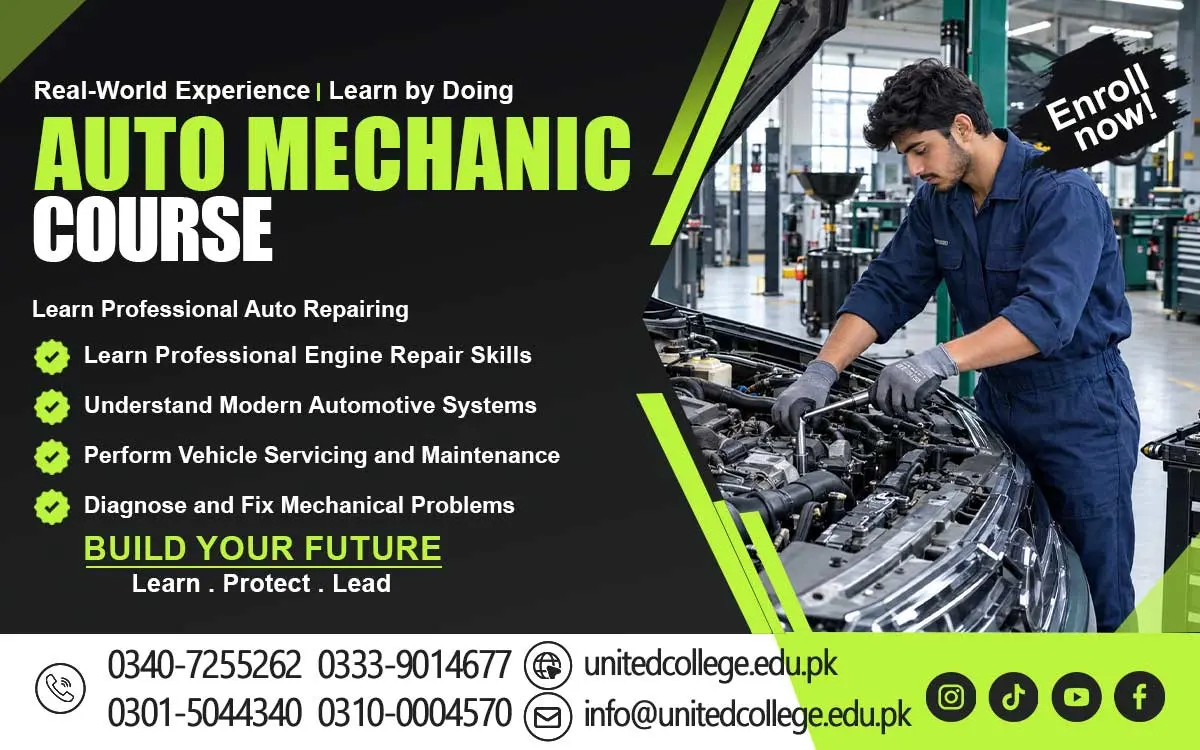

Auto Mechanic Course in Swabi for Vehicle Diagnostics
Understanding Automotive Diagnostic Equipment
The Auto Mechanic Course in Swabi offered by United College of Technology introduces students to automotive diagnostic equipment and its importance in modern vehicle maintenance. Today, many vehicles use electronic sensors, control units, and computerized systems to monitor engine performance and other vehicle functions. Diagnostic equipment helps mechanics examine these systems, identify possible faults, and understand why a vehicle may not operate correctly. Students can learn about basic diagnostic scanners, multimeters, code readers, and other tools commonly used in automobile workshops.
Learners can explore how diagnostic tools connect to a vehicle's onboard diagnostic port to retrieve information about certain engine and electronic system problems. They can understand the difference between basic code readers and more advanced diagnostic scanners that provide additional information. Students can also learn about the importance of selecting the correct equipment for a particular vehicle and following the manufacturer's recommendations. This knowledge helps learners understand how technology supports accurate automotive inspection.
In addition to identifying equipment, students can develop an understanding of safe tool handling and proper testing procedures. They can explore why diagnostic results should be considered alongside physical inspections and other relevant information. A fault code does not always identify a failed component directly, so mechanics must investigate the underlying cause before recommending repairs. Learning these principles can help students build a strong foundation for further automotive training and practical workshop experience.
Learning Methods for Identifying Vehicle Faults
The Auto Mechanic Course in Swabi helps students understand different methods for identifying faults in automobiles. Vehicle problems can develop in engines, braking systems, electrical circuits, cooling systems, fuel delivery components, and transmissions. Mechanics need to examine symptoms carefully before deciding which parts require further investigation. Students can learn how to collect information about a vehicle's condition, listen to the driver's description of the problem, and perform basic visual inspections.
Learners can explore common warning signs, including unusual engine noises, difficulty starting, excessive vibration, fluid leakage, overheating, and reduced fuel efficiency. They can understand how these symptoms may indicate different mechanical or electrical issues. For example, a starting problem could be related to the battery, starter motor, electrical connections, or fuel system. Examining the symptoms systematically helps mechanics narrow down possible causes instead of replacing components without sufficient evidence.
Another important part of fault identification is following an organized inspection process. Students can learn to check simple causes first, record their findings, and use suitable diagnostic tools when necessary. They can also understand why technicians should compare test results with manufacturer specifications. Developing these habits helps learners improve their observation, reasoning, and troubleshooting abilities, which are useful for future work in automobile garages and vehicle service centers.
Exploring Engine Warning Lights and Error Codes
The Auto Mechanic Course in Swabi introduces learners to engine warning lights and diagnostic trouble codes used in many modern vehicles. Dashboard warning lights inform drivers when certain systems require attention. The check-engine light, for example, may indicate a problem involving engine management, emissions, sensors, or related components. Students can learn why warning lights should not be ignored and how mechanics use suitable diagnostic equipment to investigate the cause.
Diagnostic trouble codes provide information about a condition detected by a vehicle's electronic monitoring system. Learners can explore how mechanics retrieve these codes, understand their general meaning, and use additional tests to investigate possible faults. They can also learn that one code may have several possible causes. A sensor-related code, for instance, does not automatically mean the sensor itself has failed; wiring, connectors, power supply, or another component may be responsible.
Students can also understand the importance of recording codes and other diagnostic information before clearing them. Proper testing helps mechanics determine whether a fault is active, intermittent, or related to a previous problem. Warning lights should be interpreted according to the vehicle manufacturer's instructions, especially when they indicate a serious engine or safety concern. This knowledge helps learners develop a more accurate approach to vehicle inspection and electronic fault diagnosis.
Studying Electronic Vehicle Control Systems
The Auto Mechanic Course in Swabi helps students explore electronic vehicle control systems and their role in modern automotive technology. Many vehicles use electronic control units to manage engine operation, fuel delivery, ignition timing, transmission functions, and other systems. These units receive information from sensors and use programmed instructions to control different vehicle components. Understanding this relationship helps learners recognize how electronic technology contributes to vehicle performance, efficiency, and reliability.
Students can study the basic functions of sensors, actuators, wiring harnesses, connectors, and electronic control modules. Sensors measure conditions such as temperature, pressure, engine speed, and airflow. The control unit processes this information and sends commands to relevant components. Learners can explore simple examples of how sensor information influences engine operation and why an electrical fault can sometimes produce mechanical symptoms.
Electronic systems also require careful testing and correct diagnostic procedures. Students can learn why mechanics inspect wiring connections, check relevant power and ground circuits, and consult technical information before replacing electronic components. They can also understand the importance of using suitable testing equipment and avoiding damage to sensitive vehicle electronics. Developing this knowledge can prepare learners for more advanced study of automotive electrical systems and computerized vehicle diagnostics.
Identifying Common Mechanical Problems
The Auto Mechanic Course in Swabi introduces students to common mechanical problems that can affect vehicle operation. Automobiles contain numerous moving components that experience friction, heat, vibration, and regular wear. Problems may develop in engines, clutches, gearboxes, suspension systems, cooling arrangements, and steering components. Learners can study the symptoms associated with these problems and understand how routine inspection can help identify issues before they become more serious.
Students can explore examples such as engine overheating, oil leakage, worn belts, damaged hoses, unusual exhaust smoke, and abnormal noises. They can learn how mechanics examine affected components and consider different possible causes. For instance, overheating may result from a coolant leak, a faulty thermostat, a damaged radiator, or a cooling fan problem. Correct diagnosis requires more than identifying the symptom; the mechanic must investigate the reason behind it.
Learners can also understand how preventive maintenance supports the reliable operation of vehicles. Regular checks of fluid levels, belts, hoses, tires, and other components can reveal signs of deterioration. Students can explore maintenance schedules and learn why recommended service intervals vary between vehicles. This knowledge helps build a practical understanding of mechanical inspection and prepares learners for further training in automotive maintenance and repair.
Understanding Diagnostic Testing Procedures
The Auto Mechanic Course in Swabi helps learners understand diagnostic testing procedures used to examine vehicle systems and locate possible faults. Proper testing follows an organized process that begins with gathering information about the problem. Mechanics may ask about warning lights, unusual sounds, driving conditions, and changes in vehicle performance. They can then conduct a visual inspection and determine which tests are appropriate for the reported symptoms.
Students can explore different testing methods, including battery voltage checks, electrical continuity tests, fluid inspections, diagnostic code scanning, and manufacturer-recommended component tests. They can learn how to select suitable equipment, follow safety instructions, and compare readings with the correct technical specifications. Understanding these methods helps learners appreciate the importance of reliable measurements when investigating automotive problems.
Recording test results is another important part of the diagnostic process. Learners can understand how notes, measurements, and diagnostic codes help mechanics compare findings and explain their conclusions. They can also study why a suspected fault should be confirmed before any repair is recommended. By learning systematic testing procedures, students can improve their technical reasoning and develop useful skills for supervised automotive workshop practice.
Learning Systematic Automotive Troubleshooting
The Auto Mechanic Course in Swabi introduces students to systematic automotive troubleshooting, a process used to identify the causes of vehicle problems. Troubleshooting requires careful observation, logical thinking, and a step-by-step approach. Rather than immediately replacing a suspected component, mechanics gather information, inspect relevant systems, and conduct suitable tests. This approach can reduce unnecessary repairs and help ensure that the actual cause of a problem is addressed.
Students can learn to begin with the reported symptoms and identify possible explanations. They can then inspect the relevant components, review diagnostic codes where appropriate, and carry out tests to confirm or rule out possible causes. For example, if an engine fails to start, the mechanic may need to examine the battery, starter circuit, fuel delivery, ignition system, and other relevant areas. Each test provides information that helps guide the next step.
Troubleshooting also involves verifying the results after maintenance or repair work. Learners can understand why mechanics should confirm that the original symptom has been resolved and check for any remaining warning indicators. They can explore the importance of accurate records, clear communication, and following workshop procedures. These habits help students build problem-solving skills that are valuable in automotive maintenance, diagnostics, and repair services.
Exploring Careers in Vehicle Diagnostics
The Auto Mechanic Course in Swabi can help learners explore career opportunities related to vehicle diagnostics and automotive maintenance. As vehicles increasingly incorporate electronic control systems and computerized technology, diagnostic knowledge is becoming an important part of automotive servicing. Students who understand basic inspection procedures, diagnostic equipment, warning lights, and mechanical systems can develop a foundation for further technical learning.
After suitable training and practical experience, learners may explore entry-level positions in automobile workshops, vehicle service centers, garages, and maintenance facilities. Possible areas of interest include general automotive servicing, electrical system inspection, diagnostic assistance, and mechanical troubleshooting. Career opportunities depend on qualifications, technical ability, practical experience, and employer requirements. Additional training can help learners progress toward more specialized automotive roles.
Students interested in this field should focus on building both theoretical understanding and practical skills. Familiarity with diagnostic scanners, electrical testing equipment, workshop safety, and manufacturer-recommended procedures can be useful. Good communication and careful record-keeping are also valuable because mechanics need to explain problems and document inspection findings. With continued learning and experience, students can strengthen their technical knowledge and explore different pathways within the automotive industry.
Frequently Asked Questions (FAQs)
Students can learn about automotive diagnostic equipment, vehicle fault identification, engine warning lights, electronic control systems, and troubleshooting procedures.
Diagnostic equipment helps mechanics identify possible vehicle faults, read error codes, and investigate problems in mechanical and electronic systems.
Common signs include unusual engine noises, difficulty starting, overheating, excessive vibration, fluid leakage, and reduced fuel efficiency.
Diagnostic trouble codes provide information about problems detected by a vehicle's electronic monitoring systems and help mechanics investigate possible causes.
After gaining suitable training and experience, learners may explore entry-level opportunities in automobile workshops, vehicle service centers, garages, and automotive maintenance facilities.
Admission Open: Start Your Professional Journey Today!
Join United College of Technology and build a career with practical training, recognized certifications, and Gulf job support. Seats are limited.
Apply Now via WhatsAppContact Information
- Address: Rawalpindi: F-272 Main New Katarian Stop, Old IJP Road | Lahore Campus: Lahore, Pakistan
- Phone/WhatsApp: 0340-7255262 / 0333-9014677 / 0301-5044340 / 0310-0004570 / 051-8770756
- Website: unitedcollege.edu.pk
















Leave a Comment