

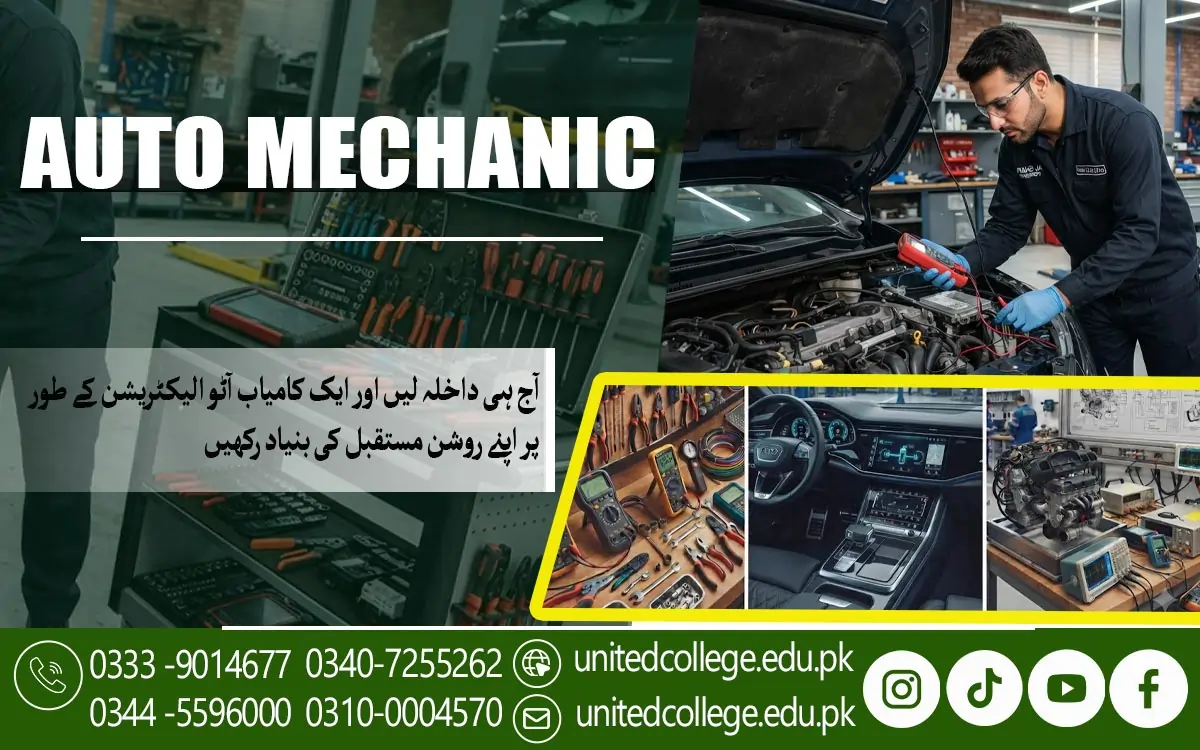
Auto Mechanic Course in Talagang for Professional Auto Training
Learning the Core Principles of Automotive Machinery
Understanding the basic principles of automotive machinery is an important part of automotive training. Students learn how different machines and mechanical systems work and how they are connected with vehicle performance. This knowledge helps learners understand the purpose of various workshop machines and their applications.
During the course, students are introduced to basic mechanical concepts related to vehicles and automotive equipment. They learn about machine functions, moving components, mechanical operations, and the importance of correct machine usage. These concepts create a strong foundation for practical automotive work.
Learning these fundamentals also helps students become more comfortable in a workshop environment. Instead of using equipment without proper knowledge, learners understand why a particular machine is required and how it should be operated according to its purpose.
Exploring Equipment Used in Vehicle Workshops
Vehicle workshops contain different types of tools and machines that are used for inspection, maintenance, repair, and servicing. Students in the Auto Machine Course in Talagang become familiar with commonly used workshop equipment and learn about their basic functions.
The training can introduce learners to equipment used for mechanical inspection, vehicle maintenance, component checking, and other workshop activities. Students learn how to recognize different tools and understand where they are normally used during automotive tasks.
Practical exposure to workshop equipment can improve confidence and handling skills. Students become familiar with organized tool usage and learn the importance of selecting the appropriate equipment for a specific automotive task.
Understanding Basic Vehicle Servicing Procedures
Regular servicing is necessary for maintaining the condition and performance of vehicles. Students learn basic vehicle servicing procedures and understand why routine inspection and maintenance are important for different automotive systems.
Training may cover general servicing activities such as checking vehicle components, inspecting fluids, examining mechanical parts, and identifying signs of wear. Students learn how these basic procedures contribute to better vehicle maintenance.
By learning servicing methods step by step, students can develop a more systematic approach to automotive work. They understand that proper servicing requires attention to detail, correct procedures, suitable tools, and careful inspection of vehicle components.
Developing Practical Machine Handling Skills
Practical machine handling is an essential part of technical automotive education. Students need hands-on practice to understand how workshop machines operate and how different tools should be handled during automotive tasks.
During practical sessions, learners can practice operating equipment under guidance. They learn how to prepare machines, use controls properly, follow operating procedures, and maintain an organized working area while performing technical activities.
Regular practical work helps improve coordination and confidence. It also allows students to connect the technical information learned in the classroom with real workshop activities, making their training more useful and skill-oriented.
Studying Automotive Troubleshooting Techniques
Vehicle problems can occur because of damaged components, improper maintenance, mechanical wear, or other technical issues. Students learn basic troubleshooting techniques that help them understand how automotive faults can be identified.
The course introduces learners to the process of observing symptoms, inspecting relevant components, and determining possible causes of a problem. Students learn that troubleshooting requires patience, logical thinking, and careful examination rather than simply replacing parts.
Developing troubleshooting knowledge can be valuable for future automotive work. With continued practice, students can become better at recognizing common vehicle issues and understanding the appropriate steps for further inspection or repair.
Practicing Safe and Organized Workshop Methods
Safety is an important part of every automotive workshop. Students learn why protective measures, correct equipment handling, and proper workplace organization are necessary when working with machines and vehicle components.
Learners are encouraged to follow safe working procedures while using tools and equipment. They can learn to keep work areas clean, handle equipment carefully, and follow instructions before operating unfamiliar machines.
An organized workshop can also make technical tasks easier and more efficient. Students develop habits such as arranging tools properly, maintaining cleanliness, and completing tasks in a controlled manner. These practices can be useful throughout their future technical careers.
Applying Technical Knowledge Through Hands-On Learning
Hands-on learning allows students to apply the technical concepts they study during their training. Instead of relying solely on classroom instruction, learners have opportunities to engage in practical activities related to automotive machinery and workshop operations.
Practical sessions can help students understand how theoretical concepts work in real situations. They can practice using tools, examining vehicle components, performing basic servicing activities, and working with different types of workshop equipment.
This practical approach can strengthen problem-solving abilities and technical confidence. Students also become more familiar with the working environment of automotive workshops, which can support their preparation for future employment or additional technical education.
Preparing for Professional Development in Automotive Work
The Auto Machine Course in Talagang can provide students with a foundation for continued development in the automotive sector. After completing basic training, learners can continue improving their knowledge through advanced courses, practical experience, and workplace training.
Automotive technology continues to involve different machines, tools, and technical procedures. Developing a strong understanding of basic automotive machinery can therefore help students adapt to further learning and changing workshop requirements.
With technical knowledge, practical experience, and a commitment to learning, students can work toward opportunities in vehicle workshops, automotive service environments, and related technical fields. The skills developed during training can serve as a foundation for long-term growth in automotive work.
Frequently Asked Questions (FAQs)
Auto Machine Course in Talagang is a technical training program that introduces students to automotive machinery, workshop equipment, basic servicing, machine handling, and troubleshooting techniques.
Students learn about automotive workshop machines, vehicle servicing procedures, equipment handling, fault identification, troubleshooting methods, and safe workshop practices.
Yes, practical learning is an important part of the course. Students can practice using automotive tools and equipment and apply their technical knowledge through hands-on workshop activities.
The course can be suitable for students, beginners, and individuals interested in developing technical skills related to automotive machinery and workshop work.
The course can provide a basic technical foundation for working in automotive workshops and related service environments. Students can further improve their skills through experience and advanced training.
Admission Open: Start Your Professional Journey Today!
Join United College of Technology and build a career with practical training, recognized certifications, and Gulf job support. Seats are limited.
Apply Now via WhatsAppContact Information
- Address: Rawalpindi: F-272 Main New Katarian Stop, Old IJP Road | Lahore Campus: Lahore, Pakistan
- Phone/WhatsApp: 0333-9014677 / 0344-5596000 / 0310-0004570 / 0301-5044340 / 0340-7255262
- Website: unitedcollege.edu.pk
















Leave a Comment