


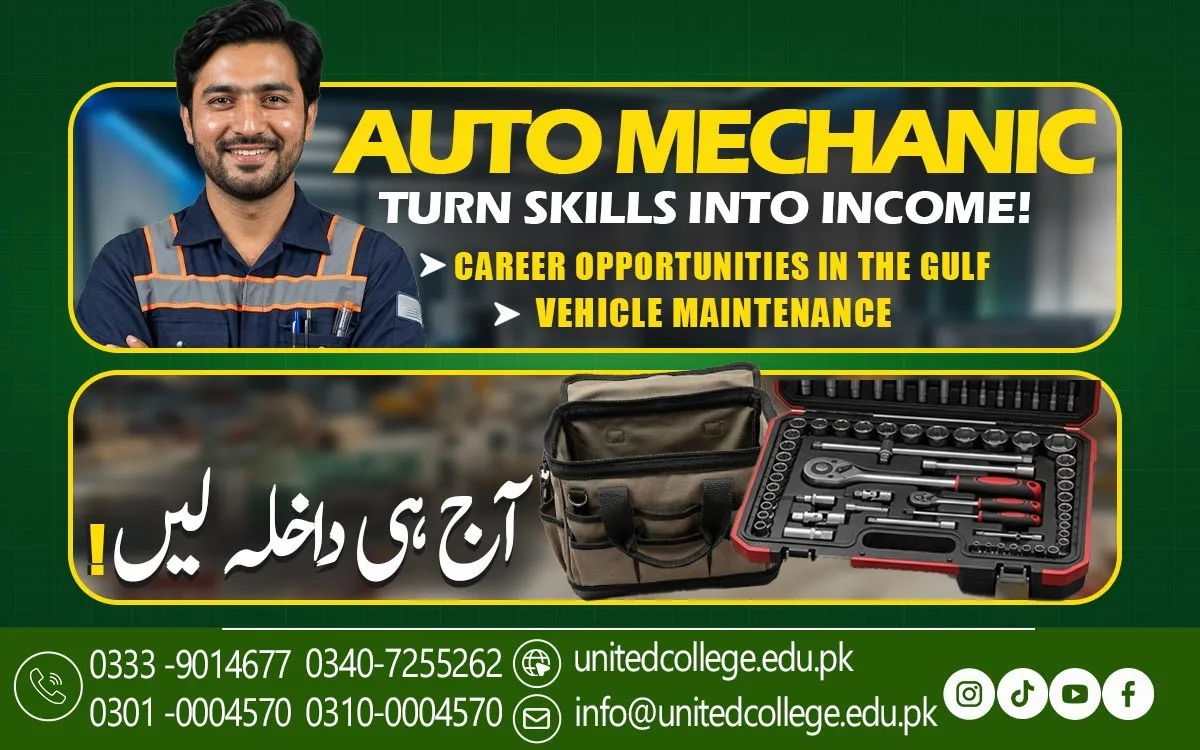

Auto Mechanic Course in Upper Dir for Fuel Systems
Understanding Essential Automotive Workshop Tools
An Auto Mechanic Course in Lower Dir introduces students to the essential tools used in automobile workshops. These tools help mechanics inspect, maintain, and service different types of vehicles. Students can learn about spanners, socket sets, screwdrivers, pliers, torque wrenches, and other commonly used mechanical equipment. Understanding the purpose of each tool is important for performing automotive tasks correctly and efficiently.
Automotive workshop tools are designed for specific jobs, such as tightening bolts, removing components, checking connections, and assembling mechanical parts. Students can develop knowledge of how these tools work and when they should be used. Selecting the correct tool helps prevent damage to vehicle components and improves the quality of maintenance work. Proper tool handling also allows learners to become more familiar with everyday workshop activities.
Learning about workshop tools provides a foundation for practical automotive training. Students can understand the importance of keeping tools clean, arranging equipment properly, and returning items to their designated places after use. These habits help create an organized working environment and reduce the risk of losing or damaging equipment. With regular practice, learners can become more confident in handling common automotive tools.
Learning Safe Mechanical Tool Handling
Safe mechanical tool handling is an important part of automobile workshop training. Students need to understand how to use tools correctly while working on vehicle components. Incorrect handling can cause injuries, damage equipment, or create problems during maintenance. An Auto Mechanic Course in Lower Dir can introduce learners to basic safety procedures and responsible working practices.
Students can learn how to inspect tools before use, choose suitable equipment for each task, and follow the manufacturer's instructions. Wearing appropriate protective equipment, including safety glasses and suitable work gloves when appropriate, can help reduce certain workplace risks. Learners should also understand the importance of avoiding damaged tools and keeping their hands away from moving mechanical components. These precautions support safer workshop activities.
Good tool-handling habits also include maintaining a clean workspace and storing equipment properly after completing a task. Students can learn to avoid leaving tools near rotating machinery, hot engine parts, or vehicle movement areas. They should understand the importance of following instructions when lifting vehicles and working beneath them, using approved lifting points and properly rated support equipment. Developing these habits prepares learners for the responsibilities of a professional automotive workshop.
Exploring Vehicle Servicing Procedures
Vehicle servicing involves inspecting different parts of a vehicle to help maintain its performance and reliability. Students studying an Auto Mechanic Course in Lower Dir can learn about routine servicing procedures, including checking engine oil, inspecting coolant levels, examining tires, and reviewing visible signs of wear. These basic checks help mechanics understand the condition of a vehicle and identify components that may require further attention.
Automotive servicing also includes inspecting filters, checking battery connections, examining belts and hoses, and identifying possible fluid leaks. Students can learn why each inspection matters and how to follow suitable maintenance schedules. Different vehicles have different servicing requirements, so learners should become familiar with manufacturer recommendations and the correct procedures for particular models. This knowledge helps them understand how routine maintenance supports vehicle operation.
Practical exposure to servicing procedures can help students develop a systematic approach to mechanical work. They can learn to follow inspection checklists, record observations, and report problems that require additional diagnosis. Mechanics must also understand when a task requires specialized equipment or more advanced technical knowledge. Learning these procedures prepares students to assist with basic servicing activities and gradually develop their automotive maintenance abilities.
Studying Workshop Safety and Organization
Workshop safety and organization are essential for maintaining a productive automobile servicing environment. Vehicle workshops contain heavy equipment, electrical tools, lubricants, hot surfaces, and moving components that can create hazards if handled incorrectly. Students in the Auto Mechanic course learn how to recognize common risks and follow established safety procedures. Proper training helps reduce accidents and encourages responsible behavior during automotive work.
An organized workshop allows mechanics to locate tools, equipment, and replacement parts without unnecessary delays. Students can understand the importance of clear walkways, suitable storage areas, clean workbenches, and correct waste disposal. Oil spills, loose cables, and misplaced tools should be addressed promptly to reduce slipping and tripping hazards. Good housekeeping also helps protect vehicle components and workshop equipment from avoidable damage.
Another important aspect of workshop organization is following procedures for handling chemicals, batteries, and flammable materials. Learners can become familiar with ventilation requirements, fire safety equipment, emergency exits, and the correct storage of automotive products. They should also understand the importance of reporting unsafe conditions rather than attempting unfamiliar tasks without guidance. These practices contribute to a safer and more efficient workshop environment.
Understanding Automotive Parts and Equipment
Automobiles contain many interconnected parts that work together to provide movement, stability, and reliable operation. Students can learn about major engine components, braking systems, steering mechanisms, suspension parts, cooling systems, and electrical equipment. Understanding the basic function of these components helps learners recognize how different vehicle systems contribute to overall performance. This knowledge is an important foundation for anyone interested in automotive maintenance.
Workshop equipment is equally important because it helps mechanics inspect vehicles and complete servicing tasks. Common equipment may include hydraulic jacks, approved vehicle lifts, diagnostic scanners, battery testers, tire pressure gauges, and measuring instruments. Students can learn the general purpose of this equipment and the importance of using it according to safety instructions. They can also understand why certain inspections require specialized tools rather than ordinary hand equipment.
Learning about automotive parts and equipment helps students develop a more structured understanding of vehicle maintenance. For example, a braking problem may require inspection of brake pads, discs, hydraulic components, or related systems. Similarly, starting difficulties may involve the battery, starter motor, wiring, or fuel delivery system. Understanding these relationships helps learners appreciate the need for careful inspection before identifying the cause of a mechanical problem.
Learning Basic Mechanical Inspection Methods
Basic mechanical inspection helps mechanics assess the visible condition of vehicle components and identify possible faults. Students in an Auto Mechanic Course in Lower Dir can learn to examine tires, hoses, belts, fluid levels, battery connections, and accessible engine components. They can also become familiar with recognizing unusual noises, visible leaks, damaged parts, and signs of excessive wear. These observations can help determine whether a vehicle requires further testing or maintenance.
A systematic inspection process is important because vehicle problems may have several possible causes. Students can learn to follow checklists, compare observations with manufacturer guidance, and record findings accurately. They can understand that a visible symptom does not always identify the exact fault. For example, difficulty starting an engine may result from battery problems, starter faults, fuel delivery issues, or other mechanical and electrical conditions.
Modern vehicles may also require diagnostic scanners and specialized testing equipment to identify certain faults. Learners can develop introductory knowledge of diagnostic procedures and understand the limitations of visual inspections. Safety precautions are essential when examining hot engines, electrical circuits, raised vehicles, or moving components. Developing these inspection habits helps students build a foundation for more advanced automotive troubleshooting and maintenance work.
Practicing Preventive Vehicle Maintenance
Preventive vehicle maintenance involves performing regular checks and servicing to help keep a vehicle in suitable operating condition. Students can learn about scheduled oil changes, filter replacement, tire inspections, coolant checks, and battery maintenance. The correct maintenance schedule depends on the vehicle model, its condition, and the manufacturer's recommendations. Understanding these requirements helps learners recognize why routine servicing is an important part of automotive care.
Regular maintenance can help identify worn components and developing problems before they cause more serious difficulties. For example, checking tire condition and pressure can help support safe handling, while inspecting fluid levels may reveal a leak or maintenance requirement. Students can also learn the importance of checking belts, hoses, lighting systems, and braking components according to appropriate procedures. These activities introduce learners to the practical responsibilities involved in maintaining vehicles.
Maintenance records are another important part of preventive servicing. Students can understand how to document completed tasks, note inspection findings, and record parts that may need replacement. Accurate records help workshops track servicing history and plan future maintenance. By learning these practices, students can develop a responsible approach to vehicle care and understand how preventive maintenance contributes to reliability, safety, and long-term vehicle performance.
Exploring Employment Opportunities in Auto Workshops
An Auto Mechanic Course in Lower Dir can help students build foundational knowledge for exploring opportunities in the automotive industry. Automobile workshops, vehicle service centers, independent garages, and fleet maintenance businesses require workers who understand basic tools, servicing procedures, and workshop safety. Students who develop practical abilities may seek entry-level positions or assistant roles, depending on employer requirements and their level of training.
Automotive work offers several areas for further learning, including engine maintenance, brake servicing, suspension systems, electrical troubleshooting, and vehicle diagnostics. Students can explore these areas according to their interests and the training opportunities available to them. Developing practical experience under qualified supervision can help learners improve their confidence and understand the standards expected in professional workshops. Additional certifications and specialized training may also support career development.
Professional success in automotive maintenance requires more than technical knowledge alone. Employers may value punctuality, teamwork, problem-solving, communication, attention to detail, and responsible tool handling. Students can strengthen these qualities through practical exercises, workshop experience, and continuous learning. With suitable training and experience, learners can work toward becoming skilled automotive technicians or pursue further specialization in vehicle maintenance and repair services.
Frequently Asked Questions (FAQs)
The course can cover engine systems, fuel delivery, fuel pumps, injectors, vehicle inspection, troubleshooting, and routine maintenance procedures.
A fuel delivery system supplies the engine with the appropriate amount of fuel needed for combustion and proper engine operation.
Petrol engines generally use spark plugs to ignite the air-fuel mixture, while diesel engines ignite fuel through the heat created by compressed air.
Mechanics can inspect fuel pumps, filters, injectors, fuel lines, and engine performance symptoms to identify possible fuel delivery issues.
Students may pursue entry-level opportunities in automobile workshops, vehicle maintenance centers, garages, and automotive service businesses, depending on their practical skills and experience.
Admission Open: Start Your Professional Journey Today!
Join United College of Technology and build a career with practical training, recognized certifications, and Gulf job support. Seats are limited.
Apply Now via WhatsAppContact Information
- Address: Rawalpindi: F-272 Main New Katarian Stop, Old IJP Road | Lahore Campus: Lahore, Pakistan
- Phone/WhatsApp: 0340-7255262 / 0333-9014677 / 0301-5044340 / 0310-0004570 / 051-8770756
- Website: unitedcollege.edu.pk
















Leave a Comment