


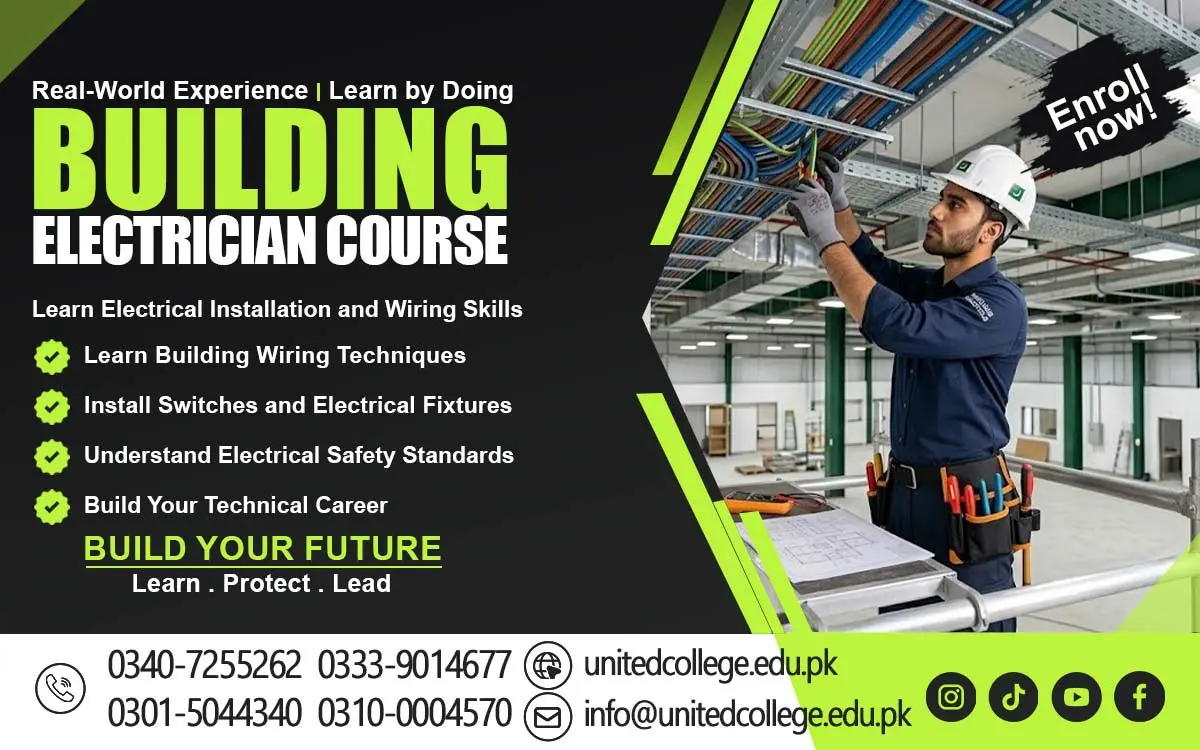

Building Electrician Course in Waziristan for Technical Skill Growth
Understand the Electrical Systems That Keep Buildings Running
Electricity supports many everyday activities in homes, shops, offices, schools, and other buildings. Lights, fans, sockets, appliances, and office equipment all depend on electrical systems that must be installed and maintained correctly. Learning how these systems work can help beginners understand a practical trade and develop useful technical knowledge. The Building Electrician Course in Waziristan is relevant to students, job seekers, fresh learners, and people who want to explore electrical installation and maintenance.
It can introduce learners to the basic principles behind building wiring, electrical fittings, circuit protection, and fault identification. These subjects help explain why electrical work requires careful planning rather than guesswork. For example, a lighting circuit must be connected correctly, while protective devices help reduce risks caused by certain electrical faults. Beginners who study these fundamentals can build a stronger understanding of how electricity reaches different parts of a building.
Discover the Work Behind Every Reliable Electrical Installation
A building electrician works with electrical systems that distribute power throughout a property. Depending on their training and responsibilities, electricians may help install wiring, connect electrical fittings, inspect circuits, maintain equipment, or investigate faults. Their work requires an understanding of how electrical components function together and how installation decisions affect safety. In a home, an electrician may work with lighting points, switches, sockets, fans, and distribution boards.
Before starting an installation, a qualified professional must consider the building layout, expected electrical load, suitable materials, and applicable standards. The Building Electrician Course in Waziristan can help learners explore these basic responsibilities and understand the principles behind residential and commercial electrical systems. It is also important for beginners to recognise their limits. Electrical work can be dangerous, and unfamiliar tasks should be left to trained professionals.
Turn Wiring Diagrams Into Practical Electrical Knowledge
Electrical wiring is a key part of building installation because it carries power to lights, sockets, switches, and other connected equipment. Learners need to understand conductors, insulation, cable identification, circuit layouts, and the purpose of common electrical fittings. An Electrical Wiring Course may also introduce electrical symbols and diagrams that explain how different components connect. These diagrams help electricians understand an installation before work begins and identify the intended relationship between circuit elements.
Beginners should learn why cable selection, secure connections, and suitable circuit protection matter. They should also understand that electrical installations must follow applicable standards instead of relying on guesswork or copying an arrangement without checking its suitability. Building Electrical Installation requires accuracy, planning, and attention to detail. The Training in Waziristan can be a useful starting point for learners who want to understand these principles and gradually become more familiar with the language and diagrams used in electrical work.
Build Confidence Through Tools, Observation, and Supervised Practice
Practical learning helps beginners connect technical explanations with the components and tools used in electrical work. During a Building Electrician Course in Waziristan City, learners can study the purpose of common electrician tools, understand how different fittings are identified, and observe how wiring components are arranged in a planned installation. Under appropriate supervision, they may practise reading diagrams, recognising components, and following an organised work sequence.
This approach can also improve their ability to notice differences between suitable equipment and items that show visible damage. Basic fault identification is another important learning area. When a light or socket stops working, several causes may be possible, so a careful inspection is more useful than making an immediate assumption.
Put Electrical Safety at the Centre of Every Task
Electrical safety is essential during installation, inspection, and maintenance. Contact with live conductors, damaged insulation, unsafe equipment, and poorly planned circuits can cause serious injury or fire. Beginners must learn that switching off a switch alone does not always make a circuit safe to work on. The correct supply must be isolated, accidental reconnection prevented, and the absence of voltage verified using an appropriate procedure and suitable tester.
Water, exposed conductors, overloaded circuits, and loose connections can create additional hazards that require careful attention. Circuit breakers and other protective devices help manage specific electrical risks, but they cannot make an unsafe installation acceptable. Electrical Safety Training should teach learners to follow approved procedures, report dangerous conditions, and seek qualified guidance when they are unsure. Safe habits are not optional extras; they form part of professional electrical practice.
Connect Electrical Skills With Building Needs in Waziristan
Homes, shops, offices, and other properties need electrical arrangements that suit their design and everyday use. Learning about building electrical systems helps students understand how installation requirements can differ from one property to another. A house may need carefully planned lighting, fans, sockets, and circuits for household appliances, while a commercial space may require different arrangements for equipment and working areas. Residential Wiring Training can help learners understand the principles behind household circuits, electrical points, and suitable protective measures.
Commercial work may involve more complex layouts and greater attention to electrical load planning. Maintenance is another area where electrical knowledge can be useful. Recognising warning signs, understanding circuit labels, and knowing when to report a fault can support responsible upkeep of a building. The Course in Waziristan is relevant to people who want to explore these applications and develop a foundation for further learning.
Explore Technical Learning Offered by United College of Technology
Choosing a suitable course can help learners organise their technical studies and understand which subjects they need to develop first. The Building Electrician Training offered by United College of Technology is relevant to people interested in building wiring, electrical fittings, circuit protection, maintenance concepts, and safe working practices. People with some previous knowledge may also wish to strengthen their understanding of areas they find difficult.
These details should not be assumed without confirmation. Learners should consider whether the course matches their goals and be prepared to participate actively, review lessons, and ask questions. Good training encourages a careful approach to technical problems and reinforces the importance of following safety procedures. Combining structured learning with regular revision can help students develop a clearer foundation for exploring electrical installation and maintenance.
Strengthen Your Ability to Recognise and Understand Electrical Faults
Basic Electrical Troubleshooting begins with observation and a systematic approach to identifying problems. A flickering light, a socket that does not work, or a circuit breaker that repeatedly trips may indicate different underlying issues. Beginners should learn not to assume that every fault has a simple solution or that replacing one component will resolve the problem. Instead, they can study how electrical diagrams, component knowledge, inspection, and appropriate testing procedures help trained professionals investigate possible causes.
Electrical Maintenance Skills also include recognising damaged fittings, understanding the purpose of routine checks, and reporting concerns clearly. For example, noticing heat marks, a burning smell, or damaged insulation should prompt people to stop using the affected equipment and seek qualified help rather than attempting an unsafe repair. Learners can improve their understanding by discussing real-world examples with instructors and observing how experienced electricians follow approved procedures.
Take Your First Steps Towards Responsible Electrical Skill Development
Developing building electrician skills takes patience, consistent learning, and respect for electrical safety. Beginners can start by understanding basic circuit concepts, learning common symbols, recognising electrical fittings, and studying the purpose of protective devices. Regular revision, supervised practice, and learning from experienced electricians can help strengthen technical understanding over time. The Building Electrician Course in Waziristan offers a relevant learning direction for people interested in electrical installation and maintenance, whether they are exploring a new technical field or improving their existing knowledge.
Before choosing a course, learners should confirm the details and consider how the subjects match their goals. They should also remember that a course does not guarantee employment or qualify someone for every electrical task. Competence grows through instruction, responsible practice, and continued development. By taking a careful approach, asking questions, and making safety a daily priority, learners can build a stronger foundation for further technical study and understand the responsibilities involved in keeping building electrical systems reliable.
Frequently Asked Questions (FAQs)
Earthing continuity checks help confirm that the protective path is connected properly, supporting the safe operation of electrical protection systems.
A single-line diagram gives a simplified view of an electrical distribution system, showing major components and how power moves between them.
Dust, moisture, heat, and outdoor exposure can affect equipment suitability, so fittings should match the conditions where they will be installed.
Preventive maintenance involves planned checks to identify developing problems, while emergency repair responds to an unexpected fault or failure.
A cable gland helps secure and protect a cable where it enters an enclosure, with the correct type selected for the cable and installation conditions.
Accurate measurements help position switches, sockets, and lighting points correctly while reducing layout mistakes and unnecessary rework.
Admission Open: Start Your Professional Journey Today!
Join United College of Technology and build a career with practical training, recognized certifications, and Gulf job support. Seats are limited.
Apply Now via WhatsAppContact Information
- Address: Rawalpindi: F-272 Main New Katarian Stop, Old IJP Road | Lahore Campus: Lahore, Pakistan
- Phone/WhatsApp: 0340-7255262 / 0333-9014677 / 0301-5044340 / 0310-0004570 / 051-8770756
- Website: unitedcollege.edu.pk
















Leave a Comment