


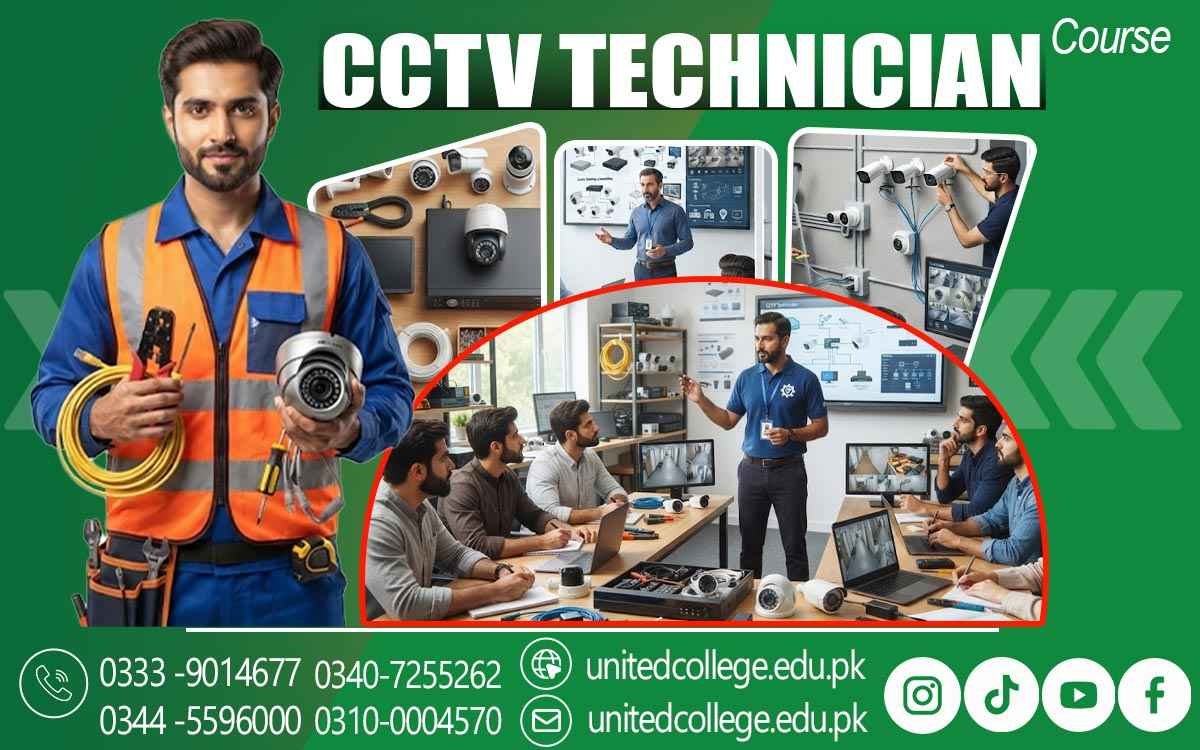

CCTV Technician Course in Gujranwala for Security Technology
Introduction to Advanced CCTV Surveillance Technology
Modern CCTV surveillance technology has become an essential part of security systems used in homes, offices, industries, shopping malls, educational institutes, hospitals, and public places. As security requirements continue to increase, organizations rely on advanced surveillance systems to monitor activities, prevent unauthorized access, and improve overall safety. The CCTV Technician Course in Gujranwala provides students with comprehensive knowledge of modern CCTV technologies and prepares them for professional careers in the security industry.
Students begin by learning the basic principles of CCTV systems, including how cameras capture images, how recording devices store footage, and how monitoring stations operate. They understand the relationship between different surveillance components and how each part contributes to building an effective security system. The course also introduces modern surveillance technologies such as high-definition cameras, IP-based security systems, motion detection, smart analytics, cloud recording, and remote access solutions.
Understanding these technologies helps students stay updated with current industry developments and prepares them for modern workplace requirements. Through a combination of theoretical learning and practical training, students develop a strong technical foundation that enables them to work confidently with different types of CCTV systems. This knowledge forms the basis for advanced installation, maintenance, and troubleshooting skills.
Building Skills in CCTV Camera Installation
Professional CCTV installation requires proper planning, technical accuracy, and practical experience. The CCTV Technician Course in Gujranwala teaches students complete installation procedures that ensure reliable surveillance system performance and long-term operational efficiency.
Students learn how to inspect installation sites, evaluate security requirements, select appropriate camera locations, and determine suitable viewing angles. Proper planning helps maximize surveillance coverage while reducing blind spots and improving overall monitoring effectiveness. The course provides practical training in mounting cameras, installing brackets, connecting power supplies, managing cable routing, and securing electrical connections.
Students become familiar with the tools and equipment used during professional CCTV installations. Hands-on practical sessions help learners gain confidence while working on real installation projects. These practical skills prepare students to perform CCTV installations in residential properties, commercial buildings, industrial facilities, and public organizations according to professional standards.
Understanding Digital and IP Security Cameras
Modern surveillance systems use a variety of digital and IP cameras designed for different security applications. This course helps students understand the features, advantages, and applications of different camera technologies used in today's security industry.
Students study analog cameras, HD cameras, IP cameras, dome cameras, bullet cameras, PTZ cameras, wireless cameras, and network-based surveillance devices. They learn how each camera type functions and where it is most suitable according to environmental and security requirements.
The training also explains image resolution, night vision technology, infrared lighting, weatherproof construction, zoom capabilities, and intelligent video features. Understanding these specifications helps technicians recommend appropriate surveillance equipment for different customers. By developing knowledge of modern camera technologies, students become capable of selecting, installing, and maintaining suitable surveillance solutions for homes, businesses, industries, educational institutions, and government organizations.
Learning Recording System Configuration Methods
Recording systems are the central management units of every CCTV installation because they store, organize, and control surveillance footage. The CCTV Technician Course in Gujranwala provides complete training in DVR, NVR, and IP recording system configuration.
Students learn how to connect surveillance cameras with recording devices, configure recording schedules, adjust video quality, manage storage capacity, create user accounts, and perform backup procedures. Proper configuration ensures reliable recording and efficient surveillance management.
The course also introduces learners to software configuration, firmware updates, security settings, playback management, and remote system access. Students understand how these functions improve the overall performance of CCTV systems. Practical configuration exercises allow learners to develop confidence while managing different surveillance platforms. These technical abilities prepare students to work with both conventional DVR systems and advanced network-based recording technologies.
Improving CCTV Troubleshooting and Maintenance Skills
Every CCTV technician must possess strong troubleshooting skills to maintain surveillance systems and resolve technical problems efficiently. The CCTV Technician Course in Gujranwala provides practical training in diagnosing and repairing common CCTV faults encountered during installation and maintenance.
Students learn how to identify issues such as poor image quality, camera malfunction, cable damage, recording failures, network communication problems, storage errors, and power supply faults. They understand systematic troubleshooting procedures that reduce repair time and improve service quality.
The course also focuses on preventive maintenance practices, including equipment inspection, cleaning, firmware updates, cable testing, and performance evaluation. Regular maintenance helps increase the lifespan of CCTV equipment while reducing unexpected system failures. By developing professional troubleshooting skills, students become capable of providing installation, maintenance, repair, and technical support services for residential, commercial, and industrial surveillance systems.
Exploring Remote Monitoring Solutions
Remote monitoring has become one of the most valuable features of modern CCTV systems because it allows users to access live and recorded surveillance footage from anywhere. This course introduces students to advanced remote monitoring technologies used in professional security systems.
Students learn how to configure internet connectivity, establish secure network communication, enable mobile viewing applications, and manage cloud-based surveillance services. They understand how remote access improves convenience and enhances overall security management.
The training also explains networking fundamentals, including IP addressing, router configuration, switch connectivity, and secure communication between surveillance devices. These networking skills are essential for installing modern IP-based CCTV systems. Understanding remote monitoring solutions enables technicians to provide advanced surveillance services that meet the growing demands of homes, businesses, industries, and commercial organizations.
Professional Opportunities in Security Technology
The security technology industry continues to expand because surveillance systems have become essential for protecting people, property, and business operations. This increasing demand has created excellent career opportunities for qualified CCTV technicians throughout Pakistan.
After completing the CCTV Technician Course in Gujranwala, students can work as CCTV installers, surveillance technicians, maintenance specialists, technical support engineers, system operators, or security consultants in public and private organizations.
Professional technicians can also establish independent CCTV installation and maintenance businesses, providing security solutions for residential clients, commercial buildings, educational institutions, hospitals, industries, and government offices. Continuous learning and practical experience help technicians improve their professional expertise, increase their earning potential, and build successful long-term careers in the rapidly growing security technology sector.
Starting a Career as a CCTV Technician
Professional CCTV training provides students with the technical knowledge, practical experience, and industry-standard skills needed for career success. The CCTV Technician Course in Gujranwala combines classroom learning with extensive hands-on practice to prepare students for real workplace responsibilities.
Throughout the training, students develop expertise in CCTV installation, camera configuration, recording systems, networking, troubleshooting, maintenance, and remote monitoring. These practical abilities allow them to complete surveillance projects confidently and professionally. Practical assignments improve technical problem-solving skills while helping students understand industry standards and customer expectations.
Working with modern CCTV equipment prepares learners for employment immediately after completing the course. By completing the CCTV Technician Course in Gujranwala, students build a strong technical foundation that supports employment, self-employment, and continuous professional growth in the expanding field of security and surveillance technology.
Frequently Asked Questions (FAQs)
This course is suitable for beginners, students, job seekers, electricians, technicians, and anyone interested in developing professional skills in the security and surveillance industry. No previous experience is required.
Students learn CCTV camera installation, DVR and NVR configuration, IP camera setup, cable management, networking, remote monitoring, fault detection, repair techniques, and preventive maintenance of surveillance systems.
Yes. The course places strong emphasis on practical training. Students work with CCTV cameras, DVRs, NVRs, IP cameras, networking equipment, and installation tools to gain real-world technical experience.
Yes. Students learn how to install and configure IP cameras, connect surveillance systems to networks, enable remote monitoring through mobile devices and computers, and manage modern cloud-based security solutions.
After completing the course, students can work as CCTV technicians, surveillance system installers, maintenance technicians, technical support specialists, security system operators, or start their own CCTV installation and maintenance business.
Admission Open: Start Your Professional Journey Today!
Join United College of Technology and build a career with practical training, recognized certifications, and Gulf job support. Seats are limited.
Apply Now via WhatsAppContact Information
- Address: Rawalpindi: F-272 Main New Katarian Stop, Old IJP Road | Lahore Campus: Lahore, Pakistan
- Phone/WhatsApp: 0340-7255262 / 0333-9014677 / 0301-5044340 / 0310-0004570 / 051-8770756
- Website: unitedcollege.edu.pk
















Leave a Comment