


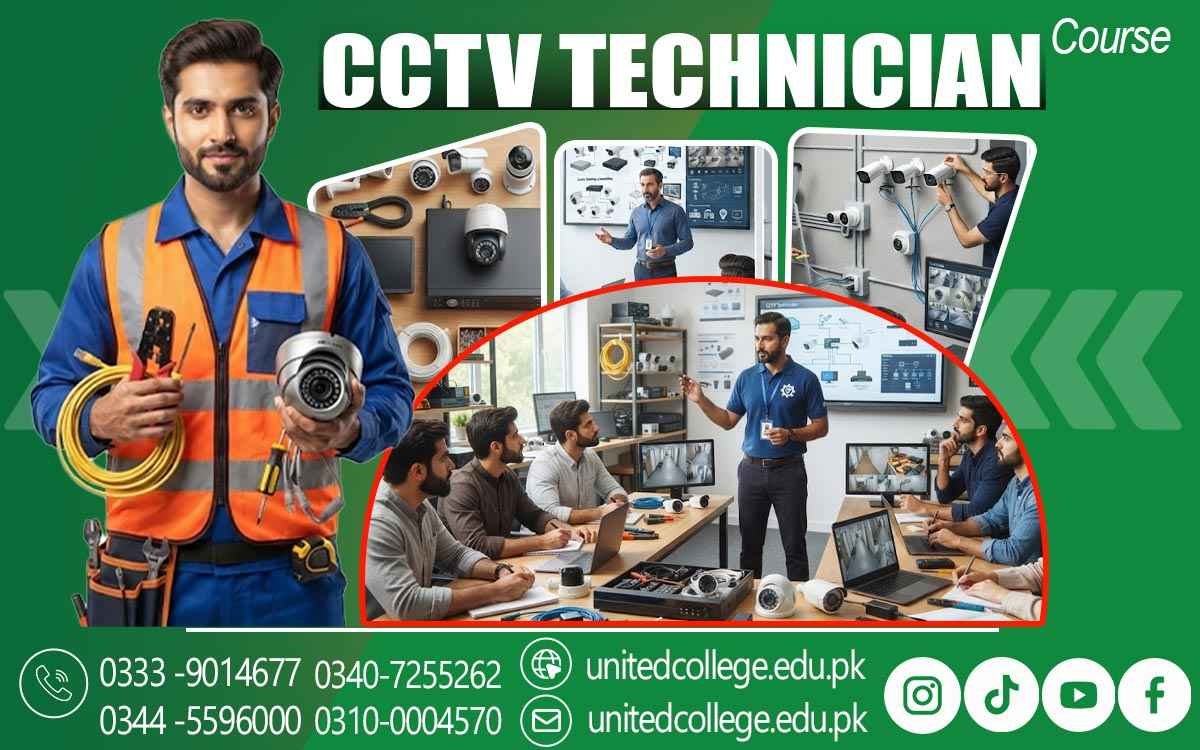

CCTV Technician Course in Hafizabad Develops Hands-On Security Skills
Turn Security Technology Into Practical Skills
A CCTV system is only useful when its cameras are placed correctly, connections are secure, footage is recorded properly, and the whole setup works as intended. From a small shop to a school, clinic, warehouse, office, or home, reliable surveillance depends on people who understand the technical side behind the cameras.
This makes practical CCTV knowledge valuable for beginners who want to learn a hands-on technical skill. The CCTV Technician Course in Hafizabad offered by United College of Technology introduces learners to the main parts of surveillance systems and helps them understand how installation, configuration, monitoring, and maintenance work together.
The Technology Behind Every Camera View
A CCTV setup contains several connected parts rather than one single device. Cameras capture video, cables or networks carry information, recording equipment stores footage, and display devices allow users to monitor the system. Understanding this basic flow gives beginners a strong starting point.
A CCTV Technician Course in Hafizabad can help learners understand the purpose of each component and learn how a complete surveillance system is installed and configured. For example, installing CCTV cameras in a local shop requires more than simply selecting a camera. A technician needs to consider entrances, counters, storage areas, lighting conditions, cable routes, recording requirements, and the position from which the footage will be monitored.
Smart Camera Choices Start With the Location
Different places can require different types of cameras. An indoor camera may be suitable for an office or room, while an outdoor installation may require equipment designed for its surroundings. During CCTV training, beginners can become familiar with common camera types, including analog cameras and IP cameras.
They can also learn how location, lighting, viewing distance, and coverage influence camera selection. This makes security camera installation more practical. Instead of treating every installation in the same way, learners can begin to understand why equipment should be selected according to the actual requirements of a property.
A Good Angle Can Change the Entire Recording
A camera can be fully functional and still provide poor footage if it is aimed incorrectly. An unsuitable angle may leave entrances, walkways, counters, or other important areas outside the camera's view. Camera positioning is therefore an important part of CCTV installation training. Learners can practice thinking about viewing angles, obstacles, lighting, and possible blind spots before deciding where a camera should be mounted.
Image quality also depends on the environment. Strong light, darkness, distance, and poor positioning can affect what appears in recorded footage. Understanding these factors helps beginners make better installation decisions.
Wiring Brings the Equipment to Life
Once camera locations have been planned, the next challenge is connecting the equipment correctly. CCTV wiring carries signals, data, or power depending on the type of system being installed. A CCTV Technician Course in Hafizabad can help beginners learn about common connection methods, cable routes, connectors, and basic power arrangements.
Students can also understand why organized cable management matters when several cameras are connected in one property. A practical example is a shop where multiple cameras are installed at different points. With proper training, learners can understand how planned wiring can make a CCTV system easier to inspect, troubleshoot, repair, and maintain over time.
IP Cameras Connect CCTV With Networking
Modern surveillance technology often uses network connections. IP cameras can send video through a network, creating possibilities for centralized monitoring and remote access. For beginners, networking for CCTV does not need to start with complicated concepts. The basic idea is to understand how a camera communicates with other equipment through a network and how that connection supports viewing and management.
Remote CCTV monitoring can allow authorized users to check footage from a suitable mobile device or computer when the system has been configured for that purpose. Learning the basics helps students understand how traditional camera installation connects with newer network-based systems.
Testing Separates Installation From Guesswork
A CCTV installation should be checked after the equipment has been connected. A technician needs to confirm that cameras display properly, recording functions work, connections remain stable, and the intended areas are visible. System testing can reveal problems that are not obvious during installation.
A camera might have power but no video, a cable may have a connection issue, or a recording setting may need adjustment. This is also where camera troubleshooting becomes useful. Learners can develop a step-by-step approach by checking power, cables, connections, camera settings, recording equipment, and network-related factors rather than making random changes.
Maintenance Keeps Small Problems From Growing
CCTV equipment needs attention after installation as well. Dust, damaged cables, loose connections, storage problems, or changes in camera position can affect system performance over time. CCTV maintenance teaches learners to think beyond the first installation.
Routine system checks can help identify issues and keep equipment working as expected. Safety should also remain part of the process. Technicians may work with ladders, mounting tools, cables, and electrical connections, so careful tool handling and safe working practices are essential during installation and servicing.
Practical Training Turns Knowledge Into Confidence
Reading about CCTV equipment can explain what a camera or recorder does, but practical work helps beginners understand how the pieces actually fit together. Hands-on activities can make wiring, mounting, configuration, testing, and troubleshooting easier to understand. The CCTV Technician Course in Hafizabad at United College of Technology is designed around learning the practical side of CCTV technology.
Students can build familiarity with surveillance equipment and develop technical habits through guided learning and practice. These skills can be relevant to different types of technical work, including CCTV installation, equipment setup, maintenance, camera servicing, basic troubleshooting, and residential or commercial surveillance projects. Actual work requirements can vary from one project to another.
Keep Your Skills Moving With Surveillance Technology
CCTV technology does not stand still. Newer systems continue to combine cameras, networking, recording, mobile access, and smarter monitoring features. For a beginner, building a strong foundation makes it easier to understand these developments as they appear. The CCTV Technician Course in Hafizabad can provide a starting point for learners who want to develop practical knowledge of camera setup, wiring, recording, configuration, monitoring, testing, and maintenance.
The next step is consistent practice. By working carefully with equipment, learning from installation problems, and staying familiar with newer surveillance technology, learners can continue strengthening their technical abilities and explore related areas such as networking and electronic systems.
Frequently Asked Questions (FAQs)
A technician can examine the property layout, possible camera points, lighting conditions, cable routes, equipment location, and areas that need video coverage.
Yes. A camera may need slight adjustments to its direction or angle so the required area appears clearly without unnecessary parts of the surroundings.
A monitor provides a visual display of camera feeds. It allows an authorized user to see what connected cameras are capturing from the surveillance system.
Yes. Learners can become familiar with handling cameras, recording units, cables, connectors, mounting items, and other equipment used during CCTV-related tasks.
A final check helps confirm that the selected settings are working correctly and that the system is producing the expected camera views and recordings.
Learners can continue practicing installation tasks, explore newer surveillance equipment, and develop related networking and technical support skills.
Admission Open: Start Your Professional Journey Today!
Join United College of Technology and build a career with practical training, recognized certifications, and Gulf job support. Seats are limited.
Apply Now via WhatsAppContact Information
- Address: Rawalpindi: F-272 Main New Katarian Stop, Old IJP Road | Lahore Campus: Lahore, Pakistan
- Phone/WhatsApp: 0333-9014677 / 0344-5596000 / 0310-0004570 / 0301-5044340 / 0340-7255262
- Website: unitedcollege.edu.pk
















Leave a Comment