


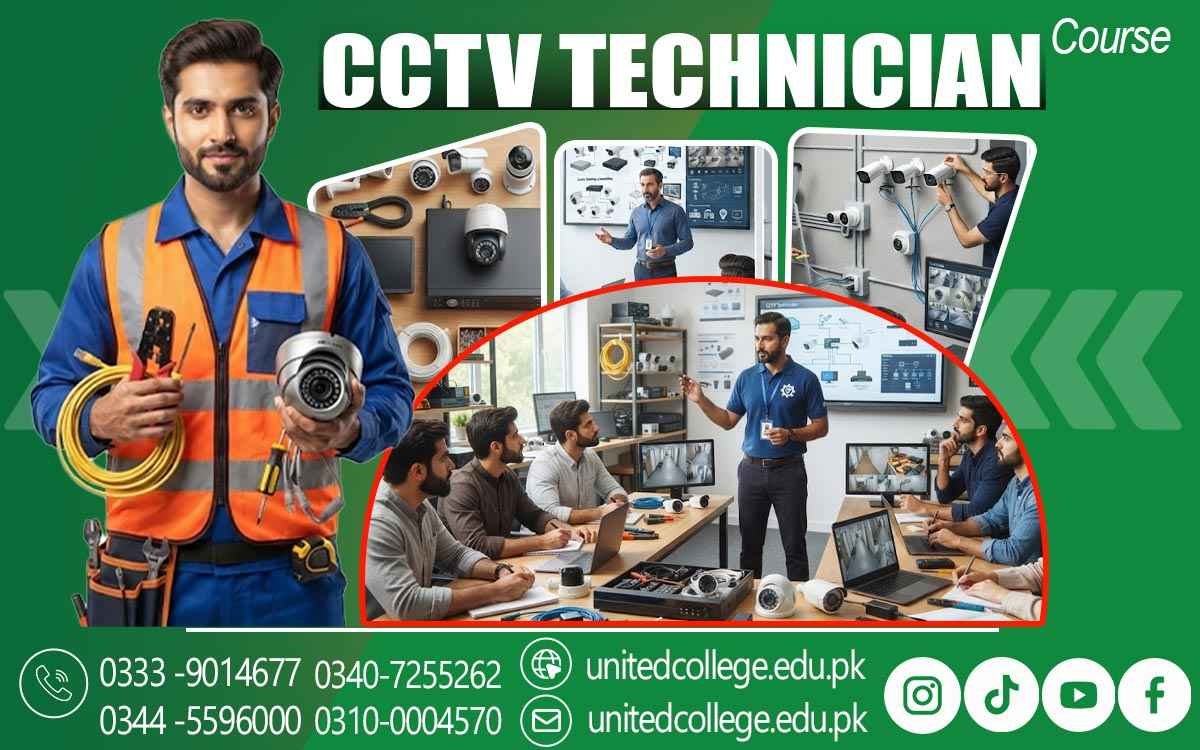

CCTV Technician Course in Khushab Gain Practical CCTV Setup Knowledge
Build Practical Skills Behind Modern Security
A CCTV system is only as useful as the person who installs and manages it. A camera may capture video, but correct positioning, clean connections, suitable recording, proper configuration, and regular checking are what turn separate devices into a working surveillance setup. This is why practical CCTV knowledge matters for modern security environments.
Homes, shops, offices, schools, warehouses, factories, and commercial buildings use CCTV cameras to monitor important areas. For beginners and fresh learners, understanding this technology can open the door to a practical technical field. The CCTV Technician Course in Khushab, offered by United College of Technology, helps learners explore the equipment, installation methods, system configuration, and troubleshooting skills involved in CCTV work.
See The Complete Security System Behind A Single Camera
The first step in CCTV learning is understanding how the complete system operates. A camera captures video, connections carry that video, a recording unit processes or stores it, and a monitor or connected device allows authorized users to view the footage. Learners can become familiar with important CCTV components such as cameras, cables, connectors, power supplies, monitors, storage devices, DVRs, NVRs, and networking equipment.
For beginners interested in professional training, a CCTV Technician Course in Mandi Bahauddin can help explain these components and their practical roles within a complete surveillance system. Knowing the purpose of each component makes it easier to understand how they work together. This basic knowledge also helps beginners avoid treating CCTV installation as a simple mounting job. A technician needs to understand the relationship between different parts before making practical installation decisions.
Camera Selection Sets the Direction for Better Coverage
Different locations can require different types of cameras. During CCTV technician training, learners can explore common camera options and understand the basic difference between analog cameras and IP cameras. An analog camera generally works with a compatible DVR-based system, while an IP camera uses network communication.
The choice depends on the design and requirements of the surveillance system. Location is equally important. A camera positioned near an entrance may serve a different purpose from one installed in a warehouse or office corridor. Learners can study how the area, viewing direction, height, obstacles, and required coverage influence camera positioning.
Installation Skills Bring the Plan Into the Real World
Once a suitable location has been selected, installation becomes the next practical stage. CCTV camera installation involves more than fixing a camera in place. The technician also needs to consider secure mounting, cable routing, connections, and the direction of the camera. Cables and connectors play an important role in transferring video or network data between compatible devices.
Learners can become familiar with CCTV cabling, basic wiring arrangements, and organized cable management. Power is another essential part of the setup. CCTV equipment requires appropriate power connections, so beginners need to understand their basic purpose while following safe working practices. Organized installation makes a system easier to inspect and maintain later.
DVR and NVR Turn Camera Feeds Into Usable Footage
A surveillance system needs a way to manage and record the video captured by its cameras. This introduces learners to DVR and NVR technology. A DVR, or Digital Video Recorder, is commonly used with analog CCTV systems. An NVR, or Network Video Recorder, is generally used with IP-based cameras.
Learners can understand their basic roles and how recording equipment fits into a complete security system. The learning process can also cover storage and playback concepts. Instead of only viewing a live camera feed, users may need to review previously recorded footage. Understanding this difference helps learners see how recording systems support everyday surveillance.
Networking Adds A Digital Side To CCTV Work
Modern security systems can combine video surveillance with computer networking. IP cameras depend on network connections, making basic networking knowledge useful for anyone developing modern CCTV technical skills. Learners can explore the basic idea behind IP camera setup, device connectivity, and network-based video communication.
For students interested in practical training, a CCTV Technician Course in Mandi Bahauddin can introduce these networking concepts gradually, helping beginners understand how cameras communicate with other compatible equipment. These concepts can be learned step by step without requiring advanced networking knowledge from the beginning. Remote camera viewing adds another layer to the system.
System Testing Reveals What Installation Alone Cannot Show
A completed installation still needs careful checking. A camera may be physically secure but have a connection problem, incorrect settings, poor positioning, or another issue that affects its performance. Practical training can introduce learners to system testing by checking camera feeds, connections, recording functions, displays, and other important components.
This process helps identify problems before the system is considered ready for normal use. Beginners can also learn to recognize common mistakes, such as loose connectors, badly arranged cables, unsuitable camera positions, incorrect configuration, or missed recording settings. These examples show why attention to detail is an important part of CCTV installation training.
Troubleshooting Builds the Mindset of a Real Technician
Technical work becomes more valuable when a learner knows how to approach a problem logically. If a camera stops displaying video, the cause could involve power, cabling, connectivity, configuration, or another part of the system. CCTV troubleshooting teaches learners to investigate rather than guess. They can learn to examine relevant components step by step and narrow down where a fault may exist.
Maintenance follows the same careful approach. Regular system checking can help identify equipment or connection issues that need attention. Developing these habits gives beginners a better understanding of how surveillance systems are supported after installation.
Hands-On Learning Makes Every Technical Detail Easier to Remember
CCTV skills are easier to understand when learners can connect technical concepts with practical activities. Identifying equipment, working with cables, positioning cameras, connecting compatible devices, checking video feeds, and exploring configuration tasks can make the learning process more meaningful. The CCTV Technician Course in Khushab at United College of Technology provides a learning path for people who want to develop practical knowledge in surveillance technology.
Hands-on activities can help learners become familiar with the steps involved in installation and system checking while building confidence through repeated practice. This type of training can suit beginners who are starting from the basics as well as learners who want to add CCTV knowledge to other technical skills. The important part is to understand the system carefully rather than trying to rush through individual tasks.
Turn Practical CCTV Knowledge Into Your Next Learning Step
CCTV technology continues to develop, particularly as traditional surveillance systems connect with networking and digital devices. After learning the fundamentals, students can continue exploring areas such as IP cameras, network systems, security equipment, maintenance, and advanced surveillance technologies. These skills can be applied in many types of environments, including residential properties, retail spaces, offices, schools, warehouses, factories, and commercial buildings.
For someone in Khushab who wants to develop a practical technical ability, learning CCTV can be a useful starting point for broader technical development. The CCTV Technician Course in Khushab offered by United College of Technology allows learners to build their understanding step by step, from basic components and installation to configuration, testing, and troubleshooting. Continued practice can then help them strengthen these skills and explore related areas of security technology.
Frequently Asked Questions (FAQs)
Learners should understand the purpose of each device and follow the correct handling methods. This helps reduce confusion when working with different surveillance components.
The technician can consider the property's layout and identify locations that are important for monitoring, such as access points, valuable areas, or spaces with regular activity.
A connector helps join compatible cables and equipment so signals or data can travel between the relevant parts of a surveillance system.
Compatible devices are designed to work together correctly. Checking compatibility can help prevent connection, communication, and configuration difficulties.
Yes. Practical activities can encourage learners to keep equipment, cables, connections, and installation steps organized, making technical tasks easier to manage.
They can continue studying areas such as IP-based surveillance, networking, advanced monitoring systems, security equipment, and other related technical technologies.
Admission Open: Start Your Professional Journey Today!
Join United College of Technology and build a career with practical training, recognized certifications, and Gulf job support. Seats are limited.
Apply Now via WhatsAppContact Information
- Address: Rawalpindi: F-272 Main New Katarian Stop, Old IJP Road | Lahore Campus: Lahore, Pakistan
- Phone/WhatsApp: 0333-9014677 / 0344-5596000 / 0310-0004570 / 0301-5044340 / 0340-7255262
- Website: unitedcollege.edu.pk
















Leave a Comment