


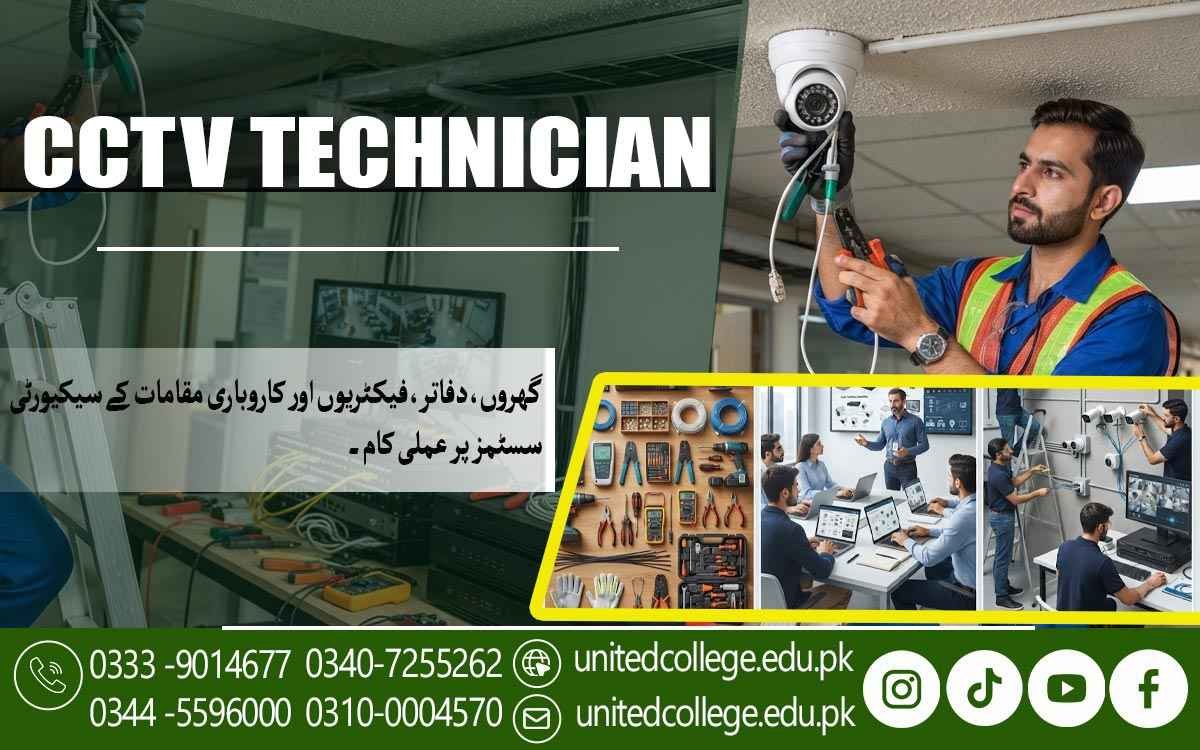

CCTV Technician Course in Sadiqabad – Master Security Systems
When a Security Camera Needs More Than Just a Wall Mount
Imagine a shop owner who wants to keep an eye on the entrance, cash counter, and storage area, or a homeowner who wants to monitor important areas of the property while away. A CCTV system may look simple from the outside, but its usefulness depends heavily on correct installation, camera positioning, wiring, configuration, and regular maintenance. A camera placed at the wrong angle can leave important areas outside its view, while poor wiring or incorrect settings can affect video quality and recording.
This is where practical technical knowledge becomes valuable. A CCTV Technician Course in Sadiqabad can help beginners understand how modern surveillance systems are installed and maintained in real situations. Instead of only learning the names of different devices, learners can become familiar with camera installation, security camera systems, cable connections, recording equipment, CCTV monitoring, and basic troubleshooting. For people interested in technical work, this type of training provides a practical way to understand how video surveillance systems operate in homes, shops, offices, warehouses, and commercial properties.
Choosing the Right Camera for the Place Being Monitored
Not every security camera is suitable for every location, and understanding this difference is an important part of CCTV technician training. A camera installed inside a small office may have different requirements from one used at the entrance of a warehouse or outside a commercial building. During a CCTV Technician Course in Sadiqabad, learners can become familiar with common camera types such as analog cameras, IP cameras, dome cameras, bullet cameras, and other surveillance equipment.
Analog cameras generally use traditional cabling to send video signals to a recording device, while IP cameras transmit digital video through a network. Learners can also understand how factors such as lighting, distance, camera height, viewing angle, coverage area, and installation environment affect camera selection. A good CCTV installation is not simply about placing as many cameras as possible; it is about selecting suitable equipment and positioning it where the required area can be viewed properly. Understanding these practical considerations helps beginners approach CCTV camera installation with greater awareness and avoid common mistakes that can reduce the usefulness of a surveillance system.
Camera Positioning and Wiring Set the Foundation for a Reliable Installation
A CCTV camera can have good technical specifications and still produce poor results if it is installed in the wrong position. Camera height, viewing direction, lighting, blind spots, distance from the subject, and surrounding objects all need attention during installation. Learners taking a CCTV Technician Course in Sadiqabad can explore how technicians plan camera locations before fixing equipment permanently. They can also learn about camera wiring, connectors, power connections, cable routing, and basic cable management.
Traditional CCTV installations may use coaxial cables, while network-based systems commonly use Ethernet cables, depending on the equipment and setup. Safe installation practices are also important because cables should be organized properly and connections should be protected from unnecessary damage, moisture, or interference. A technician needs to understand not only how to connect a cable but also how to check whether the connection is secure and suitable for the system. Practical CCTV installation training can therefore help beginners develop a more organized approach to setting up cameras in homes, shops, offices, warehouses, and other properties around Sadiqabad.
DVR and NVR Systems Turn Camera Signals Into Usable Records
Seeing a live camera feed is useful, but surveillance becomes much more practical when video can be recorded, stored, reviewed, and managed properly. DVR and NVR equipment plays an important role in this part of a CCTV system. A Digital Video Recorder, commonly called a DVR, is generally used with traditional analog CCTV cameras, while a Network Video Recorder, or NVR, is commonly associated with IP cameras and network-based surveillance systems. Through a CCTV Technician Course in Sadiqabad, learners can become familiar with DVR and NVR setup, camera connections, recording modes, storage requirements, playback functions, date and time settings, and basic configuration.
They can also understand why a camera may show a live picture but fail to record footage correctly. Recording settings, hard-drive condition, storage capacity, camera connections, and system configuration can all affect how footage is saved. Learning these areas through practical CCTV training gives beginners a clearer understanding of how surveillance footage is managed and how technicians can check recording problems when a system does not behave as expected.
IP Cameras Bring CCTV Installation Into the Networking World
Modern surveillance systems increasingly use network technology, which means CCTV technicians can benefit from understanding simple networking concepts as well. IP cameras communicate through a network and may connect with switches, routers, NVRs, computers, or mobile devices depending on the system design. During CCTV installation training, beginners can learn how network cameras are connected, how IP addresses relate to connected devices, and why correct network configuration matters for communication between cameras and recording equipment.
Some systems may also use Power over Ethernet, or PoE, which can allow compatible equipment to receive power and data through a suitable network cable. The purpose of learning these concepts is not to turn a beginner into a network engineer, but to provide enough practical knowledge to understand common CCTV setups. A CCTV Technician Course in Sadiqabad can introduce learners to these concepts in a manageable way so they can become more comfortable working with IP cameras, network cables, switches, NVR systems, and connected surveillance equipment used in modern properties.
Remote Viewing Connects CCTV Monitoring With Everyday Devices
Many property owners do not want surveillance footage to remain available only on a monitor inside the building. They may want to check their shop, office, home, or warehouse while they are away. Modern CCTV systems can support remote viewing through suitable internet connections, mobile applications, network settings, and compatible recording equipment. However, remote monitoring requires more than simply connecting a camera to the internet. The camera or recorder, network, user account, application, and configuration must work together correctly. In a CCTV Technician Course in Sadiqabad, learners can understand the basic principles behind remote CCTV viewing and mobile monitoring.
They can learn how connected surveillance equipment communicates with a network and what basic checks may be needed when remote access is not working. For example, a technician may need to check network connectivity, device settings, user access, or communication between the recorder and the application. Understanding these practical steps helps learners see how traditional CCTV monitoring has developed into connected video surveillance that can be accessed through suitable devices.
Troubleshooting Starts With Finding the Real Cause of the Fault
A CCTV technician's work does not end when the cameras are installed. Systems can develop problems over time, and identifying the actual cause of a fault is an important technical skill. A camera may show a blank screen, video quality may become poor, recording may stop, a network camera may disconnect, or remote viewing may suddenly become unavailable. Instead of replacing equipment immediately, a technician needs to check the system step by step. CCTV Technician Course in Sadiqabad training can introduce beginners to common troubleshooting methods, including checking power supplies, cables, connectors, camera connections, recorder settings, storage devices, network connections, and other relevant components.
CCTV maintenance also involves keeping equipment clean, checking physical connections, reviewing system performance, and identifying signs of wear or damage. Learning a logical troubleshooting process can help beginners understand that many CCTV problems have simple causes, while others may require more detailed technical inspection. This approach is useful when working with residential and commercial surveillance systems where reliable monitoring depends on correctly functioning equipment.
Hands-On Practice Makes CCTV Equipment Easier to Understand
Technical skills become much easier to understand when learners can see and handle the equipment instead of only reading about it. Practical training can allow beginners to work with CCTV cameras, cables, connectors, recording devices, power supplies, networking equipment, and basic installation tools. A learner may understand what a DVR does from a textbook, but connecting cameras to a recorder, checking video signals, organizing cables, and exploring recording settings can make the concept much clearer.
At United College of Technology, practical learning can help students become familiar with the procedures involved in CCTV installation and system configuration. The focus can remain on understanding how different components work together and how technicians approach common installation tasks. Learners can also develop better habits related to tool handling, cable organization, safe working practices, and systematic checking of equipment. This type of hands-on experience is particularly useful for fresh learners who have an interest in technical work but have limited previous experience with security camera systems.
Building CCTV Technician Skills for Security Systems in Sadiqabad
Homes, shops, offices, warehouses, workshops, and commercial buildings can all have different surveillance requirements, which makes CCTV work a practical technical field to explore. A CCTV Technician Course in Sadiqabad can help beginners develop an understanding of the complete installation process, from selecting suitable cameras and planning their positions to connecting cables, configuring DVR or NVR equipment, working with IP cameras, setting up basic network connections, and troubleshooting common problems. Learners can gradually become more comfortable with CCTV monitoring, security system installation, video recording, camera maintenance, and basic security camera repair procedures.
These skills can be useful for people who want to understand how residential and commercial surveillance systems are designed and maintained. The value of training comes from building practical understanding rather than simply memorizing technical terms. With consistent practice, learners can become more familiar with the equipment and procedures used by CCTV technicians and better understand the responsibilities involved in maintaining functional video surveillance systems in Sadiqabad and similar working environments.
Frequently Asked Questions (FAQs)
A CCTV Technician Course in Sadiqabad teaches practical skills related to camera installation, wiring, recording systems, networking, monitoring, and troubleshooting.
Students, beginners, fresh learners, and people interested in security systems and technical work can join CCTV technician training.
Learners can study camera types, positioning, wiring, DVR and NVR setup, IP cameras, networking, remote viewing, CCTV configuration, and maintenance.
DVR is generally used with analog CCTV cameras, while NVR is commonly used with IP-based network cameras for recording and managing digital video.
Yes. Beginners can learn CCTV installation step by step through practical training that introduces equipment, tools, wiring, configuration, and basic troubleshooting.
Admission Open: Start Your Professional Journey Today!
Join United College of Technology and build a career with practical training, recognized certifications, and Gulf job support. Seats are limited.
Apply Now via WhatsAppContact Information
- Address: Rawalpindi: F-272 Main New Katarian Stop, Old IJP Road | Lahore Campus: Lahore, Pakistan
- Phone/WhatsApp: 0333-9014677 / 0344-5596000 / 0310-0004570 / 0301-5044340 / 0340-7255262
- Website: unitedcollege.edu.pk
















Leave a Comment