


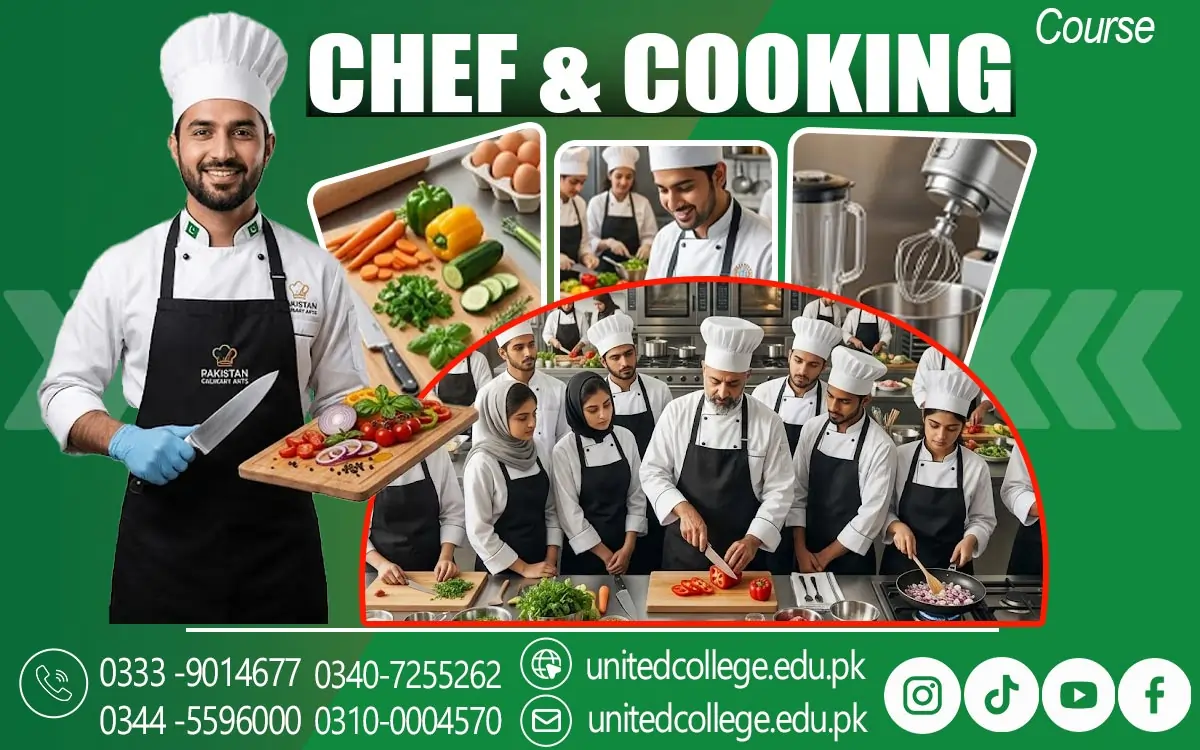

Chef and Cooking Course in Kohat | Practical Culinary Skills
Turn Your Interest in Food into Practical Cooking Skills
A kitchen can quickly become stressful when several dishes need to be prepared at the same time, ingredients are not ready, and a recipe does not turn out as expected. For someone who enjoys cooking, these challenges can also become opportunities to learn and improve. Cooking is not only about mixing ingredients or following instructions; it involves understanding flavours, managing time, using equipment safely, and appealingly presenting food. The Chef and Cooking Course in Kohat offers an opportunity for interested learners to explore cooking as a practical skill and develop a better understanding of kitchen work.
Offered by United College of Technology (UCT), the course is relevant to beginners, students, and individuals who want to learn more about food preparation and culinary practices. People who enjoy preparing meals at home may want to understand how professional kitchens organise their work, while those interested in hospitality may wish to explore the skills used by chefs. Learning basic cooking techniques can help beginners become more confident when preparing everyday meals, trying unfamiliar recipes, or working with different ingredients. It can also introduce them to the importance of cleanliness, organisation, and careful planning.
Explore What Chef Training in Kohat Can Teach You
Preparing a delicious meal at home is one thing, but producing consistent results in a busy kitchen requires additional knowledge and preparation. A learner must understand ingredients, cooking methods, hygiene, equipment, and the correct order of different tasks. The Chef and Cooking Course in Kohat offered by United College of Technology introduces learners to the subject of cooking and the skills associated with kitchen work. For beginners, a professional cooking course can provide a starting point for understanding how culinary work is organised and what responsibilities may be involved in preparing food.
For example, preparing a meal successfully may require washing and cutting vegetables, measuring spices, checking cooking temperatures, and preparing different components in the correct order. Understanding these steps can help reduce mistakes and improve the overall cooking process. Learners should also understand that the exact syllabus, practical facilities, course duration, and admission requirements should be confirmed directly with UCT before enrolment. The most useful approach is to treat training as an opportunity to build knowledge gradually, ask questions, practise carefully, and develop habits that can be applied in home kitchens or professional food preparation environments.
Master the Kitchen Skills Every Beginner Needs
Imagine preparing a vegetable dish and discovering halfway through cooking that the onions are not chopped, the spices have not been measured, and the cooking oil is already too hot. Situations like this show why preparation is an essential part of cooking. Before turning on a stove, a learner should understand the recipe, gather the required ingredients, clean the workstation, and arrange the tools within easy reach. These food preparation techniques help make cooking more organised and reduce unnecessary pressure. Knife safety is another important skill because sharp kitchen tools must be handled with care.
Measuring ingredients correctly is equally useful, particularly when preparing baked items or following recipes that require a balanced combination of flavours. Learners should also understand how to read a recipe, recognise ingredient quantities, and follow the steps in a sensible order. Basic cooking techniques become easier to practise when each task is broken into manageable stages. For example, preparing a curry may involve cutting ingredients, heating spices, cooking the main ingredient, and adjusting the seasoning before serving. The Chef and Cooking Course in Kohat can be explored by people who want to develop these practical cooking skills and understand the importance of consistency.
Understand Cooking Methods and How They Change Food
The same ingredient can taste and look very different depending on how it is cooked. Potatoes, for example, can be boiled for a soft texture, fried for a crisp surface, or roasted to develop a rich flavour. Learning how cooking methods work helps a chef choose the right technique for each dish rather than relying on guesswork. Boiling involves cooking food in water or another suitable liquid, while steaming uses hot vapour and can be useful for preparing vegetables and other ingredients. Frying cooks food using hot oil, although the amount of oil and the temperature must be controlled carefully. Grilling exposes food to direct heat, making it suitable for preparing items such as vegetables, chicken, and kebabs.
Baking uses controlled heat inside an oven and is commonly used for bread, cakes, and pastries. Roasting also uses dry heat and can help develop colour and flavour in vegetables and meat. A learner studying culinary skills should understand that different ingredients require different cooking times, temperatures, and levels of attention. Undercooking may leave some foods unsafe to eat, while excessive heat can burn the outside before the inside is properly cooked. Professional chef training also involves observing changes in colour, texture, aroma, and consistency throughout the cooking process. Exploring these methods can help learners become more adaptable when preparing Pakistani dishes or experimenting with international cuisine.
Make Food Hygiene and Kitchen Safety a Daily Habit
A meal can look attractive and smell delicious, but poor food handling can still make it unsafe. This is why kitchen safety and hygiene must be treated as essential responsibilities rather than optional steps. Anyone learning to cook should understand the importance of washing hands before handling food, cleaning preparation surfaces, and keeping kitchen equipment in suitable condition. Raw meat, poultry, seafood, and ready-to-eat foods should be handled separately to reduce the risk of cross-contamination. For example, using the same unwashed chopping board for raw chicken and fresh salad can transfer harmful microorganisms to food that will not receive further cooking.
Safe food storage also matters because perishable ingredients need appropriate refrigeration, and cooked food should not remain at room temperature for extended periods. Learners in the Chef and Cooking Course in Kohat can develop an understanding of how to handle and store food safely. They should understand that smell and appearance alone cannot confirm whether food is safe. Proper cooking temperatures, suitable storage practices, and attention to food safety guidance are important parts of responsible preparation. Personal hygiene includes wearing clean clothing, keeping hair secured, covering cuts appropriately, and avoiding food handling when illness could create a contamination risk.
Prepare Pakistani Dishes and Explore International Flavours
Food is closely connected to culture, family traditions, and the ingredients available in different regions. In Pakistan, everyday cooking may include daal, vegetable dishes, rice, chicken karahi, biryani, kebabs, and a variety of curries. Although these dishes use familiar ingredients, preparing them successfully requires attention to seasoning, cooking time, texture, and the balance of spices. Pakistani cooking techniques often involve frying onions, preparing spice mixtures, controlling heat, and allowing ingredients to cook together so their flavours develop. Learning why these steps matter can help beginners understand recipes instead of simply memorising instructions.
Culinary learning can also introduce people to international cuisine, including pasta dishes, soups, sandwiches, grilled foods, and simple baked items. Different food traditions use different ingredients and preparation methods, giving learners opportunities to explore a wider range of flavours. Menu planning and preparation are useful skills when several dishes must be served together. A balanced menu may include a main dish, a suitable side, vegetables, and a complementary sauce or accompaniment. Food presentation skills also influence how a meal is received. Clean plates, appropriate portions, attractive colours, and thoughtful arrangement can make a dish look more inviting without requiring expensive decorations. Learners should remember that presentation cannot replace taste, freshness, or safe preparation.
Learn to Use Kitchen Equipment and Organise Your Workstation
Walking into a professional kitchen for the first time can feel confusing when different tools, appliances, and ingredients are arranged across several work areas. Understanding the purpose of each item helps make the environment easier to manage. The Chef and Cooking Course in Kohat can help learners explore the importance of kitchen equipment and its role in food preparation. Common kitchen equipment includes knives, chopping boards, mixing bowls, measuring cups, weighing scales, pans, pots, ovens, and refrigeration units. Larger kitchens may also use commercial kitchen equipment designed to handle higher volumes of food preparation. Through chef and cooking training, learners can develop an understanding of the correct purpose of each tool and the importance of following the manufacturer's instructions when operating electrical or heated appliances.
A weighing scale, for example, can help measure ingredients accurately, while a thermometer can help check whether certain foods have reached a safe internal temperature. Equipment must also be cleaned and stored properly to keep it ready for use. Ingredient selection is another important part of kitchen work. Check fresh vegetables for signs of spoilage, inspect packaged ingredients for damaged packaging, and follow storage instructions. An organised workstation makes these tasks easier because you can arrange ingredients, utensils, and equipment before cooking begins. This preparation is often described as setting up the work area, and it helps prevent unnecessary movement during busy periods.
Build Time Management and Teamwork in a Busy Kitchen
When a restaurant receives several orders at once, preparing each dish separately without a plan can cause delays and confusion. Some ingredients may need longer cooking times, while salads, sauces, and garnishes may require separate preparation. This is why kitchen management skills include time management, communication, teamwork, and task planning. A cook should learn to identify which tasks need to happen first and which can be completed while another ingredient is cooking. For example, vegetables can be prepared while water heats, provided the cook can monitor both tasks safely. In a professional kitchen, team members may have different responsibilities, so clear communication helps everyone understand what needs to be prepared and when it should be ready.
If an ingredient is unavailable or a dish requires additional preparation, communicating the issue early can help the team adjust its plan. Portion control is another useful skill because serving consistent quantities supports predictable food costs and helps maintain a similar experience for customers. Reducing food waste also matters. Ingredients should be stored correctly, stock should be rotated appropriately, and quantities should be planned according to realistic needs. However, food safety must always come before attempts to save ingredients; food that is unsafe should never be served. People exploring chef training in Kohat can benefit from understanding these responsibilities because cooking in a professional environment involves more than preparing individual dishes.
Explore Future Opportunities in the Food and Hospitality Industry
For someone who enjoys cooking, learning new recipes can be the beginning of a broader journey into the food and hospitality industry. Restaurants, hotels, catering services, bakeries, cafés, and food businesses all require people who understand food preparation and can follow appropriate hygiene standards. Depending on their interests and experience, learners may explore different roles, such as kitchen assistant, food preparation worker, commis chef, catering assistant, or trainee cook. Some may prefer working with baked products, while others may be more interested in Pakistani cuisine, restaurant meals, or large-scale food preparation. Each setting has its own expectations, and employers may require particular qualifications, practical experience, or additional training.
The Chef and Cooking Course in Kohat, offered by United College of Technology, can be considered by people who want to learn about cooking and explore the knowledge involved in kitchen work. Before enrolling, interested learners should confirm the course details, practical learning arrangements, and any certificate or assessment information directly with the college. Completing a course does not automatically guarantee employment, so continued practice, good hygiene habits, communication, and a willingness to learn remain important. Learners can strengthen their skills by preparing dishes regularly, recording improvements, learning from experienced cooks, and understanding how different kitchens operate.
Frequently Asked Questions (FAQs)
The Chef and Cooking Course in Kohat is designed for people interested in learning cooking techniques, food preparation, kitchen hygiene, and culinary skills. It is offered by United College of Technology (UCT).
Beginners, students, fresh learners, and individuals interested in cooking or the hospitality industry can explore this course. Contact UCT to confirm the eligibility criteria.
Culinary training may introduce learners to Pakistani dishes and different international cooking styles. Contact United College of Technology to confirm the specific course content.
Culinary training may introduce learners to Pakistani dishes and different international cooking styles. Contact United College of Technology to confirm the specific course content.
Food hygiene helps prevent contamination, maintain food quality, and protect customers. Proper handwashing, safe food storage, and clean kitchen equipment are essential practices.
Admission Open: Start Your Professional Journey Today!
Join United College of Technology and build a career with practical training, recognized certifications, and Gulf job support. Seats are limited.
Apply Now via WhatsAppContact Information
- Address: Rawalpindi: F-272 Main New Katarian Stop, Old IJP Road | Lahore Campus: Lahore, Pakistan
- Phone/WhatsApp: 0340-7255262 / 0333-9014677 / 0301-5044340 / 0310-0004570 / 051-8770756
- Website: unitedcollege.edu.pk
















Leave a Comment