


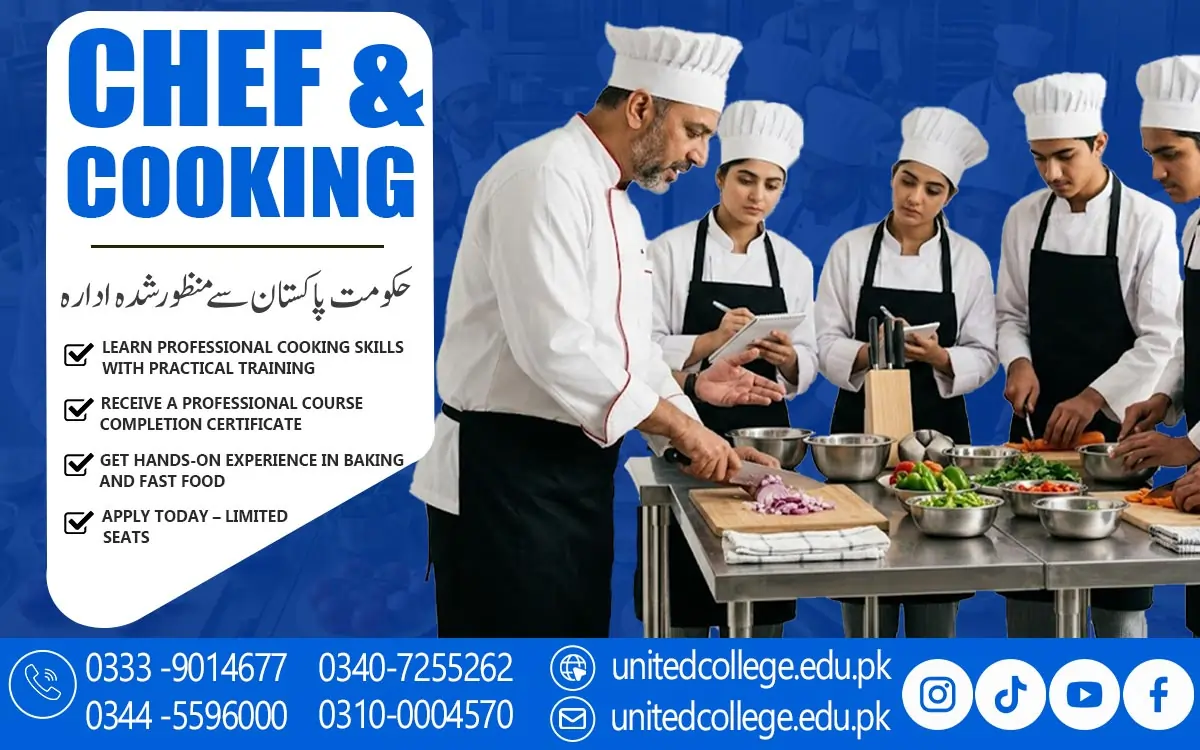

Chef and Cooking Course in Malakand – Learn Modern Cuisine Skills
Turning an Interest in Food into a Practical Cooking Skill
Imagine preparing a meal for your family or guests, only to discover that the taste is not quite right, the vegetables are overcooked, or several dishes are not ready at the same time. These small problems show that good cooking requires more than following a recipe. It involves choosing fresh ingredients, measuring spices correctly, controlling heat, managing time, and presenting food attractively. For people who enjoy cooking and want to improve their abilities, professional training can provide a useful starting point. The Chef and Cooking Course in Malakand offered by United College of Technology (UCT) is a training option for learners interested in developing their cooking knowledge and understanding professional kitchen practices.
Cooking also requires patience because the same recipe can produce different results when ingredient amounts, temperatures, or preparation methods change. Through regular practice, learners can understand these differences and improve their results step by step. They can also learn why cleanliness, careful preparation, and attention to detail matter in every kitchen. Building these skills takes time, but a structured approach can help learners move from basic home cooking toward a better understanding of professional food preparation.
What Students Can Learn During Professional Chef Training
A professional chef does more than prepare tasty meals. In a restaurant, hotel, café, catering service, or commercial kitchen, chefs may need to prepare ingredients, follow recipes, organize workstations, coordinate with other kitchen staff, and maintain consistent food quality during busy periods. A small delay in one preparation task can affect the timing of an entire meal, so planning and teamwork are important parts of the job. Professional chef training introduces learners to the knowledge and habits used in these working environments. A cooking skills course may cover ingredient measurement, food preparation techniques, cooking methods, kitchen organization, hygiene, and the correct use of equipment, depending on the syllabus.
These subjects help students understand how professional kitchens operate and why chefs follow particular procedures. Learners exploring culinary training in Malakand can benefit from understanding both the creative and practical sides of cooking. Creativity helps a chef develop flavors and present dishes attractively, while accuracy helps ensure that recipes produce reliable results. The Chef and Cooking Course in Malakand provides a topic around which interested learners can explore professional cooking education through United College of Technology (UCT). Beginners do not need to master every technique immediately. They can start with simple tasks, practise them carefully, and gradually work toward more demanding recipes.
Preparing Ingredients, Using Knives, and Handling Kitchen Equipment
A delicious dish can begin to go wrong before it reaches the stove. Vegetables cut into uneven pieces may cook at different speeds, while poorly measured spices can change the balance of a recipe. That is why ingredient preparation is an important part of professional cooking. Learners need to understand how to wash produce, peel vegetables, cut ingredients into suitable sizes, measure seasonings, and prepare portions before cooking starts. Chefs often use a method called mise en place, which means arranging the ingredients and tools needed for a recipe before beginning the actual cooking process. This simple habit reduces confusion and makes it easier to follow the recipe in the correct order.
Students also need to learn how to handle knives safely, use stable chopping boards, and keep sharp tools in suitable storage. Common kitchen equipment includes pots, pans, measuring cups, weighing scales, mixers, ovens, and different types of knives. Each tool has a specific purpose, and using it correctly can improve both safety and efficiency. For example, measuring ingredients with a scale can be particularly useful when preparing baked products, where exact quantities often affect the final texture. Through practical food preparation training, learners can understand how to select the right equipment for different tasks.
Learning Pakistani Dishes, Spices, and Everyday Cooking Techniques
Pakistani food offers many opportunities to learn about flavor, texture, and cooking methods. Biryani, karahi, daal, curries, kebabs, rice dishes, and traditional gravies each require a different combination of ingredients, spices, and preparation techniques. For example, preparing a flavorful karahi involves controlling the heat, cooking tomatoes and other ingredients properly, and adding seasonings in suitable amounts. Biryani requires attention to rice texture, spice balance, layering, and cooking time. These dishes demonstrate why successful cooking depends on understanding the process rather than simply memorizing a list of ingredients.
A Pakistani cooking course may introduce learners to methods such as frying, boiling, simmering, steaming, grilling, and sautéing. Frying uses hot oil to cook or brown ingredients, while simmering means cooking food gently in liquid at a low temperature. Sautéing involves cooking small pieces of food quickly with a little fat, usually over moderate or high heat. Each method affects the taste and texture of the final dish. Learners interested in the Chef and Cooking Course in Malakand can explore how traditional food preparation connects with wider culinary skills. They can also learn the importance of tasting food appropriately during preparation, adjusting seasoning carefully, and avoiding excessive heat that may burn spices or dry out ingredients.
Exploring Baking, Desserts, Snacks, and International Cuisine
Cooking is not limited to curries, rice, and traditional meals. Bakeries, cafés, hotels, and food businesses may also prepare cakes, biscuits, pastries, desserts, sandwiches, snacks, and dishes inspired by international cuisine. Exploring these areas can help learners understand the variety of skills used across the food industry. Baking, for instance, often requires accurate measurements because changing the amount of flour, sugar, liquid, or raising agents can affect the texture and shape of a product. Oven temperature and baking time also matter. A cake may become dry if it stays in the oven too long, while an incorrect ingredient ratio can prevent it from rising properly.
Dessert preparation introduces learners to different textures, sweetness levels, garnishing methods, and serving styles. Snacks and sandwiches provide opportunities to practise portioning, ingredient combinations, and neat presentation. International cuisine can introduce different flavor combinations, ingredients, and preparation traditions from around the world. However, the dishes included in any baking and cooking course depend on the institute's syllabus, training arrangements, and available practical facilities. Learners should check the current course details before assuming that a particular specialty is included.
Maintaining Food Hygiene and Safety in a Busy Kitchen
A meal may look fresh and taste excellent, but poor hygiene can make it unsafe to eat. Imagine preparing raw chicken on a chopping board and then using the same board for salad vegetables without cleaning it properly. Harmful microorganisms can transfer from one ingredient to another, creating a risk of foodborne illness. This is why food hygiene training and kitchen safety are essential parts of culinary education. Learners need to understand the importance of washing their hands before handling food, cleaning work surfaces, using clean utensils, and storing ingredients at appropriate temperatures.
Perishable ingredients should not be left at room temperature for unnecessarily long periods, and cooked food must be stored safely. Personal cleanliness also matters. Clean clothing, properly secured hair, and careful handling practices help maintain a suitable food preparation environment. In the Chef and Cooking Course in Malakand, students can learn the importance of kitchen hygiene and safe food preparation. Kitchen equipment introduces other risks, including sharp knives, hot pans, boiling liquids, and electrical appliances. Students should learn to use equipment according to instructions, keep work areas free from spills, and avoid leaving handles or sharp tools in unsafe positions.
Improving Taste, Plating, and Kitchen Time Management
Have you ever tasted a dish that contained all the right ingredients but still seemed bland? The reason may be poor seasoning, incorrect cooking time, or an imbalance between flavors. Professional cooking involves understanding how ingredients work together and how to adjust a dish without overpowering its natural taste. Learners can develop these abilities by following recipes, tasting food carefully when appropriate, and observing how heat changes ingredients. Texture is equally important. Vegetables should suit the dish rather than becoming unnecessarily soft, and meat should be cooked safely without becoming dry.
Presentation also influences the dining experience. Clean plates, balanced portions, suitable garnishes, and thoughtful arrangement can make a meal more inviting. Food presentation techniques do not always require complicated designs; often, neatness and attention to detail are enough. Time management is another important skill, especially when several dishes need to be served together. A cook might need to prepare vegetables while rice cooks and a sauce simmers. Planning the order of tasks helps prevent unnecessary delays and reduces food waste. Kitchen management also involves keeping ingredients organized, monitoring portions, cleaning as work progresses, and communicating clearly with other team members.
Practising with Real Kitchen Tasks and Building Confidence
Reading recipes and watching cooking demonstrations can provide useful information, but practical experience helps learners understand how techniques work in real situations. A written recipe might say to cook onions until soft and lightly golden, yet a beginner may need practice to recognize that stage and understand how heat affects the result. Repeating tasks helps students become familiar with ingredient textures, cooking sounds, temperatures, and timing. Practical learning can include preparing ingredients, following recipes, measuring quantities, using kitchen tools correctly, maintaining clean workstations, and reviewing the final dish.
Feedback is also valuable because an experienced instructor can point out mistakes that learners may not notice themselves. For example, uneven vegetable cutting, excessive seasoning, or poor workstation organization can often be improved through simple adjustments. People interested in the Chef and Cooking Course in Malakand can contact United College of Technology (UCT) to confirm the current syllabus, admission requirements, course duration, practical training arrangements, and other relevant details. This helps them make an informed decision based on the actual program rather than assumptions. Learners can also support their progress by keeping notes about recipes, ingredient measurements, cooking times, and changes they make during practice.
Exploring Culinary Workplaces and Continuing to Develop as a Chef
Cooking skills can be useful in several settings, including restaurants, hotels, cafés, catering services, bakeries, and other food businesses. Some people may also explore small home-based food ventures, depending on local requirements, available resources, and customer demand. However, completing training alone does not guarantee a job or business success. Opportunities depend on practical ability, experience, employer expectations, communication skills, and the needs of the local market. Professional kitchens often require staff to work as a team, follow instructions, maintain cleanliness, and prepare food consistently, even during busy periods.
Reliability is important because delays or careless preparation can affect the whole team. Learners should also understand that culinary education does not end when a course finishes. Food trends, ingredients, recipes, and customer preferences can change, so continuing to learn is valuable. Practising familiar dishes, exploring new cuisines, improving presentation, and understanding portion control can all support long-term development. People considering the Chef and Cooking Course in Malakand through United College of Technology (UCT) should focus on the knowledge and practical skills they want to develop and confirm the program details before enrolling.
Frequently Asked Questions (FAQs)
The Chef and Cooking Course in Malakand is designed for learners who want to develop cooking knowledge and practical kitchen skills, including food preparation, cooking techniques, hygiene, and presentation.
Students may learn ingredient preparation, Pakistani dishes, cooking methods, baking, dessert preparation, food presentation, kitchen management, and food safety, depending on the course syllabus.
Beginners, students, fresh learners, and individuals interested in cooking can explore this course. Previous professional cooking experience may not be necessary, depending on the institute's admission requirements.
Professional cooking training may include popular Pakistani dishes such as biryani, karahi, daal, curries, rice dishes, and kebabs. Contact the institute to confirm the dishes included in its current syllabus.
Baking and dessert preparation may be included in culinary training. These skills can involve preparing cakes, biscuits, desserts, and other baked products, depending on the available course modules.
Admission Open: Start Your Professional Journey Today!
Join United College of Technology and build a career with practical training, recognized certifications, and Gulf job support. Seats are limited.
Apply Now via WhatsAppContact Information
- Address: Rawalpindi: F-272 Main New Katarian Stop, Old IJP Road | Lahore Campus: Lahore, Pakistan
- Phone/WhatsApp: 0340-7255262 / 0333-9014677 / 0301-5044340 / 0310-0004570 / 051-8770756
- Website: unitedcollege.edu.pk
















Leave a Comment