


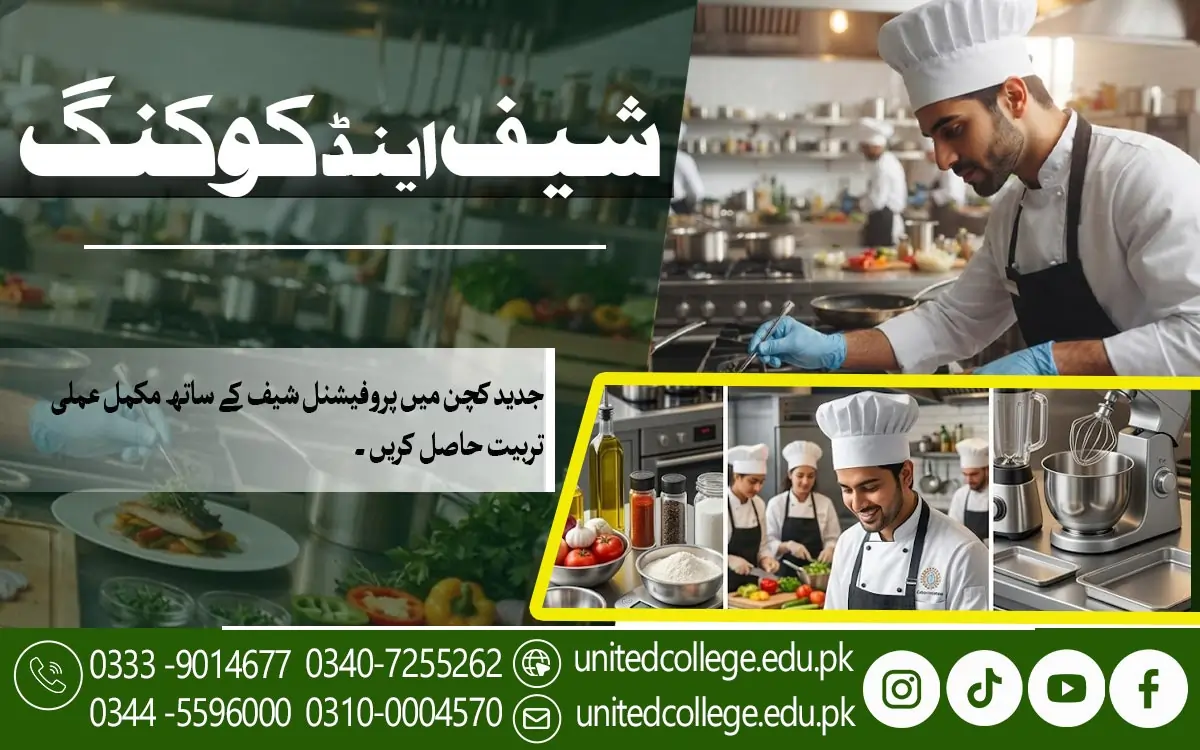

Chef and Cooking Course in Haripur – Learn Practical Cooking Skills
How Professional Cooking Skills Develop Through Practice
Cooking at home often allows people to work at their own pace, but a professional kitchen requires greater attention to timing, consistency, and organization. A chef may need to prepare several dishes together while ensuring that each one is served at the correct temperature and has the expected flavour. Professional cooking training introduces learners to these responsibilities step by step. Students can learn how to follow recipes carefully, measure ingredients accurately, prepare ingredients before cooking, and control heat according to the dish being prepared. For example, cooking rice requires a suitable amount of water and proper heat, while preparing meat safely requires attention to cooking temperature and cooking time.
These details may appear simple, but they can make a noticeable difference to the final result. A professional cooking course can also help learners understand why the same recipe may produce different results when ingredient quantities or cooking methods change. Regular practice allows beginners to recognize flavours, improve their timing, and correct common mistakes. Culinary skills training also encourages patience because some dishes require slow cooking, careful seasoning, or several preparation stages. Instead of depending entirely on written recipes, learners can gradually develop an understanding of ingredients and cooking methods.
Food Preparation Techniques Every Beginner Should Understand
Before a dish reaches the stove, several important preparation tasks must be completed correctly. Washing vegetables, measuring ingredients, cutting food into suitable sizes, and organizing cooking equipment all contribute to a smoother kitchen routine. The Chef and Cooking Course in Haripur is a relevant option for people who want to explore these essential food preparation techniques and understand their importance in everyday cooking. Beginners need to learn safe knife handling, including how to hold a knife properly, keep fingers away from the blade, and use a stable cutting surface. They can also develop an understanding of different cooking methods.
Boiling uses hot water to cook ingredients, frying uses hot oil or fat, steaming cooks food with hot vapour, grilling applies direct heat, and roasting uses dry heat in an oven or similar cooking environment. Each method produces a different texture and flavour, so selecting the correct technique matters. Learners should also understand how to use kitchen tools responsibly and keep their workstations clean. Preparing ingredients before starting a recipe can save time and reduce confusion, especially when several dishes need to be completed together. Practical chef training can help students connect these basic techniques with real cooking tasks.
Learning to Prepare Pakistani and International Dishes
Food is an important part of everyday life, and different regions have their own ingredients, cooking methods, and flavour combinations. In Haripur and other parts of Pakistan, traditional dishes such as chicken karahi, daal, biryani, pulao, and various vegetable curries are familiar examples of how spices and cooking techniques work together. Learning to prepare such dishes requires more than adding ingredients to a pot. A cook must understand when to add spices, how to control heat, how long ingredients need to cook, and how to balance flavours without overpowering the dish. For example, adding spices at different stages can affect the aroma and overall taste of a curry.
Italian pasta, simple soups, grilled dishes, sandwiches, and other international-style meals can introduce beginners to different ingredient combinations and presentation methods. The goal is not simply to memorize recipes but to understand the principles behind them. Ingredient selection is also important because fresh vegetables, suitable cuts of meat, quality grains, and properly stored spices can influence the result. Food presentation techniques help make a meal more appealing through thoughtful portion sizes, colour combinations, and clean plating. Cooking classes in Haripur can be useful for people who want to improve their knowledge of different dishes and preparation styles.
Food Hygiene, Kitchen Safety, and Proper Storage
A meal can look attractive and taste delicious, but it may still be unsafe if food has been handled incorrectly. This is why food hygiene and safety are essential parts of professional cooking. Anyone working with food should understand the importance of washing hands before preparing ingredients, cleaning work surfaces, and using properly washed utensils. Raw meat, poultry, seafood, and ready-to-eat foods should be handled separately to reduce the risk of cross-contamination, which occurs when harmful microorganisms transfer from one food or surface to another. For example, using the same unwashed cutting board for raw chicken and salad vegetables can create a serious food safety risk.
Correct storage is equally important. Perishable ingredients should be kept at suitable temperatures, covered when necessary, and used within safe storage periods. Cooks should check ingredient freshness and follow reliable food safety guidance rather than relying only on appearance or smell. Personal hygiene, clean clothing, safe footwear, and careful handling of hot pans or sharp tools also contribute to a safer kitchen. During chef training in Haripur, learners can explore why these practices matter in restaurants, hotels, catering kitchens, and other food preparation environments. They should also understand the importance of keeping floors dry, storing knives safely, and cleaning spills promptly to reduce accidents.
Baking, Desserts, and Attractive Food Presentation
Baking introduces a different side of cooking because small changes in measurements, temperature, and preparation can significantly affect the final product. When preparing a cake, for example, using too much flour or an incorrect oven temperature may produce a dry, dense, or uneven result. Unlike some everyday dishes, many baked products depend on accurate measurements and carefully followed instructions. Beginners interested in culinary skills can explore how ingredients such as flour, sugar, eggs, butter, and raising agents work together to create different textures. Baking and pastry preparation may include products such as biscuits, cakes, bread, tarts, and simple desserts, depending on the course syllabus and available practical training.
Learners can also discover the importance of preheating an oven, preparing baking trays, checking cooking progress, and allowing baked items to cool properly before decorating or serving them. Food presentation is another useful skill. A dessert can become more appealing through suitable portion sizes, clean plates, balanced colours, and simple decoration that does not overwhelm the food itself. The same principle applies to savoury meals, where thoughtful plating can improve the dining experience. Students exploring the Chef and Cooking Course in Haripur should confirm whether baking, pastry preparation, and dessert-making are included in the current training modules. These skills can be useful in bakeries, cafés, restaurants, hotels, and catering businesses.
Kitchen Organization, Menu Planning, and Teamwork
Good organization helps prevent these problems and allows kitchen staff to work more efficiently. The Chef and Cooking Course in Haripur helps learners understand the importance of organizing kitchen tasks and preparing ingredients properly. Before cooking begins, ingredients should be checked, vegetables prepared, tools arranged, and workstations kept ready for the tasks ahead. This preparation helps cooks focus on the food instead of searching for supplies in the middle of a busy service. Menu planning is another important skill because it involves deciding which dishes will be prepared, what ingredients are required, and how food costs and portions will be managed.
Portion control means serving consistent quantities, helping maintain quality and manage costs. Teamwork is equally important because cooks, kitchen assistants, and serving staff often depend on one another to complete orders on time. Clear communication helps everyone understand which dishes are being prepared and which tasks need attention first. Practical chef training can introduce learners to these kitchen management skills and explain how professional kitchens maintain an organized workflow. Clean workstations, labelled ingredients, sensible storage, and timely cleaning can make everyday tasks easier and safer. In a busy kitchen, even a simple habit such as preparing ingredients before service can save valuable time.
What Students Can Learn Through Chef Training at UCT
People in Haripur who want to explore professional cooking can consider the Chef and Cooking Course offered by United College of Technology (UCT). Structured training can provide a starting point for understanding the tasks involved in food preparation and the responsibilities of working in a kitchen. Depending on the current syllabus, chef training may cover topics such as ingredient preparation, cooking methods, kitchen equipment, food hygiene, safe handling practices, and the organization of cooking activities. Understanding these areas can help beginners connect basic cooking knowledge with the expectations of a professional food service environment.
Preparing ingredients, following instructions, monitoring heat, and maintaining a clean workstation are skills that learners need opportunities to practise. Students should also develop the habit of asking questions when they do not understand a technique or are unsure how to handle equipment safely. People interested in the Chef and Cooking Course in Haripur should contact UCT directly to confirm the current course duration, admission requirements, syllabus, facilities, fees, and available practical training modules. These details should be checked before making a decision because course arrangements can vary. Learners can also ask which cooking techniques are covered and whether the program includes baking, Pakistani dishes, international cuisine, or kitchen management.
Exploring Cooking and Hospitality Career Pathways in Haripur
Learning to cook can open several directions for people who enjoy preparing food and working in a service environment. Restaurants, hotels, cafés, bakeries, catering companies, and other food businesses all need people who understand food preparation, hygiene, and kitchen routines. In Haripur, learners may explore local opportunities that match their abilities and experience, while others may consider work in nearby areas if suitable positions are available. Possible roles can include kitchen assistant, food preparation worker, junior cook, catering assistant, or bakery assistant, depending on the employer's requirements and the person's skills. Some positions may require additional experience, specialized training, or knowledge of particular cuisines.
Completing a cooking course does not automatically guarantee employment, so learners should focus on developing practical ability, following safety standards, and understanding how professional kitchens operate. Building a collection of dishes they can prepare consistently may help them demonstrate their progress when appropriate. Over time, experienced cooks may choose to specialize in particular food styles or explore opportunities in catering and small food businesses. Starting a food business requires more than cooking skills alone; it also involves budgeting, ingredient sourcing, hygiene compliance, customer service, and understanding local demand. The Chef and Cooking Course in Haripur can be a starting point for people who want to explore this field, but continued practice and workplace experience remain important.
Frequently Asked Questions (FAQs)
The Chef and Cooking Course in Haripur is designed for people who want to learn cooking techniques, food preparation, kitchen hygiene, and the skills used in professional kitchens.
Students, beginners, fresh learners, job seekers, and anyone interested in cooking can explore this course. Contact United College of Technology (UCT) to confirm the current admission requirements.
Students may learn food preparation, cooking methods, ingredient selection, knife handling, kitchen safety, food presentation, and basic kitchen management, depending on the course syllabus.
Practical training may involve preparing ingredients, using kitchen equipment, following recipes, and learning cooking techniques. Contact UCT to confirm the practical activities included in its current program.
Yes, beginners can explore chef training to develop their cooking knowledge. Learning basic food preparation, following instructions, and practising regularly can help them build confidence.
Admission Open: Start Your Professional Journey Today!
Join United College of Technology and build a career with practical training, recognized certifications, and Gulf job support. Seats are limited.
Apply Now via WhatsAppContact Information
- Address: Rawalpindi: F-272 Main New Katarian Stop, Old IJP Road | Lahore Campus: Lahore, Pakistan
- Phone/WhatsApp: 0340-7255262 / 0333-9014677 / 0301-5044340 / 0310-0004570 / 051-8770756
- Website: unitedcollege.edu.pk
















Leave a Comment