


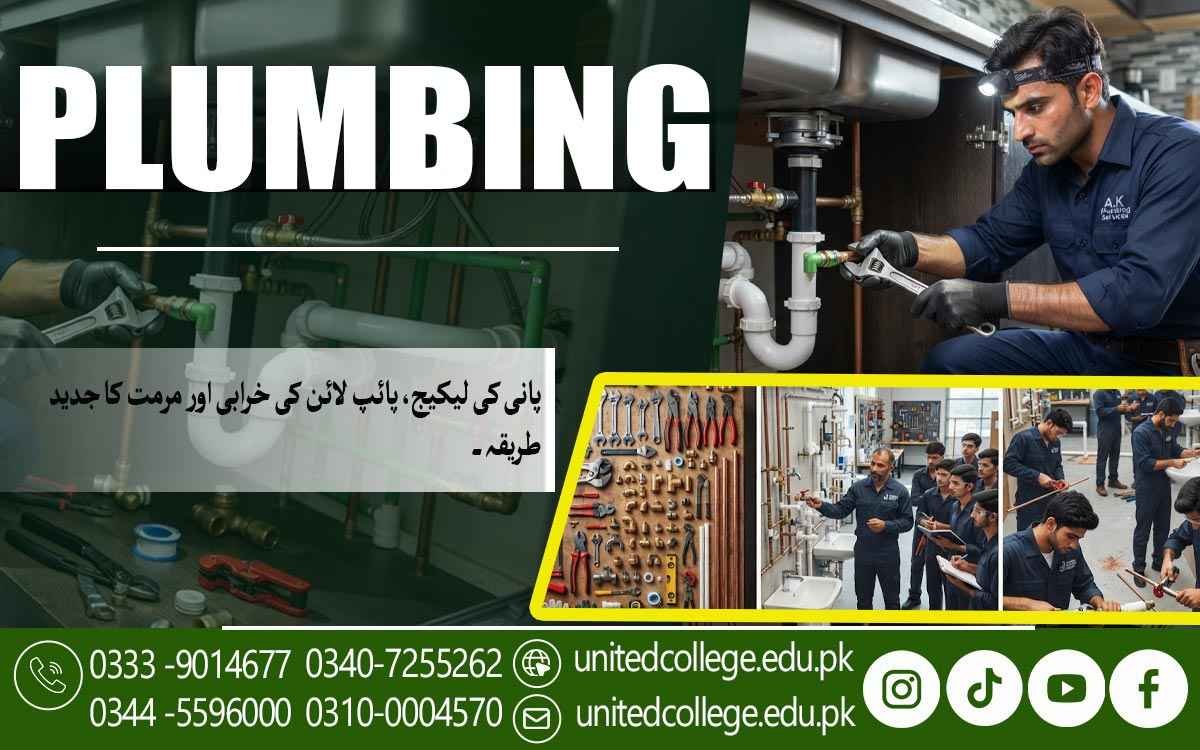

Plumbing Course in Narowal – Build Practical Plumbing Skills
When a Small Water Leak Becomes a Bigger Plumbing Problem
A dripping tap, blocked drain, loose pipe joint, or leaking water line may look like a small household issue, but a minor plumbing problem can sometimes create much bigger trouble when it is ignored or repaired incorrectly. Good plumbing is not simply about connecting pipes and tightening fittings; it involves understanding how water moves through a building, how drainage works, how pressure affects a system, and how different materials should be installed and maintained. This is why practical plumbing skills are useful in homes, construction projects, renovation work, and building maintenance.
A Plumbing Course in Narowal can introduce beginners to the practical side of this field and help them understand common plumbing tasks through structured learning. At United College of Technology, learners can become familiar with plumbing tools, water pipes, pipe fitting, valves, fittings, drainage components, installation procedures, repair techniques, and safety practices. For someone starting from zero, this type of vocational plumbing training can make technical work easier to understand because learners can gradually connect classroom explanations with practical tasks.
What Learners Can Expect From Practical Plumbing Training in Narowal
What happens when someone understands the theory of plumbing but has never actually handled a pipe, fitting, wrench, or cutting tool? The information may make sense on paper, but practical work can feel completely different. A plumbing course is designed to bridge that gap by allowing learners to understand how plumbing work is performed in real situations. During a plumbing Course in Narowal, beginners can learn about common plumbing systems, materials, tools, installation methods, repair procedures, and maintenance practices in a step-by-step manner.
The learning process may include identifying different types of pipes and fittings, understanding water supply routes, studying drainage systems, practicing pipe connections, and learning how to inspect a plumbing installation. Learners can also develop an understanding of sanitary plumbing, water tank connections, bathroom plumbing, kitchen plumbing, and basic residential pipework. At United College of Technology, practical learning can help students become more comfortable with the equipment and procedures used in plumbing work. Rather than expecting beginners to know everything immediately, hands-on plumbing practice can help them build their understanding gradually and recognize why each step is important.
Plumbing Tools Become Easier to Use When You Understand Their Purpose
Have you ever watched someone use a pipe wrench and wondered why that particular tool was selected instead of an ordinary wrench? Plumbing work involves several tools, and knowing their names is only the beginning. A learner also needs to understand what each tool is designed to do and how it should be handled safely. In a Plumbing Course in Narowal, students can be introduced to commonly used plumbing tools such as pipe wrenches, adjustable wrenches, pipe cutters, measuring tapes, pliers, screwdrivers, hacksaws, threading tools, levels, and other equipment used during installation and repair tasks.
They can learn how accurate measurement helps prevent unnecessary cutting and how the correct tool can make a job more controlled and efficient. Tool handling also connects directly with plumbing safety because improper use can damage pipes, fittings, or the tool itself and may create unnecessary risks. Practical training allows learners to understand the difference between tools used for cutting, tightening, measuring, joining, or inspecting components. As their confidence grows, beginners can learn to organize tools properly, inspect them before use, and select equipment according to the task rather than simply using whatever is available.
Pipe Cutting, Fitting, and Joining Require More Than Physical Strength
A pipe may look simple, but getting it to fit correctly into a plumbing system requires measurement, preparation, and attention to detail. If a pipe is cut too short, positioned incorrectly, or joined without proper preparation, the finished installation may develop leaks or other problems. Pipe fitting therefore becomes an important part of plumbing practical training. Learners can practice measuring water pipes, marking cutting points, preparing pipe ends, selecting suitable fittings, and creating secure pipe joints. Different materials may require different joining methods, so students can also become familiar with common plumbing materials such as PVC pipes and PPR pipes and understand where these materials may be used.
They can learn about elbows, tees, sockets, reducers, unions, valves, and other fittings that help change direction, connect sections, control water flow, or adapt pipe sizes. A plumbing course in Narowal can make these tasks easier for beginners by allowing them to see how individual pieces become part of a complete plumbing installation. With repeated practice, learners can better understand the importance of alignment, measurement, joint preparation, and proper fitting instead of treating pipework as a simple process of cutting and connecting.
Water Supply Systems Need Careful Planning From the Tank to the Tap
Turn on a tap and clean water appears almost instantly, but behind that simple action is a network of pipes, fittings, valves, tanks, and connections working together. Understanding this hidden network is an important part of learning plumbing. A water supply system carries water from its source or storage point to fixtures throughout a building, and its installation needs to be planned according to the layout and requirements of the property. During a Plumbing Course in Narowal, learners can study the basic principles behind water supply systems and understand how water pipes are routed toward bathrooms, kitchens, wash areas, and other points of use.
Water tank installation can also be discussed as part of residential plumbing, including the role of connecting pipes and control valves. Students can learn why correct pipe sizing, secure connections, suitable fittings, and proper valve placement matter when installing a water supply system. They can also become familiar with common causes of weak water flow and leakage and learn the importance of checking connections after installation. This knowledge can help beginners understand plumbing as a complete system rather than viewing each pipe or fixture as an isolated component.
Drainage Systems Carry Away Waste and Protect Building Hygiene
Water entering a building is only half of the plumbing story. Once water has been used, it needs to leave the building safely through an appropriate drainage system. Poor drainage pipe installation can lead to slow drainage, unpleasant smells, blockages, water accumulation, and other maintenance problems. This makes drainage an important area of sanitary plumbing training. Learners can study how wastewater moves from fixtures such as sinks, wash basins, showers, and toilets toward suitable drainage points. A plumbing course can introduce students to drainage pipes, traps, connections, slopes, and basic principles that help wastewater move effectively. Understanding these elements can also help beginners recognize why a drain should not simply be installed wherever it is convenient.
The direction, slope, connection, and accessibility of the system all matter. In Narowal, plumbing skills can be useful in residential construction, building renovation, maintenance work, and other settings where water supply and drainage systems need proper installation. By practicing drainage pipe installation and learning how common drainage issues develop, students can gain a more complete understanding of how clean water supply and wastewater removal work together inside a building.
Bathroom and Kitchen Plumbing Bring Classroom Learning Into Real Situations
A bathroom or kitchen can quickly reveal whether a plumbing system has been installed carefully. A loose basin connection, poorly fitted tap, blocked drain, leaking shower line, or incorrectly connected kitchen pipe can make everyday activities difficult. These spaces therefore provide useful practical situations for developing plumbing technician skills. During hands-on training, learners can become familiar with bathroom plumbing tasks involving wash basins, toilets, showers, taps, water supply connections, and drainage outlets. Kitchen plumbing may include sink connections, water supply lines, waste pipes, valves, and related fittings. Students can learn how to read the arrangement of fixtures and understand how supply and drainage lines are connected.
They can also practice checking joints and identifying signs of leakage before a small problem becomes more serious. A Plumbing Course in Narowal can help beginners approach these tasks systematically instead of relying on guesswork. Residential plumbing requires attention to both function and neat installation, so learners can also understand why pipes should be positioned securely, connections should remain accessible where appropriate, and completed work should be checked carefully. These practical exercises can make plumbing concepts much easier to remember because students can see how technical principles apply to everyday building systems.
Leak Detection and Repair Start With Finding the Real Cause
Imagine noticing water on the floor and immediately tightening the nearest fitting. The leak stops for a moment, but a few days later the same problem appears again. This is why effective pipe repair begins with finding the actual source of the problem rather than treating only the visible symptom. Leak detection is an important plumbing skill because water can travel along surfaces and make the location of a leak appear different from its true source. In practical training, learners can study common causes of leaks, including damaged pipes, loose connections, worn seals, faulty valves, and poorly joined fittings.
They can learn to inspect an area carefully, trace the likely source, and check relevant components before deciding what repair is required. Plumbing maintenance also involves more than fixing leaks after they appear. Regular inspection of joints, valves, fixtures, tanks, and drainage points can help identify problems at an earlier stage. Through a Plumbing Course in Narowal, learners can develop a structured approach to basic troubleshooting, where they observe the problem, check the system, identify possible causes, and then apply an appropriate repair method. This way of thinking is useful because good plumbing work depends not only on physical skills but also on careful observation and logical problem-solving.
Hands-On Practice Builds Safer and More Useful Plumbing Skills
What makes a practical skill different from information you have only read about? Repetition, supervised practice, and the chance to correct mistakes can make a significant difference. Plumbing involves cutting, joining, lifting, handling tools, working around water, and sometimes working in spaces where careful movement is important, so workplace practices and safety should be part of the learning process. At United College of Technology, practical learning in a Plumbing Course in Narowal can help students become familiar with plumbing equipment, pipe installation, fittings, repair work, maintenance procedures, and basic plumbing safety. Learners can practice tasks while understanding why protective equipment, proper tool handling, clean work areas, careful measurements, and safe working procedures matter.
They can also develop habits such as checking water supply conditions before starting work, inspecting tools, keeping fittings organized, and testing completed connections. Over time, these exercises can help beginners build a stronger foundation in plumbing installation and repair. For students, fresh learners, and people interested in developing a practical trade, vocational plumbing training can also provide a starting point for further learning. The goal is not simply to memorize plumbing terms, but to understand how systems work, practice essential tasks, and develop the discipline needed to continue improving practical plumbing skills in real working environments.
Frequently Asked Questions (FAQs)
A Plumbing Course in Narowal teaches learners practical skills related to pipe fitting, plumbing installation, water supply, drainage, repair, and maintenance.
Beginners, students, fresh learners, job seekers, and anyone interested in developing practical plumbing skills can join a suitable plumbing training program.
Learners can study pipe cutting and joining, PVC and PPR pipes, valves and fittings, water supply systems, drainage systems, sanitary plumbing, leak detection, and repair work.
Yes, practical training can help learners become familiar with plumbing tools, pipe fitting, installation procedures, repair tasks, maintenance, and workplace safety.
Can beginners learn plumbing skills? Yes. A beginner-friendly plumbing course can introduce basic concepts and practical tasks step by step, helping learners develop their skills through hands-on practice.
Admission Open: Start Your Professional Journey Today!
Join United College of Technology and build a career with practical training, recognized certifications, and Gulf job support. Seats are limited.
Apply Now via WhatsAppContact Information
- Address: Rawalpindi: F-272 Main New Katarian Stop, Old IJP Road | Lahore Campus: Lahore, Pakistan
- Phone/WhatsApp: 0333-9014677 / 0344-5596000 / 0310-0004570 / 0301-5044340 / 0340-7255262
- Website: unitedcollege.edu.pk
















Leave a Comment