


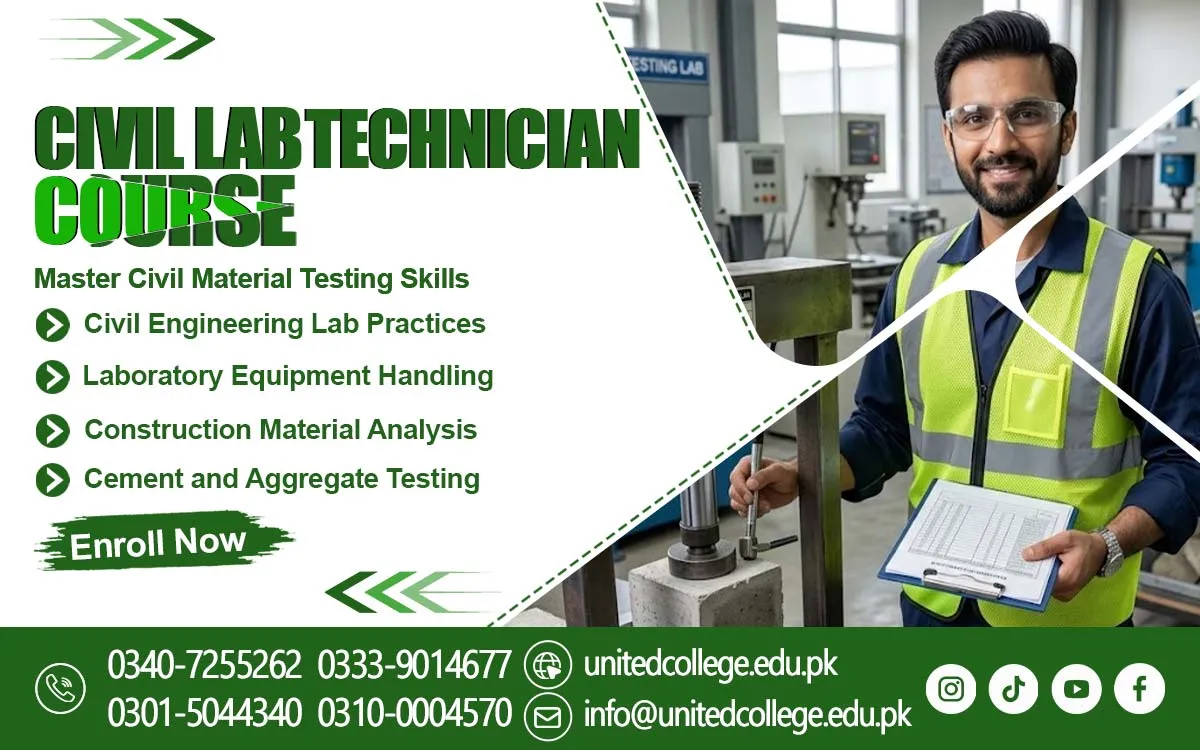

Civil Lab Technician Course in Bannu with Applied Material Skills
Discover the Science Behind Reliable Construction
Strong buildings and safe roads depend on more than good designs and skilled workers. The quality of cement, concrete, soil, and other materials also plays an important role. The Civil Lab Technician Course in Bannu introduces learners to the testing knowledge used to examine these materials and understand their condition before they become part of a construction project.
A civil laboratory technician helps check construction materials through careful observation, measurements, and testing procedures. This work gives engineers and construction teams useful information about material quality. Through the Civil Lab Technician Course in Bannu, beginners can explore how laboratory testing supports better planning and helps identify possible material problems at different stages of construction.
Material Quality Is the Foundation of Dependable Construction
Construction materials may look similar but can have different properties. Their strength, texture, moisture, and other conditions can affect how they perform. Material testing helps examine these differences instead of relying only on appearance. It provides useful information before materials are selected or used in building work.
A Civil Lab Technician Course in Bannu works with samples and follows suitable procedures to understand their properties. These activities can include preparing samples, using measuring tools, observing changes, and recording findings. This knowledge helps learners understand why testing is an important part of construction quality control.
Cement and Concrete Testing Reveal Important Material Properties
Cement and concrete are widely used in construction, but their properties need proper examination. Cement testing can help learners understand basic checks related to consistency, setting behavior, and material condition. These observations explain why the quality of cement matters when preparing construction materials.
Concrete testing introduces another important area of material examination. Learners can explore concepts such as workability, strength, and the condition of concrete samples. They may also become familiar with the purpose of common testing equipment. Understanding these ideas helps beginners see how concrete testing contributes to construction quality checks.
Civil Laboratory Work Connects Science With Building Projects
Civil laboratory testing brings scientific methods into everyday construction activities. A technician may examine cement, concrete, soil, sand, or aggregates to understand their basic properties. The results can help technical teams review whether materials meet the requirements set for a particular project.
The Civil Lab Technician Course in Bannu can introduce students to the purpose of these checks and the responsibilities involved in laboratory work. Learners can become familiar with sample preparation, basic testing concepts, careful handling, and result recording. These skills also help them understand how laboratory information connects with decisions made at construction sites.
Soil and Aggregate Examination Supports Better Site Decisions
Soil conditions matter when planning foundations, roads, and other structures. Different types of soil can behave differently under pressure or when moisture levels change. A basic Soil Testing Course learning approach can introduce concepts such as soil classification, moisture content, compaction, and sample examination. These areas help learners understand why ground conditions deserve attention before construction begins.
Aggregates such as sand and crushed stone are also important construction materials. Their size, shape, cleanliness, and distribution can influence the quality of concrete and other mixtures. Learners can explore simple aggregate examination methods, including the purpose of sieving and checking sample conditions. This knowledge develops a clearer understanding of material selection and testing.
Water Checks and Sample Preparation: Add Another Layer of Accuracy
Water is used in several construction activities, especially when preparing concrete mixtures. Its quality can affect material performance, so basic water quality checks are another useful area to understand. Learners can explore why unusual colour, visible particles, or other signs may require further examination through suitable testing methods.
Sample preparation is equally important because careless handling can affect observations and results. A technician needs to identify samples, keep them separate, and prepare them according to the relevant procedure. The Course can help beginners understand these responsibilities and develop a careful approach to laboratory tasks without treating every sample in the same way.
Construction Activities in Bannu Give Technical Learning a Local Connection
Bannu has different types of building and infrastructure activities, where material quality remains an important consideration. Houses, commercial buildings, roads, and public structures all depend on materials selected for their intended use. Understanding laboratory testing can help learners connect classroom knowledge with the technical questions that arise during construction work.
The Civil Lab Technician Training in Bannu can be a useful learning direction for people who want to explore construction-related technical education. Civil Laboratory Testing knowledge may be relevant in material testing laboratories, construction companies, engineering projects, and quality inspection settings. Actual duties depend on the workplace, required skills, and the level of responsibility assigned to each person.
Measurements and Records Make Laboratory Findings More Useful
Laboratory work requires more than operating equipment. Learners need to understand how to take measurements, read basic values, compare observations, and record information clearly. Even a small recording mistake can create confusion when another person reviews the findings. Accurate documentation therefore forms an important part of technical laboratory practice.
Basic laboratory equipment may include weighing scales, sieves, measuring containers, and testing machines, depending on the type of examination. Students can learn about the general purpose of such tools and the importance of using them correctly. Good Material Testing Skills develop through attention, patience, repeated learning, and a willingness to check details before recording results.
Turn Technical Curiosity Into Practical Understanding
Students who enjoy science, measurements, observation, and construction may find this field interesting. Civil Lab Technician Training introduces a way to understand how material properties are examined and why accurate results matter. It also encourages useful habits such as following instructions, maintaining a clean workspace, handling samples carefully, and respecting laboratory safety rules.
The training option offered by United College of Technology gives interested learners an opportunity to explore civil laboratory concepts as part of their technical education. The Civil Lab Technician Course in Bannu can help beginners build a foundation for understanding material testing, laboratory procedures, and construction quality. With continued learning and practice, students can develop a clearer picture of how laboratory work supports safer and more reliable construction.
Frequently Asked Questions (FAQs)
Calibration means checking measuring or testing equipment to see whether it gives reliable readings.
Dust, moisture, or unwanted materials can change a sample and affect the accuracy of its examination.
Curing is the process of maintaining suitable moisture and temperature conditions so concrete can develop its properties over time.
A consistent procedure helps technicians carry out tests in an organised way and makes results easier to review.
A report may include sample details, testing dates, methods, measurements, observations, and recorded findings.
Team members can share observations, check records, follow instructions, and communicate findings more clearly.
Admission Open: Start Your Professional Journey Today!
Join United College of Technology and build a career with practical training, recognized certifications, and Gulf job support. Seats are limited.
Apply Now via WhatsAppContact Information
- Address: Rawalpindi: F-272 Main New Katarian Stop, Old IJP Road | Lahore Campus: Lahore, Pakistan
- Phone/WhatsApp: 0340-7255262 / 0333-9014677 / 0301-5044340 / 0310-0004570 / 051-8770756
- Website: unitedcollege.edu.pk
















Leave a Comment