


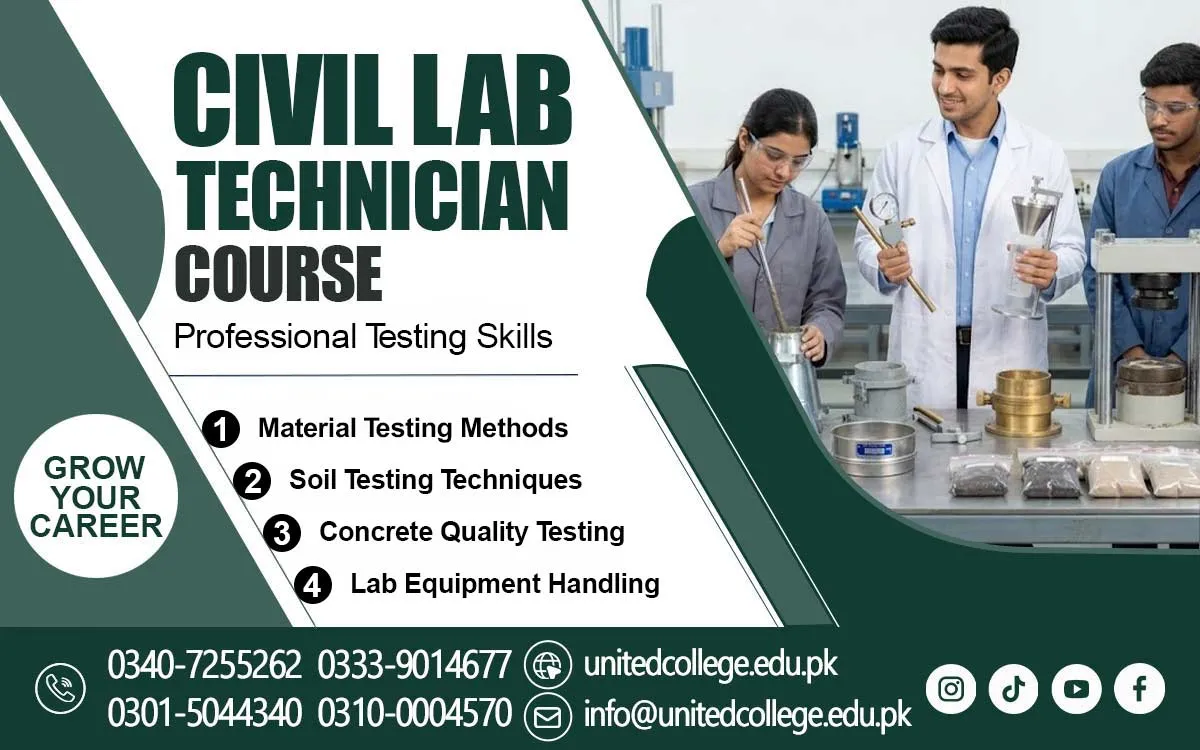

Civil Lab Technician Course in Hangu with Essential Testing Methods
Strong Construction Depends on More Than What the Eyes Can See
A building may look solid, but its actual strength depends on the quality of the materials used during construction. Cement, sand, concrete, and soil all have properties that influence the safety and durability of structures. Roads, houses, and commercial buildings require suitable materials to support their intended use. The Civil Lab Technician Course in Hangu introduces learners to the importance of examining construction materials and understanding how laboratory testing supports better construction decisions.
Civil lab technicians help check materials through sampling, measurements, observations, and testing procedures. Their work provides useful information about material properties that engineers and construction teams can consider during a project. Learning about these responsibilities helps beginners understand the technical side of construction. It also shows why careful examination is important before materials are selected or used in different building activities.
Step Inside the Working Environment of a Civil Engineering Laboratory
A civil engineering laboratory is a place where construction materials are examined through organised testing procedures. Different samples are handled and checked to understand their basic properties. Technicians need to follow instructions, use suitable tools, and record information correctly. Each activity has a purpose, whether it involves checking a material's condition or understanding how it may perform in construction.
Learners can explore how laboratory work connects with engineering knowledge. They can become familiar with sample identification, preparation, measurements, observations, and simple reports. A Civil Lab Technician Course in Hangu can introduce these concepts in a beginner-friendly way. This understanding helps students recognise that laboratory testing is not guesswork; it follows procedures designed to produce useful information about construction materials.
Discover What Cement, Sand, and Concrete Can Reveal
Cement, sand, aggregates, and concrete are commonly used in construction, but they do not all serve the same purpose. Cement acts as a binding material, sand is used in different construction mixtures, and aggregates contribute to concrete and other applications. Understanding their basic properties helps learners recognise why material quality matters in building work.
Concrete Testing and Cement Testing introduce the basic idea of examining these materials for their relevant properties. Learners may explore how samples are prepared, how measurements are taken, and why results need careful review. Aggregate examination can also introduce particle size and material characteristics. These general learning areas help explain how Construction Material Testing supports the assessment of materials before and during construction activities.
Soil Examination Provides Important Clues About Ground Conditions
The ground beneath a structure plays an important role in construction planning. Different soil types can behave differently under pressure and changing conditions. Soil Testing helps examine basic soil properties and provides information that may be relevant when engineers assess ground conditions for foundations, roads, and other projects.
The Civil Lab Technician Course in Hangu can help learners understand the general purpose of soil examination and its connection with construction activities. Students can explore how soil samples are collected, prepared, and checked through suitable procedures. They can also learn why observations and measurements need proper documentation. This knowledge gives beginners a clearer picture of how ground conditions influence technical decisions.
Laboratory Tools Become Useful Through Proper Handling
Civil engineering laboratories may use different types of tools for measuring, separating, weighing, and examining construction materials. Examples include weighing scales, sieves, measuring containers, and testing machines. Each tool has a specific purpose, and learners need to understand its basic function before using it. However, the equipment available can vary between laboratories, so no particular facility should be assumed.
Learning about laboratory tools also involves understanding safe handling practices. Students can explore how to keep equipment clean, prepare samples carefully, and follow instructions during testing activities. Basic measurement skills help reduce mistakes, while proper organisation makes laboratory work easier to manage. These habits support a responsible approach to practical learning.
Explore the Connection Between Laboratory Learning and Hangu's Construction Activities
Construction activities in Hangu involve different types of buildings, roads, and infrastructure projects. Each project depends on materials that are suitable for its intended purpose. Understanding how soil, concrete, cement, and aggregates are examined can help local learners recognise the technical checks associated with construction work.
Material testing knowledge may be useful for understanding the work carried out at construction sites, engineering laboratories, and material testing facilities. It can also provide background knowledge about quality inspection and technical support activities. The Civil Lab Technician Course in Hangu gives interested learners a way to explore this subject and understand how laboratory procedures connect with practical construction requirements. Employment outcomes depend on several factors, including experience and workplace needs.
Build Your Technical Understanding One Skill at a Time
Beginners in Hangu do not need to understand every testing procedure at once. They can start with basic construction materials and gradually learn about their properties. People who enjoy practical activities, measurements, and organised tasks may also find laboratory learning interesting. Developing technical knowledge requires regular attention and a willingness to practise. Through the Civil Lab Technician Training, learners can improve their observation skills, while basic mathematics helps them understand measurements and simple calculations.
Teamwork and clear communication are useful when sharing testing information with others. With consistent learning and practice, students can become more familiar with laboratory procedures and understand the responsibilities connected with construction material testing and examination.
United College of Technology Brings Civil Laboratory Concepts Into Focus
The Civil Lab Technician Course offered by United College of Technology provides an opportunity for interested individuals to explore construction material testing and basic laboratory practices. The subject is relevant to learners who want to understand how materials are examined and why testing information matters in engineering work. It also connects with Civil Lab Technician Training and the wider field of technical construction learning.
Structured learning can introduce general concepts related to sample preparation, Soil Testing, Concrete Testing, Cement Testing, measurements, and laboratory documentation. These areas help learners understand the relationship between material properties and construction quality. Anyone interested in this learning opportunity should contact United College of Technology directly for current course details and relevant information before making a decision.
Let Technical Knowledge Shape a Better Understanding of Construction
Every construction project involves decisions about materials, methods, and quality. Laboratory testing helps people understand the properties of materials before they are used in different applications. Learning about these procedures can develop a clearer understanding of why accurate measurements, careful observations, and organised records matter in civil engineering work.
For people interested in technical learning, the Civil Lab Technician Course in Hangu offers a subject worth exploring. Understanding laboratory practices can help learners build knowledge of construction materials and the checks used to examine them. Continued learning, responsible working habits, and practical understanding can strengthen this foundation and create a more informed view of how material testing supports reliable construction.
Frequently Asked Questions (FAQs)
Correct labels help identify each sample and prevent confusion when reviewing test results.
Learners explore how texture and physical appearance can provide useful clues during material examination.
They can use suitable measuring methods, check readings carefully, and follow consistent procedures.
Comparison helps identify differences and understand whether materials behave in a similar or different way.
Clear explanations help other people understand observations and make informed decisions about materials.
Yes. Observation and basic testing concepts can help learners notice unexpected changes that may need further examination.
Admission Open: Start Your Professional Journey Today!
Join United College of Technology and build a career with practical training, recognized certifications, and Gulf job support. Seats are limited.
Apply Now via WhatsAppContact Information
- Address: Rawalpindi: F-272 Main New Katarian Stop, Old IJP Road | Lahore Campus: Lahore, Pakistan
- Phone/WhatsApp: 0340-7255262 / 0333-9014677 / 0301-5044340 / 0310-0004570 / 051-8770756
- Website: unitedcollege.edu.pk
















Leave a Comment