


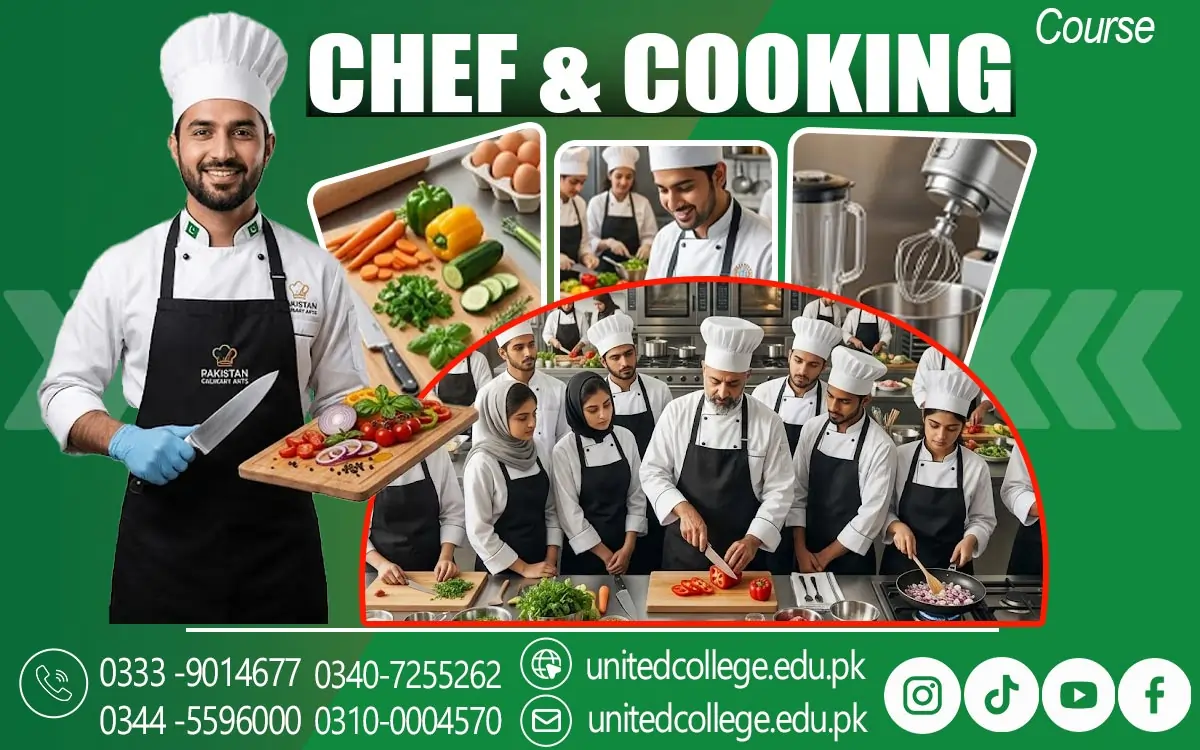

Chef and Cooking Course in Swat – Learn Professional Cooking Skills
How a Passion for Cooking Can Become a Practical Skill
Many people enjoy cooking for their families, experimenting with spices, or watching chefs prepare attractive meals, but preparing food professionally requires more than interest alone. A home cook might add ingredients according to personal taste, while a professional chef must pay attention to measurements, cooking time, food quality, presentation, and customer expectations. The Chef and Cooking Course in Swat can help learners understand the difference between casual cooking and organised food preparation. Students can begin by learning simple tasks, such as preparing vegetables, measuring ingredients, boiling rice, and cooking basic dishes. As their understanding improves, they can explore more advanced methods and develop better control over flavour and texture.
For example, knowing when to add spices can change the taste of a curry, while controlling heat can prevent meat from becoming dry or vegetables from losing their natural texture. These small details often make a noticeable difference in the final dish. Culinary skills training also encourages patience, creativity, and attention to detail because recipes do not always produce the same results without careful preparation. With consistent practice, learners can identify mistakes and improve their methods. Chef training in Swat can therefore help people develop a practical skill, build confidence in the kitchen, or prepare for further learning in the food industry.
What Students Learn in a Chef and Cooking Course in Swat
A cooking course introduces learners to the knowledge and routines needed to prepare food in a more organised way. The exact syllabus can vary, but a professional cooking course may cover ingredient preparation, basic cooking methods, seasoning, recipe reading, kitchen hygiene, food presentation, and the safe use of common equipment. Students need to understand how different ingredients behave during cooking and why preparation matters before a dish reaches the stove. For instance, cutting vegetables into similar sizes helps them cook more evenly, while measuring ingredients can make recipes easier to repeat.
Learners may also explore how to balance salty, sweet, sour, bitter, and savoury flavours to create a more satisfying meal. The Chef and Cooking Course in Swat is relevant to beginners who want to understand these processes before taking on more complex kitchen tasks. United College of Technology (UCT) offers training for people interested in developing cooking-related knowledge and practical culinary skills. Students should confirm the current syllabus and practical components directly with the institute before enrolling. Beyond preparing individual dishes, cooking education can introduce the importance of teamwork, time management, and keeping work areas organised.
Essential Cooking Techniques Every Beginner Should Practise
Good cooking begins with understanding how heat changes food. Beginners can start with common methods such as boiling, steaming, frying, sautéing, grilling, roasting, and baking. Boiling is useful for foods such as rice, pasta, and eggs, while steaming can cook vegetables without requiring them to sit directly in water. Sautéing means cooking small pieces of food quickly in a little oil, often while stirring, whereas roasting uses dry heat to cook food and develop a deeper flavour. Frying can create a crisp surface, but it requires careful temperature control and safe handling of hot oil. During chef training in Swat, learners can benefit from understanding these differences and practising one technique at a time
. Seasoning is another important skill. Salt, spices, herbs, and other flavourings should be added thoughtfully rather than automatically, because the right balance depends on the ingredients and recipe. Beginners should also learn to recognise signs of doneness instead of relying only on cooking time. Meat, poultry, seafood, and other foods may require specific temperature checks to ensure they are safe to eat. Repeating simple recipes helps learners understand how heat, timing, and ingredient proportions affect the result. As their confidence improves, they can combine different methods and adapt recipes more carefully.
Learning Food Preparation, Cutting, and Ingredient Selection
Before cooking begins, ingredients must be selected, cleaned, measured, and prepared correctly. This preparation stage is often called mise en place, a French term used in professional kitchens to describe arranging ingredients and equipment before starting a recipe. It may sound like a small detail, but organised preparation helps reduce confusion and makes cooking more efficient. Students learning cooking and food preparation can practise identifying fresh vegetables, checking the quality of meat, selecting suitable herbs, and understanding how different ingredients contribute to flavour. Knife skills are equally important. Learning safe cutting methods, such as slicing, dicing, and chopping, helps produce evenly sized pieces that cook more consistently.
Beginners should use an appropriate cutting board, keep knives sharp and clean, and handle blades carefully to reduce the risk of injury. They should also learn how to wash produce properly and separate raw ingredients from ready-to-eat foods. Ingredient selection affects both the taste and appearance of a dish. Fresh tomatoes, for example, may be suitable for salads and sauces, while certain varieties of potatoes work better for frying than others. Understanding these differences allows cooks to make better choices according to the recipe. A Chef and Cooking Course in Swat can help learners appreciate why preparation is an essential part of culinary work rather than a task to rush through. With regular practice, students can improve their speed without sacrificing accuracy, maintain a cleaner workspace, and follow recipes more confidently.
Understanding Kitchen Hygiene and Food Safety
A meal can look attractive and smell delicious, but it is not properly prepared if food safety has been ignored. Cleanliness and safe handling are essential responsibilities for anyone who works with food. Learners need to understand how germs can spread through unwashed hands, contaminated utensils, dirty surfaces, and contact between raw and cooked ingredients. For example, using the same cutting board for raw chicken and salad vegetables without washing and sanitising it can transfer harmful microorganisms to food that will not be cooked again. This is known as cross-contamination.
Temperature control is another important part of food handling. Perishable foods should not be left at room temperature for long periods, and refrigerators should be maintained at safe temperatures. Cooks must also understand the importance of cooking foods thoroughly and cooling and storing leftovers properly. Personal hygiene matters as well, including wearing clean work clothes, covering cuts appropriately, and keeping hair secured during food preparation. The Chef and Cooking Course in Swat provides a relevant starting point for learners who want to understand the safety responsibilities associated with cooking. Food safety is not simply a rule to follow during training; it is a daily habit that protects customers, colleagues, and the cook.
Preparing Pakistani Dishes and Exploring International Cuisine
Food reflects culture, local ingredients, family traditions, and personal creativity. In Pakistan, cooking includes a wide variety of dishes, from chicken karahi, biryani, pulao, and daal to kebabs, vegetable curries, and traditional desserts. Learning Pakistani cooking techniques involves understanding spices, controlling heat, preparing gravies, and balancing flavours. For example, a rich karahi depends on the way tomatoes, spices, and other ingredients cook together, while a good biryani requires attention to rice texture, seasoning, and the timing of each preparation stage. Beginners can develop these skills by following reliable recipes and learning why particular ingredients are added at different times.
Exploring international cuisine can introduce students to different ingredients and cooking traditions. Italian pasta, Chinese-style stir-fried vegetables, soups, grilled dishes, and simple baked foods offer opportunities to practise different methods. Baking and dessert preparation may also involve measuring ingredients carefully, controlling oven temperatures, and understanding how dough or batter changes during cooking. Cooking classes in Swat can be an appealing option for people who want to build their knowledge of different foods and learn how to prepare meals with greater confidence. Learners should check which cuisines and practical modules are included in the course offered by United College of Technology (UCT), rather than assuming every specialisation is available.
Using Kitchen Equipment and Managing Cooking Tasks
Professional kitchens depend on more than ingredients and recipes. Cooks must also understand how to use equipment safely, organise their work, and complete tasks within a suitable time. Common kitchen equipment includes knives, chopping boards, measuring cups, weighing scales, pots, pans, strainers, blenders, mixers, ovens, and refrigerators. Each tool serves a particular purpose, and using the correct equipment can make preparation easier and more consistent. For example, a weighing scale helps measure ingredients accurately, while a thermometer can help check whether food has reached a safe internal temperature. Students should learn to follow equipment instructions, check for damage, and keep tools clean after use. They also need to understand basic kitchen organisation.
Imagine preparing rice, chicken, and a vegetable side dish for several people: if every ingredient is prepared at the last minute, the cook may struggle to finish everything together. Planning the order of tasks can reduce this pressure. Some ingredients can be prepared in advance, while other steps must happen immediately before serving to preserve quality. These activities develop kitchen management skills, including time management, teamwork, cleanliness, and communication. During a busy service, chefs may need to follow instructions, coordinate with other kitchen staff, and adjust their pace without ignoring safety. A Chef and Cooking Course in Swat can introduce learners to the importance of these routines as they develop their culinary knowledge.
How Practical Chef Training Builds Confidence and Experience
Reading a recipe can explain what to do, but practical experience helps a learner understand how each step works in a real kitchen. A beginner may know that onions should be cooked until softened, for example, yet still need practice to recognise the right colour, texture, and aroma. Repeated cooking allows students to connect written instructions with what they see, hear, smell, and taste. Practical cooking training can also help learners identify common mistakes, such as adding too much water, using excessive heat, cutting ingredients unevenly, or seasoning a dish without tasting it carefully. Instead of becoming discouraged by these errors, students can treat them as opportunities to understand the cooking process.
Teamwork is another valuable part of kitchen experience. Preparing food with others encourages learners to communicate clearly, share responsibilities, and respect different tasks. In a professional environment, one person may prepare ingredients while another manages cooking or presentation, so coordination is important. United College of Technology (UCT) offers the Chef and Cooking Course in Swat for individuals interested in developing their culinary knowledge. Before enrolling, learners can ask the institute about practical sessions, equipment access, assessment methods, and the skills covered in training. The amount of experience gained depends on the course structure and the learner's participation.
Exploring Career Paths in Restaurants, Hotels, and Food Businesses
Cooking skills can be useful in several settings, although the opportunities available to each learner depend on their ability, experience, training, and local employment requirements. Restaurants and cafés may need kitchen assistants, food preparation workers, or cooks who can follow recipes and maintain consistent food quality. Hotels may have kitchen teams responsible for breakfast service, buffet preparation, event meals, and dishes for different guests. Catering companies prepare food for weddings, meetings, family gatherings, and other events, where planning and timing are particularly important. Learners with additional interests may also explore bakeries, dessert preparation, or small food businesses, provided they develop the necessary skills and meet relevant food safety and business requirements.
Some people may eventually want to sell homemade meals or specialise in a particular cuisine, but running a food business also requires knowledge of budgeting, ingredient costs, packaging, customer service, and local regulations. Completing a course alone does not guarantee a job or business success; practical ability, work experience, reliability, and continued learning all matter. The Chef and Cooking Course in Swat can serve as a starting point for people who want to explore culinary work and understand what professional kitchens expect. United College of Technology (UCT) offers this course to learners interested in developing cooking-related skills and knowledge.
Frequently Asked Questions (FAQs)
The Chef and Cooking Course in Swat is designed for people who want to learn cooking techniques, food preparation, kitchen hygiene, and the skills used in professional kitchens.
Students can learn ingredient preparation, knife skills, cooking methods, seasoning, Pakistani dishes, international cuisine, food presentation, and kitchen safety. The exact syllabus depends on the training programme.
Beginners, students, fresh learners, and job seekers interested in cooking can consider this course. Previous professional cooking experience may not be necessary, depending on the institute's admission requirements.
Practical training may involve preparing ingredients, following recipes, using kitchen equipment, and practising cooking methods. Contact United College of Technology (UCT) to confirm the practical training included in its current course.
The course duration depends on the institute's programme and schedule. Contact United College of Technology (UCT) for the latest information about course duration.
Admission Open: Start Your Professional Journey Today!
Join United College of Technology and build a career with practical training, recognized certifications, and Gulf job support. Seats are limited.
Apply Now via WhatsAppContact Information
- Address: Rawalpindi: F-272 Main New Katarian Stop, Old IJP Road | Lahore Campus: Lahore, Pakistan
- Phone/WhatsApp: 0340-7255262 / 0333-9014677 / 0301-5044340 / 0310-0004570 / 051-8770756
- Website: unitedcollege.edu.pk
















Leave a Comment