


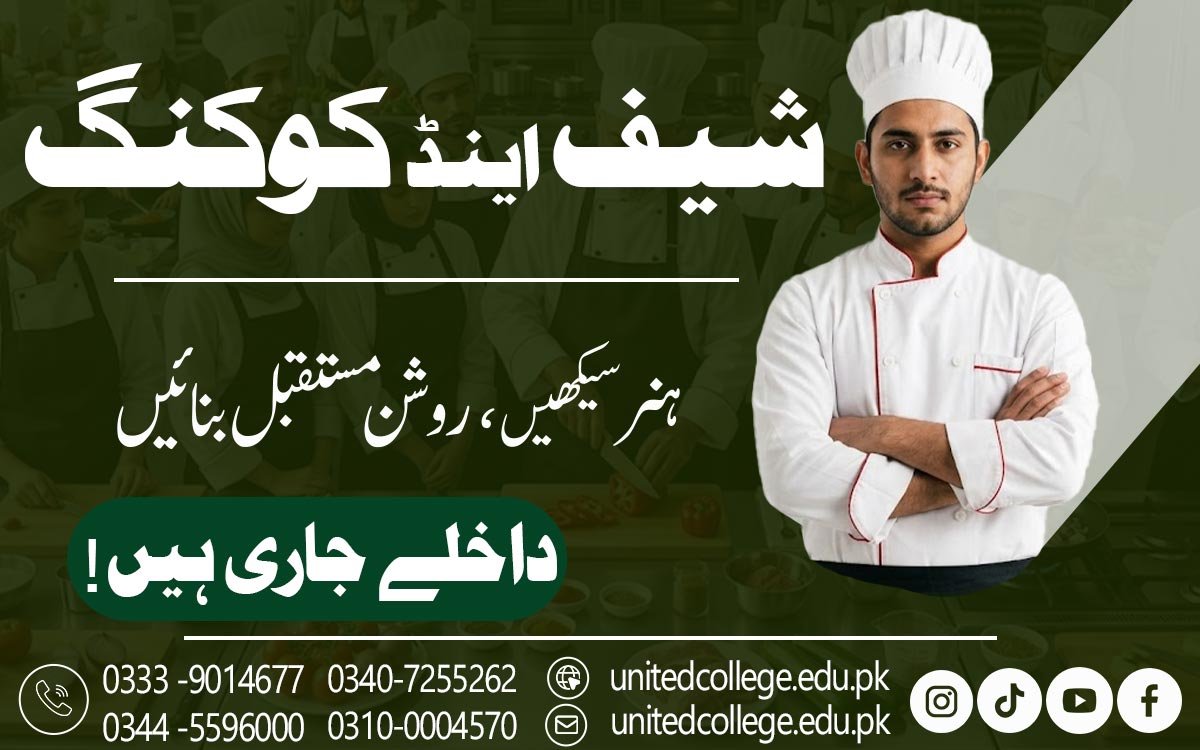

Chef and Cooking Course in Noshehra for Practical Kitchen Skills
Turning a Love for Cooking into Practical Kitchen Skills
Imagine preparing three different dishes at the same time while keeping each one fresh, flavourful, and ready to serve. One dish needs more cooking time, another requires careful seasoning, and a third must be presented attractively before it reaches the table. Without proper planning and cooking knowledge, even a simple kitchen task can become stressful. This is where professional cooking skills can make a real difference. The Chef and Cooking Course in Noshehra, offered by United College of Technology (UCT), introduces learners to the knowledge and techniques that are useful in food preparation and professional kitchen environments.
Cooking is not only about mixing ingredients or following a recipe; it also involves cleanliness, patience, creativity, timing, and attention to detail. Learners need to understand why ingredients are prepared in a particular order, how cooking temperatures affect food, and how different methods change flavour and texture. Through culinary skills training, beginners can develop a clearer understanding of these responsibilities and learn to approach cooking tasks more confidently. Whether someone enjoys preparing meals at home or hopes to explore the food industry, learning structured cooking methods can help turn an everyday interest into a useful practical skill.
Learning How Ingredients Become Delicious and Balanced Dishes
Often, the problem is not the recipe itself but the way ingredients are selected, measured, prepared, and combined. Food preparation techniques help learners understand these details before cooking even begins. During culinary training for beginners, learners can become familiar with different ingredients, their uses, and the importance of checking their freshness. Vegetables, meat, seafood, dairy products, spices, and grains all require suitable handling and preparation. For example, cutting vegetables into similar-sized pieces can help them cook more evenly, while measuring ingredients carefully can improve consistency when preparing the same dish more than once.
Understanding recipes is equally important because cooking instructions often explain the correct order of tasks, cooking times, and ingredient quantities. Beginners can also learn why some ingredients should be added earlier while others are better introduced near the end of cooking. The Chef and Cooking Course in Noshehra provides a relevant learning pathway for individuals interested in developing these essential skills. With regular practice, learners can improve their understanding of flavour, texture, and portion sizes. These skills can also encourage creativity, allowing cooks to explore different combinations while maintaining the balance and quality that make a dish enjoyable.
Developing Safe Knife Skills and Using Kitchen Equipment Correctly
A professional kitchen contains many tools, including knives, chopping boards, measuring cups, weighing scales, peelers, pans, ovens, and food processors. Knowing how to use these tools correctly can make food preparation more organised and reduce avoidable mistakes. Knife handling is particularly important because careless cutting can lead to injuries, wasted ingredients, and uneven cooking results. Beginners should learn to use a suitable knife for the task, keep their fingers away from the cutting edge, work on a stable chopping board, and avoid rushing when preparing food. They should also understand the importance of keeping knives clean, storing them safely, and never attempting to catch a falling knife.
Other kitchen equipment requires similar attention. For instance, an oven should be used according to its instructions, hot pans should be handled with suitable protection, and electrical appliances should be kept away from water where necessary. Kitchen equipment handling is not simply about knowing which button to press; it also involves understanding safe operating practices and recognising when equipment needs cleaning or inspection. Through suitable chef training in Noshehra, learners can explore the purpose of common kitchen tools and understand how the right equipment supports different cooking tasks. Building these habits early helps beginners work more carefully and efficiently.
Exploring Cooking Methods to Improve Taste, Texture, and Quality
Why does a roasted vegetable taste different from a boiled one, even when both are prepared using the same ingredient? The answer often lies in the cooking method. Different techniques affect the colour, texture, moisture, and flavour of food, so understanding when to use each method is an important part of professional cooking. Basic cooking techniques include boiling, steaming, frying, grilling, roasting, baking, and sautéing. Boiling cooks food in hot water, while steaming uses hot vapour and can help vegetables retain their natural texture when prepared correctly. Frying can create a crisp surface, whereas roasting develops flavour through dry heat.
Each method requires attention to temperature, timing, and the characteristics of the ingredients. For example, delicate vegetables may become soft if cooked for too long, while thick pieces of meat may need careful temperature control to cook safely throughout. A professional cooking course can introduce learners to these methods and explain how they are used in different dishes. The Chef and Cooking Course in Noshehra is relevant to people who want to understand more than basic home recipes and explore structured culinary skills training. By practising different techniques, learners can discover how to prepare familiar meals more consistently and experiment with new dishes.
Maintaining Food Hygiene and Safety During Every Kitchen Task
A meal can look attractive and taste excellent, but poor hygiene can make it unsafe to eat. Food hygiene and safety are therefore essential responsibilities for anyone who prepares or serves food. Beginners should understand that harmful microorganisms can spread through contaminated hands, dirty equipment, unsafe water, or contact between raw and ready-to-eat foods. Simple habits can help reduce these risks, including washing hands properly, cleaning work surfaces, using suitable chopping boards, and storing ingredients at appropriate temperatures. Raw meat and seafood should be kept separate from foods that will be eaten without further cooking.
Perishable ingredients should not be left at room temperature for unnecessarily long periods, and food should be cooked to safe internal temperatures appropriate to the product. Learners should also understand the importance of checking ingredient dates, identifying signs of spoilage, and keeping waste away from food preparation areas. Personal cleanliness matters as well: clean clothing, restrained hair, and suitable handling practices help maintain a hygienic working environment. In a professional kitchen, these responsibilities affect not only customers but also colleagues who depend on safe and organised work practices. The Chef and Cooking Course in Noshehra can introduce learners to the importance of these principles as part of their broader cooking education.
Organising Kitchen Work to Manage Time and Multiple Orders
A busy kitchen can quickly become confusing when several orders arrive together, ingredients need preparation, and different dishes must be served at nearly the same time. In such an environment, cooking knowledge alone is not enough; organisation, communication, and time management also matter. Culinary training can introduce learners to the importance of preparing a workstation before cooking, checking ingredients, reading recipes in advance, and arranging tasks in a sensible order. This preparation helps reduce confusion and makes it easier to complete work efficiently. For example, a cook preparing a meal with rice, vegetables, and chicken must consider the cooking time required for each item.
A better approach is to identify which tasks take the longest, prepare ingredients beforehand, and coordinate the cooking process so that the food is ready together. This kind of planning is often supported by the kitchen practice known as mise en place, a French term meaning putting everything in its place before cooking begins. Kitchen management skills also include keeping work areas tidy, returning tools to their proper places, monitoring available ingredients, and communicating clearly when supplies are running low. Through the Chef and Cooking Course in Noshehra, learners can explore why organised working methods are valuable in professional kitchens.
Creating Attractive Food Presentations and Serving Dishes Professionally
People often begin enjoying a meal before taking the first bite because its appearance creates an expectation about taste and quality. Food presentation skills help cooks arrange dishes in a way that looks appealing while keeping the food practical to eat. Good presentation does not always require expensive ingredients or complicated decoration. Sometimes, a clean plate, balanced portions, suitable colours, and thoughtful placement are enough to make a meal look more inviting. For example, colourful vegetables can add contrast to a dish of rice and grilled chicken, while a small amount of fresh herbs may provide a finishing touch when appropriate. However, decoration should never replace good flavour, proper cooking, or food safety.
In restaurants and hotels, consistency matters because customers generally expect the same dish to look similar each time they order it. Serving temperature, clean plates, and careful handling are also important parts of the final presentation. A chef must pay attention to these details while making sure food is delivered without unnecessary delays. The Chef and Cooking Course in Noshehra can help introduce learners to the principles behind attractive food preparation and professional serving practices. With practice, beginners can learn to present everyday dishes more carefully and develop a stronger understanding of how appearance, taste, and cleanliness work together to create a positive dining experience. These skills are relevant to both home cooking and professional food service.
Understanding Professional Kitchens in Restaurants, Hotels, and Catering Services
Cooking skills can be applied in many environments, but each workplace has its own responsibilities and working conditions. A restaurant kitchen may focus on preparing customer orders quickly, while a hotel kitchen might handle breakfast services, buffet arrangements, room service, and meals for events. Catering services often prepare food for weddings, meetings, celebrations, and other gatherings where timing and quantity are especially important. Cafés may concentrate on light meals, snacks, sandwiches, and beverages, while bakeries commonly require knowledge of dough preparation, baking temperatures, ingredient measurements, and product consistency. Understanding these differences can help learners recognise the range of activities found within the food industry.
Hotel kitchen operations, for example, may involve coordinating with service staff, maintaining preparation schedules, and following established hygiene procedures. Restaurant cooking skills may require cooks to understand menu items, organise ingredients, and respond to changing order volumes. In catering, preparing a large quantity of food requires careful planning, storage, transport, and serving arrangements. The Chef and Cooking Course in Noshehra, offered by United College of Technology, provides a relevant starting point for people interested in learning about cooking and professional kitchen responsibilities. Learners should remember that each workplace may expect additional practical experience, specialised knowledge, or training before assigning particular duties.
Building Confidence Through Practice, Teamwork, and Continued Learning
Learning to cook professionally takes time because even a simple dish involves several decisions, from ingredient preparation to seasoning, cooking temperature, and final presentation. Beginners may make mistakes while learning, such as adding too much salt, overcooking vegetables, or preparing ingredients in the wrong order. These experiences can become useful learning opportunities when learners identify what went wrong and make adjustments the next time. Patience and regular practice are therefore important parts of culinary development. Teamwork is equally valuable because professional kitchens depend on people completing different tasks and communicating clearly. A cook may need to inform a colleague that an ingredient is running low, coordinate the timing of a dish, or ask for clarification about a preparation method.
Listening carefully, accepting feedback, and respecting other team members can help create a more productive working environment. Creativity also has a place in cooking, but it works best when supported by an understanding of ingredients, food safety, and basic techniques. People interested in chef training in Noshehra can use the Chef and Cooking Course in Noshehra as a starting point for exploring these areas and identifying the skills they want to strengthen. United College of Technology offers this course for individuals interested in learning about cooking and kitchen work. As learners continue practising, they can build a clearer understanding of their strengths, recognise areas that need improvement, and explore relevant career opportunities in the food industry. Progress comes from consistent effort, responsible working habits, and a willingness to keep learning from experience and qualified kitchen professionals. Turning a Love for Cooking into Practical Kitchen Skills
Frequently Asked Questions (FAQs)
The Chef and Cooking Course in Noshehra introduces learners to cooking techniques, food preparation, kitchen management, food hygiene, and professional cooking practices.
United College of Technology (UCT) offers the Chef and Cooking Course in Noshehra for individuals interested in developing culinary knowledge and practical cooking skills.
Students can learn ingredient preparation, basic cooking methods, knife safety, kitchen equipment handling, food presentation, cleanliness, and time management.
Yes, culinary training can be a useful starting point for beginners who want to understand cooking fundamentals and gradually improve their kitchen skills.
Food hygiene and safety help prevent contamination, protect customers, maintain food quality, and create a cleaner and safer kitchen environment.
Admission Open: Start Your Professional Journey Today!
Join United College of Technology and build a career with practical training, recognized certifications, and Gulf job support. Seats are limited.
Apply Now via WhatsAppContact Information
- Address: Rawalpindi: F-272 Main New Katarian Stop, Old IJP Road | Lahore Campus: Lahore, Pakistan
- Phone/WhatsApp: 0340-7255262 / 0333-9014677 / 0301-5044340 / 0310-0004570 / 051-8770756
- Website: unitedcollege.edu.pk
















Leave a Comment