


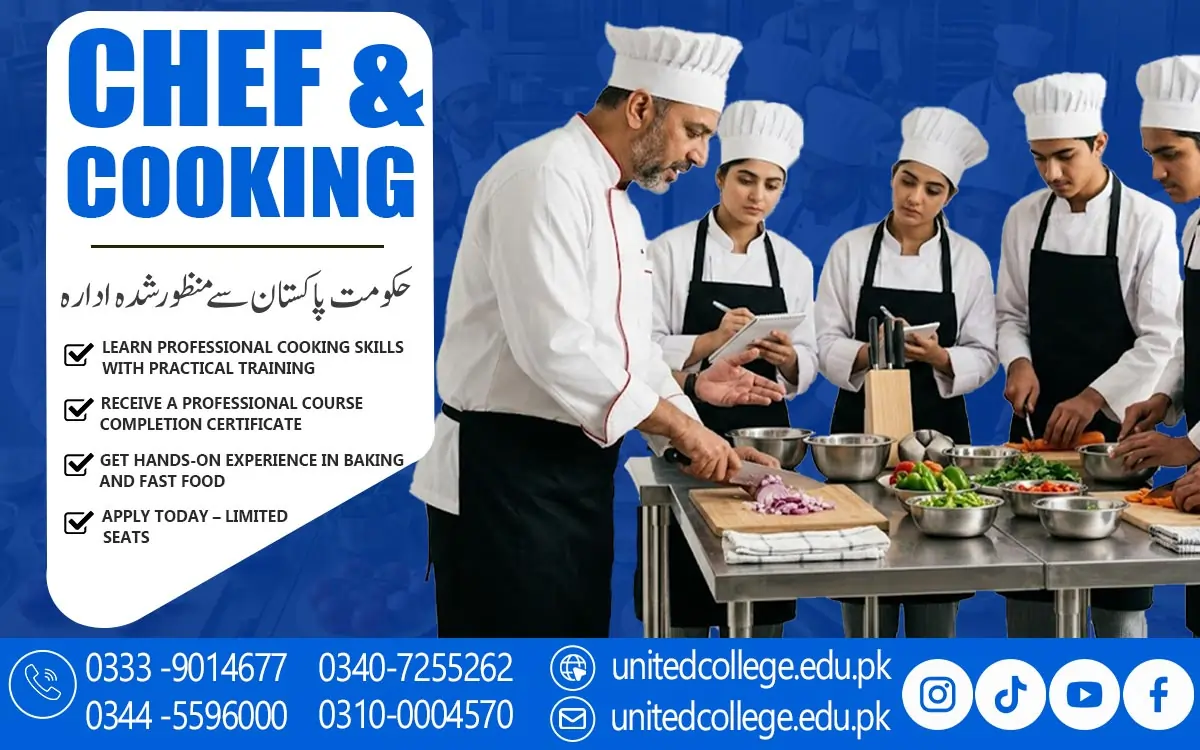

Chef and Cooking Course in Shangla – Build Professional Chef Skills
Turning a Passion for Food into Practical Cooking Skills
Imagine a busy kitchen where several customers are waiting for their meals, vegetables need cutting, spices must be measured, and every dish has to be prepared on time. Many people enjoy preparing food at home but want to understand how cooking works in restaurants, hotels, cafés, and catering services. The Chef and Cooking Course in Shangla can be a useful starting point for individuals who want to develop their cooking knowledge and explore professional culinary training. Offered by United College of Technology (UCT), this course topic is relevant to students, beginners, and job seekers interested in learning about food preparation and kitchen operations.
Professional cooking involves much more than following a recipe. It includes selecting fresh ingredients, preparing a clean workstation, understanding different cooking methods, and presenting meals attractively. Beginners can gradually develop these abilities through learning, practice, and attention to detail. Even a simple dish can teach valuable lessons about flavour, texture, timing, and temperature. For example, preparing rice requires the right amount of water and heat, while cooking chicken properly requires careful attention to ensure it is safe to eat. Understanding these details helps learners build confidence and develop a stronger foundation for more advanced recipes.
Learning Food Preparation Techniques That Make Cooking Easier
A successful dish often begins before the stove is switched on. Ingredients need to be checked, vegetables must be washed, spices should be measured, and cooking equipment must be arranged properly. These steps are part of food preparation techniques that help make cooking more organised and efficient. During culinary arts training, beginners can learn why preparation is an essential part of professional kitchen work. The Chef and Cooking Course in Shangla can help learners understand these important practices and develop their knowledge of professional cooking. One useful practice is called mise en place, a French term meaning putting everything in its proper place before cooking begins.
This method reduces confusion when several tasks must be completed together. Knife handling is another important skill because different ingredients require different cutting methods. Onions may need fine chopping, potatoes may require even cubes, and vegetables for salads might be cut into thin slices. Consistent cutting helps ingredients cook more evenly and improves the appearance of the final dish. Learners can also practise reading recipes carefully, converting measurements, and understanding when ingredients should be added. These abilities are useful for beginners who want to move beyond preparing familiar meals at home. A professional cooking course can introduce the importance of following a clear process while also allowing room for creativity.
Exploring Pakistani Dishes and Different Cooking Methods
Pakistani cuisine offers many dishes that help beginners understand how ingredients and cooking methods work together. Biryani, karahi, pulao, daal, vegetable curries, kebabs, and traditional breads all involve different preparation steps and flavour combinations. Learning Pakistani cooking techniques can introduce students to the use of spices, fresh herbs, marinades, and balanced seasoning. For example, preparing a curry often involves cooking onions until they develop the right colour, adding spices at the appropriate time, and allowing the ingredients to combine gradually. However, professional cooking also requires knowledge of methods beyond traditional recipes.
Boiling, steaming, grilling, roasting, frying, sautéing, and baking each produce different results. Boiling is useful for cooking rice and vegetables, while grilling can create a browned surface and distinctive flavour. Baking uses controlled oven heat to prepare items such as cakes, bread, and pastries. Learners can compare these methods and discover how temperature, cooking time, and ingredient size affect the finished dish. In Shangla, where local food traditions and family recipes can be an important part of everyday life, learning to prepare familiar dishes with greater consistency can be especially meaningful. The Chef and Cooking Course in Shangla can be explored by learners who want to understand traditional food alongside wider professional cooking practices.
Understanding Food Hygiene and Safe Kitchen Practices
Food hygiene and safety are essential responsibilities for anyone who handles ingredients, whether cooking at home or working in a commercial kitchen. The Chef and Cooking Course in Shangla can help learners understand the importance of maintaining cleanliness and following safe food-handling practices during meal preparation. One of the first habits learners should develop is washing their hands thoroughly before handling food and after touching raw meat, using the toilet, handling rubbish, or completing other activities that may spread germs. Work surfaces, cutting boards, knives, and utensils must also be cleaned properly. Another important principle is preventing cross-contamination, which happens when harmful germs transfer from one food or surface to another.
For example, using the same unwashed cutting board for raw chicken and fresh salad can create a serious food safety risk. Separate equipment or thorough cleaning between tasks helps reduce this danger. Safe storage also matters because some ingredients spoil quickly when left at unsuitable temperatures. Refrigerated foods should be stored correctly, raw meat should be kept separate from ready-to-eat foods, and perishable ingredients should not remain at room temperature for extended periods. Learners should also understand the importance of checking food condition, observing expiry information, and following safe cooking and cooling procedures. Professional chef skills include recognising that hygiene is not an occasional task but a routine part of every shift.
Using Kitchen Equipment Correctly and Safely
A professional kitchen contains many tools and appliances, and knowing how to use them correctly makes everyday work easier. Beginners may already be familiar with household equipment, but commercial kitchen operations can involve larger machines, more demanding workloads, and stricter safety procedures. Kitchen equipment handling begins with understanding the purpose of each tool and learning how to use it according to the manufacturer's instructions. Knives, peelers, graters, chopping boards, measuring scales, mixing bowls, and strainers are common tools used during food preparation. Larger appliances may include ovens, grills, fryers, mixers, refrigerators, and food processors.
Each item requires suitable handling and cleaning. For example, a food processor should not be opened until its moving parts have stopped, and electrical equipment should never be handled with wet hands. Hot pans and oven trays require suitable heat-resistant protection, while knife blades should be kept sharp and handled carefully because dull knives can also slip and cause injuries. Learners should keep floors dry, avoid placing equipment near the edge of work surfaces, and store sharp tools safely when they are not in use. They should also learn to report damaged plugs, loose handles, unusual machine sounds, and other equipment problems instead of continuing to use faulty items. Practical culinary training can help beginners become familiar with these responsibilities and understand why safe working habits matter.
Developing Baking, Pastry, and Food Presentation Skills
Cooking is not limited to savoury meals. Baking and pastry basics can introduce learners to another area of food preparation that requires accuracy, patience, and creativity. Bread, cakes, biscuits, muffins, pastries, and desserts are made using different combinations of ingredients and preparation methods. Unlike some everyday dishes, baking often depends on accurate measurements and controlled temperatures. Adding too much flour, using the wrong amount of liquid, or setting the oven at an unsuitable temperature can change the texture and shape of the finished product. Understanding how ingredients such as flour, sugar, eggs, butter, and raising agents work together helps beginners identify why recipes need to be followed carefully.
Presentation involves arranging food neatly, choosing suitable serving plates, balancing colours, and paying attention to portion sizes. A simple vegetable dish can look more appealing when its colours remain bright, and its ingredients are arranged thoughtfully. Similarly, a dessert may appear more inviting when garnishes are used carefully rather than added without purpose. However, presentation should never replace proper cooking or safe food handling. Learners should focus first on taste, freshness, correct preparation, and suitable serving temperatures. The Chef and Cooking Course in Shangla is a relevant topic for people who want to explore different culinary skills, including the techniques used to prepare and serve a variety of dishes.
Building Kitchen Management, Teamwork, and Time Management Skills
When a restaurant becomes busy, even skilled cooks can struggle if the kitchen is poorly organised. Several orders may arrive at the same time, ingredients may need replacing, and different dishes might require different cooking periods. Kitchen management skills help workers organise these responsibilities and maintain a steady workflow. Time management begins with understanding which tasks take the longest and planning preparation accordingly. For example, a dish that requires slow cooking may need to be started before ingredients for a quick salad are prepared. Keeping track of cooking times and checking orders carefully can help reduce delays.
Clear communication helps everyone understand their responsibilities and prevents confusion. Learners should practise giving simple, accurate instructions, listening to colleagues, and asking questions when something is unclear. Organisation also includes maintaining stock, checking ingredient quantities, reducing unnecessary waste, and cleaning work areas throughout the day rather than leaving every task until closing time. Professional kitchen work can become stressful, so patience and a calm approach are valuable qualities. Mistakes may happen, especially while learning, but identifying the problem and correcting it responsibly can improve future performance.
Exploring Cooking Career Opportunities in Restaurants and Hospitality
People who develop cooking skills may explore different areas of the food and hospitality industry, depending on their interests, practical ability, experience, and the requirements of individual employers. Restaurants need kitchen workers who can prepare ingredients, follow recipes, maintain hygiene, and help deliver orders on time. Hotels may have several food-service areas, such as breakfast kitchens, banquet departments, restaurants, and room service. Cafés often prepare snacks, sandwiches, light meals, and beverages, while catering businesses may cook for weddings, family gatherings, meetings, and other events. Bakeries and pastry shops offer another direction for people who enjoy bread, cakes, desserts, and decorative food preparation.
However, operating a food business involves responsibilities beyond cooking, including budgeting, purchasing ingredients, maintaining food safety, setting suitable prices, and understanding customer needs. Completing training does not automatically guarantee employment or business success. Employers may also look for experience, communication skills, reliable work habits, and additional qualifications depending on the position. For learners in Shangla, exploring a professional cooking course can provide a starting point for understanding the skills used across restaurants, hotels, and other food-related workplaces. The Chef and Cooking Course in Shangla, offered by United College of Technology (UCT), may be worth considering when researching culinary learning options.
Taking the Next Step Towards Practical Culinary Learning in Shangla
Learning to cook professionally is a gradual process that begins with simple habits and develops through consistent practice. A beginner does not need to master every recipe immediately. Instead, progress can come from learning to prepare ingredients correctly, understanding cooking temperatures, improving knife control, and following food hygiene rules every day. Preparing one dish carefully can teach useful lessons about flavour, timing, texture, and presentation. Repeating the process helps learners recognise mistakes and discover how small changes can improve results. People interested in culinary arts training should also consider their personal goals.
Some may want to improve their home cooking, while others may wish to explore restaurant work, hotel kitchen training, baking, or catering and hospitality skills. Choosing a suitable learning option involves checking what topics are covered, how practical sessions are arranged, what equipment is used, and whether the schedule fits personal commitments. Anyone considering the Chef and Cooking Course in Shangla offered by United College of Technology (UCT) should contact the college for accurate information about admission requirements, course duration, fees, and training arrangements.
Frequently Asked Questions (FAQs)
The Chef and Cooking Course in Shangla is a culinary training option for beginners who want to learn food preparation, cooking methods, kitchen hygiene, food presentation, and professional kitchen practices.
United College of Technology (UCT) offers the Chef and Cooking Course in Shangla. Contact the institute directly to confirm current course availability and admission details.
Yes, beginners can explore professional cooking courses to develop their skills step by step, starting with ingredient preparation, basic cooking methods, and kitchen safety.
Students may learn knife handling, food preparation, Pakistani cooking techniques, baking basics, kitchen equipment handling, food hygiene, and food presentation, depending on the course curriculum.
Food hygiene helps prevent contamination, reduce the risk of foodborne illness, maintain food quality, and protect customers in restaurants, hotels, cafés, and catering businesses.
Admission Open: Start Your Professional Journey Today!
Join United College of Technology and build a career with practical training, recognized certifications, and Gulf job support. Seats are limited.
Apply Now via WhatsAppContact Information
- Address: Rawalpindi: F-272 Main New Katarian Stop, Old IJP Road | Lahore Campus: Lahore, Pakistan
- Phone/WhatsApp: 0340-7255262 / 0333-9014677 / 0301-5044340 / 0310-0004570 / 051-8770756
- Website: unitedcollege.edu.pk
















Leave a Comment