


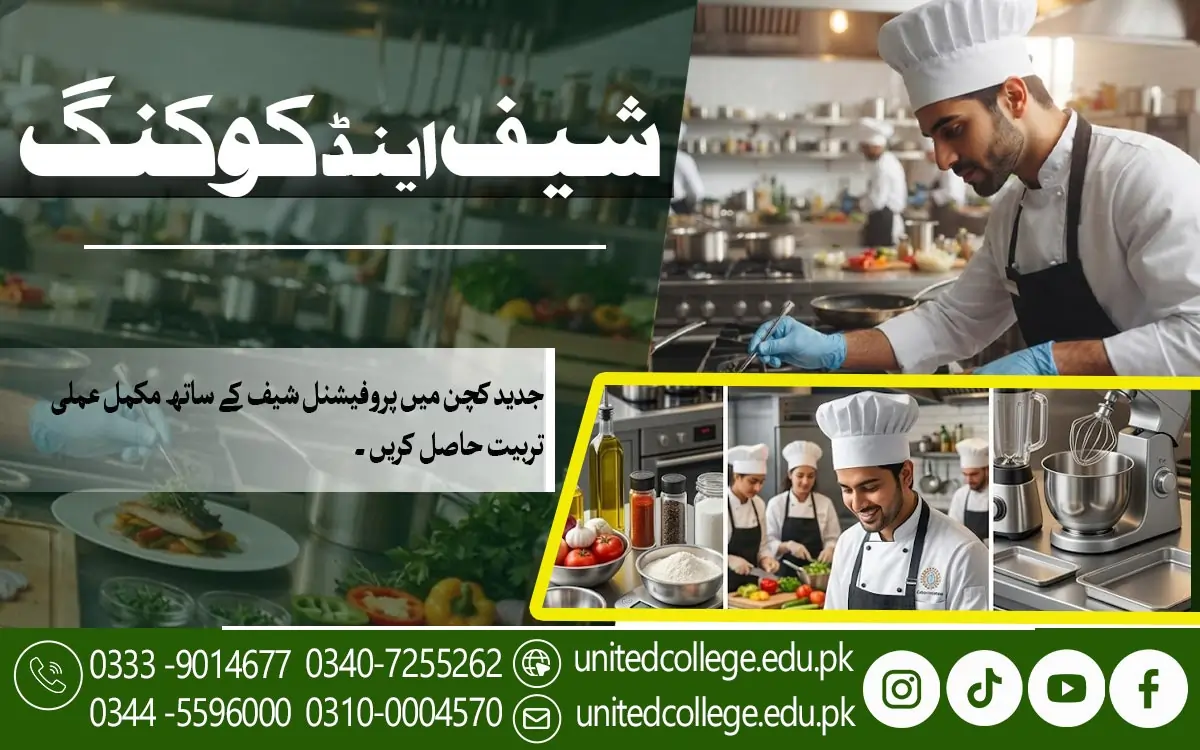

Chef and Cooking Course in Balakot – Master Essential Cooking Skills
How Everyday Cooking Can Develop into Professional Culinary Skills
Preparing a meal at home may seem simple, but professional cooking requires a more organised approach. A person might know how to prepare rice or fry vegetables, yet cooking several dishes together requires planning, accurate timing, and an understanding of different ingredients. This is where structured culinary learning becomes valuable. The Chef and Cooking Course in Balakot introduces learners to the importance of building basic cooking skills before moving towards more demanding kitchen tasks. Students can learn why ingredients should be prepared before cooking begins, how recipes guide the process, and why different foods require different temperatures and cooking times.
Similarly, adding spices at the correct stage can influence the final flavour of a dish. Through culinary arts training, learners can develop a better understanding of these practical details rather than relying entirely on guesswork. Training also encourages patience, observation, and consistency, which are important qualities in any kitchen. United College of Technology provides the course for individuals interested in exploring cooking as a practical skill. By learning the principles behind everyday recipes, beginners can develop a stronger foundation for preparing a wider variety of dishes and understanding the responsibilities involved in professional food preparation.
What Learners Can Explore During Chef and Cooking Training
Learning to cook professionally involves several connected areas, from preparing ingredients to presenting a finished dish. Through a Chef and Cooking Course in Balakot, learners can explore the knowledge commonly associated with culinary training, including ingredient handling, cooking methods, recipe preparation, kitchen cleanliness, and food presentation. These areas help explain how a meal moves from its initial preparation to the final serving stage. For instance, preparing a vegetable dish involves washing the vegetables, removing unwanted parts, cutting them into suitable sizes, selecting the right cooking method, and checking their texture before serving. Each step affects the quality of the result.
Learners may also study how herbs, spices, sauces, and other ingredients contribute to flavour. Understanding the difference between seasoning a dish gradually and adding too much salt at once can help prevent common mistakes. Another important area is kitchen safety, because hot surfaces, sharp knives, electrical appliances, and boiling liquids require careful handling. Culinary training can also introduce the working habits expected in commercial kitchens, where several people may share equipment and complete different tasks. The exact subjects and practical activities depend on the course curriculum, so prospective students should confirm the available modules with United College of Technology.
Essential Kitchen Tools and Preparation Techniques Every Beginner Should Understand
A well-organised kitchen can make cooking safer, faster, and less stressful. Imagine beginning a recipe only to discover that the knife is missing, the required spices have not been measured, and the main ingredient is still unwashed. These small problems interrupt the cooking process and can affect the final meal. For this reason, kitchen preparation is an important part of developing professional chef skills. Learners exploring chef training in Balakot can benefit from understanding common tools such as chopping boards, knives, measuring cups, mixing bowls, peelers, strainers, pans, and cooking pots. Each tool has a particular purpose, and using it correctly helps reduce mistakes.
Students should also learn to handle knives carefully, keep work surfaces organised, and return equipment to suitable storage areas after use. Ingredient preparation is equally important. Washing vegetables, checking ingredients, removing damaged portions, measuring spices, and arranging everything before cooking can make the process more manageable. This preparation is often called mise en place, a French term meaning putting everything in its place. It is widely associated with organised professional kitchens. Understanding kitchen equipment handling also includes recognising which tools are suitable for particular tasks and following instructions when using unfamiliar appliances. These habits support better kitchen management skills and help beginners approach cooking tasks in a clear, orderly manner.
Understanding Cooking Methods to Improve Taste and Food Texture
Why does one potato become soft and tender when boiled while another develops a crisp outer layer when roasted? The difference comes largely from the cooking method, temperature, and preparation process. Learning how different techniques affect food is an important part of culinary arts training. Boiling involves cooking ingredients in water or another suitable liquid at a high temperature, making it useful for foods such as pasta, rice, and certain vegetables. Steaming cooks food using hot vapour and can help retain its natural shape and texture when handled correctly. Frying uses hot oil to cook ingredients and may create a crisp surface, although the temperature and amount of oil need careful attention.
Grilling exposes food to direct heat, while roasting uses dry heat, usually in an oven, to cook ingredients and develop flavour. Baking is commonly used for bread, cakes, pastries, and other oven-prepared foods. Each technique serves a different purpose, so choosing the right method depends on the ingredient and desired result. For example, delicate vegetables may need less cooking time than firm root vegetables, while a cake requires a different temperature and process from grilled chicken. A professional cooking course can help learners understand these differences through explanations and suitable practice activities. The Chef and Cooking Course in Balakot is relevant to beginners who want to develop their knowledge of cooking methods and techniques.
Food Safety and Kitchen Hygiene as Everyday Professional Responsibilities
A delicious meal is not enough if the food has been prepared in an unsafe environment. Poor hygiene can allow harmful bacteria to spread, making food unsafe even when it looks and smells normal. This is why food safety and hygiene are essential topics for anyone learning to cook. Beginners should understand the importance of washing their hands before handling food, cleaning preparation surfaces, and keeping kitchen equipment in suitable condition. Raw meat, poultry, seafood, and ready-to-eat foods should be handled separately to reduce the risk of cross-contamination. For example, using a knife to cut raw chicken and then using the same unwashed knife to slice salad can transfer harmful microorganisms to food that may not receive further cooking.
Safe storage is equally important. Perishable ingredients should be refrigerated promptly, and refrigerators should be maintained at appropriate temperatures. Cooked food should not be left at room temperature for extended periods, and leftovers should be stored and reheated safely. Kitchen sanitation also involves cleaning spills, managing waste, and keeping pests away from food preparation areas. During chef training in Balakot, learners can benefit from understanding why these practices matter in homes, restaurants, hotels, and catering businesses. Personal hygiene, clean clothing, suitable protective equipment, and careful ingredient inspection all contribute to a safer working environment. These responsibilities are not optional extras; they are part of preparing food professionally.
Recipe Preparation, Ingredient Measurement, and Attractive Food Presentation
Following a recipe involves more than collecting ingredients and mixing them together. A successful cook needs to understand quantities, preparation order, cooking times, and the way different flavours work together. Consider a simple soup: too much water may make it thin, excessive salt may overpower its flavour, and overcooked vegetables may lose their desired texture. These problems show why accurate measurement and careful observation matter. During culinary training, learners can develop an understanding of recipe preparation by measuring ingredients, reading instructions carefully, and following steps in the correct order. They can also explore portion control, which means serving an appropriate and consistent quantity of food.
Flavour balancing is another useful skill. Salt, acidity, sweetness, bitterness, and savoury flavours can influence one another, so cooks need to taste food carefully and make sensible adjustments. Food presentation skills are equally important because the appearance of a dish can influence how it is received. Simple practices, such as arranging ingredients neatly, choosing a suitable plate, avoiding unnecessary decoration, and wiping spills from the rim, can improve presentation. However, attractive plating should never replace proper cooking or safe handling. Students taking a professional cooking course can practise these skills with different recipes and learn to evaluate their results.
Kitchen Management Skills for Busy Service Hours and Teamwork
A professional kitchen can become extremely busy when several orders arrive together, ingredients need preparation, and different dishes must be served at nearly the same time. In such an environment, cooking knowledge alone is not enough; organisation, communication, and time management also matter. Culinary training can introduce learners to the importance of preparing a workstation before cooking, checking ingredients, reading recipes in advance, and arranging tasks in a sensible order. This preparation helps reduce confusion and makes it easier to complete work efficiently. For example, if a meal includes rice, grilled vegetables, and a sauce, a cook needs to consider which component takes the longest to prepare and which items should be finished just before serving. Poor timing can leave one dish cold while another is still being cooked.
Clear communication helps everyone understand their responsibilities and reduces avoidable mistakes. Kitchen management skills also include keeping work surfaces tidy, monitoring available ingredients, using equipment responsibly, and reporting problems when they arise. During commercial kitchen training, learners can explore how these habits support an orderly working environment. The Chef and Cooking Course in Balakot can be a starting point for understanding these responsibilities, although the precise practical training available should be confirmed with United College of Technology. By developing organised working habits, learners can prepare themselves to understand the pace and expectations of a professional kitchen more clearly.
How Culinary Skills Connect with Restaurants, Hotels, and Catering Services
Cooking skills can be useful in several food-service environments, but each setting has its own responsibilities and working conditions. A restaurant kitchen may focus on preparing dishes to order, while a hotel kitchen might need to support breakfast service, room service, banquets, and other dining arrangements. Catering services often involve preparing food for weddings, family gatherings, business events, and larger functions, where planning quantities and arranging transport can be particularly important. Bakeries and pastry kitchens have different requirements, including accurate measurements, dough preparation, temperature control, and careful attention to baking times.
The Chef and Cooking Course in Balakot may interest people who want to explore these areas and develop a foundation in food preparation techniques. However, the skills required for a particular position depend on the employer, the type of kitchen, and the level of responsibility. Some roles may require further training, relevant experience, food safety knowledge, or specialised culinary skills. United College of Technology offers this course for individuals interested in culinary learning, and prospective students should ask about the curriculum and practical learning opportunities before enrolling. It is also helpful to understand that completing a course does not automatically guarantee employment.
Building Cooking Confidence Through Regular Practice and Continued Learning
Confidence in the kitchen develops gradually through practice, observation, and a willingness to learn from mistakes. A beginner may initially struggle to chop vegetables evenly, judge cooking temperatures, or prepare several ingredients without losing track of the recipe. These challenges are normal and can become learning opportunities when approached patiently. Someone interested in the Chef and Cooking Course in Balakot can begin by setting small, practical goals, such as preparing one complete meal, learning a new cooking method, or improving the consistency of a familiar recipe. Keeping a notebook of ingredient quantities, cooking times, and useful observations can help identify what works well and what needs adjustment.
It is also useful to practise safe knife handling, clean the workstation after each task, and learn how to store ingredients correctly. Trying recipes from different cuisines can expand knowledge of spices, textures, and cooking traditions, while feedback from experienced cooks can reveal areas that might otherwise be overlooked. Learners should also recognise the value of patience: a failed recipe does not mean they cannot become better cooks. Instead, they can review the process, identify the mistake, and try again with a clearer plan. Through United College of Technology, interested learners can explore the available course information and determine whether the training suits their goals.
Frequently Asked Questions (FAQs)
The Chef and Cooking Course in Balakot is designed for learners who want to develop cooking knowledge, food preparation techniques, kitchen management skills, and food hygiene awareness.
Students can learn cooking methods, ingredient preparation, recipe measurement, food presentation, kitchen safety, and proper handling of kitchen equipment.
Beginners, students, fresh learners, and individuals interested in cooking or exploring the food-service industry may consider this course. Specific admission requirements should be confirmed with the institute.
Yes, United College of Technology (UCT) offers the Chef and Cooking Course for individuals interested in developing culinary knowledge and cooking skills.
Food safety and hygiene help prevent contamination, maintain kitchen cleanliness, protect customers, and support safe food preparation in restaurants, hotels, and catering businesses.
Admission Open: Start Your Professional Journey Today!
Join United College of Technology and build a career with practical training, recognized certifications, and Gulf job support. Seats are limited.
Apply Now via WhatsAppContact Information
- Address: Rawalpindi: F-272 Main New Katarian Stop, Old IJP Road | Lahore Campus: Lahore, Pakistan
- Phone/WhatsApp: 0340-7255262 / 0333-9014677 / 0301-5044340 / 0310-0004570 / 051-8770756
- Website: unitedcollege.edu.pk
















Leave a Comment