


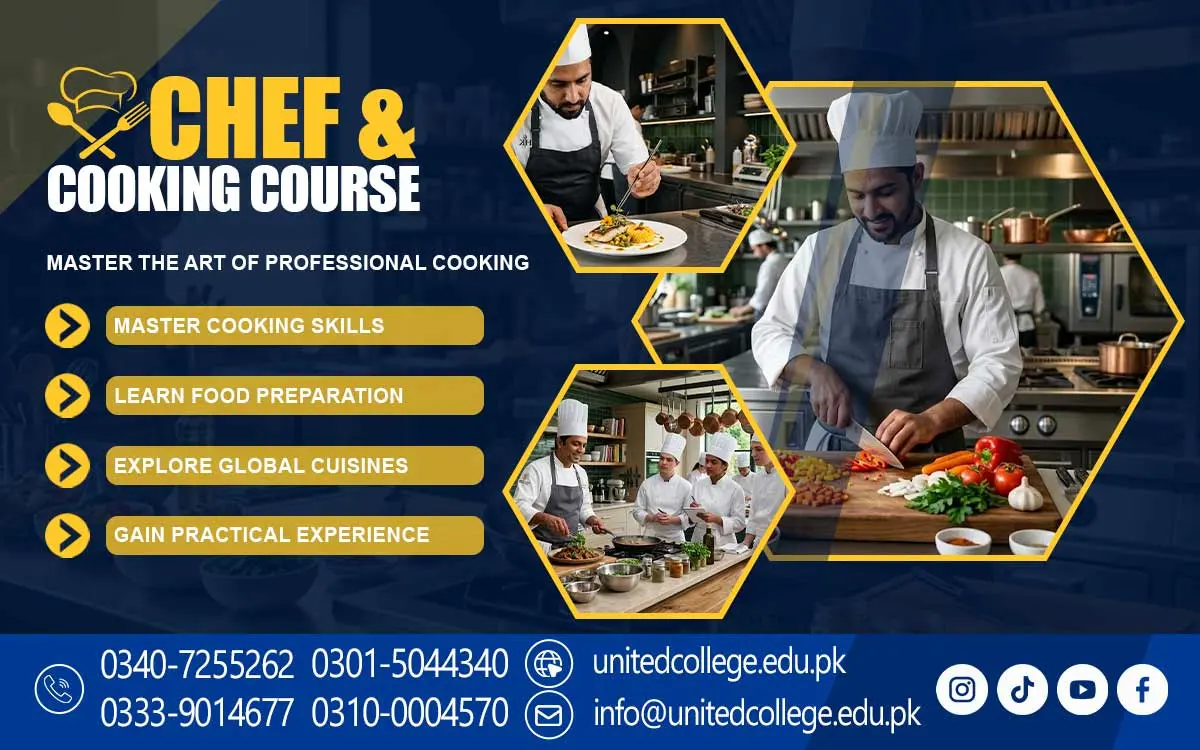

Chef and Cooking Course in Mardan for Culinary Expertise
Understanding the Fundamentals of Professional Cooking
Professional cooking begins with understanding the basic principles used to prepare different types of food. Students learn about common cooking ingredients, kitchen tools, measuring methods, and the importance of following recipes. These fundamentals help learners understand how ingredients work together and how proper preparation affects the taste, texture, and quality of a meal.
A professional chef must also understand different food categories, including vegetables, fruits, grains, meat, poultry, and dairy products. Each ingredient requires suitable handling and preparation to achieve the desired results. Learning these basics allows students to understand the differences between home cooking and the organized methods used in commercial kitchens.
The Chef and Cooking Course in Mardan helps learners develop a foundation for further culinary education. By studying essential cooking principles, students can gradually improve their understanding of recipes, cooking equipment, ingredient measurements, and kitchen procedures. This knowledge supports their progress toward more advanced cooking techniques and professional kitchen responsibilities.
Exploring Ingredients and Their Culinary Uses
Understanding ingredients is an important part of culinary arts training. Different ingredients provide unique flavors, colors, textures, and nutritional value to meals. Students learn how vegetables, herbs, spices, oils, sauces, and other food products are used in different recipes. This knowledge of chefs and cooking helps them select suitable ingredients when preparing traditional Pakistani dishes and international meals.
Freshness and quality also play an important role in cooking. Learners can study how to identify fresh produce, check food quality, and store ingredients under appropriate conditions. Proper storage helps maintain freshness, reduce food waste, and protect ingredients from contamination. These practices are especially important in restaurants, hotels, catering businesses, and other food service environments.
A professional chef must know how to combine ingredients to create balanced and enjoyable flavors. For example, herbs and spices can improve the aroma of a dish, while sauces can add moisture and richness. Through a Professional Cooking Course, students can develop a better understanding of ingredient selection and learn how these choices influence the final appearance and taste of different meals.
Learning Food Preparation and Cutting Methods
Food preparation is one of the most important responsibilities in a professional kitchen. Before cooking begins, ingredients must be washed, measured, peeled, cleaned, and arranged properly. Students learn why preparation should be completed carefully and how organized work helps chefs prepare meals efficiently. These methods also make it easier to follow recipes and manage several cooking tasks at the same time.
Knife handling and cutting techniques are essential parts of chef training. Learners can become familiar with methods such as slicing, dicing, chopping, and mincing. Consistent cutting helps ingredients cook more evenly and improves the presentation of food. Students also learn the importance of using appropriate cutting boards, handling knives safely, and keeping preparation surfaces clean.
Good preparation habits can make a significant difference in kitchen performance. When ingredients are measured and arranged before cooking, chefs can work with greater accuracy and avoid unnecessary delays. The Chef and Cooking Course in Mardan introduces learners to these essential practices, helping them understand the importance of precision, cleanliness, and time management in food preparation.
Practicing Different Cooking Techniques
Professional cooking involves several methods that affect the flavor, texture, and appearance of food. Students can learn about boiling, steaming, frying, grilling, roasting, baking, and sautéing. Each technique is suitable for different ingredients and recipes. Understanding these methods helps learners choose an appropriate cooking process for preparing vegetables, meat, rice, baked products, and other dishes.
Temperature control is another important part of culinary training. Cooking food at the correct temperature helps improve its texture and ensures that it is properly cooked. Learners can explore how heat affects different ingredients and why cooking times vary according to the type and size of food. These concepts help students follow recipes more accurately and understand common cooking problems.
Practical experience allows learners to apply these techniques when preparing different meals. They can develop an understanding of traditional Pakistani cuisine, everyday dishes, and selected international recipes. By studying multiple cooking methods, students can gradually improve their confidence and versatility. These abilities are valuable for people interested in restaurant cooking, hotel kitchens, catering services, and other culinary careers.
Developing Food Presentation Skills
Food presentation is an important part of professional cooking because the appearance of a meal can influence a customer's first impression. Students learn how chefs arrange food on plates, select suitable serving dishes, and use colors and textures to make meals look appealing. Proper presentation can improve the dining experience and help restaurants maintain a professional image.
Garnishing is another useful technique in culinary arts. Herbs, vegetables, sauces, and other suitable ingredients can be used to decorate meals without distracting from their main flavors. Learners can explore simple plating arrangements and understand how portion sizes, spacing, and color combinations contribute to an attractive presentation. These methods are useful when preparing restaurant dishes, desserts, and special-event meals.
Developing presentation skills also requires attention to detail and consistency. A chef should aim to serve dishes that maintain similar quality and appearance across multiple orders. Through chef training, students can understand the relationship between cooking quality and visual presentation. These abilities may help them prepare meals that meet customer expectations in restaurants, hotels, and catering businesses.
Maintaining Kitchen Hygiene and Food Safety
Kitchen hygiene is essential for protecting the health of customers and food preparation staff. Students learn why kitchen surfaces, cooking tools, utensils, and equipment must be cleaned regularly. Proper handwashing, clean clothing, and suitable food handling practices help reduce the risk of contamination. Maintaining a hygienic workspace is an important responsibility for every professional chef.
Food storage and temperature control are equally important in commercial kitchens. Learners can study how to store raw and cooked foods separately, maintain appropriate refrigeration conditions, and follow safe handling procedures. These practices help reduce the risk of foodborne illness and prevent food from spoiling too quickly. Understanding food safety also helps students recognize the importance of cleanliness throughout the preparation and serving process.
The Chef and Cooking Course in Mardan introduces learners to the value of hygiene and responsible kitchen behavior. Students can develop awareness of safe cooking temperatures, proper waste disposal, and the importance of following workplace food safety procedures. This knowledge is useful for individuals who want to work in restaurants, hotels, bakeries, cafeterias, and catering companies where food quality and customer safety are essential.
Understanding Menu Planning and Meal Preparation
Menu planning helps chefs organize meals according to customer preferences, available ingredients, and the type of food service being provided. Students learn how different dishes can be arranged into starters, main courses, side dishes, and desserts. They can also explore how traditional Pakistani meals and international recipes are selected for different occasions and customer requirements.
Meal preparation requires careful planning of ingredients, equipment, cooking time, and serving arrangements. Learners can understand how chefs organize their tasks to prepare several dishes efficiently without compromising quality. Basic portion control and ingredient measurement also help reduce unnecessary waste and support consistent results. These practices are useful in busy restaurant kitchens and large-scale food service operations.
Understanding menu planning can also introduce students to the business side of cooking. Chefs often need to consider ingredient costs, seasonal availability, customer demand, and the time required to prepare each dish. Through culinary arts training, learners can develop a foundation in these concepts and understand how organized meal planning contributes to efficient kitchen management and customer satisfaction.
Exploring Career Opportunities in the Culinary Industry
The food and hospitality industry offers different career paths for people interested in professional cooking. After gaining relevant knowledge and practical experience, learners may explore opportunities as assistant chefs, kitchen assistants, restaurant cooks, catering assistants, or food preparation workers. The exact opportunities available depend on an individual's skills, experience, employer requirements, and additional training.
Some learners may also choose to develop specialized interests in baking, pastry preparation, traditional cuisine, or international cooking. With experience and further professional development, they may work toward more advanced kitchen positions. Hotels, restaurants, cafés, resorts, catering companies, and other food service businesses can offer opportunities for people with relevant culinary knowledge and workplace skills.
Another possible direction is starting a small food business. Individuals may consider home-based food services, catering, snack preparation, or other suitable food ventures after understanding local requirements and business costs. The Chef and Cooking Course in Mardan can help learners explore the fundamentals of cooking and identify areas in which they want to develop further. Building a successful career usually requires practice, discipline, creativity, hygiene awareness, and a willingness to continue learning.
Frequently Asked Questions (FAQs)
The Chef and Cooking Course in Mardan introduces students to food preparation, cooking techniques, kitchen hygiene, food presentation, and basic menu planning.
Beginners, students, and individuals interested in cooking or working in the food and hospitality industry can consider joining the course, subject to the institute’s admission requirements.
Students can learn ingredient selection, knife handling, different cooking methods, food presentation, kitchen organization, and food safety practices.
Food hygiene helps prevent contamination, maintain food quality, and protect customers from foodborne illnesses.
Learners may explore roles such as assistant chef, restaurant cook, kitchen assistant, catering worker, or food preparation worker, depending on their skills and experience.
Admission Open: Start Your Professional Journey Today!
Join United College of Technology and build a career with practical training, recognized certifications, and Gulf job support. Seats are limited.
Apply Now via WhatsAppContact Information
- Address: Rawalpindi: F-272 Main New Katarian Stop, Old IJP Road | Lahore Campus: Lahore, Pakistan
- Phone/WhatsApp: 0340-7255262 / 0333-9014677 / 0301-5044340 / 0310-0004570 / 051-8770756
- Website: unitedcollege.edu.pk
















Leave a Comment