


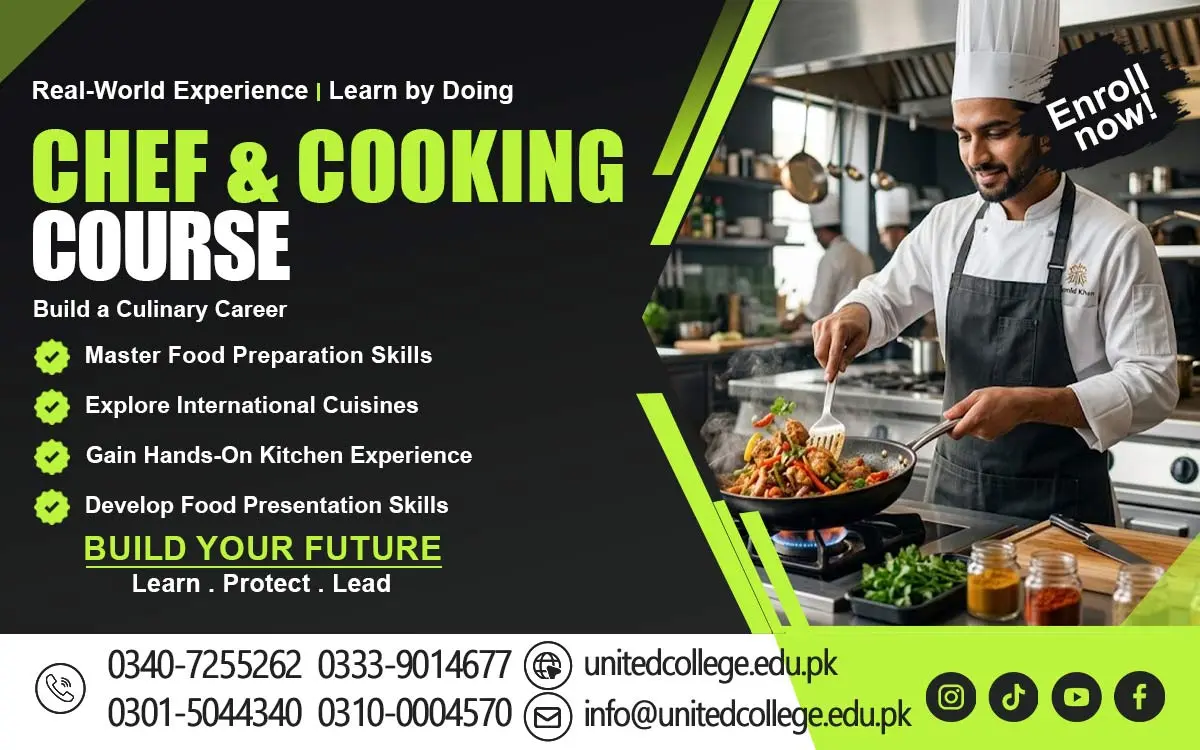

Chef and Cooking Course in Skardu for Culinary Careers
Discovering the Foundations of Culinary Arts
The Chef and Cooking Course in Skardu introduces students to the basic principles of culinary arts. Learners can understand how professional cooking combines ingredients, techniques, timing, and creativity to prepare delicious meals. They can also explore the importance of following recipes, measuring ingredients accurately, and maintaining consistency while preparing different dishes.
Understanding culinary fundamentals helps students become more confident when working in a kitchen. They can learn about different food categories, common cooking terms, and the steps involved in preparing meals. These basic concepts provide a strong starting point for learners who want to improve their cooking knowledge.
Students can also explore traditional Pakistani cuisine and selected international dishes. Learning about different food cultures helps them understand how ingredients, spices, and preparation methods influence taste. This knowledge can support their development as aspiring chefs and help them prepare a wider variety of meals.
Identifying Kitchen Equipment and Its Uses
Kitchen equipment plays an important role in professional food preparation. During the Chef and Cooking Course in Skardu, students can learn about common kitchen tools, utensils, appliances, and cooking equipment. They can understand how knives, chopping boards, measuring cups, pans, ovens, and mixers are used for different tasks.
Using the correct equipment can make cooking more efficient and organized. Students can learn how to select suitable tools for cutting vegetables, mixing ingredients, preparing dough, and cooking various dishes. They can also understand why equipment should be handled carefully to avoid accidents and maintain food quality.
Proper care of kitchen equipment is another important area of learning. Students can explore cleaning procedures, safe storage methods, and routine maintenance practices. These habits help keep the kitchen organized and allow learners to work more efficiently in professional cooking environments.
Preparing Ingredients for Various Recipes
Ingredient preparation is an essential part of successful cooking. Students enrolled in the Chef and Cooking Course in Skardu can learn how to wash, peel, cut, measure, and organize ingredients before beginning a recipe. These preparation steps help reduce confusion and make the cooking process smoother.
Learners can also understand the importance of selecting fresh ingredients. Fresh vegetables, quality meat, suitable spices, and properly stored food products can influence the taste and appearance of a dish. Students can explore how different ingredients work together to create balanced flavors and satisfying meals.
Another useful concept is preparing ingredients before cooking begins. This approach helps students manage their time and follow recipes in the correct order. By practicing these techniques, learners can improve their organization, reduce unnecessary waste, and prepare dishes more consistently.
Learning Baking, Frying, and Grilling Methods
Different cooking methods produce different flavors and textures. The Chef and Cooking Course in Skardu can introduce students to baking, frying, grilling, boiling, steaming, and other common techniques. Learners can understand when to use each method and how cooking temperature affects the final result.
Baking involves preparing foods such as cakes, biscuits, bread, and pastries using controlled oven temperatures. Students can explore ingredient measurements, mixing techniques, and baking times. They can also learn why accurate measurements are important for achieving suitable texture and appearance.
Frying and grilling offer other ways to prepare food. Students can learn about oil temperature, cooking duration, heat control, and safe handling practices. Regular practice with these methods can help learners prepare a wider range of dishes and develop the practical knowledge needed for professional kitchen work.
Improving Taste, Texture, and Food Presentation
Food quality depends on more than simply following a recipe. In the Chef and Cooking Course in Skardu, students can explore how seasoning, ingredient selection, cooking temperature, and preparation techniques influence the final dish. They can learn how salt, herbs, spices, sauces, and other seasonings contribute to balanced flavors.
Texture is another important feature of cooking. Some dishes require a crispy surface, while others should remain soft, tender, or creamy. Students can understand how cooking methods and preparation times affect food texture and why careful monitoring is necessary during cooking.
Food presentation also contributes to the dining experience. Learners can practice arranging food neatly, selecting suitable serving dishes, and using garnishes appropriately. These techniques are particularly useful in restaurants, hotels, and catering services, where attractive presentation can improve customer satisfaction.
Understanding Kitchen Safety and Sanitation
Kitchen safety and cleanliness are essential for anyone working in food preparation. The Chef and Cooking Course in Skardu helps learners understand the importance of personal hygiene, clean work surfaces, and proper food-handling procedures. Students can learn how to wash their hands, keep utensils clean, and prevent contamination during cooking.
Safe food storage is equally important. Learners can explore suitable storage temperatures, the separation of raw and cooked foods, and the importance of checking food freshness. These practices help reduce the risk of foodborne illness and support better hygiene standards in professional kitchens.
Students can also learn how to handle sharp knives, hot pans, ovens, and electrical appliances carefully. Understanding basic kitchen safety procedures can reduce the risk of burns, cuts, and other accidents. Developing these habits prepares learners to work more responsibly in busy cooking environments.
Managing Food Supplies and Meal Preparation
Effective kitchen management helps chefs prepare meals on time while using ingredients responsibly. Through the Chef and Cooking Course in Skardu, students can learn basic food planning, ingredient organization, portion control, and supply management. These skills can help them understand how professional kitchens maintain an organized workflow.
Meal preparation involves planning dishes, arranging ingredients, and deciding which tasks should be completed first. Students can practice organizing their work according to recipes and cooking times. This approach can help them manage several preparation tasks without unnecessary delays.
Food waste management is another valuable topic. Learners can understand how to measure ingredients carefully, store unused food appropriately, and use supplies efficiently. They can also explore basic menu planning and portion sizes, which are useful concepts for restaurants, hotels, catering services, and small food businesses.
Exploring Professional Cooking Opportunities
The Chef and Cooking Course in Skardu can help students understand different career paths within the food industry. Depending on their training, practical experience, and professional development, learners may explore opportunities as kitchen assistants, junior cooks, bakery assistants, catering workers, or entry-level kitchen staff.
Hotels and restaurants require workers who understand food preparation, cleanliness, kitchen equipment, and teamwork. Students who continue improving their culinary knowledge can prepare for responsibilities in different kitchen departments. Practical experience and consistent performance can support their professional growth over time.
Some learners may also consider starting a small food business after gaining suitable experience. Options can include home-based baking, snack preparation, catering, or preparing meals for local customers. The knowledge gained through cooking education can provide a useful foundation, although business success also depends on food quality, customer service, budgeting, and effective management.
Frequently Asked Questions (FAQs)
Students can learn ingredient preparation, cooking methods, baking, food presentation, kitchen hygiene, and basic kitchen management.
Yes, beginners can develop basic cooking knowledge and gradually improve their practical abilities through regular practice.
Learners can explore baking, grilling, frying, boiling, steaming, seasoning, and other common food preparation techniques.
Kitchen hygiene helps prevent food contamination, maintain cleanliness, and support safe food preparation practices.
The course can help students build foundational knowledge for entry-level opportunities in restaurants, hotels, bakeries, and catering services, depending on their practical experience and qualifications.
Admission Open: Start Your Professional Journey Today!
Join United College of Technology and build a career with practical training, recognized certifications, and Gulf job support. Seats are limited.
Apply Now via WhatsAppContact Information
- Address: Rawalpindi: F-272 Main New Katarian Stop, Old IJP Road | Lahore Campus: Lahore, Pakistan
- Phone/WhatsApp: 0340-7255262 / 0333-9014677 / 0301-5044340 / 0310-0004570 / 051-8770756
- Website: unitedcollege.edu.pk
















Leave a Comment