


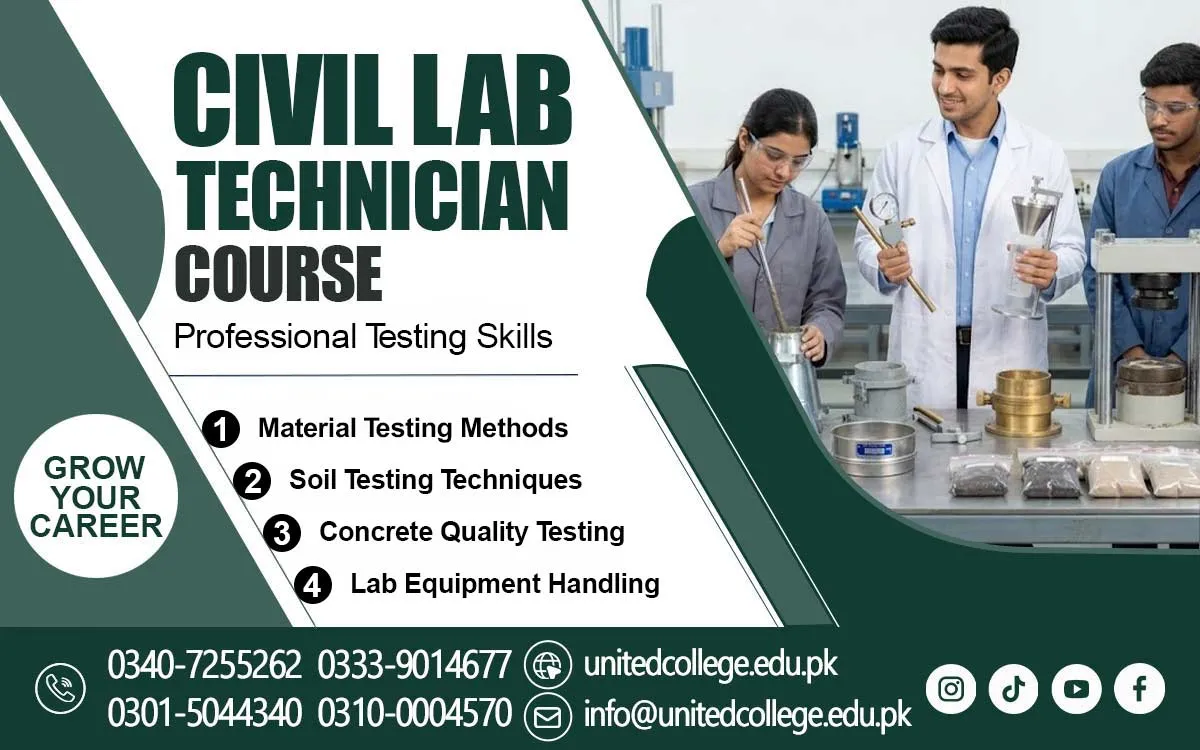

Civil Lab Technician Course in Sibi through Practical Lab Testing
Material Quality Makes the Difference Between Weak and Reliable Structures
The strength of a construction project depends on more than its design and building techniques. The materials used in the project also play a major role in determining its safety, durability, and performance. Soil, cement, concrete, bricks, and aggregates must be examined carefully to understand their properties before or during construction. Poor-quality materials can create problems such as cracks, weak foundations, and reduced structural stability. This is why material testing is an important part of modern construction and civil engineering.
The Civil Lab Technician Course in Sibi introduces beginners to the technical knowledge behind construction material testing and laboratory procedures. It helps learners understand how different materials are examined, how samples are prepared, and why accurate measurements matter. Students can explore the responsibilities of laboratory technicians and learn how testing information supports construction professionals. This subject is useful for individuals who want to understand the practical side of civil engineering and develop an interest in technical laboratory work.
The Work Behind Every Accurate Construction Test Report
A civil lab technician helps examine materials used in different construction projects. The work generally involves collecting samples, preparing materials, following testing procedures, operating laboratory tools, and recording observations. Each material requires a suitable testing method, so technicians need to understand the basic purpose of different laboratory activities. Careful handling and accurate measurements are necessary because incorrect observations can affect the reliability of test information.
Civil lab technicians may work with construction companies, material testing laboratories, engineering organizations, and project quality control teams. Their work supports engineers by providing information about the properties of construction materials. For example, soil samples may be examined before foundation preparation, while concrete samples may be tested during construction activities. Understanding these responsibilities through the Civil Lab Technician Course in Sibi can help beginners become familiar with the connection between laboratory work and practical construction requirements.
Soil Testing Reveals the Ground Conditions Before Building
Before constructing a building or road, professionals need to understand the condition of the ground. Soil properties can influence foundation stability, road performance, and the overall reliability of a structure. Different types of soil behave differently under pressure and moisture conditions. Soil testing helps examine characteristics such as particle size, moisture content, and compaction. These observations provide useful information about the material and support decisions related to construction planning.
A Soil Testing Course introduces learners to general procedures used for examining soil samples. Students can understand how samples are collected, prepared, measured, and documented. They can also explore why moisture content and compaction are important during earthwork and foundation-related activities. For beginners, these concepts provide a practical introduction to construction materials and explain how laboratory observations can help engineers understand ground conditions before starting important construction work.
Concrete and Cement Examination Supports Structural Reliability
Concrete is widely used in buildings, roads, bridges, and other infrastructure projects. Its quality depends on several factors, including the ingredients, mixing process, water content, and curing conditions. Concrete Testing helps examine different properties of the material and provides useful information about its performance. Learners can become familiar with the general purpose of testing fresh and hardened concrete and understand why proper testing procedures are important for construction quality.
Cement is another essential construction material because it binds the ingredients used in concrete and mortar. Cement testing introduces learners to the examination of its basic properties and the importance of proper sample handling. The Civil Lab Technician Course in Sibi can help students understand how cement and concrete testing relate to construction work. These learning areas also show why accurate measurements, suitable testing methods, and clear documentation are necessary when examining materials used in structural development.
Aggregate and Brick Testing Bring More Accuracy to Material Selection
Aggregates are important materials used in concrete mixtures, road construction, and several other civil engineering applications. Their characteristics can influence the strength and performance of construction materials. Aggregate testing generally involves examining properties such as particle size, grading, and material quality. Understanding these properties helps learners recognize why aggregates must be assessed before being selected for particular construction purposes.
Brick testing is another useful subject for individuals interested in building materials. Bricks are commonly used in walls and other building components, so their physical properties and quality need attention. Students can explore general examination methods related to brick dimensions, water absorption, and compressive strength. These concepts help beginners understand how different materials are assessed and why suitable material selection is important for creating durable construction work.
Laboratory Equipment and Sample Preparation Demand Careful Handling
A Civil Engineering Laboratory uses different tools and instruments to examine construction materials. Depending on the testing method, technicians may work with weighing instruments, measuring tools, sample containers, and testing equipment. Each tool serves a particular purpose, and learners need to understand the importance of using equipment according to the correct procedure. Careful handling helps prevent unnecessary errors and supports reliable testing activities.
Sample preparation is equally important because the quality of a test result can depend on how the material is collected and handled. Technicians must identify samples correctly, prevent confusion between different materials, and maintain proper records. Learners can also develop awareness of laboratory cleanliness, protective practices, and safe material handling. These activities help build essential Material Testing Skills, including observation, accuracy, organization, and attention to detail.
Accurate Test Results Strengthen Construction Quality Control
Construction Quality Control involves checking materials and construction activities against relevant project specifications. Laboratory testing supports this process by providing information about the properties of different materials. Soil examination can help professionals understand ground conditions, while concrete testing provides information about measured concrete properties. Cement and aggregate analysis also contribute to the assessment of materials used in construction mixtures.
These testing activities are relevant to different infrastructure projects. Road construction may involve soil compaction and aggregate testing, while building projects can require concrete, cement, and brick examination. Bridge construction also depends on proper material assessment because structural performance is an important consideration. The Civil Lab Technician Training, offered by United College of Technology, introduces learners to the general concepts behind these activities. It helps beginners understand the relationship between laboratory observations and construction quality without making unrealistic promises about professional outcomes.
Building the Right Technical Habits for Laboratory Work
Working in a civil laboratory requires patience, concentration, and a responsible attitude. Technicians must follow instructions, take measurements carefully, and record observations correctly. Even a small mistake in sample identification or documentation can create confusion when results are reviewed. Good communication and basic problem-solving skills are also useful when working with engineers, supervisors, and other laboratory professionals. Developing these habits helps beginners understand the standards of responsible technical work.
This field may interest students who enjoy practical activities, scientific observation, construction materials, and technical procedures. Knowledge of civil material testing can be relevant to construction sites, engineering projects, quality testing laboratories, and infrastructure organizations. However, actual work responsibilities depend on experience, qualifications, and workplace requirements. Exploring these learning areas can help individuals decide whether laboratory-based civil engineering activities match their interests and future learning goals.
Turning Technical Learning Into a Foundation for Construction Knowledge
Construction material testing connects laboratory observations with real-world engineering requirements. From checking soil before foundation work to examining concrete and aggregates, every testing activity helps professionals understand the materials used in different projects. Learning about these processes also explains why accurate measurements, proper sampling, and organized records are important. For beginners, this knowledge creates a clearer picture of how laboratory work supports the construction industry.
The Civil Lab Technician Course in Sibi offers a starting point for individuals interested in exploring civil laboratory procedures and construction material examination. Students can develop a basic understanding of soil, cement, concrete, aggregates, bricks, equipment handling, and laboratory safety. With continued learning and practical exposure, they can strengthen their understanding of technical testing activities. A thoughtful approach to learning, combined with accuracy and regular practice, can help build a valuable foundation in civil laboratory work.
Frequently Asked Questions (FAQs)
Testing helps identify material properties and determine whether construction materials are suitable for their intended applications.
Samples are collected, identified, cleaned or processed when required, and prepared according to the procedure used for a particular test.
Understanding measurement units helps technicians record accurate values, read test results correctly, and avoid calculation mistakes.
A clean working area reduces the risk of sample contamination, protects equipment, and supports more reliable testing procedures.
It helps learners connect material specifications and construction requirements with the testing and quality checks performed during projects.
Patience, concentration, curiosity, responsibility, and an interest in practical technical activities are useful qualities in this field.
Admission Open: Start Your Professional Journey Today!
Join United College of Technology and build a career with practical training, recognized certifications, and Gulf job support. Seats are limited.
Apply Now via WhatsAppContact Information
- Address: Rawalpindi: F-272 Main New Katarian Stop, Old IJP Road | Lahore Campus: Lahore, Pakistan
- Phone/WhatsApp: 0340-7255262 / 0333-9014677 / 0301-5044340 / 0310-0004570 / 051-8770756
- Website: unitedcollege.edu.pk
















Leave a Comment