


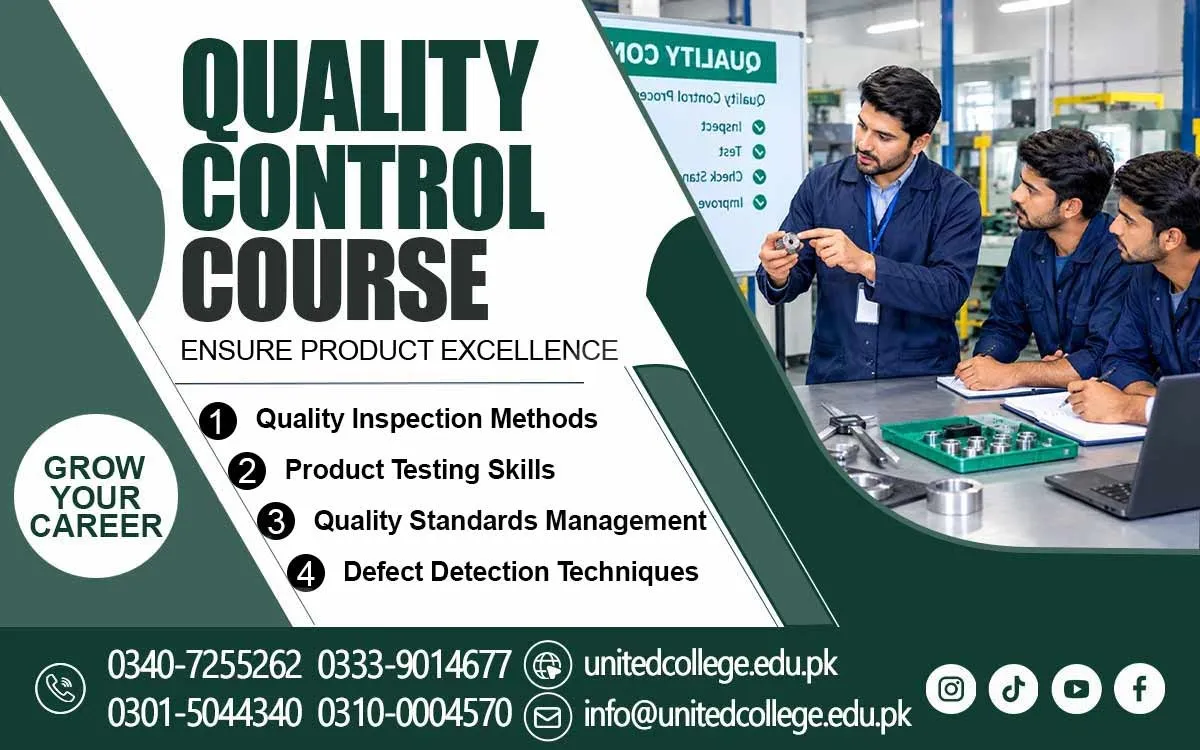

Quality Control Course in Balakot for Practical Learning
Quality Control Course in Balakot: Building Strong Quality Inspection Skills
Imagine a construction project where the concrete does not meet the required strength, or a manufacturing unit where defective products reach customers because nobody checked their quality properly. These problems can cause financial losses, delays, safety concerns, and damage to a company's reputation. This is why quality inspection is an important part of modern workplaces. Every product, material, and completed task needs to meet certain requirements before it is accepted. The Quality Control Course in Balakot, offered by United College of Technology (UCT), provides an opportunity for students and fresh learners to understand the basic principles of quality control and develop useful technical knowledge.
Quality control is not limited to checking finished products; it also involves inspecting materials, measuring dimensions, identifying defects, maintaining records, and following established quality standards. Through quality control training, learners can become familiar with the inspection procedures used in construction, manufacturing, production, and other industrial environments. This field is suitable for individuals who are interested in technical work, careful observation, and improving workplace standards.
The Importance of Quality Control in Modern Industrial Workplaces
A small mistake in material selection or product measurement can create a major problem during production or construction. For example, if a metal component is manufactured with the wrong dimensions, it may not fit properly during assembly. Similarly, poor-quality construction materials can affect the strength and durability of a building. Quality control helps prevent these problems by checking whether materials, products, and completed work meet the required specifications. In manufacturing industries, quality inspectors examine products during different production stages to identify defects before they reach customers. In construction, quality checking involves inspecting cement, concrete, steel, bricks, measurements, and workmanship.
Warehouses and production facilities also depend on inspection procedures to maintain consistent standards. The role of Industrial Quality Control is to reduce errors, improve product reliability, and support better working practices. It also helps companies avoid unnecessary material waste and repeated work. Students interested in technical fields can develop a better understanding of these responsibilities through the Quality Control Course in Balakot. Learning about quality management introduces beginners to the importance of accuracy, proper inspection, and following instructions. These skills are useful in workplaces where even a small quality issue can affect the final result.
Essential Knowledge Covered in Quality Control Training
A quality inspector needs more than the ability to notice visible defects. The work requires an understanding of materials, measurements, inspection procedures, product requirements, and workplace documentation. During Quality Control Training, learners can study the basic principles that help them understand these responsibilities. One important area is product inspection, which involves checking whether an item meets its required dimensions, appearance, and functional requirements. Students can also learn about material inspection, where raw materials are examined before being used in production or construction. Another important topic is defect identification.
This means recognising problems such as cracks, scratches, uneven surfaces, incorrect sizes, damaged components, or poor finishing. Learners also become familiar with the importance of inspection records and technical instructions. For example, a quality inspector working with manufactured metal parts may need to compare measurements against approved specifications before accepting the components. In construction, an inspector may examine concrete surfaces and check whether the work follows the project requirements. The QC Inspector Course provides a useful learning direction for individuals who want to understand these technical responsibilities. At United College of Technology, the Quality Control Course in Balakot is relevant to beginners who want to build foundational knowledge and become familiar with the inspection methods used in different industries.
Quality Assurance and Quality Control in Production Processes
The materials, production methods, equipment, and inspection procedures all contribute to the final result. This is where Quality Assurance and Quality Control become important. Although these terms are closely connected, they have different responsibilities. It includes planning, reviewing work instructions, maintaining systems, and ensuring that production activities follow defined requirements. Quality Control, or QC, focuses more directly on examining materials, products, and completed work to identify defects or differences from specifications. Through a Quality Control Course, students can learn these concepts and understand how quality inspection and quality assurance procedures work together to maintain reliable production standards.
For example, a factory may use quality assurance procedures to establish consistent manufacturing instructions. Quality control inspectors then examine selected products to confirm that they meet the required standards. Both activities support reliable production and customer satisfaction. Students learning quality management should understand that inspection is not simply about rejecting defective items. It is also about identifying repeated problems and helping workplaces improve their processes. During quality inspector training, beginners can develop an understanding of the relationship between prevention and inspection. These concepts are useful in manufacturing, construction, food production, engineering, and other fields where consistent quality is necessary.
Inspection Tools and Equipment Used by Quality Inspectors
Incorrect measurements can lead to serious problems, especially when workers are producing machine parts, installing equipment, or checking construction materials. A component that is slightly larger or smaller than the required size may not fit correctly, even if it looks normal. Quality inspectors use different measurement tools and inspection equipment to check dimensions and identify possible defects. Common tools include measuring tapes, steel rulers, vernier calipers, micrometers, weighing scales, and gauges. A measuring tape is useful for checking lengths and distances, while a vernier caliper can measure external dimensions, internal diameters, and depths with greater accuracy.
For example, construction quality control may involve equipment for checking concrete properties, while manufacturing inspection may require gauges to check component sizes. Learners should understand that using a tool correctly is just as important as selecting the right instrument. The tool must be suitable for the measurement, properly maintained, and used according to its instructions. Quality Control Techniques also involve recording results accurately instead of relying on guesses. Understanding Measurement Tools helps students develop the technical awareness needed to perform basic inspection tasks in different workplace environments.
Technical Drawings, Measurements, and Tolerance Checking
A manufacturing worker may receive a metal part that looks correct but does not match the dimensions shown in its technical drawing. Without checking the drawing, the problem may remain unnoticed until the component reaches the assembly stage. Technical drawings provide important information about the shape, size, dimensions, and other requirements of a product or component. Quality inspectors need to understand basic drawing symbols, measurement details, and written specifications to check whether the finished item matches the approved design. Another important concept is tolerance checking. Tolerance refers to the acceptable difference between a specified measurement and the actual measurement of a component.
An inspector must compare the measured value with the permitted range before deciding whether the part meets the requirements. These checks are important in engineering workshops, manufacturing units, mechanical production, and construction projects. In Construction Quality Control, drawings are also used to verify dimensions, layouts, levels, and structural details. Students interested in the Quality Control Course in Balakot can benefit from learning how measurements and technical instructions work together during inspection. This knowledge develops attention to detail and helps learners understand why accurate measurement is essential for maintaining product quality and reducing errors during production.
Material Testing and Defect Identification During Inspection
A damaged material can affect the entire production process, even when the workers follow the correct manufacturing instructions. For example, steel with visible corrosion, concrete with unsuitable properties, or a plastic component with cracks may not be suitable for its intended purpose. Material inspection helps identify such problems before materials are accepted for use. Depending on the workplace, inspectors may examine the appearance, dimensions, condition, and other required properties of materials. Product testing is another important part of quality inspection. It involves checking whether a product performs according to its specifications and intended use.
In manufacturing quality inspection, these defects may affect product performance, safety, and customer satisfaction. In construction, material testing can help determine whether materials meet the project's technical requirements. Students should also understand that not every defect can be identified through visual inspection. Certain materials require laboratory testing or specialised examination by qualified professionals. Through Quality Control Training, beginners can learn the purpose of different inspection methods and understand why testing results must be compared with approved specifications before materials or products are accepted.
Inspection Reports, Quality Standards, and Workplace Documentation
Finding a defect is only one part of an inspector's responsibility. The problem must also be recorded clearly so that supervisors and other team members can understand what happened and take appropriate action. Inspection reports provide written details about the materials, products, or work being checked. These reports may include inspection dates, item identification, measurements, test results, observed defects, and the final inspection status. Accurate documentation helps workplaces track repeated problems and maintain a record of quality-related activities. For example, if a production unit regularly receives metal components with incorrect dimensions, inspection records can help identify the repeated issue and support further investigation.
Quality standards also play an important role because they provide requirements and guidelines for maintaining consistent results. Different industries may follow different standards depending on their products, processes, and legal requirements. Students should become familiar with the purpose of quality procedures, checklists, technical specifications, and inspection records. Workplace safety is equally important during quality-related activities. Inspectors may work around machines, electrical equipment, chemicals, heavy materials, and moving production lines. They must follow site instructions and use suitable personal protective equipment (PPE), such as safety shoes, gloves, helmets, and eye protection when required.
Practical Quality Control Skills for Construction and Manufacturing
A quality inspector in a manufacturing facility may examine finished products, measure machine components, check surface finishing, and record inspection results. In a construction project, the work may involve checking building materials, reviewing measurements, inspecting concrete work, and comparing completed activities with technical drawings. Food production facilities may require different checks related to cleanliness, packaging, storage conditions, and product quality. These examples show why practical knowledge is important for anyone interested in quality management. Students should understand how to observe workplace conditions, follow inspection checklists, use measurement instruments, identify visible defects, and communicate findings clearly.
They should also learn the importance of teamwork because quality inspectors often coordinate with production workers, engineers, supervisors, and other technical staff. The Quality Control Course in Balakot offered by United College of Technology (UCT) provides an educational starting point for individuals interested in understanding these responsibilities. A structured learning approach can help beginners connect technical concepts with real workplace situations. Developing practical quality control skills also requires attention to detail, patience, basic mathematics, and the ability to follow instructions. These abilities support better performance in inspection-related tasks across different industrial sectors.
Career-Related Opportunities and Continuous Skill Development in Quality Control
Industries such as construction, manufacturing, engineering, production, and material processing require different types of inspection activities. The Quality Control Course helps students understand these inspection processes and develop basic knowledge of industry quality standards. Depending on their qualifications and experience, individuals may explore roles related to quality inspection, QC assistance, production checking, material inspection, or documentation support. Some workplaces also employ quality control technicians and inspectors to monitor specific production stages and maintain inspection records. However, job responsibilities and eligibility requirements vary between employers.
At United College of Technology, students can develop an educational foundation in quality inspection, measurement procedures, defect identification, and quality documentation. Continuous learning is also important because industrial methods, testing equipment, and quality requirements can change over time. Individuals can improve their knowledge by studying technical drawings, learning about relevant industry standards, practising measurement techniques, and gaining supervised workplace experience. Strong communication, careful observation, problem-solving, and accurate record-keeping are valuable qualities in this field. With consistent learning and practical development, students can build a better understanding of quality control responsibilities and make informed decisions about their future technical education and career direction.
Frequently Asked Questions (FAQs)
A Quality Control Course teaches students how to inspect materials, check product quality, identify defects, and follow workplace quality standards.
Students, fresh learners, job seekers, and individuals interested in quality inspection and technical work can consider this course.
Students can learn material inspection, measurement techniques, defect identification, product testing, inspection reporting, and quality management.
Quality Assurance focuses on preventing mistakes through proper processes, while Quality Control involves inspecting products and identifying defects.
Construction, manufacturing, engineering, production, food processing, and other industrial sectors require quality inspection activities.
Admission Open: Start Your Professional Journey Today!
Join United College of Technology and build a career with practical training, recognized certifications, and Gulf job support. Seats are limited.
Apply Now via WhatsAppContact Information
- Address: Rawalpindi: F-272 Main New Katarian Stop, Old IJP Road | Lahore Campus: Lahore, Pakistan
- Phone/WhatsApp: 0340-7255262 / 0333-9014677 / 0301-5044340 / 0310-0004570 / 051-8770756
- Website: unitedcollege.edu.pk
















Leave a Comment