


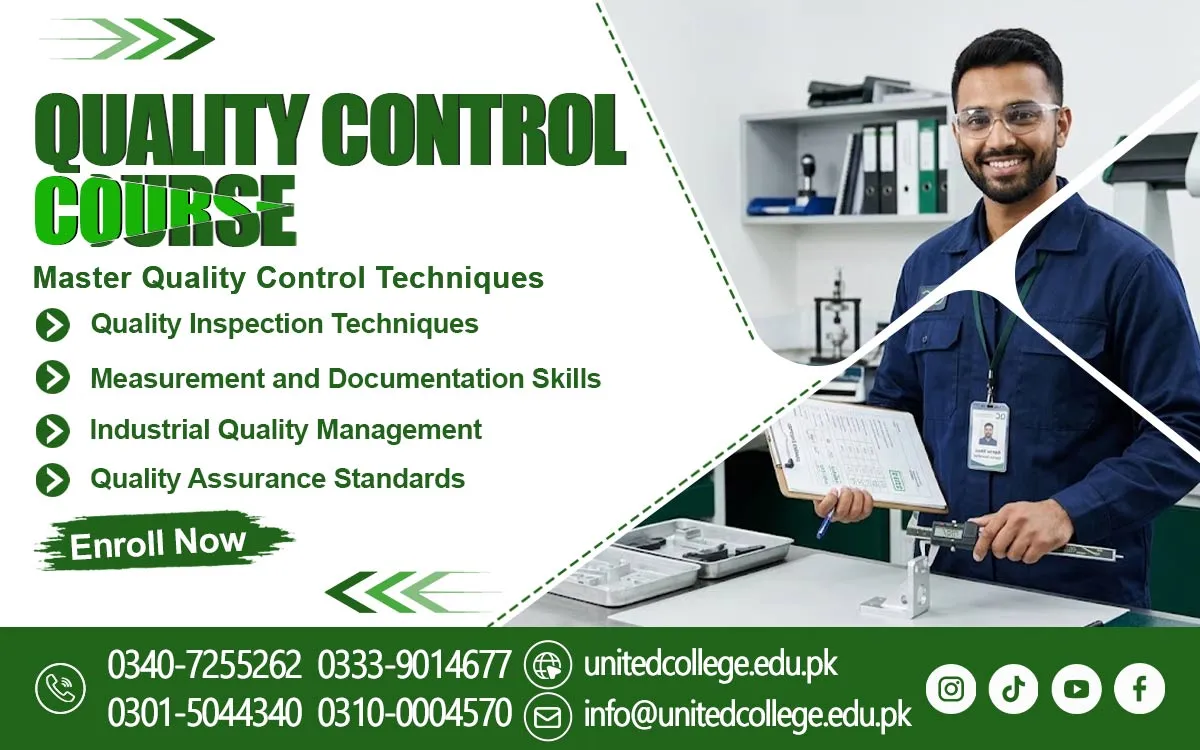

Quality Control Course in Bannu Encourages Smarter Quality Decisions
Consistent Quality Begins With Careful Work and Responsible Inspection
Quality plays an important role in almost every industry. Whether a company manufactures products, constructs buildings, processes materials, or provides technical services, its work must meet certain standards. Even a small defect can affect the performance, safety, or reliability of a finished product. This is why organizations use quality control methods to check their work, identify problems, and maintain consistent results. The Quality Control Course in Bannu introduces learners to the basic principles behind these important activities.
It is suitable for beginners, students, fresh learners, and job seekers who want to understand how quality inspection works in real workplaces. Through quality control training, learners can explore how materials are checked, how defects are recognized, and why inspection procedures matter. This knowledge can help individuals become more aware of industrial expectations and the role that accuracy plays in daily operations. For people in Bannu who want to develop technical knowledge, quality control offers a useful starting point for understanding modern workplace standards.
The Everyday Role of Quality Control in Industrial Operations
Quality control is the process of examining materials, products, or completed work to determine whether they meet defined requirements. It helps organizations find problems before defective items move to another production stage or reach customers. For example, a manufacturing unit may inspect the size and shape of a component before assembling it into a larger product. A construction team may check materials and completed work to confirm that they follow project specifications. In a production environment, workers may examine items at different stages to identify faults as early as possible.
The Quality Control Course in Bannu helps learners understand why inspection is not simply a final check. It is part of a wider process that involves following instructions, comparing results with standards, and reporting issues clearly. Quality control also works alongside quality assurance. While quality control focuses on checking actual results, quality assurance focuses on the processes designed to prevent problems. Both contribute to an organized approach to quality management.
Inspection Methods That Turn Observation Into Accurate Results
Effective inspection requires a clear method and an understanding of what needs to be checked. Visual inspection is one basic method. It involves examining an item for visible problems such as cracks, scratches, rough surfaces, missing parts, or poor finishing. Measurement is another important method because products often need to meet specific dimensions or limits. For instance, a metal component may need to match a particular length or thickness before it can be used.
Testing concepts help workers understand how certain materials or products are evaluated according to their intended purpose. Learners also need to understand inspection instructions so that they know which features require attention. They can also explore how inspectors compare actual results with required standards. A careful approach makes it easier to recognize differences, record findings, and communicate when an item does not meet expectations.
Documentation and Standards That Keep Quality Checks Organized
Inspection results become more useful when workers record them accurately. Documentation provides information about what was inspected, which requirements were checked, and what results were found. It can include inspection reports, testing records, product details, and other relevant information. These records help supervisors and quality teams review completed work and understand whether further action is needed. For example, if a particular product repeatedly fails the same check, earlier records may help the team recognize a pattern.
Quality standards also guide workers by explaining the expected condition, performance, or features of a product or process. Learners studying the Quality Control Course in Bannu can become familiar with the purpose of written procedures, inspection criteria, and clear reporting. They can also understand why records should be factual, readable, and completed carefully. Good documentation supports communication between departments and helps organizations maintain a consistent approach.
Industry Applications That Give Quality Knowledge Practical Value
Quality control knowledge can be useful across several industrial environments. In manufacturing, inspectors may check components, finished products, surface conditions, and product dimensions. Construction projects require attention to material quality, workmanship, and compliance with project requirements. Production units may use quality checks to review different stages of their operations and identify faults before products move forward.
Laboratories also follow testing procedures to examine samples and produce reliable results. In industrial environments, quality-related responsibilities may involve reviewing materials, checking process results, and maintaining accurate records. Each industry has its own requirements, but the need for accuracy, consistency, and clear procedures remains important. Learning these concepts can help beginners understand technical workplaces and recognize how quality practices contribute to reliable products and services.
Personal Skills That Strengthen an Inspector’s Professional Approach
A quality inspector needs more than technical knowledge. Personal abilities also influence the accuracy and usefulness of inspection work. Attention to detail helps individuals notice small differences in products or materials. Problem-solving supports a logical response when results do not match the expected requirements. Communication is equally important because inspection findings must be explained clearly to supervisors and other team members.
Accuracy is essential when measuring items or entering information into records. Patience also matters because some inspections require repeated checks and careful comparison. They can also recognize the importance of following instructions instead of making assumptions. Developing these skills can improve a learner’s confidence when handling technical information and preparing for tasks that require careful observation and responsible decisions.
Career Preparation Through Industry-Related Quality Management Knowledge
Understanding quality control can help students and job seekers explore different areas of technical work. Knowledge of inspection procedures may be relevant to production support, material checking, quality documentation, testing assistance, and other quality-related responsibilities. It can also help individuals understand how organizations review products and maintain workplace standards. Quality management skills are useful because they encourage workers to follow procedures, identify differences, and share accurate information.
However, training alone does not guarantee employment, a particular salary, or a specific professional position. Career opportunities depend on employer requirements, practical ability, experience, and the needs of each industry. The Quality Control Training in Bannu can provide a foundation for learners who want to understand this field before exploring further training or practical experience. Students can build on their knowledge by learning relevant technical terms, becoming familiar with industry requirements, and developing strong communication habits.
A Clear Learning Path for Beginners Through United College of Technology
Starting a technical subject can feel challenging when a learner has no previous experience. A suitable learning path makes the process easier by introducing basic concepts before moving toward more detailed topics. Beginners can start by understanding what quality means, why inspection is necessary, and how products are compared with required standards. They can then explore visual checks, measurement, testing concepts, and documentation. Choosing a training provider is also an important part of this process.
Interested learners should review the course information, understand the subjects covered, and confirm the current details before making an enrollment decision. The Course offered by United College of Technology is a training opportunity for individuals interested in developing knowledge of quality inspection and industrial standards. United College of Technology introduces this course for learners who want to understand quality control principles and their relevance to different industries.
Turning Quality Awareness Into Long-Term Learning and Improvement
Quality is not achieved through one inspection or a single decision. It requires consistent attention throughout the work process, from checking incoming materials to reviewing finished products. People who understand quality control can better recognize why standards matter, how defects affect results, and why accurate records support improvement. The Quality Control Course in Bannu gives beginners an opportunity to explore these ideas and develop a foundation in inspection, testing concepts, documentation, and quality management.
Learners can continue strengthening their knowledge by practising careful observation, reading technical instructions, and becoming familiar with the requirements of their chosen industry. They should also remain willing to learn from mistakes and understand how different inspection methods serve different purposes. With regular learning and practical development, individuals can build a more responsible approach to technical work. For students and job seekers in Bannu, gaining quality control knowledge can be a meaningful step toward understanding industrial operations and preparing for responsibilities where accuracy and dependable standards matter.
Frequently Asked Questions (FAQs)
It provides detailed information about a product's required features, dimensions, materials, and performance expectations.
A production trial allows a team to review a process on a limited scale and identify possible issues before regular production begins.
It provides information about a material's properties and confirms relevant details supplied by its manufacturer or supplier.
It helps ensure that leftover materials, labels, or components from an earlier batch do not become mixed with the next one.
Repeatability refers to getting similar results when the same test is performed under consistent conditions.
It helps organizations review reported product problems, identify affected items, and understand where improvements may be needed.
Admission Open: Start Your Professional Journey Today!
Join United College of Technology and build a career with practical training, recognized certifications, and Gulf job support. Seats are limited.
Apply Now via WhatsAppContact Information
- Address: Rawalpindi: F-272 Main New Katarian Stop, Old IJP Road | Lahore Campus: Lahore, Pakistan
- Phone/WhatsApp: 0340-7255262 / 0333-9014677 / 0301-5044340 / 0310-0004570 / 051-8770756
- Website: unitedcollege.edu.pk
















Leave a Comment