

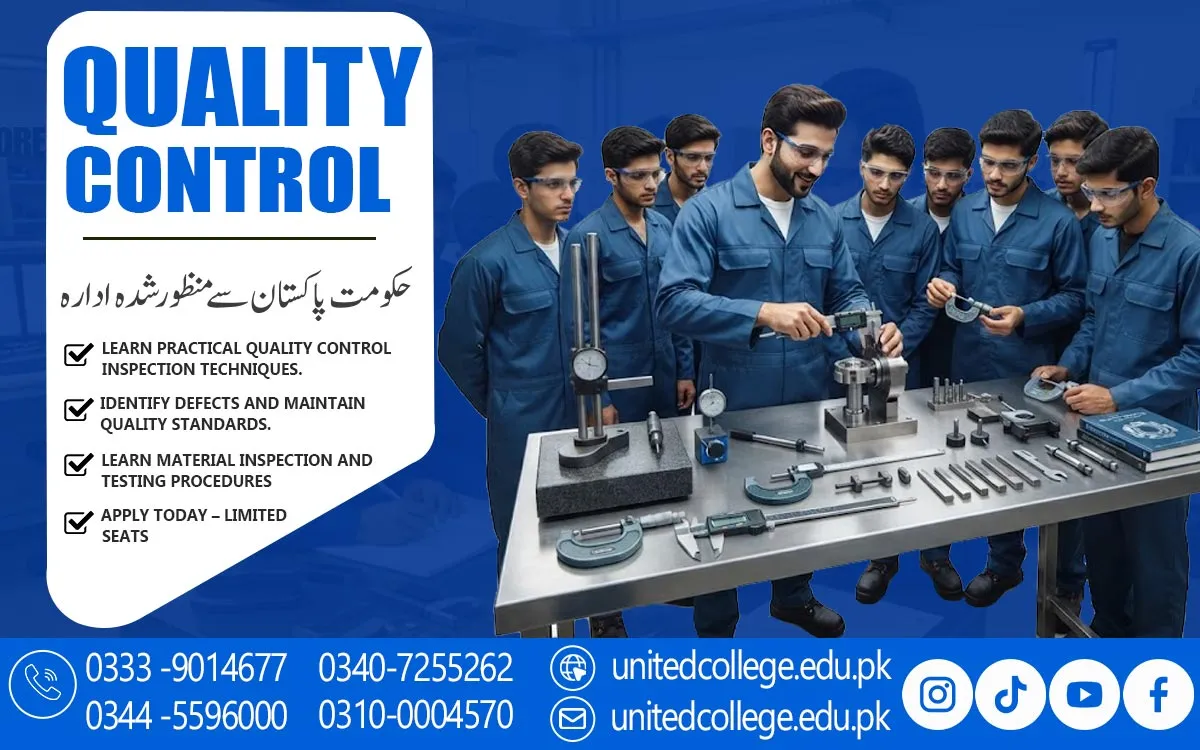
Quality Control Course in Gujranwala for Production Standards
Creating Better Production Outcomes Through Quality Control
Quality has become a major factor in the success of modern industries because businesses need to deliver products that are reliable, safe, and meet customer expectations. From manufacturing units to engineering companies, every organization requires skilled professionals who can monitor production activities, identify problems, and maintain quality standards. The Quality Control Course in Gujranwala is designed to provide learners with practical knowledge and technical abilities needed to work effectively in quality-focused environments.
Gujranwala is known for its industrial activities, where skilled professionals are required to maintain production standards and improve manufacturing processes. This course helps students understand the importance of quality control in industrial operations by covering inspection techniques, testing procedures, quality documentation, and process evaluation methods. Learners gain valuable knowledge that supports career opportunities in different technical sectors.
The training focuses on developing practical skills rather than only theoretical understanding. Students learn how professional quality inspectors work, how defects are identified, how production quality is monitored, and how organizations improve their processes through effective quality management. These skills help learners become prepared for real workplace responsibilities.
The Growing Importance of Quality Control in Industrial Operations
Industries today cannot achieve long-term success without maintaining consistent quality standards. Customers expect products that perform well, meet safety requirements, and provide value for money. Quality control helps organizations achieve these goals by ensuring that products are checked carefully at different stages of production.
The Quality Control Course in Gujranwala explains how quality control systems help businesses reduce production mistakes, control waste, and improve overall efficiency. Students learn why industries focus on preventing defects rather than correcting problems after production is completed. This approach saves time, reduces costs, and improves customer satisfaction.
Quality control professionals play an important role in connecting production activities with quality requirements. Through this course, learners understand how inspectors cooperate with engineers, supervisors, and production teams to maintain better manufacturing standards and support continuous improvement.
Learning the Complete Process of Quality Inspection
Quality inspection is a detailed process that requires technical understanding and strong observation skills. Inspectors are responsible for checking materials, components, and finished products to ensure they meet required specifications. Accurate inspection helps companies maintain reliability and avoid quality-related issues.
During the Quality Control Course in Gujranwala, learners study different inspection stages used in industrial environments. They understand how raw materials are examined before production, how processes are monitored during manufacturing, and how final products are evaluated before delivery.
Practical examples help students recognize common quality problems and understand how inspection results influence production decisions. By learning professional inspection methods, participants develop the confidence required to perform quality checks accurately in real industrial workplaces.
Improving Product Standards Through Testing and Evaluation
Testing plays an essential role in verifying whether products meet technical requirements. Quality professionals use different testing methods to evaluate product performance, accuracy, durability, and overall reliability. Proper testing ensures that only approved products move forward in the supply chain.
The Quality Control Course in Gujranwala introduces students to basic testing concepts and evaluation procedures used in different industries. Learners understand how testing results help identify weaknesses, improve product design, and maintain consistent production standards.
Through practical learning, students develop the ability to analyze inspection results and understand the importance of accurate evaluation. These skills are useful in manufacturing, engineering, construction, and other industries where product quality directly affects business success.
Developing Skills in Quality Records and Reporting
Quality control is not limited to inspection and testing; proper reporting is also an important responsibility. Organizations need accurate records to track production quality, identify repeated issues, and maintain transparency throughout their operations.
The Quality Control Course in Gujranwala teaches students how quality reports, inspection records, checklists, and corrective action documents are prepared. Learners understand how professional documentation supports better communication between different departments.
Strong reporting skills help quality professionals present inspection findings clearly and support management decisions. This knowledge increases employment opportunities because companies prefer individuals who can handle both technical inspections and quality documentation effectively.
Understanding Quality Management Practices in Industry
Successful organizations follow structured quality management practices to maintain consistency and improve performance. These practices include process monitoring, standard procedures, quality planning, and continuous improvement activities.
Through the Quality Control Course in Gujranwala, students learn how quality management systems operate within industrial organizations. They understand how companies develop procedures that help employees maintain the required quality standards during daily operations.
Knowledge of quality management allows graduates to become more effective professionals because they can identify improvement opportunities and support organizations in achieving better production results.
Career Opportunities After Quality Control Training
The demand for trained quality control professionals continues to increase because industries require skilled individuals who can maintain production standards. Organizations need experts who understand inspection methods, documentation procedures, testing techniques, and quality improvement practices.
After completing the Quality Control Course in Gujranwala, graduates can explore career opportunities as Quality Control Inspectors, QA/QC Assistants, Production Quality Officers, Quality Technicians, Documentation Officers, and Process Inspectors. These roles are available in manufacturing companies, engineering firms, construction projects, automotive industries, and many other sectors.
Professional quality control skills also provide opportunities for career advancement. With experience and additional certifications, individuals can move toward supervisory and management-level positions within quality departments.
Building a Successful Future with Quality Control Expertise
A career in quality control offers stability and continuous learning opportunities because every industry requires professionals who can maintain standards and improve processes. Developing these skills allows individuals to become valuable contributors to industrial organizations.
The Quality Control Course in Gujranwala provides learners with practical knowledge of inspection, testing, documentation, and quality management. The training approach helps students understand real industrial challenges and develop the confidence needed to handle professional responsibilities.
By gaining quality control expertise, learners can improve their career prospects and prepare themselves for opportunities in growing industries. This course provides a strong foundation for individuals who want to build a successful technical career focused on quality and industrial excellence.
Frequently Asked Questions (FAQs)
You will learn inspection methods, testing procedures, quality documentation, defect identification, reporting techniques, and industrial quality practices.
Yes, the skills gained through this course are highly useful for manufacturing, engineering, construction, automotive, and production-related jobs.
Yes, beginners can enroll because the course covers basic concepts before moving toward advanced quality control practices.
Graduates can work as Quality Inspectors, QA/QC Assistants, Quality Technicians, Production Inspectors, and Documentation Officers.
Trained professionals help reduce defects, improve production efficiency, maintain standards, and ensure that products meet customer expectations.
Admission Open: Start Your Professional Journey Today!
Join United College of Technology and build a career with practical training, recognized certifications, and Gulf job support. Seats are limited.
Apply Now via WhatsAppContact Information
- Address: Rawalpindi: F-272 Main New Katarian Stop, Old IJP Road | Lahore Campus: Lahore, Pakistan
- Phone/WhatsApp: 0333-9014677 / 0344-5596000 / 0310-0004570 / 0301-5044340 / 0340-7255262
- Website: unitedcollege.edu.pk
















Leave a Comment